

A powdery patch spreading across a houseplant calls for more than basic misting, and the right product depends on whether the problem is foliar disease, pests, or weak root development. I’ve separated direct crop-protection formulas from mycorrhizal root enhancers and plant-care sprays, since each category has a distinct purpose. For most indoor plant shelves, Crop Defender 3 offers the most direct disease-and-pest coverage, while RootMax and Great White make more sense around potting, propagation, and transplanting.
An Overview Of The Picks

RootMax Mycorrhizal Fungi Rooting Powder, 75 g for Plants, Trees, Flowers, Edibles
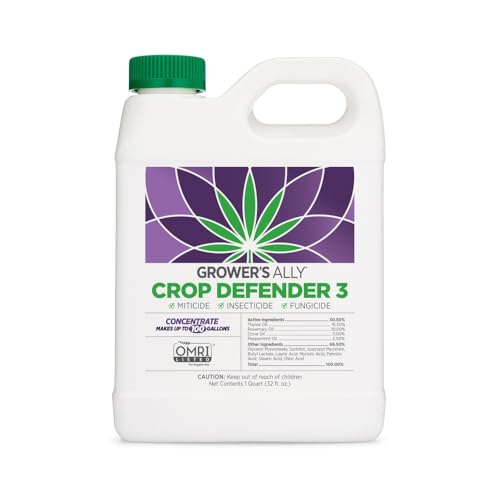
Grower’s Ally Crop Defender 3 Concentrate, 1 Quart

Smart Grower Root Enhancer, 2 oz

Smart Grower Supercharge Mycorrhizae

Bonide All Seasons Horticultural & Dormant Spray Oil, 32 oz Ready-to-Spray

Great White 4 oz Mycorrhizal Fungi Root Stimulator

Smart Grower Neem & Peppermint Plant Spray
Why These Options Stand Out
RootMax belongs with the rooting and transplanting choices rather than the direct disease sprays. Mycorrhizal fungi are beneficial microorganisms that form an association with plant roots, improving their access to moisture and nutrients from the surrounding soil.
Compared with Crop Defender 3, which targets visible pest and disease problems, RootMax focuses on root establishment. Its 75 g container also gives me more practical scope than the smaller packs in this roundup, especially for a home collection of houseplants, flowers, or edible plants.
Notable Gains
- Supports cuttings, potted plants, trees, flowers, shrubs, and edible crops.
- Provides 245 spores per gram of Glomus intraradices, a beneficial fungal strain.
- Offers a clear 5 g, roughly 1 teaspoon, dose for houseplants and planting holes.
- Works without the mixing step required by liquid root products.
- Its odorless, non-toxic formulation suits shared plant-care spaces.
Practical Considerations
- Root development support is a different job from controlling an active foliar disease.
- The powder must contact roots and moist growing medium to work as directed.
Key Specs
Built With In Mind
RootMax fits propagation, repotting, and indoor plant care for growers who want root-zone support in a straightforward powder format.
Where Another Pick Shines
Crop Defender 3 is a better fit for an active powdery mildew, mite, thrip, or aphid problem that requires direct crop protection.
Crop Defender 3 is the most direct disease-management option in my roundup. It combines fungicidal, insecticidal, and miticidal functions in one concentrate, which makes sense when powdery mildew arrives alongside mites, thrips, or aphids rather than as an isolated issue.
For a busy indoor grow room, the one-quart concentrate can be a sensible choice because one quart makes 100 gallons of spray. Unlike the mycorrhizal powders, this formula addresses organisms on plant surfaces and their eggs through contact, so the distinction between prevention and active management matters.
Where It Delivers
- Covers powdery mildew, several mites, thrips, aphids, and other soft-bodied insects.
- Combines botanical oils with a surfactant for contact with treated surfaces.
- The concentrate creates up to 100 gallons of spray, reducing refill frequency.
- Supports weekly use throughout clones, vegetative growth, and flowering.
- Contains no synthetic pesticides, residual solvents, or heavy metals.
Points To Note
- Concentrates require dilution and careful mixing, unlike the ready-to-use Bonide oil.
- Weekly application and full-surface coverage call for more attention than a root powder.
- The label remains the deciding factor for crop, plant, and application timing.
Quick Facts
The Right Fit
Crop Defender 3 fits indoor growers managing confirmed fungal or soft-bodied pest problems across multiple plants.
Another Choice May Suit
RootMax suits a grower focused on cuttings, transplanting, and stronger root establishment rather than a current pest outbreak.
Smart Grower Root Enhancer takes a broader microbial approach than a single-strain mycorrhizal powder. Its blend includes mycorrhizal fungi, Trichoderma, and Bacillus, giving roots access to several beneficial organisms rather than one fungal type alone.
The 2 oz package makes 25 gallons, which appears practical for someone mixing soil for a sizable collection of houseplants. Compared with RootMax, this option offers a wider organism blend, while RootMax provides a more clearly stated spore count and teaspoon dosage.
Standout Benefits
- Combines mycorrhizal fungi, Trichoderma, and Bacillus in one powder.
- Includes sea kelp and molasses as additional organic ingredients.
- The 2 oz quantity is stated to cover 25 gallons.
- Useful when repotting several plants or preparing a larger soil batch.
Small Caveats
- This is a root and soil-support formula, not a direct foliar disease spray.
- The package states coverage but does not present the same detailed application directions as RootMax.
- Multiple beneficial organisms may be less compelling for a grower wanting a single targeted strain.
Made For
Smart Grower Root Enhancer suits indoor gardeners preparing larger quantities of potting mix for repotting or plant recovery.
Look Elsewhere When
RootMax is the better fit for precise teaspoon dosing or a grower wanting a stated Glomus intraradices spore concentration.
Smart Grower Supercharge Mycorrhizae is built around root recovery and transplant support rather than foliar disease management. The formula pairs mycorrhizal fungi with Trichoderma and Bacillus, three groups of beneficial organisms that can support a plant’s root environment.
Its closest comparison is Smart Grower Root Enhancer. Both use similar microbial ingredients, but Supercharge is the more clearly named choice for a grower who wants fungi and beneficial bacteria presented together; Root Enhancer has the advantage of a stated 2 oz size and 25-gallon coverage.
Useful Touches
- Combines mycorrhizal fungi with two types of beneficial bacteria.
- Sea kelp and molasses add organic inputs to the root-zone blend.
- Fits the common stages of repotting, transplanting, and plant recovery.
- Supports nutrient uptake through a diverse soil biology approach.
Details To Watch
- The product does not address powdery mildew or soft-bodied insects directly.
- Two similar Smart Grower options can be difficult to distinguish without comparing the organism blends and package sizes.
Feature Snapshot
Who Will Love This
Supercharge fits indoor plant caretakers focused on transplanting, root-zone biology, and recovering plants with declining root condition.
Reach For A Different Pick When
Great White is a better fit when a named three-part root formula and a stated 4 oz package make application planning easier.
Bonide’s ready-to-spray horticultural oil covers several common plant problems without the dilution step required by Crop Defender 3. Oil works by coating susceptible organisms, making thorough leaf and stem coverage an important part of the application.
The 32 oz container is intended for year-round use, including dormant, green-tip, delayed-dormant, and growing-season stages. That flexibility makes it a practical choice for households with both indoor houseplants and outdoor ornamentals, though indoor use still depends on the product label and plant-specific directions.
A Few Strong Suits
- Ready-to-use format removes the need to measure concentrate.
- Addresses insects, mites, and several common plant diseases.
- Works across dormant and active growth stages.
- Suits mixed collections of indoor and outdoor plants.
Things That May Matter
- Ready-to-spray packaging is less economical for large greenhouse operations.
- Oil can leave visible residue on some plant surfaces, making careful application important.
- Some plants are sensitive to oil, so the label remains essential before broad use.
Core Details
Right Match For
Bonide fits household growers who value simple application and need one oil-based spray for several insect, mite, and disease concerns.
A Better Fit Elsewhere
Crop Defender 3 is a better fit for larger indoor operations because its concentrate makes 100 gallons of spray and targets a defined pest list.
Great White is a compact root-zone product with a familiar three-part formula: mycorrhizal fungi, beneficial bacteria, and plant-growth support. It fits the early stages of a plant’s life, particularly seed starting, rooting, and transplanting, when root establishment deserves extra attention.
Compared with RootMax, Great White uses a broader 3-in-1 formulation in a 4 oz package. RootMax provides more precise usage directions and a stated fungal spore concentration, while Great White may appeal more to someone who wants several beneficial components without handling multiple products.
Points In Its Favor
- Supports seed germination and early root development.
- Combines mycorrhizal fungi with beneficial bacteria.
- Useful during both transplanting and propagation.
- The 4 oz size suits routine use across multiple pots.
Less Ideal Details
- It supports root development rather than an existing foliar disease.
- The 3-in-1 formula does not provide the same detailed strain and spore information as RootMax.
- Application timing still depends on the planting medium and product directions.
Who Should Grab It
Great White fits first-time plant growers who want a simple root-support formula for seed starting, cuttings, and transplants.
Swap It Out When
RootMax is a better fit when a stated fungal strain, spore density, and teaspoon dosage are more important than a combined formula.
Smart Grower Neem & Peppermint Plant Spray sits in a different category from the disease-control concentrates. It is a gentle leaf wash made with neem oil and peppermint oil, intended for routine indoor and outdoor plant care rather than a confirmed fungal outbreak.
That distinction keeps it useful for plant owners who want a straightforward spray for leaf maintenance and a cleaner-looking surface. Compared with Crop Defender 3, it lacks the same defined fungicidal, insecticidal, and miticidal positioning, so I would not treat the two as interchangeable.
Why It Works Well
- Combines neem oil with peppermint oil in a plant-focused spray.
- Designed for routine use on indoor and outdoor foliage.
- Leaf wash format suits regular plant maintenance.
- Can leave foliage looking cleaner and shinier after application.
Potential Compromises
- This is a leaf wash, not a full-spectrum crop-protection formula.
- Peppermint scent may be noticeable in a small indoor room.
- Oil-based sprays require attention to leaf coverage and plant compatibility.
Feature Card
Whose Shelf It Belongs On
This spray fits indoor plant caretakers who want a simple neem-and-peppermint wash for regular leaf maintenance across houseplants.
Consider Something Else When
Crop Defender 3 is a better fit for confirmed powdery mildew, mites, thrips, aphids, and their eggs across an indoor collection.
How To Match A Plant Formula With The Actual Problem
The first decision is whether the plant has a visible foliar problem or a root-development need. A direct fungicide or crop-protection spray belongs with powdery mildew, mites, aphids, thrips, and similar active issues. Mycorrhizal powders belong closer to potting, propagation, transplanting, and root recovery.
Match The Active Problem
Powdery mildew needs accurate product identification and complete coverage of the affected foliage. Crop Defender 3 offers the clearest disease-and-pest combination, while Bonide’s horticultural oil provides ready-to-spray coverage across several organisms and growth stages. The label remains the final guide for plant compatibility and application timing.
Check Root-Zone Support
Mycorrhizal fungi form beneficial relationships with roots, but that role differs from managing organisms on leaves. RootMax offers detailed doses and a stated fungal concentration, Great White emphasizes a combined root formula, and the two Smart Grower choices provide broader microbial blends. Potting medium, plant count, and storage space should guide the choice.
Compare Format And Frequency
Ready-to-spray products suit small collections and simple routines. Concentrates make sense for larger volumes or repeated greenhouse applications. Powders require careful measuring, but they remain convenient for mixing soil and treating cuttings without handling liquid during propagation.
Practical Traps In Indoor Plant Care
Mistakes Worth Dodging
The most common mistake is treating every plant problem as a fungal disease. Root support, leaf washing, pest management, and disease control solve different problems, so matching the symptom and plant stage prevents wasted applications. Another trap is ignoring the label, especially for oils and concentrates that require specific dilution, coverage, or timing.
What Separates Premium From Basic
A larger container may suit extensive collections, but added volume does not create a better fit by itself. More useful distinctions include a defined fungal strain, detailed dosing, a concentrate that produces a meaningful spray volume, or ready-to-use packaging that reduces measuring. The upgrade is worthwhile only when that feature matches the actual routine.
Frequently Asked Questions
What Is The Best Fungicide For Indoor Plants?
Crop Defender 3 is the most direct fit because it combines fungicidal, insecticidal, and miticidal functions for common indoor plant problems. Bonide All Seasons Spray Oil is the simpler ready-to-spray alternative for mixed insect, mite, and disease concerns.
Are Mycorrhizal Products Fungicides?
Mycorrhizal products support roots and soil biology rather than functioning as conventional foliar disease-control sprays. RootMax, Great White, and the Smart Grower choices fit propagation, transplanting, and root-recovery routines.
Which Product Handles Powdery Mildew Best?
Crop Defender 3 specifically lists powdery mildew among the problems addressed by its fungicidal action. Bonide All Seasons Spray Oil is another relevant option because its horticultural oil is positioned for disease management alongside insects and mites.
Should Root Powder Go Directly Onto The Roots?
Root powder should make direct contact with roots or moist growing medium, following the product directions. RootMax specifies application near the plant base or in the planting hole, with light soil coverage afterward.
Can Root Enhancers And Plant Sprays Be Used Together?
Yes, they serve separate purposes and may form separate parts of a plant-care routine. Root enhancers support establishment below the soil line, while sprays address conditions on leaves and stems.
Closing Remarks
The most useful choice depends on the actual problem rather than a general plant-care label. Crop Defender 3 suits direct disease and pest management, Bonide offers convenient oil-based coverage, and the mycorrhizal powders belong around roots, cuttings, and transplants. Matching the formula to the stage and symptom keeps the routine focused and manageable.
