Peonies often look healthy while producing fewer flowers, and the right plant food can help address that gap without adding unnecessary complexity. I focus on fertilizer formulas, application methods, and the needs of garden beds, containers, and mixed borders. My goal is to make each choice easier to match with a specific growing setup.
A peony that produces healthy leaves but sparse flowers often needs more phosphorus than a general-purpose plant food supplies. JR Peters uses a 10-30-20 formula, meaning 10 parts nitrogen, 30 parts phosphorus, and 20 parts potassium by weight. That phosphorus-heavy balance makes it a direct fit for gardeners focusing on bud and flower development.
The water-soluble powder is convenient for established beds and containers, particularly during the active growing period. Compared with the granular options later in the lineup, it can be distributed evenly through a measured watering solution. I find the 1.5-pound size practical for a small collection rather than an expansive nursery.
The Case For It
✓The 10-30-20 analysis gives flowering plants a noticeable phosphorus emphasis.
✓Water-soluble powder mixes with multiple gallons of feeding solution for flexible coverage.
✓Added micronutrients broaden the nutritional mix beyond the three main nutrients.
✓The concentrated powder reduces carrying bulk for targeted feeding.
Things To Consider
•Accurate measuring matters because a concentrated solution can place nutrients unevenly when mixed poorly.
•The high-phosphorus formula is more specialized than a balanced fertilizer for an entire mixed garden.
Key Specs
Feature
Specification
Why It Matters
Nutrient analysis
10-30-20
Prioritizes phosphorus for flowering plants
Format
Water-soluble powder
Allows measured feeding through water
Package size
1.5 pounds
Suits targeted use and compact storage
Built With In Mind
This formula serves home gardeners who mainly want a straightforward flowering-focused feed for peonies in containers or small garden spaces.
A Better Fit Elsewhere
Gardeners maintaining a mixed collection of vegetables, shrubs, and flowers will find GARDENWISE 10-10-10 Slow Release Granular Garden Fertilizer more broadly useful.
Where the JR Peters formula pursues a high-phosphorus liquid feed, FoxFarm takes a soil-oriented approach with steamed bone meal. Its 3-12-0 analysis provides more phosphorus than nitrogen, making it a focused supplement for flowering plants from early development through bloom time. Peony growers can mix it into soil or use it as a top dressing according to the label.
Calcium and mycorrhizal fungi add a different kind of appeal. Mycorrhizal fungi form associations with plant roots, potentially expanding the soil area available for nutrient and water uptake. For most flower borders, I see this as a useful long-term soil amendment rather than a fast-acting replacement for routine fertilization.
What Pays Off
✓Phosphorus supports root and flower development across multiple growth stages.
✓Calcium contributes to strong plant cell formation.
✓Mycorrhizal fungi may improve root access to soil resources.
✓The 4-pound package suits established beds and several containers.
Trade Offs
•Its low-nitrogen analysis makes it a supplement rather than a complete feeding plan.
•Peonies grow from crowns and roots rather than true bulbs, so a bulb-focused label deserves careful comparison.
Feature Snapshot
Feature
Specification
Why It Matters
Analysis
3-12-0
Emphasizes phosphorus over nitrogen
Calcium source
Bone meal
Adds calcium to the feeding mix
Soil biology
Mycorrhizal fungi
Supports root-level fungal associations
Package size
4 pounds
Offers more material than the first pick
Right Fit For
This bone meal is well suited to gardeners feeding established perennial beds where soil improvement and steady flower support are priorities.
Another Choice May Suit
Peony growers seeking a ready-to-dilute liquid concentrate will find Farmer’s Secret Super Concentrated Rose Booster Fertilizer 8oz easier to apply.
A flower garden rarely contains only peonies. Cz Garden Supply therefore makes more sense than a narrowly concentrated bloom formula for mixed beds containing annual flowers, bulbs, and flowering shrubs. The 4-10-10 analysis balances moderate nitrogen and potassium with a higher phosphorus level, supporting growth and flowering without the same emphasis found in the 10-30-20 choice.
Its 2% iron content catches my attention because iron helps support chlorophyll, the pigment involved in photosynthesis. That matters when foliage looks pale, although pale leaves can have several causes. The resealable 4-pound pouch also appears easier to store and pour than a rigid container, especially in a crowded utility shed.
Good Reasons To Consider
✓Works across indoor and outdoor flowering plants rather than one narrow plant group.
✓The 2% iron content supports foliage color and chlorophyll production.
✓Added micronutrients complement the primary NPK nutrients.
✓A resealable pouch simplifies storage and controlled pouring.
Minor Gripes
•Its phosphorus level is less concentrated than the JR Peters formula, so dedicated bloom feeding is less pronounced.
•The soft pouch needs to be kept dry and upright to remain easy to handle.
Who Will Love This
This option fits gardeners maintaining varied flower beds who want one fertilizer for containers, annual displays, bulbs, and established ornamentals.
Reach For A Different Pick
Peony growers concentrating entirely on bud and flower production will get a more focused formula from JR Peters 10-30-20 Blossom Booster.
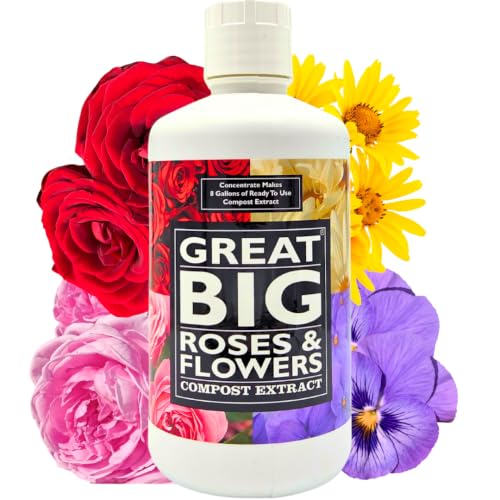
Great Big Plants takes a different route from the straightforward nutrient formulas. Its booster is intended to move into the root zone and help activate nutrients already present in garden soil. Roses, hydrangeas, citrus trees, and other ornamental plants are named uses, so peonies can fit into a mixed rose-and-flower border without changing the entire feeding routine.
The 32-ounce format gives this option a more substantial presence than the small Farmer’s Secret concentrate. For a gardener already using soil nutrients, that root-zone focus is the central benefit. In a sparse container, though, a booster cannot replace the basic fertility of a complete growing medium, so I would check the potting mix before relying on it.
What Works In Its Favor
✓Targets the root zone where garden plants absorb water and nutrients.
✓Suits mixed borders containing roses, hydrangeas, citrus, and other ornamentals.
✓Works alongside existing soil fertility rather than requiring a specialized feed for each plant.
Practical Considerations
•Container peonies still need a suitable potting mix and balanced nutrition.
•The bottle is larger than the concentrated rose booster, so storage deserves consideration.
Quick Facts
Feature
Specification
Why It Matters
Package size
32 ounces
Provides more volume for ornamental beds
Primary approach
Root-zone booster
Focuses on nutrients around plant roots
Made For
This booster best fits mixed ornamental borders where roses and flowering perennials share a bed with established soil nutrients.
Swap It Out When
Gardeners feeding a collection of potted peonies alone will find FoxFarm Happy Frog Steamed Bone Meal Fertilizer 3-12-0 4 lb more suitable for soil incorporation.
The 8-ounce bottle makes this the most compact option here. Farmer’s Secret formulates it for roses across their life cycle, from new growth through flowering, which also makes it reasonable for a mixed rose-and-peony planting. Unlike the granular products, it is mixed with water before application, so measuring becomes part of the routine.
The specified dilution is two teaspoons in one gallon of water, followed by application during the growing season. That measurement is easy to remember, though weekly use calls for consistent mixing. Compared with the four-pound bone meal bag, this bottle takes up much less room and avoids carrying a heavy container around the garden.
Where It Helps
✓The 8-ounce size is easy to store and handle.
✓A measured liquid concentrate works with ordinary watering equipment.
✓The formula supports roses and other flowering ornamentals through multiple stages.
Possible Compromises
•Its rose-centered positioning is less specific to peonies than the bulb and bloom formulas.
•Weekly dilution and application require more attention during the growing season.
•The small bottle offers less total volume for extensive flower borders.
Who Should Grab It
This concentrate is a practical fit for rose enthusiasts adding peonies to a mixed shrub border and preferring a small, liquid format.
Consider Something Else When
Gardeners devoted to peonies and other bulb-planted flowers will find Cz Garden Supply 4-10-10 Bulb and Bloom Fertilizer more directly aligned with the planting.
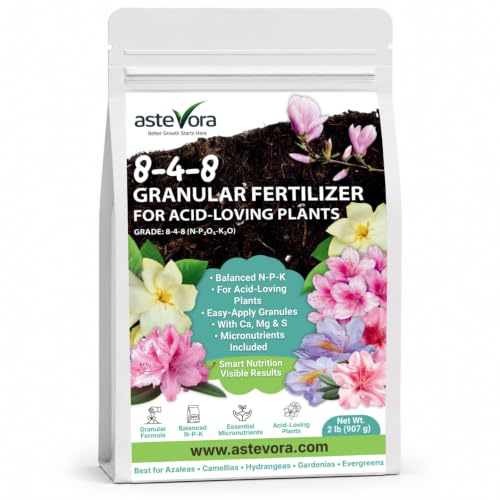
This choice matters in a border that combines peonies with strongly acid-preferring plants such as azaleas, camellias, gardenias, blueberries, and rhododendrons. The 8-4-8 analysis provides a conventional balance of nitrogen, phosphorus, and potassium, while magnesium, iron, and manganese support the foliage of acid-loving plants. For most mixed ornamental beds, that makes it a less flower-specific but more chemically aligned option.
Soil pH affects nutrient availability because plants cannot absorb some elements efficiently when soil chemistry does not suit them. This fertilizer is designed to support an acidic soil environment, and the one-quart container is a reasonable size for a focused bed. Peony growers should avoid choosing it solely for the word acidic, since the broader planting mix matters more than any single label.
Where It Excels
✓Supports azaleas, camellias, gardenias, blueberries, and rhododendrons in the same planting area.
✓Magnesium, iron, and manganese contribute to healthy foliage and chlorophyll production.
The equal 10-10-10 analysis makes this the broadest nutritional choice in the group. NPK is the familiar shorthand for the three primary nutrients: nitrogen supports leafy growth, phosphorus supports flowering and root development, and potassium contributes to overall plant vigor. Unlike the earlier flower-focused formulas, none of these three nutrients receives a dominant position.
Its slow-release granular form suits gardeners who want a measured amount to remain in the root area longer than a liquid feed. The one-quart package works for flower beds, potted plants, and nearby shrubs without requiring much storage space. I would still follow the label application rate, since a slow-release product is not intended to replace every supplemental feeding during peak bloom.
Notable Upsides
✓An even nutrient analysis supports many types of ornamental plants.
✓Slow-release granules reduce the need for frequent liquid feeding during active growth.
✓One quart accommodates flowers, shrubs, vegetables, and container plants.
✓The dry format is easy to store away from moisture.
Where It May Fall Short
•Its balanced analysis is less targeted for maximizing peony blooms.
•Granular particles require careful distribution around the root zone.
Technical Highlights
Feature
Specification
Why It Matters
Analysis
10-10-10
Balances the three primary nutrients
Format
Slow-release granules
Extends nutrient availability
Placement
Outdoor and indoor plants
Supports varied garden collections
Package size
1 quart
Balances coverage with compact storage
Whose Shelf It Belongs On
This fertilizer belongs with generalist gardeners who maintain peonies alongside vegetables, shrubs, roses, and container plants.
Where A Sibling Pick Shines
Gardeners focused solely on larger peony flowers will find the higher-phosphorus JR Peters 10-30-20 Blossom Booster more purposeful.
## Feeding Decisions That Matter for Peony Gardens
### Start With the Planting Mix
A fertilizer cannot compensate for unsuitable soil or an empty container. Peonies in open ground benefit from soil that drains well and contains organic matter, while container plants need a suitable growing medium. I check the planting site before deciding which formula to buy, because a concentrated bloom feed does little to correct a structurally poor root environment.
### Match Nutrients to the Goal
Higher phosphorus makes sense when flowering is the main objective, as in the 10-30-20 and 3-12-0 options. Balanced 10-10-10 works better for mixed collections, while an acidic formula serves plants with specific soil chemistry needs. NPK numbers express the proportion of nitrogen, phosphorus, and potassium, not the total amount of fertilizer in the container.
### Account for Application Style
Liquid concentrates allow measured feeding through a watering solution, while granules suit routine top-dressing around root zones. Bone meal can be incorporated into soil as a longer-term amendment. I compare the label directions with the available watering equipment, storage space, and planting area before choosing a format.
### Check Nearby Plants First
A mixed bed changes the nutritional decision because roses, bulbs, blueberries, and other ornamentals can have different needs. The GARDENWISE acidic blend becomes more relevant beside several acid-preferring plants, while a balanced slow-release formula makes sense across varied beds. For an isolated peony planting, a flowering-focused formula offers a more direct approach.
## Two Mistakes Worth Avoiding Before Planting
### Mistakes Worth Dodging
Choosing by the word bloom alone can produce an overly concentrated formula for a mixed garden. I compare NPK ratios, nearby plants, soil conditions, and application directions before adding anything, then use the labeled amount rather than estimating a heavier dose.
### What Separates Specialized From Basic
Specialized products concentrate phosphorus, add calcium and fungi, or adjust nutrients for acidic soil. Those additions help only when the planting matches that purpose, so a more basic balanced fertilizer can serve a mixed bed better than a specialty blend applied for the wrong reason.
## Frequently Asked Questions
### What Is The Best Fertilizer For Peonies?
A high-phosphorus fertilizer such as the 10-30-20 formula is directly suited to encouraging flower and bud development. Soil quality, drainage, and the age of the plant still shape the results.
### Should Peonies Receive Fertilizer Every Year?
Established peonies benefit from appropriate feeding during active growth, especially in poor or heavily worked soil. Container plants may have different needs because their nutrients are limited, so the plant’s condition and the label schedule should guide application.
### Is Bone Meal Good For Peonies?
Bone meal supplies phosphorus and calcium, making it a reasonable soil supplement for flowering plants. Peonies grow from perennial crowns and roots rather than true bulbs, so its soil-building role matters more than the bulb-oriented marketing.
### Is High Phosphorus Fertilizer Always Better?
Higher phosphorus supports flowering, but an imbalanced formula may not suit an entire mixed garden. A balanced fertilizer can be more appropriate when peonies share space with vegetables, shrubs, and other flowering plants.
### Can Fertilizer Fix Poor Peony Blooms?
Fertilizer may help when insufficient nutrients limit flower production, but it cannot correct poor drainage, unsuitable soil, disease, or an unsuitable planting location. I assess those growing conditions before changing the feeding routine.
## Final Verdict
JR Peters 10-30-20 Blossom Booster is the clearest choice for a dedicated peony planting focused on plentiful flowers. Mixed gardens may suit the balanced Cz Garden or GARDENWISE options better, while the FoxFarm bone meal and concentrated rose booster serve distinct soil and application preferences. The right decision comes from matching the formula to the plant, the bed, and the feeding routine.