Philodendron leaves can look glossy yet still lack the nutrients they need, especially in a dim room or a tightly packed plant shelf. I built this guide around eight practical options for foliage feeding, slow-release care, root-zone support, and convenient watering routines, with the format, nutrient balance, and handling needs kept in view.
A large bag makes sense for a plant shelf that expands every spring, especially when a slow-release format can reduce the number of feeding sessions. Espoma Organic Plant-Tone uses a 5-3-3 analysis, meaning 5 parts nitrogen for foliage growth, 3 parts phosphorus for root and flower development, and 3 parts potassium for general plant resilience. That balance feels more measured than the concentrated 24-8-16 mix offered by Miracle-Gro.
I would favor this option for a gardener who prefers ingredients associated with organic production and wants a ready-to-use product around trees, shrubs, flowers, and vegetables. The 36-pound package is substantial, so storage space matters more than measurement precision. Philodendron is not named in the stated plant list, so I would still match the fertilizer to the growth stage and care routine of the specific plant.
Reasons It Performs
✓The slow breakdown of natural organic ingredients creates a longer nutrient reserve than a quick-dissolving feed.
✓The 5-3-3 ratio places relatively more emphasis on foliage, which suits plants managed primarily for large leaves.
✓No mixing is required, reducing one step during routine plant care.
✓The 36-pound package covers multiple outdoor and indoor feeding tasks without frequent repurchasing.
Trade Offs
•The bulk package needs a dry, accessible storage place.
•Its listed uses center on outdoor plants and broad gardens rather than a dedicated houseplant formula.
Key Specs
Feature
Specification
Why It Matters
Nutrient analysis
5-3-3 with 5% calcium
Provides a balanced framework for foliage and general growth.
Release pattern
Slow breakdown
Supports steadier feeding across the growing season.
Preparation
Ready to use
Removes the need to dilute or mix the product.
Package size
36 pounds
Suits repeated feeding and mixed garden care.
Made For
Organic-gardening households and mixed plant collections that value slow-release feeding and have adequate storage.
Where Another Pick Suits Better
Miracle-Gro Water Soluble Plant Food 12.5 lb. suits indoor collectors who want a measured, water-based feeding routine.
Water-soluble feeding fits neatly into an existing watering routine, which is why this Miracle-Gro formula remains a practical choice for mixed indoor and outdoor collections. Its 24-8-16 analysis provides a notably higher nitrogen share than Espoma Organic Plant-Tone, making it more immediately focused on vigorous leafy growth. That concentration also calls for accurate dilution.
For a busy room with houseplants, roses, flowers, vegetables, and trees, one container can cover several jobs without changing formulas. The listed coverage reaches approximately 5,000 square feet of garden area, though indoor watering-can use depends on plant size and frequency. Depending on the mix of plants, a gardener may find the 12.5-pound container more manageable than Espoma’s 36-pound bag.
What Makes Sense
✓The feed dissolves into watering water, making it convenient for routine indoor care.
✓A 24-8-16 analysis emphasizes nitrogen, the nutrient most closely associated with green leaf and stem growth.
✓The same formula covers houseplants, outdoor flowers, vegetables, roses, and trees.
✓Clear dilution guidance supports consistent indoor and outdoor application.
Practical Considerations
•Accurate measuring is important because the nutrient analysis is more concentrated than the Espoma option.
•The 12.5-pound container still requires storage away from moisture and spill-prone areas.
Right Fit For
Houseplant-heavy collections and mixed gardens that already include a water-based feeding routine.
Consider Something Else When
Espoma Organic Plant-Tone 5-3-3 Plant Food suits organic-gardening households that prefer slow-release nutrition and ready-to-use granules.
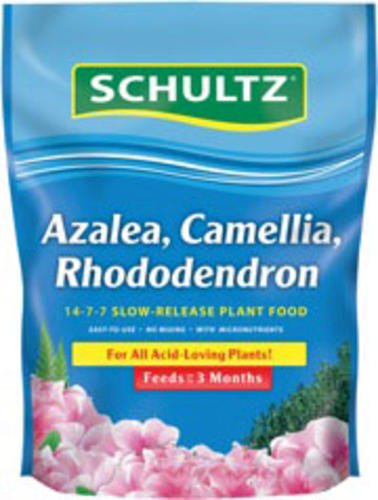
This formulation targets a narrower need than the broad-spectrum Miracle-Gro option. Schultz 14-7-7 Slow Release Plant Food is formulated for indoor and outdoor acid-loving plants, including azaleas, camellias, and rhododendrons, making plant matching more important. For a philodendron kept in acidic soil conditions, that targeted approach may feel more relevant than a general-purpose feed.
Slow-release nitrogen can feed flowers for up to three months, so the practical benefit is fewer applications than a routine liquid schedule. No mixing is required, and micronutrients add smaller nutritional elements alongside the main NPK ratio. In my view, the trade-off is specialization: it works best when the plant type genuinely falls within the formula’s intended category.
Where It Delivers
✓The slow-release nitrogen extends feeding for as long as three months.
✓The product requires no mixing, simplifying application around indoor and outdoor acid-loving plants.
✓Micronutrients broaden the formula beyond its primary NPK components.
✓The 3.5-pound package offers a middle ground between a small household format and a large garden bag.
Some Limits To Know
•Its acid-loving focus requires a closer plant-type match than a general all-purpose product.
•Slow release is less suited to schedules built around correcting a specific feeding gap immediately.
Feature Snapshot
Feature
Specification
Why It Matters
Nutrient analysis
14-7-7
Provides a nitrogen-led balance for sustained feeding.
Feed duration
Up to three months
Reduces the frequency of scheduled applications.
Who Will Love This
Houseplant keepers with acid-preferring plants who value infrequent feeding and a specialized nutrient profile.
A Better Fit Elsewhere
Schultz All Purpose 10-15-10 Plant Food Plus 2-Pack suits mixed indoor collections that need a single formula across many species.
Seven drops into a quart of water is the detail that makes this compact formula attractive for indoor plant shelves. The 10-15-10 analysis emphasizes phosphorus over nitrogen, giving it a different purpose from Miracle-Gro’s foliage-heavy 24-8-16 mix. That profile can align with transplanting, repotting, and rooting periods when root development is the immediate focus.
The two-pack format works well for separate rooms, a home and studio, or a rotating plant-care kit. Unlike the 12.5-pound Miracle-Gro container, this product occupies little shelf space and avoids handling a large supply container. The trade-off is refilling frequency, since two small containers will not cover the same number of watering sessions as a bulk bag.
Well-Handled Touches
✓A seven-drop measurement integrates easily into a quart of watering water.
✓The liquid format serves indoor and outdoor plants without changing products.
✓Its stated use around transplanting, repotting, and rooting gives it a clear role in plant establishment.
✓The two-pack format separates supplies cleanly between plant-care zones.
Details To Watch
•The compact containers require more regular refills than a bulk fertilizer.
•Drop-based dosing still calls for a consistent measuring routine.
Quick Facts
Feature
Specification
Why It Matters
Nutrient analysis
10-15-10
Places greater emphasis on phosphorus for root development.
Indoor dilution
7 drops per quart
Allows small, repeatable watering-can portions.
Pack format
Two 4-ounce units
Offers compact storage and separate plant-care stations.
Built With In Mind
Small-space plant keepers who repotted recently or prefer a compact liquid feed for routine watering.
Reach For A Different Pick When
Miracle-Gro Watering Can Singles 24 Packets suits plant-care routines that need premeasured portions without handling a liquid bottle.
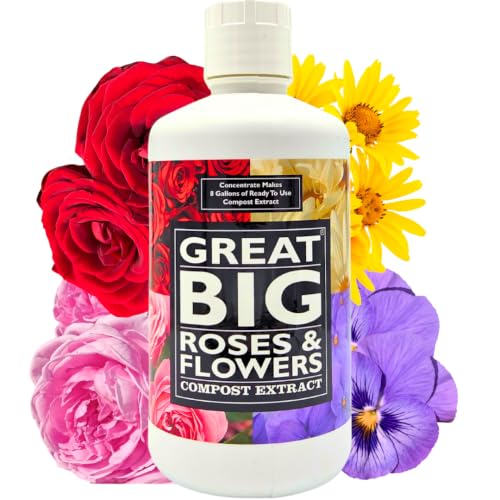
Great Big Roses Fertilizer Booster occupies a different category from the NPK products in this roundup. It is designed to move through the root zone and activate nutrients already present in garden soil, with stated uses for rose bushes, hydrangeas, citrus trees, and other garden plants. That makes it an amplifier for an existing soil-and-fertilizer setup rather than a simple standalone nutrient source.
A mixed household with roses and lush philodendrons may find the broader garden framing useful, particularly when existing fertilizer is already part of the routine. The honest limitation is the product’s flowering-garden emphasis, which is less direct than a general-purpose houseplant formula. I would treat it as a specialized companion for a flower-heavy garden, not as an automatic choice for every foliage plant.
Standout Benefits
✓The formulation is directed toward the root zone rather than the leaves alone.
✓It is intended to activate nutrients already available in garden soil.
✓The stated plant range includes roses, hydrangeas, citrus trees, and other garden plants.
✓The 32-ounce bottle provides a manageable format for a home flower garden.
Where It May Fall Short
•The rose and flower focus is less specific to ordinary philodendron care than an all-purpose feed.
•Its booster role makes soil condition and the existing fertilizing plan relevant to the expected result.
Whose Shelf It Belongs On
Home gardeners with flowering plants and an established soil program can put this product to practical use.
Another Choice May Suit
Miracle-Gro Water Soluble Plant Food 12.5 lb. suits mixed households prioritizing one straightforward feed for houseplants and outdoor plants.
This compact soil inoculant takes a different approach from the granular and liquid feeds elsewhere in the roundup. Mycorrhizal fungi form associations with plant roots, allowing the organisms to occupy soil space that roots can use. The 4-ounce package contains 100,000 propagules, meaning the fungal material is distributed in forms capable of producing new colonies under suitable conditions.
I see this as most relevant during repotting or when introducing a plant to new soil, where root establishment matters more than an immediate nutrient top-up. OMRI-listed status adds a useful production standard for gardeners following organic-input practices. The smaller package is also easier to store than a bulk fertilizer, though it represents a targeted soil treatment rather than a complete NPK feeding program.
What Earns Its Place
✓The inoculant targets the root zone and supports the plant-soil relationship.
✓A 4-ounce format suits a single repotting session or a small collection.
✓OMRI-listed status fits gardeners who pay attention to organic production standards.
✓The 100,000-propagule count provides a concrete measure of the product’s concentration.
Factors To Consider
•Mycorrhizal fungi require suitable soil and moisture conditions to establish.
•Confirmation of the application instructions is sensible before treating an entire pot.
Core Details
Feature
Specification
Why It Matters
Propagule count
100,000
Shows the concentration of the fungal material.
Package size
4 ounces
Supports targeted use and compact storage.
Best Suited To
Plant keepers focused on repotting, root establishment, and improving the soil biology around indoor plants.
Swap It Out When
Organo Republic Mycorrhizal Fungi 1 lb, 400,000 Propagules suits larger projects requiring more propagules in a single package.
The one-pound version carries the same root-zone approach as the compact Organo Republic formula but holds four times as many propagules. That makes it more practical for repotting a roomful of plants, refreshing soil around several mature specimens, or treating a larger collection. In practical terms, the bigger pack reduces the need to open multiple small containers for a single project.
Philodendron care often involves moving a plant into fresh potting mix, and that transition is where a mycorrhizal inoculant can have a clear purpose. The fungi live in association with roots and contribute to the soil biology around them. Compared with the 4-ounce version, the main benefit is coverage and handling rather than a change in product type, so smaller collections can remain with the compact option.
Bright Spots
✓One-pound packaging serves multiple pots or a broader soil-refreshing project.
✓The 400,000-propagule count supports a concentrated soil treatment.
✓The root-zone focus complements repotting and fresh potting-medium work.
✓OMRI-listed production supports organic-input purchasing priorities.
Possible Compromises
•The larger package offers little value for a collection with only one or two pots.
•Stable moisture and suitable soil remain important parts of the treatment.
The Right Fit
Plant-room managers, avid repotters, and gardeners treating several containers at once benefit most from the larger format.
Where A Sibling Pick Shines
Organo Republic Mycorrhizal Fungi 4 oz, 100,000 Propagules is more proportionate for a single repotting or a small indoor shelf.
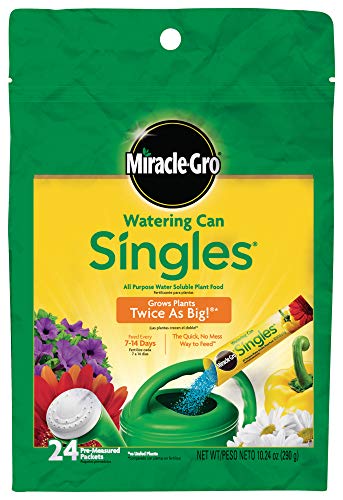
Premeasured packets remove the measuring step from an otherwise ordinary watering session. Each single-use portion can be emptied into the watering can, which makes this format easier to store than a loose powder container and more consistent than estimating an amount by eye. For a household that already waters philodendrons on a regular schedule, that simplicity is the central benefit.
The format also extends beyond an indoor plant shelf. Stated uses include backyard gardens, vegetable growing, and flower gardening, so the 24 packets can serve several plant-care zones. Compared with Miracle-Gro Water Soluble Plant Food 12.5 lb., the tradeoff is supply size rather than convenience, since a small collection can use packets efficiently while a large garden would require far more.
What Helps Most
✓Single-use portions eliminate the need to measure each watering session.
✓The packets fit neatly into an existing watering-can routine.
✓Compact packaging is easy to store beside a watering can.
✓One format supports houseplants, vegetables, flowers, and backyard gardens.
Small Caveats
•Twenty-four packets provide less coverage than a large bulk container.
•Single-use portions create ongoing packaging waste compared with a reusable supply.
## What Matters Most in Philodendron Feeding
### Match the Format to the Routine
Water-soluble granules dissolve into irrigation water and suit regular watering, while liquid drops simplify measured additions. Slow-release granules require fewer applications but call for an appropriate soil and watering pattern. The right format is the one that fits the plant keeper’s schedule without encouraging overfeeding.
### Read the NPK Ratio
NPK stands for nitrogen, phosphorus, and potassium. Nitrogen supports green leaf and stem growth, phosphorus contributes to roots and flowering, and potassium supports general vigor and stress resilience. A foliage-focused plant may respond well to a nitrogen-forward analysis, while transplanting periods can justify a more phosphorus-centered formula.
### Check the Plant Category
Broad all-purpose formulas fit mixed collections, while acid-loving formulas require closer plant matching. Flower boosters and mycorrhizal inoculants serve different roles from complete NPK feeds. I would also consider the potting mix, pot size, light level, and recent repotting before choosing a stronger feeding schedule.
## Practical Fertilizer Decisions
### Mistakes Worth Dodging
Choosing fertilizer only by the product’s plant category can lead to mismatched nutrition. More frequent feeding does not automatically produce healthier foliage, and concentrated formulas demand careful dilution. I would also avoid applying several different products at once without understanding how their roles overlap.
### What The Higher Tier Buys
A larger package or more concentrated inoculant can reduce repurchasing and suit frequent repotting, but concentration alone does not determine suitability. The useful upgrade is whichever format improves dosing, storage, or coverage for the actual plant-care routine. For a small indoor shelf, compact and premeasured options may be more useful than extra volume.
## Frequently Asked Questions
### Can General Fertilizer Be Used on Philodendron?
Yes, a general-purpose plant food can support routine philodendron care when its dilution and nutrient profile suit the growing conditions. The formula should still be matched to the plant’s growth stage and the surrounding soil.
### Is Slow-Release Fertilizer Better for Philodendron?
Slow-release fertilizer suits plant keepers who prefer fewer applications and steadier feeding over time. Water-soluble or liquid options provide more control over individual watering sessions and are easier to adjust when plant needs change.
### What Does a 5-3-3 Fertilizer Analysis Mean?
The analysis lists 5 parts nitrogen, 3 parts phosphorus, and 3 parts potassium by weight. That relatively nitrogen-forward profile places greater emphasis on foliage than formulas with more phosphorus.
### Are Mycorrhizal Fungi Fertilizer?
Mycorrhizal fungi function as a soil inoculant rather than a conventional NPK fertilizer. They associate with roots and are most relevant when soil biology and root establishment are central parts of the care plan.
### Which Fertilizer Is Easiest to Measure?
Miracle-Gro Watering Can Singles 24 Packets avoids loose-powder measurement through premeasured portions. Schultz All Purpose 10-15-10 Plant Food Plus 2-Pack is also convenient for indoor use, using seven drops per quart of water.
## Final Verdict
I would choose Espoma Organic Plant-Tone 5-3-3 Plant Food for organic, slow-release care, Miracle-Gro Water Soluble Plant Food 12.5 lb. for flexible indoor and outdoor feeding, and Miracle-Gro Watering Can Singles 24 Packets for the simplest routine. The right choice ultimately depends on plant type, watering habits, and storage needs rather than a single universal formula.