

A large yard can turn a routine mowing session into an all-afternoon chore, especially when grass is damp or the lawn contains slopes, narrow borders, and awkward corners. Electric equipment suits homeowners who want manageable noise and cord-free operation, while the right capacity and terrain handling matter more than headline wattage. The shortlist includes robotic mowers, a self-propelled model, and electric maintenance tools for properties where one machine cannot handle every part of the lawn.
A Closer Look At The Lineup


BLACK+DECKER 30-Foot Autofeed Trimmer Line 2-Pack

SKIL SM4910C-11 40V 20-Inch Self-Propelled Mower Kit

WORX WR340 1-Acre Robot Mower
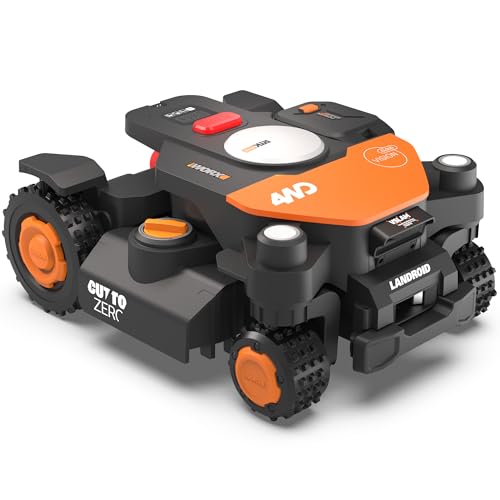
WORX WR341 4WD Mower

WORX WR344 4WD Mower
The Details Behind The Selections
Large lawns often need more attention than regular mowing provides, particularly when dead grass builds up between healthy turf. The EVEAGE Trimmer is a 16-inch electric dethatcher and scarifier rather than a conventional mower, so it fits a seasonal maintenance role alongside your cutting equipment. For a broad property where spring cleanup takes priority, that distinction makes it a useful addition rather than a substitute.
Its two-blade system separates debris removal from soil loosening, while five depth settings let you match the working height to the lawn. The honest read is that this is most valuable during targeted yard care, not routine clipping. Compared with the robotic options later in the lineup, it requires you to move across the lawn and make passes manually.
What Works In Its Favor
- The 16-inch working path covers a meaningful strip per pass, helping large-lawn maintenance proceed more efficiently.
- A dethatcher blade lifts accumulated dead grass that can form a dense layer over turf.
- A separate scarifier blade loosens soil to support the lawn’s root zone during seasonal care.
- Five depth positions give you control across different lawn heights and levels of buildup.
Practical Considerations
- You still need a separate mower for regular grass cutting, so factor the purchase into a broader yard-care setup.
- The working-depth ranges differ between the two blades, making the selected attachment important to the job.
Key Specs
Right Fit For
This tool suits homeowners with a large lawn who need seasonal dethatching and scarifying alongside a separate mower.
Another Choice May Suit
Choose the SKIL SM4910C-11 40V 20-Inch Self-Propelled Mower Kit when your priority is routine cutting rather than lawn-thatch maintenance.
One machine can cover several lawn tasks when it converts among mowing, trimming, and edging. The BLACK+DECKER package centers on that flexibility, with a 6.5-amp motor and a power-drive transmission for handling grass, weeds, and overgrowth. That makes it a practical multi-function choice for a yard with open lawn areas, fence lines, and flower beds.
Unlike the EVEAGE Trimmer, which concentrates on dethatching and scarifying, this setup addresses several everyday cutting tasks. The 30-foot autofeed spool, measuring 0.065 inch, reduces the number of refills during extended trimming sessions. Its compatibility list is extensive, so verifying your existing model against that list is the essential ownership check.
The Case For It
- The mower, trimmer, and edger configuration reduces the number of separate tools needed around a lawn.
- Power drive supports continuous work through dense grass and overgrowth.
- Each 30-foot spool provides substantial line for edging or trimming borders.
- Two spools give you a spare for future replacement needs.
Details To Watch
- Your existing lawn tool must appear on the stated compatibility list.
- Conversion setup takes planning between mowing, trimming, and edging rather than leaving one fixed cutting role.
- The package is a maintenance-focused alternative, not the higher-capacity robotic coverage offered by the WORX models.
Feature Snapshot
Made For
This option fits households wanting one convertible platform and replacement line for compatible BLACK+DECKER equipment.
Consider Something Else
The WORX WR340 1-Acre Robot Mower suits you better when automatic mowing on a large property matters more than handheld edging.
A walk-behind mower becomes less tiring when it moves under its own power, and the SKIL SM4910C-11 adds a variable speed control so you can match the pace to the grass and terrain. Its 20-inch cutting deck offers a practical balance for open sections of a large property. For someone who wants an active mowing session without managing a cord, the kit is refreshingly straightforward.
The package includes a 6.0Ah battery and Auto PWR JUMP charger, removing the need to assemble a separate power system. Compared with the BLACK+DECKER conversion approach, this mower is more focused on regular cutting, while its self-propelled design reduces the physical effort of moving the machine. For extensive acreage, the 20-inch deck still requires more passes than the robotic mowers in this group.
Why It Works Well
- Self-propulsion reduces the effort required to guide the mower across level grass.
- Variable speed control lets you select a comfortable mowing pace.
- The included 6.0Ah battery and charger make the kit ready for regular use without a separate battery purchase.
- Push-button starting adds convenience to each session.
Trade-Offs To Consider
- A 20-inch deck takes repeated passes across a large lawn compared with an automated model covering the same ground.
- The self-propelled format still requires you to remain with the mower during operation.
Who It Suits Best
This kit suits homeowners who prefer hands-on mowing, value a complete cordless setup, and want adjustable self-propelled speed.
A Better Fit Elsewhere
The EVEAGE Trimmer is a better fit for seasonal thatch removal and soil loosening rather than routine grass clipping.
Robot mappers remove the need to trace a boundary cable around a large lawn, and the WORX WR340 takes that approach a step further with no on-site antenna. It is designed for properties of up to one acre, making it a serious option for broad residential grounds. Vision AI maps the lawn, recognizes obstacles, and detects edges, while RTK Cloud positioning, a real-time kinematic location system, supports inch-level navigation.
Unlike the SKIL mower, this machine works independently after setup rather than requiring a full session of manual guidance. Cut-to-Zero border cutting is intended to address the narrow strip often missed along edges, while V-SLAM supports reliable positioning. You still need a clear route from the mower to its charging area, and the cloud-connected features make connectivity an important part of the setup.
Useful Touches
- No perimeter wire simplifies the initial layout of a large property.
- The lack of an on-site antenna reduces the need for a central outdoor signal unit.
- Automatic mapping and obstacle recognition reduce manual boundary work.
- RTK Cloud positioning supports precise navigation across larger areas.
- Edge detection and Cut-to-Zero border cutting target the perimeter of the lawn.
Where It May Fall Short
- Cloud-based mapping and positioning require a dependable network connection in the service area.
- Robotic operation still depends on a practical charging-area location and clear access through the lawn.
Quick Facts
Built With In Mind
This robot suits large-lawn households that want automatic cutting without installing a boundary wire or tending a walk-behind mower.
Reach For A Different Pick
The WORX WR344 4WD Mower is the better match for a one-acre property that combines expansive coverage with pronounced slopes or uneven ground.
Four-wheel drive changes how a robot handles a lawn that slopes, rolls, or breaks into separate sections. The WORX WR341 combines that traction with a terrain-adaptive chassis and front-steering system, giving all four wheels a role in directional control. It targets lawns of up to one-quarter acre, so it is built for smaller properties where difficult terrain matters more than maximum acreage.
Compared with the WR340, this model places more emphasis on negotiating steep slopes, uneven ground, and intricate layouts. Vision AI continues to handle mapping, obstacle recognition, and edge detection without a perimeter wire. For a quarter-acre yard with a demanding layout, that combination is more relevant than fitting another acre into the operating area.
Practical Advantages
- Four-wheel drive improves traction across uneven lawn conditions.
- The adaptive chassis adjusts to changing ground profiles.
- Front steering supports control in complex lawn layouts.
- Wire-free mapping removes the task of installing a boundary cable.
Possible Compromises
- The one-quarter-acre rating makes it more appropriate for compact properties than broad acre-plus grounds.
- Cloud-connected mapping and positioning require suitable network coverage.
- The charging base still needs a clear, practical location within the mowing area.
Who Will Love This
This model suits quarter-acre homeowners with slopes, uneven ground, or a fragmented lawn layout where four-wheel traction is the priority.
Where A Sibling Pick Shines
The WORX WR340 1-Acre Robot Mower is a better fit when broad, relatively manageable acreage matters more than four-wheel terrain adaptation.
The WORX WR344 brings the WR341’s terrain-focused chassis to a much larger operating area, covering lawns of up to one acre. Four-wheel drive, a terrain-adaptive chassis, and front steering are particularly relevant when a large property includes slopes, rough sections, and changing ground levels. That combination makes this model a stronger consideration than the WR341 for acreage-heavy lawns.
Vision AI handles mapping, obstacle recognition, and edge detection, so a perimeter wire is unnecessary. Compared with the WR340, the defining difference is four-wheel traction across demanding terrain; compared with the WR341, the important difference is much greater lawn capacity. Depending on your layout, that expansion makes careful charging placement and network coverage more consequential than the smaller model’s footprint.
Practical Pluses
- One-acre capacity addresses large residential lawns without a boundary cable.
- Four-wheel drive supports traction on slopes and uneven ground.
- The adaptive chassis follows changes in the lawn’s terrain.
- Front steering helps the mower navigate intricate property layouts.
- Automatic mapping reduces the setup required for unattended mowing.
Worth Noting
- Cloud-based navigation depends on reliable coverage across the property.
- One acre is the stated capacity limit, so unusually sprawling or divided grounds may need closer planning.
Technical Highlights
The Right Fit
This mower suits owners of large, uneven properties who value automatic mowing and four-wheel terrain handling.
Skip It When
The SKIL SM4910C-11 40V 20-Inch Self-Propelled Mower Kit suits you better when active control and a complete battery kit matter more than automated coverage.
What Matters Before Bringing Electric Power to a Large Lawn
Start With the Lawn’s Actual Shape
Measure the usable lawn rather than relying on property size alone. Exclude the house, driveway, garden beds, pools, and other obstacles from your acreage estimate. Robot mappers handle many irregular borders, but a narrow passage, disconnected lawn section, or steep transition can still affect the layout.
Match the Machine to Your Terrain
Flat, open grounds favor wider walk-behind decks and simpler robotic navigation. Steep slopes and uneven soil raise the value of four-wheel drive, terrain-adaptive construction, and front steering. The WORX WR341 and WR344 make more sense for those conditions than capacity alone would suggest.
Choose Between Assistance and Automation
A self-propelled mower gives you direct control over each pass. A robot mower reduces active mowing time but introduces charging placement, network service, and setup considerations. The BLACK+DECKER option makes the most sense when one platform must handle mowing, trimming, and edging around the property.
Avoiding Costly Lawn-Mower Mistakes
Common Shopping Slip Ups
Buying by advertised acreage alone can leave a model under-suited for slopes, narrow passages, or multiple lawn sections. Check the machine’s terrain features, charging requirements, and compatibility before purchase. Treat the stated lawn capacity as a planning limit rather than a promise that every complex property will suit equally.
What Separates Premium From Basic
Advanced robotic models spend more on automatic mapping, edge detection, positioning, and terrain handling. That additional capability can justify a higher tier for large or irregular lawns, while simpler equipment may be enough for a compact, level property.
Frequently Asked Questions
Can a robotic mower handle a large yard?
Yes, models such as the WORX WR340 and WR344 are designed for lawns of up to one acre. Their suitability also depends on slopes, obstacles, charging placement, and network coverage.
Do robotic lawn mowers need perimeter wire?
No, these WORX models use automatic mapping and edge detection without a perimeter wire. You still need a suitable charging area and a safe path through the lawn.
Is a 20-inch self-propelled mower suitable for a large lawn?
A 20-inch deck makes routine mowing manageable, but more passes are required than with a robot covering a large property. The SKIL SM4910C-11 is most practical for owners who want direct control and a complete cordless kit.
Which option handles uneven terrain best?
The WORX WR341 and WR344 use four-wheel drive, terrain-adaptive chassis, and front steering. Their capacity and traction features differ, with the WR341 intended for up to one-quarter acre and the WR344 for up to one acre.
Do I need separate lawn-maintenance equipment?
You need a mower for routine cutting, but seasonal thatch removal and soil loosening are different tasks. The EVEAGE Trimmer provides dedicated dethatching and scarifying functions that complement rather than replace a mower.
Final Verdict
The best fit depends on your lawn’s shape, terrain, and preferred level of involvement. Robot mowers suit large properties where automatic coverage and wire-free mapping matter, while the SKIL kit serves owners who prefer guided mowing. For seasonal cleanup, the EVEAGE Trimmer adds a different maintenance capability, and the BLACK+DECKER package remains practical for mixed mowing, trimming, and edging work.
