

A bare patch near your driveway or thinning lawn in Colorado calls for more than a generic bag of seed. Sun exposure, irrigation, traffic, and the size of the repair determine which Scotts blend fits your lawn, whether you are overseeding an established area or starting from scratch.
The Choices Worth Comparing

Scotts Tall Fescue 50 lbs.

Scotts Quick Fix Seed 3 lbs.

Scotts Heat-Tolerant Blue Mix

Scotts Sun & Shade Mix

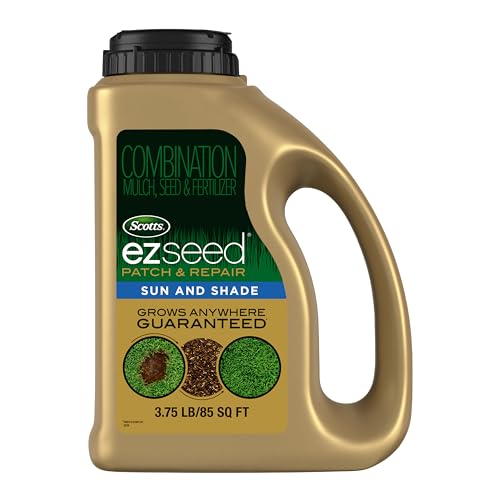
Scotts EZ Patch & Repair
A Closer Look At Each Pick
The 50-pound bag makes this the practical choice for a substantial Colorado lawn or a contractor handling several nearby properties. Its tall fescue mix is intended for full sun and partial shade, with medium-to-high drought resistance and durable grass growth for new lawns or existing ones.
Overseeding means adding seed to an established lawn to improve thin areas. This mix supports that job at 4 pounds per 1,000 square feet, compared with 8 pounds per 1,000 square feet for a new lawn, so your spreader settings depend on the project.
Where It Helps
- The 50-pound size suits broad properties and repeat applications.
- Full-sun and partial-shade tolerance broadens placement options.
- Drought resistance gives new lawns a useful starting point.
- Spring and fall timing aligns with the stated growing windows.
- Uncoated seed suits applications where no special coating is needed.
Trade Offs
- A grass spreader is required to apply the seed at an even rate.
- One bag carries substantial weight, making storage and handling less convenient.
Key Specs
Who It Suits Best
This bag fits homeowners with sizable lawns and professionals managing multiple nearby properties.
Where Another Pick Suits Better
Scotts Quick Fix Seed 3 lbs. suits a household repairing only a few isolated bare spots.
A worn patch beside a front walk does not require a professional-scale bag. This 3-pound mix targets temporary repairs in full sun, with germination, the process of beginning growth after planting, stated within 4 to 7 days.
The short timeline makes it practical for covering a newly disturbed area quickly. It also provides ground cover and erosion control, although its coarse blade texture and low drought tolerance make it more of a temporary fix than a long-term answer for an entire lawn.
What Pays Off
- The stated 4-to-7-day germination window suits urgent repairs.
- Ground cover can reduce exposed soil in a damaged area.
- Erosion control adds value on a sloped patch.
- The small bag is easier to handle than bulk seed.
Points To Note
- Its coarse texture may differ noticeably from finer neighboring grass.
- Low drought tolerance makes continued irrigation important during establishment.
Made For
This mix works well for homeowners repairing a small bare patch in a sunny portion of the lawn.
Another Choice May Suit
Scotts EZ Patch & Repair suits a larger damaged area that also receives heavy foot traffic.
Hot summers can make a tall fescue lawn thin, and this mix is built around that concern. It combines Kentucky bluegrass and tall fescue for tall fescue lawns, with heat tolerance forming its central advantage over the more broadly adaptable Scotts Sun & Shade Mix.
Root-Building Nutrition is the manufacturer’s term for the included ingredients intended to support deeper root establishment. The resulting 5.6-pound package gives you a dedicated choice for lawns that need more heat consideration than a general-purpose sun-and-shade blend provides.
Notable Upsides
- Heat tolerance directly addresses a difficult growing condition.
- The blend suits lawns already based on tall fescue.
- Root-supporting nutrition complements the seed mixture.
- Kentucky bluegrass and tall fescue offer a mixed-grass lawn.
Small Caveats
- The bluegrass component can produce a different texture from a pure tall fescue lawn.
- Heat tolerance does not remove the need for appropriate watering during establishment.
At A Glance
Right Fit For
Homeowners with tall fescue lawns and hot summer conditions benefit most from this targeted blend.
Reach For A Different Pick When
Scotts Tall Fescue 50 lbs. suits larger properties that need broad seeding coverage instead of a heat-focused mix.
A Colorado yard often changes character from one corner to the next. This mix is designed for full sun and deeper shade, giving you one seed choice for a lawn with trees, open areas, and shifting exposure rather than separate products for each zone.
It combines grass seed, fertilizer, and soil improver, while its Root-Building Nutrition is intended to encourage deeper roots. Compared with Scotts Heat-Tolerant Blue Mix, it prioritizes mixed light conditions over a specific response to hot weather, which makes it the more general-purpose selection.
Positive Points
- One mix handles both sunny and shaded lawn areas.
- Added nutrition supports the establishment period.
- Soil improver makes it suitable for challenging home-lawn zones.
- The 5.6-pound size suits moderate residential projects.
Practical Considerations
- Shade tolerance does not compensate for poor soil or unsuitable irrigation.
- A general-purpose blend is less focused on heat than the heat-tolerant option.
Who Will Love This
This mix fits households with a lawn that receives both direct sun and substantial tree shade.
Swap It Out When
Scotts Heat-Tolerant Blue Mix suits a tall fescue lawn where summer heat is the central problem.
This six-pack of 2.4-pound bags adds fertilizer to the seed, taking a different approach from the seed-only products elsewhere in the roundup. It can be used for establishing new grass or filling thin areas, with the manufacturer stating that the combination can produce growth up to twice as fast as seed alone when the new-lawn rate and proper care are followed.
Its appeal lies in the convenient pairing of seed and nutrition. The trade-off is less flexibility for spreading a single bag across a large property, and the rapid-growth claim still depends on watering, soil preparation, and consistent follow-up.
Bright Spots
- Seed and fertilizer are combined in one product.
- The sun-and-shade formula fits mixed lawn exposure.
- New lawns and thin areas are both stated uses.
- Spring and fall application windows suit seasonal repair work.
Where It May Fall Short
- Multiple smaller bags require more spreading for broad projects.
- The rapid-growth result depends on proper care after application.
Quick Facts
The Right Fit
You benefit most from this option when you want seed and nutrition in one product and can manage the application carefully.
A Better Fit Elsewhere
Scotts Tall Fescue 50 lbs. suits large properties that need a simpler seed-only approach with a spreader rate.
Play areas, worn entry paths, and sloping corners create very different repair conditions. This patch product is designed to handle full sun, dense shade, high-traffic areas, and slopes, making it the broadest targeted repair choice in the group for a lawn that contains several kinds of problem spots.
Its formula combines high-performance grass seed, continuous-release lawn food, and super-absorbent granules. The result is more involved than plain seed, with the supporting components intended to help the repaired area establish and retain moisture through the product’s absorbent material.
What Earns Its Place
- Handles sun, shade, traffic, and sloped locations.
- Continuous-release lawn food supports the repair area.
- Absorbent granules help manage moisture around the seed.
- Targeted use suits isolated lawn defects.
- The 3.75-pound size is practical for household projects.
Things To Weigh
- The combined formula requires more attention during establishment than seed alone.
- Matching the existing lawn texture remains important in highly visible areas.
The Details
Made With In Mind
Families with worn play areas, shaded corners, and high-traffic paths get the most practical fit from this option.
Skip It When
Scotts Tall Fescue 50 lbs. makes more sense for broad new-lawn or overseeding coverage.
Match the Seed to Your Lawn Conditions
Start With the Problem Area
A small worn patch, a thinning lawn, and a newly planted yard require different amounts of seed and different blends. Quick Fix and EZ Patch target isolated damage, while the 50-pound Tall Fescue mix handles broad establishment and overseeding. Overseeding means spreading seed across existing turf, while establishing a new lawn starts with exposed soil.
Account for Sun and Heat
Sun-and-shade labeling describes the growing conditions a blend is intended to handle, not a guarantee that every part of your lawn will look identical. A lawn dominated by summer heat calls for the targeted heat-tolerant blue and tall fescue combination. A property with both open sun and deep tree shade benefits more from a general-purpose sun-and-shade mix.
Check the Application Rate
Seed spreaders help distribute grass seed evenly, and the rate changes with the job. Scotts Tall Fescue uses 8 pounds per 1,000 square feet for new grass and 4 pounds for overseeding. Measure the area before opening a large bag, then set the spreader according to the project rather than the bag size.
Think Beyond the Seed
Some blends include fertilizer, lawn food, soil improver, or absorbent material. These additions can simplify a repair by combining several lawn-care functions, but they also change how you water and maintain the treated area. Choose a seed-only mix for greater control over each input, or a combined formula for a more streamlined application.
Avoid Common Grass Seed Mistakes
Pitfalls Shoppers Hit
The most common mistake is choosing by bag size rather than by lawn condition. A small repair does not need a 50-pound bag, while a large seeded area may outlast several smaller packages. Another error is ignoring sun exposure or assuming every blend handles heat, shade, traffic, and slopes equally well.
What Separates Premium From Basic
Larger bags, specialized seed combinations, and added lawn nutrition create the main differences between basic and upgraded options. The extra material earns its place when your project covers substantial ground, faces persistent heat, or needs nutrition and moisture support built into the same product. Match the upgrade to the condition rather than assuming a larger package handles every lawn issue.
Frequently Asked Questions
Which Colorado grass seed is best for a large lawn?
Scotts Tall Fescue 50 lbs. is the most practical of these options for large properties because it provides separate application rates and coverage figures for new lawns and overseeding. Its uncoated, sun-and-shade tall fescue mix also gives you a straightforward seed-only approach.
What is the fastest grass seed for bare patches?
Scotts Quick Fix Seed 3 lbs. has the most specific short timeline, with germination stated within 4 to 7 days. Scotts EZ Patch & Repair offers broader conditions for traffic, slopes, sun, and shade, while Scotts Rapid Sun & Shade combines seed with fertilizer for projects where quick visible growth is the priority.
Which mix handles Colorado sun and shade?
Scotts Sun & Shade Mix is designed for lawns containing both full sun and deeper shade. It also includes fertilizer and soil improver, making it a convenient general-purpose option, while Scotts Heat-Tolerant Blue Mix is the more specific choice for a tall fescue lawn exposed to hot summer conditions.
Can I use the same seed for new grass and overseeding?
Scotts Tall Fescue supports both jobs, but the application rate changes. Use 8 pounds per 1,000 square feet for a new lawn and 4 pounds per 1,000 square feet when overseeding an existing tall fescue lawn.
Do these grass seed mixes include fertilizer?
Scotts Sun & Shade Mix, Scotts Rapid Sun & Shade, and Scotts EZ Patch & Repair include lawn nutrition or fertilizer components. The remaining products are presented as grass seed choices, so separate lawn food may be appropriate when you want more control over the feeding schedule.
Final Verdict
Scotts Tall Fescue 50 lbs. handles broad Colorado lawn projects, while the smaller mixes focus on repairs, shade, heat, or combined nutrition. Measure the area, identify the dominant growing condition, and choose the bag that matches the job rather than the one that looks most attractive on the shelf. Proper preparation and follow-up care will do more for your lawn than the label alone.
