

A large plant pot can determine where a tree fits, how often you water, and whether a room feels finished. Your decision comes down to drainage, weight, material, and the plant’s mature size. These six options cover self-watering plastic, ceramic, fiberstone, rattan, and a reusable mesh layer for existing containers.
The Lineup, Simplified
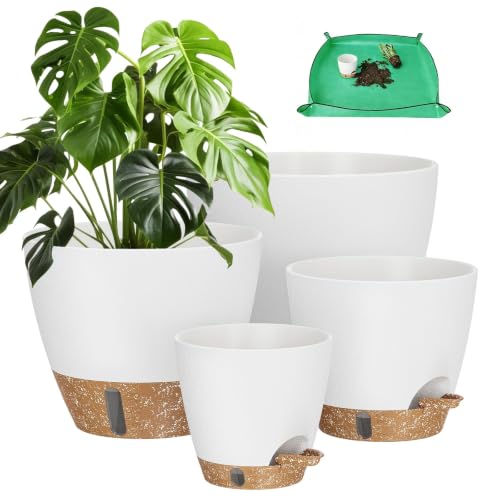
LifeNest Self-Watering Plant Pots, 6, 8, 10, 12 Inch Set with Indicator

LifeNest Self-Watering Plant Pots, 6, 8, 10, 12 Inch Set with Indicator

Aecsze 10 PCS Flower Pot Hole Mesh Pad 8 x 12 Inch Squares

Haispring 12 x 14 Inch Fiberstone Vintage Style Planter with Drainage Hole

Jardin Tesoro Grey-Blue Ceramic Planters, Set of 2

Kouboo 12-Gallon Rattan Planter Basket
Inside Each Recommended Option
Plant care becomes more predictable when the water supply sits beneath the soil. The LifeNest set spans 6, 8, 10, and 12 inches, so a windowsill herb and a floor-standing fiddle leaf fig can share one coordinated collection.
A viewing window makes the remaining water level visible, while the wick moves moisture toward the roots. For busy schedules and frequent travel, that system is more useful than a conventional pot, although the manufacturer’s stated 7-to-14-day interval still depends on the plant and growing conditions.
Reasons It Performs
- Four sizes accommodate plants ranging from small succulents to larger floor specimens.
- The indicator reduces guesswork at refill time.
- Mesh drainage and detachable trays simplify cleanup.
- Lightweight plastic makes the larger pots easier to reposition than ceramic or concrete.
Practical Considerations
- The 12-inch pot needs enough floor or shelf space for a mature plant.
- Lightweight plastic may need securing in a strong draft or on a raised surface.
Key Specs
Who It Suits Best
Frequent travelers and households mixing houseplant sizes benefit most from this LifeNest set.
Where Another Pick Suits Better
The Kouboo 12-Gallon Rattan Planter Basket suits you better when woven texture matters more than visible water levels.
A single large container rarely suits every plant in a home. This LifeNest combination shifts from a 6-inch windowsill pot to a 12-inch floor pot, giving a mixed collection a consistent practical design.
Compared with the ceramic Jardin Tesoro pair, the plastic construction is easier to carry, while the water window adds visibility that the solid ceramic finish does not offer. You may find the smaller sizes more useful for dense shelving, and the included repotting mat helps contain soil during container changes.
Key Advantages
- Four diameters cover herbs, shelf plants, and larger floor specimens.
- Reservoir level markings reduce repeated watering checks.
- Detachable trays make refilling and cleaning more direct.
- The repotting mat limits soil scattered during transfers.
Points To Note
- Measure furniture before choosing a location for the 12-inch pot.
- Self-watering behavior still requires occasional monitoring during hot or rapidly growing periods.
Made For
Apartment dwellers and office planters benefit most from the range of compact-to-medium sizes.
Consider Something Else When
The Haispring 12 x 14 Inch Fiberstone Vintage Style Planter with Drainage Hole suits you better for a single large floor display.
Coarse soil can wash through a drainage hole and leave a pot looking bare. The Aecsze mesh pads add a porous barrier without replacing the container, making them a focused solution for existing indoor or outdoor planters.
Unlike the LifeNest sets, these squares contain soil rather than store a visible water reserve. Depending on your watering style, the small openings also permit airflow and water movement while reducing the amount of soil escaping.
Notable Upsides
- Ten sheets cover multiple pots or repeated repotting sessions.
- Small openings reduce soil loss without sealing the container.
- Reusable polyethylene can be trimmed to suit different pot bases.
Minor Gripes
- This is an add-on rather than a complete plant container.
- Each 8-by-12-inch sheet must be sized to cover the drainage area.
Quick Facts
Right Fit For
You benefit most from these pads when you already own attractive pots that need better soil control.
A Better Fit Elsewhere
The LifeNest Self-Watering Plant Pots, 6, 8, 10, 12 Inch Set with Indicator suit you better when you want a complete watering system.
A large floor plant needs more visual presence than a compact shelf pot can provide. At 14 inches across and 12 inches tall, the Haispring planter creates a defined focal point for a shrub, small tree, or artificial plant.
Where the LifeNest set prioritizes watering automation and the Aecsze pads control soil escape, this container focuses on a stone-like vintage appearance. Fiberstone keeps the form lighter than concrete or ceramic, which matters most when you need to reposition it.
What Earns Its Place
- The broad dimensions suit statement plants and large containers.
- Hand-finished color matching gives each planter a natural variation.
- A drainage opening allows excess water to leave the soil.
- The material supports indoor and outdoor placement with less lifting weight.
Worth Noting
- Allow room around the 14-inch diameter for foliage and maintenance access.
- Place it where drainage runoff will not mark flooring or furniture.
Feature Snapshot
Who Will Love This
You benefit most from this Haispring planter when a neutral, vintage-style focal plant defines the room.
Another Choice May Suit
The Jardin Tesoro Grey-Blue Ceramic Planters, Set of 2 suit you better when you need coordinated indoor pots in two sizes.
A matched pair gives a plant shelf more visual balance than two unrelated containers. The Jardin Tesoro set pairs fluted 10-inch and 12-inch planters in a muted grey-blue finish that suits restrained, contemporary interiors.
After the broad fiberstone form of the Haispring planter, this set shifts toward a more decorative, compact profile. Built-in drainage holes manage excess water, while removable rubber plugs let you control the outflow for plants that prefer a drier root zone.
Strong Points
- Two sizes create a coordinated display without matched duplicates.
- The smooth glazed surface wipes clean and resists color fading.
- Rubber plugs give you control over drainage.
- Weighted bases provide stability around top-heavy plants.
Possible Compromises
- Compared with the LifeNest plastic pots, ceramic adds more lifting weight.
- Assuming exposed outdoor placement, the UV-treated finish still calls for sensible sun and weather management.
The Right Fit
This pair suits you best for a composed indoor display where finish and proportion matter alongside drainage.
Look Elsewhere When
The Kouboo 12-Gallon Rattan Planter Basket suits you better when a large plant requires a woven, natural-textured container.
A woven exterior can soften the formality of a large plant. The Kouboo basket wraps a rigid plastic planting pot in a gray-brown rattan-look finish, bringing texture to coastal, bohemian, or neutral rooms.
Unlike the Jardin Tesoro ceramic pair, this container offers much more planting volume. Its 12-gallon capacity suits palms and large leafy plants, although soil and roots increase the moving weight after the 10-pound empty shell becomes a full planter.
The Value In It
- The 12-gallon inner pot supports substantial plant volume.
- A non-removable plastic liner protects the decorative exterior.
- Drainage holes support controlled water movement through the soil.
- The woven appearance pairs naturally with wood and neutral furnishings.
Some Limits To Know
- Moisture and outdoor weather can gradually weaken the rattan exterior.
- A saucer helps protect indoor flooring from drainage water.
At A Glance
Built With In Mind
This Kouboo basket suits you best for a large indoor plant and a relaxed, textured interior scheme.
Swap It Out When
The Haispring 12 x 14 Inch Fiberstone Vintage Style Planter with Drainage Hole suits you better when a compact footprint and stone appearance take priority.
Plant Pot Details That Actually Matter
Size and Plant Fit
Choose a container from the mature dimensions of the root ball rather than the plant’s current height. The 6-inch LifeNest pot suits small succulents and herbs, while the 10-inch and 12-inch versions support larger floor plants. For one dramatic specimen, the Haispring planter offers a broad 14-inch opening, while the Kouboo basket prioritizes soil volume.
Water Management
Self-watering systems, drainage holes, mesh pads, and removable plugs solve different watering problems. A reservoir reduces refill frequency, a hole directs excess water out, mesh keeps soil in place, and a plug controls when water can leave. Match the mechanism to the plant rather than expecting one arrangement to suit every species.
Material and Placement
Plastic stays light for moving, ceramic provides a smooth decorative finish, fiberstone balances a stone appearance with easier handling, and rattan brings texture but needs protection from prolonged moisture. Account for the finished weight of soil and water, the available footprint, and the surrounding floor before placing a large planter.
Avoiding Common Plant Pot Pitfalls
Mistakes Worth Dodging
Selecting by decoration alone can leave you with a container that is too small or poorly drained. Measure both the root ball and the pot opening, then check where runoff will go. A decorative outer pot also needs an inner container that holds soil without trapping excess water against the base.
Where The Extra Money Goes
Higher-priced planters often invest more in material density, larger dimensions, coordinated finishes, or integrated drainage hardware. Those additions matter for a frequently moved plant, a coordinated display, or a patio that sees frequent exposure. Basic plastic and mesh options remain more practical when the priority is function and minimal visual detail.
Frequently Asked Questions for 12 Plant Pot
What Size 12 Plant Pot Do You Need?
Choose the 6-inch pot for succulents, herbs, and starter plants; move up to 8, 10, or 12 inches as the root ball and plant mature. Leave room around the root ball rather than choosing solely by the plant’s current height.
Are Self-Watering Pots Suitable for Every Plant?
Self-watering pots suit moisture-loving plants that benefit from consistent moisture. Succulents and other plants that prefer a drier root zone need measured watering and careful reservoir management.
Which Material Fits Your Space Best?
Plastic is the easiest option to move, ceramic offers a refined finish, and fiberstone provides a stone-like appearance with less weight. Rattan adds woven texture but needs protection from excessive moisture.
Do Large Planters Need Drainage Support?
Large planters benefit from drainage openings, and the Aecsze mesh pads can stop loose soil from escaping through those openings. A saucer or protective surface helps manage runoff after watering.
Do I Need a Saucer Under the Kouboo Rattan Planter?
A saucer is useful indoors because drainage water can spill onto the floor. It also collects runoff while you check how quickly the soil drains.
Final Thoughts
The best choice depends on which constraint matters most: reliable watering, coordinated styling, soil control, or a large finished display. The LifeNest pots serve mixed plant collections, Haispring and Kouboo handle larger specimens, Jardin Tesoro pairs sculptural ceramics, and Aecsze improves an existing pot. Match the container to your space and the plant’s mature needs, and the right pot becomes a lasting part of the room rather than a temporary container.
