

A broad elephant ear leaf can look healthy until its newest growth becomes smaller or the lower foliage loses color. I focus on formulas made for elephant ears, along with liquid and slow-release options that can also support related indoor foliage, so plant-specific needs guide each choice.
The Essentials At A Glance
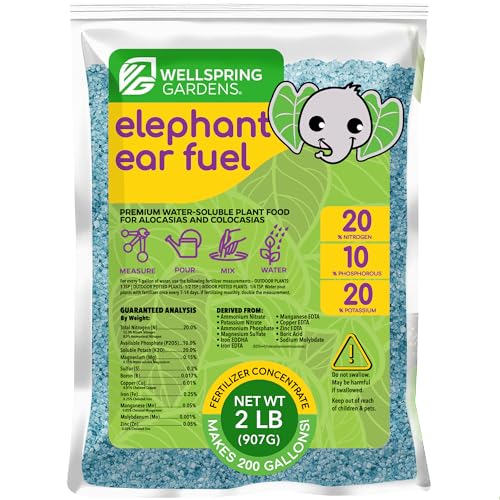
Wellspring Gardens Elephant Ear Food 20-10-20

Grow Queen Complete Organic Cactus & Succulent Plant Food, 11 Servings

TPS Nutrients Fern Fertilizer, 8 oz

GrowThrive Lemon Tree Fertilizer

GrowThrive Citrus Tree Fertilizer, 10 oz

GrowThrive Money Tree Fertilizer

Grow Queen All-in-One Organic Plant Food for Houseplants, 7 Servings

GrowThrive Fiddle Leaf Fig Fertilizer
Taking A Closer Look At The Options
This is the only option in my list formulated specifically for elephant ears. Its 20-10-20 ratio supplies nitrogen for leaf growth, phosphorus for root development, and a larger proportion of potassium for sturdy foliage. That plant-specific balance makes it my first stop for a large Alocasia, Colocasia, or related aroid.
Water solubility makes the powder convenient for routine watering, while minor elements complement the primary nutrients. The resealable two-pound package also seems more practical than storing several small containers. I would follow the included directions closely, since the dedicated formula gives me a clearer application target than a general houseplant food.
Real-World Strengths
- Made specifically for elephant ears rather than general foliage
- The 20-10-20 ratio supports leaves, roots, and sturdy growth
- Water-soluble powder fits regular watering routines
- The two-pound bag supports repeat applications and compact storage
Things To Consider
- This is a targeted product, so it suits a mixed aroid shelf less closely than an all-purpose plant food
- Application strength and frequency should follow the package directions
Key Specs
Built With In Mind
This formula best fits someone growing elephant ears as a focal foliage plant and willing to follow a plant-specific feeding routine.
Another Choice May Suit
Grow Queen All-in-One Organic Plant Food for Houseplants, 7 Servings suits a mixed indoor collection that needs one plant food across several species.
This formula prioritizes long feeding intervals over elephant ear specificity. Each single serving is intended to cover up to 44 succulents and as much as 22 gallons of soil for two to eight months. That structure appeals to me in a busy home where loose fertilizer sachets are easier to manage than frequent liquid feedings.
The formula includes beneficial microbes, calcium, and micronutrients, with an odorless profile suited to indoor shelves and patios. I would not treat it as a direct recommendation for an elephant ear collection because its label centers on succulents and cacti. It becomes more relevant when elephant ears share a care shelf with many drought-tolerant plants.
Strengths Worth Knowing
- Eleven individually measured servings simplify storage and dosing
- Two-to-eight-month feeding periods reduce application frequency
- Microbes and calcium support soil biology and watering tolerance
- The odorless formula works well indoors
- OMRI-listed, vegan, and non-toxic attributes suit pet-conscious homes
Worth Noting
- Surface discoloration may appear as microbes become active in the soil
- Elephant ears need a product whose label directly accounts for their nutritional needs
Feature Snapshot
Made For
This product best fits indoor growers maintaining numerous succulents, cacti, aloes, and related drought-tolerant plants.
A Better Fit Elsewhere
Wellspring Gardens Elephant Ear Food 20-10-20 is the stronger match for someone who primarily wants a dedicated nutrient formula for elephant ears.
A Boston fern beside a sunny window can develop thin growth even when watering stays consistent. This liquid formula targets that group directly, supporting fuller fronds, deeper green foliage, and stronger roots. The eight-ounce size is also more compact than the two-pound elephant ear powder, which matters in a crowded plant cabinet.
Its indoor and outdoor coverage makes sense for hanging baskets, houseplants, and garden ferns. The trade-off is specificity: fern nutrition is not the same decision as elephant ear nutrition. I would choose this for a fern collection, but an elephant ear owner should favor a formula made for that plant unless the label permits broader use.
Everyday Perks
- The liquid format avoids preparing a separate fertilizer solution
- It supports both indoor and outdoor fern varieties
- Root support complements its foliage-focused benefits
- The compact container takes up little shelf space
Trade Offs
- The formula is designed for ferns rather than elephant ears
- Boston ferns and hanging baskets have different watering needs, so application rates should follow the label
Right Fit For
This item fits someone caring for Boston ferns, hanging baskets, or outdoor ferns who values a compact liquid fertilizer.
Where Another Pick Shines
Wellspring Gardens Elephant Ear Food 20-10-20 gives someone focused on elephant ears a plant-specific nutrient ratio rather than fern-oriented care.
A patio lemon tree needs a formula that accounts for sustained leaf production, flowering, and fruit development. This liquid nutrient solution is designed around those citrus goals, with an organic micronutrient component and direct root-zone delivery. That makes it relevant to a sunny patio where a container tree receives frequent attention.
Its fit is narrow for this roundup, since elephant ears are not lemon trees and the product name signals a different use. I see it as a useful companion for a mixed indoor-outdoor garden, not as a substitute for dedicated elephant ear nutrition. Application quantity and frequency should come from its directions.
Reasons It Performs
- The liquid formula fits routine watering and feeding tasks
- It targets the leaf, bloom, and fruit needs of citrus plants
- Organic micronutrients support container-grown lemon trees
Small Caveats
- The lemon tree focus limits its relevance to elephant ear care
- Container trees require the label’s application rate to avoid overfeeding
Quick Facts
Who Will Love This
This formula best suits someone maintaining a container lemon tree on a patio or in a warm indoor growing area.
Reach For A Different Pick When
Grow Queen All-in-One Organic Plant Food for Houseplants, 7 Servings is more practical for a varied indoor collection that includes several foliage species.
This ten-ounce liquid is intended for citrus trees that need steady nutrition in containers or garden soil. Its slow-release format is the central feature: it fits a routine built around extended feeding rather than frequent correction. I would favor it for a patio grouped with lemon, lime, or other citrus plants.
Elephant ears fall outside that plant group, so I would not use the citrus designation as a reason to feed an elephant ear. Someone tending both types should keep separate products and follow each label. The honest read is that this is a focused patio-garden option rather than a direct match for large tropical foliage plants.
Strong Points
- Slow-release liquid nutrition suits established care routines
- The ten-ounce bottle is compact for patio storage
- The formula is specifically positioned for citrus trees
Possible Compromises
- It is not formulated specifically for elephant ears
- Plant-specific directions matter when citrus and tropical foliage share a watering schedule
Best Suited To
This item fits someone caring for several citrus trees in containers who prefers a measured slow-release liquid.
Consider Something Else When
GrowThrive Money Tree Fertilizer is the more relevant option for a broadleaf indoor plant collection centered on Pachira or similar tropical foliage.
Money trees and elephant ears share a preference for large tropical leaves, but their labels still tell me more than their appearance does. This formula is built around Pachira aquatica and is also intended for monstera, fiddle leaf fig, pothos, snake plant, and peace lily. That makes it a practical choice for an indoor broadleaf collection with several familiar plants.
Microbial fermentation is the distinguishing element, and the product presents itself as free of synthetic additives. The slow-release liquid format suits regular indoor care, although an elephant ear-focused formula remains clearer for anyone maintaining only those plants. I would keep this option for mixed foliage rather than use it as my primary elephant ear choice.
Noteworthy Benefits
- Designed for money trees and several common broadleaf houseplants
- Microbial fermentation supplies a distinct formula approach
- Slow-release liquid nutrition fits established watering habits
- The broad plant list reduces the need for several separate products
Points To Keep In Mind
- The elephant ear name is not prominent in its stated plant coverage
- Different indoor plants still have different feeding needs despite sharing one formula
Feature Card
The Right Fit
This formula best suits someone caring for money trees alongside monstera, pothos, peace lily, and related indoor foliage.
Not Your Match When
Wellspring Gardens Elephant Ear Food 20-10-20 is the stronger fit when the entire plant shelf centers on elephant ears and their specific nutrient needs.
A mixed home with potted foliage, hanging plants, and a small vegetable bed creates a different problem from caring for one species. This all-purpose organic food offers seven single servings, with a stated capacity of 14 gallons and both fast- and slow-release nutrition. The serving format is the feature I value most because it keeps portioning consistent.
Its broader application makes it a reasonable indirect option for elephant ears in a diverse plant collection. I would still check the label for any crop or plant restrictions, and I would favor the dedicated elephant ear formula in a collection built entirely around those plants. The root-focused benefits may also help after repotting, when disturbed roots need careful establishment.
Everyday Wins
- One product covers houseplants, hanging pots, and garden beds
- Seven pre-portioned servings simplify regular feeding
- Fast and slow release accommodates different feeding approaches
- Its root and transplant-support positioning helps newly potted plants
- The stated 14-gallon capacity suits a substantial collection
Things That May Matter
- A broad formula cannot match the plant-specific focus of elephant ear nutrition
- Fast-release components require attention to the recommended application rate
Whose Shelf It Belongs On
This product fits someone tending mixed houseplants, hanging containers, and garden beds from one shelf-stable food.
Swap It Out When
Wellspring Gardens Elephant Ear Food 20-10-20 is the better option for a dedicated grower who prioritizes an elephant ear-specific nutrient ratio.
A fiddle leaf fig with yellowing leaves needs more than an attractive container, and this formula focuses on nutrition for broad leaves. The ten-ounce liquid uses microbial fermentation and a slow-release format without harsh chemical additives. That combination gives me a reasonable option for a bright indoor corner where a fig is the main plant.
Its plant-specific identity still makes it secondary to dedicated elephant ear food for this roundup. I would choose it for a home also containing a fiddle leaf fig, especially one managed by someone who prefers a gentle liquid approach. Directions remain essential because fertilizer rate and watering frequency should match the plant and its growing medium.
Features That Help
- Microbial fermentation provides a natural feeding approach
- Slow-release nutrition suits a measured indoor care routine
- The formula is made for fiddle leaf fig foliage
- Its ten-ounce bottle is easy to store near other plant supplies
Details To Watch
- It is not labeled specifically for elephant ears
- A dedicated formula better reflects an elephant ear-focused collection
Technical Highlights
Made For
This formula best suits someone raising fiddle leaf figs indoors and preferring a slow-release liquid with a microbial base.
Look Elsewhere When
Wellspring Gardens Elephant Ear Food 20-10-20 suits someone who wants the feeding ratio and package instructions developed specifically for elephant ears.
What To Match Before Feeding Elephant Ears
Start With The Plant Label
A formula made for elephant ears offers the clearest starting point. The 20-10-20 blend in Wellspring Gardens Elephant Ear Food gives me a defined nutrient balance for a foliage-heavy tropical plant. A general houseplant food can work in a mixed collection, but the label should still cover the species and application rate.
Decide Between Fast And Slow Release
Fast-release products can act sooner, while slow-release formulas extend nutrition over a longer interval. Neither is automatically better. Soil drainage, pot size, watering frequency, and the plant’s growth stage determine how concentrated or prolonged the feeding should be.
Account For Container Size And Routine
Large pots hold more moist soil than small hanging containers, so the same feeding schedule may not suit both. I also pay attention to storage, since resealable powder, single servings, and ten-ounce liquids create different cabinet demands. Single-use portions are convenient for occasional care, while a larger bag suits frequent applications.
Common Mistakes To Avoid
Mistakes Worth Dodging
The most common error is selecting a fertilizer solely because it is labeled for houseplants. Elephant ears need a product that either names the plant or clearly supports broad foliage use, with directions matched to the growing medium. Another mistake is increasing the dose when leaves pale, since the cause may involve light, water, or root conditions rather than fertilizer.
What Separates Premium From Basic
A plant-specific ratio, measured serving system, and clearly stated coverage can justify a higher cost. The extra expense is more useful when it reduces guesswork or matches the plant’s needs closely. It adds little value when the label is vague or the formula is stored indefinitely after opening.
Frequently Asked Questions
Can Elephant Ear Plants Use General Houseplant Fertilizer?
Yes, a general houseplant fertilizer can suit an elephant ear when its label covers foliage plants and provides clear directions. A dedicated elephant ear formula remains more precise because its nutrient ratio is designed around the plant.
Is 20-10-20 Fertilizer Good for Elephant Ears?
The Wellspring Gardens formula uses 20-10-20 specifically for elephant ears, with nitrogen, phosphorus, and potassium supporting leaves, roots, and sturdy growth. Its water-soluble format also fits routine watering.
Is Liquid Fertilizer Better Than Powder for Elephant Ears?
Neither format is universally better. Liquid products suit regular watering routines, while water-soluble powder offers flexible mixing and convenient storage in a resealable bag.
How Often Should Elephant Ears Be Fertilized?
The appropriate schedule depends on the product, pot size, growing medium, and seasonal growth. I follow the fertilizer label rather than applying a fixed schedule to every plant, especially one that is newly repotted or recently stressed.
Can One Fertilizer Cover Elephant Ears and Other Houseplants?
A broad plant food may cover several indoor species. Plants with distinct needs, such as succulents, ferns, citrus trees, money trees, and fiddle leaf figs, benefit from formulas selected for their particular requirements.
Final Thoughts
Wellspring Gardens Elephant Ear Food is my most direct choice because its ratio, water-soluble format, and instructions center on the plant itself. Grow Queen All-in-One Organic Plant Food is the more adaptable option for a mixed indoor collection, while the remaining formulas make more sense for ferns, citrus, money trees, succulents, or fiddle leaf figs. The right decision begins with the plants already on your shelf.
