

Commercial grounds maintenance often extends beyond grass, especially around hedges, entrance hedges, and foundation shrubs. These cordless options suit property teams, landscapers, and homeowners who want maneuverable cutting tools without fuel handling or cord management. Blade length, pole reach, cutting capacity, and tool weight determine which model fits a demanding workday best.
How The Shortlist Stacks Up

WORX WG261 20V 22-Inch Hedge Trimmer

WORX WG263 20V 22-Inch Hedge Trimmer

WORX WG801 20V Grass Shear & Trimmer

WORX WG286 40V 24-Inch Hedge Trimmer
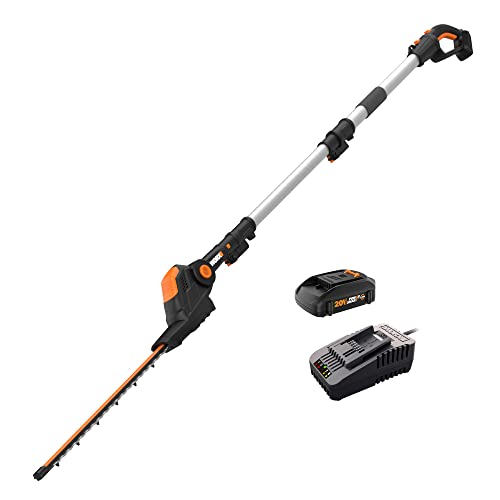
WORX WG252 20V Pole Hedge Trimmer

WORX WG252.9 20V Pole Hedge Trimmer
The WG261 combines a 22-inch cutting bar with a front D-grip, giving you a secure grip while shaping hedges from the side or working above shoulder height. Its 5.5-pound weight keeps longer sessions manageable, which matters during routine rounds around apartment grounds or office properties.
Dual-action blades move on both sides of the bar, a design intended to reduce vibration while cutting through woody growth. Compared with the much smaller WORX WG801, this model offers substantially more reach and suits larger shrubs, though it remains easier to position than a long pole trimmer.
The Practical Payoff
- The 22-inch bar reduces the number of passes needed across medium and large hedges.
- A 5.5-pound operating weight supports controlled overhead and side trimming.
- The front D-grip gives you more control than a single rear handle.
- Dual-action hardened steel blades are suited to twigs and ordinary hedge growth.
Things To Consider
- Its 22-inch length requires more maneuvering space than the compact WG801.
- For overhead work on mature, tall hedges, the pole-capable WG252.9 offers greater reach.
Feature Snapshot
Made For
You benefit most from the WG261 as a groundskeeper or homeowner who regularly shapes medium-to-large shrubs and values maneuverability.
A Better Fit Elsewhere
The WORX WG252.9 suits you better when tall hedges require pole reach rather than a compact 22-inch cutting bar.
For maintenance teams that already handle several types of outdoor power equipment, the WG263’s broader battery compatibility may matter more than any small trimmer distinction. Its battery also works with more than 140 PowerShare tools and outdoor equipment, reducing the number of separate battery systems in a service kit.
The 22-inch bar provides a useful balance between reach and control, and the manufacturer specifies that it can cut twigs and branches up to one inch thick. That capacity makes it more purposeful for substantial shrubs than the lighter WG801, although the WG261 may feel more natural for detailed positioning.
Useful Strengths
- One battery can cover a broad collection of compatible tools.
- The 22-inch bar balances long-reach trimming with manageable handling.
- Cutting capacity extends to branches specified at one inch thick.
Practical Considerations
- Confirm that your existing batteries belong to the compatible PowerShare platform before planning around shared charging.
- The WG286 makes more sense for very large hedges because it combines a longer 24-inch bar with a 40V platform.
Quick Facts
Right Fit For
The WG263 fits you best when one rechargeable battery must power both hedge trimming and other compatible outdoor equipment.
Look Elsewhere When
The WORX WG801 is the better fit for lightweight touch-ups on small shrubs where a full-size 22-inch bar would be excessive.
A missed branch beside a doorway rarely justifies carrying a full-size hedge trimmer, and the WG801 handles that kind of finishing work with a two-pound body. Its 4-inch and 8-inch cutting options cover small grass areas and compact shrubs without turning a quick cleanup into a large-tool task.
The soft-grip overmold handle improves comfort for users who find larger garden tools difficult to control. This is the practical choice for cleaning up vegetation around irrigation heads, edging, or landscape borders, although the shorter reach makes it unsuitable for the broad, level shaping handled by the WG261.
Features That Help
- A two-pound weight supports quick one-handed cleanup work.
- The 4-inch blade handles grass and small isolated shoots.
- The 8-inch blade gives you more useful shrub-cutting capacity.
- The overmold soft-grip handle adds comfort during detail work.
- Its compact form simplifies storage between property visits.
Small Caveats
- Short blades mean more passes on anything larger than a small shrub.
- The limited reach is less suitable for deep hedges or elevated branches.
- You will still need a full-size trimmer for broad hedge faces and woody branches.
Who Should Grab It
The WG801 suits you for quick property touch-ups, small shrubs, and light grass trimming where portability matters more than extended reach.
Consider Something Else When
The WORX WG261 is the more capable choice for sustained hedge shaping because its 22-inch bar covers much more material in each pass.
Large hedges create a different problem from small shrubs: each pass covers more surface, and an undersized bar quickly turns a tidy shape into extra work. The WG286 addresses that demand with a 24-inch cutting bar and a 40V battery platform, giving you more reach than the 22-inch WG261 and WG263.
Battery power removes fuel storage, refueling, and engine maintenance from the workflow, which matters during back-to-back visits. For deep or tall hedges, the longer bar still requires a steady cutting rhythm, so the WG252.9 may be easier to position where you need extended overhead reach.
Strong Points
- The 24-inch bar reduces passes across broad hedge faces.
- A 40V platform suits sustained commercial trimming routines.
- Specified branch capacity reaches one inch.
- Fuel-free operation simplifies transport between jobs.
Worth Noting
- Its longer bar and higher-voltage platform require more equipment space than the 20V models.
Technical Highlights
Built With In Mind
The WG286 fits you best when maintaining extensive hedges and you want long cuts without changing to a gas-powered setup.
Another Choice May Suit
The WORX WG252.9 suits you better when the main challenge is overhead access rather than covering wide hedge faces.
The WG252 changes the working angle rather than simply extending the bar. A 10-position head lets you approach the same hedge from above, the side, or the top, reducing the need to climb or drag a conventional trimmer into an awkward position.
Its telescoping pole provides up to 12 feet of reach, making the tool useful for tall perimeter hedges and elevated branches. For crews handling many low shrubs, that extended reach can be unnecessary, and the WG801 remains much easier to carry between quick cleanup tasks.
Points In Its Favor
- The adjustable head supports more precise cutting angles.
- Extended pole reach helps you reach tall hedges from the ground.
Trade-Offs
- The pole format is less convenient for low, flat hedge surfaces.
- Long reach requires awareness of the cutting head’s position around obstacles.
- Its 20-inch cutting bar is shorter than the WG286’s 24-inch bar.
- You may prefer the WG252.9 for a broader two-in-one attachment arrangement.
The Right Fit
The WG252 suits you when tall hedges and awkward overhead angles matter more than a wide, level cutting pass.
Swap It Out When
The WORX WG286 is a better match for you when large, broad hedges matter more than elevated access.
The WG252.9 carries the same adjustable-head concept as the WG252, but its two-in-one attachment capability makes it a more flexible member of the group. A 20-inch cutting head addresses twigs and branches up to one inch thick, while the telescoping pole extends working reach to as much as 12 feet.
For mixed grounds duties, you can keep one power platform involved in several trimming configurations. The trade-off appears in ground-level work, where the compact WG801 is easier to maneuver, and on broad hedges, where the 24-inch WG286 covers more width per pass.
A Few Strong Suits
- The two-in-one arrangement broadens the tool’s role in a maintenance kit.
- Ten head positions accommodate overhead, side, and top cuts.
- The telescoping pole reaches as far as 12 feet.
Possible Compromises
- The pole setup takes more space than a conventional 22-inch trimmer.
- Low shrubs are faster to handle with the smaller WG801.
Feature Facts
Made For
The WG252.9 fits you when tall hedges and attachment versatility are central to a mixed outdoor maintenance routine.
Reach For A Different Pick When
The WORX WG801 is the more practical choice for you when frequent light trimming and easy storage outweigh extended reach.
Where Commercial Trimming Decisions Actually Matter
Blade length sets the pace
A longer bar covers more hedge with each pass, making it practical for large or established plantings. The WG263 and WG261 use 22-inch bars, while the WG286 stretches to 24 inches. A compact 4-inch or 8-inch shear handles detail work, but it cannot replace a full-size trimmer across a broad hedge face.
Voltage affects your equipment plan
A 20V model offers a lighter platform for hedge cutting, while the 40V WG286 supports a more substantial approach to large shrubs. Shared battery compatibility can also simplify charging and transport, particularly for teams already using multiple compatible outdoor tools. Match the platform to the equipment in your kit rather than choosing voltage in isolation.
Pole access changes overhead work
A pole trimmer reduces the need for ladders around tall hedges, although extended reach calls for careful positioning. The WG252 and WG252.9 both offer adjustable heads and telescoping poles. Their benefit is strongest where workers must shape elevated foliage while keeping both feet on the ground.
Weight and cutting capacity set expectations
A lighter tool is useful for touch-ups and short tasks, while a 5.5-pound full-size trimmer offers better control over medium shrubs. Branch capacity is equally important: the WG263 and WG286 are specified for material up to one inch thick. Stay within those limits and match the tool to the vegetation already present on the property.
Common Shopping Slip Ups
Mistaking blade length for total reach
A long cutting bar covers wide hedges, but it does not raise your working height. Tall or deep hedges may require a pole model even when your preferred trimmer has a 22-inch or 24-inch bar.
Overlooking the shared battery plan
Check your battery platform before assembling a multi-tool kit. Compatibility can simplify charging and storage, while choosing an unrelated platform may add unnecessary equipment.
Selecting capacity beyond the work
Extra power and reach are useful only when your property needs them. For small shrubs and routine touch-ups, a lighter shear can be the more efficient tool.
What The Higher Tier Buys
More reach and cutting capacity
Moving from a compact shear to a 20V or 40V trimmer adds blade length, higher cutting capacity, or both. That difference becomes worthwhile when you regularly shape large shrubs rather than occasional edge cleanup.
Better access to elevated hedges
A telescoping pole adds vertical reach, and an adjustable head makes several angles more practical. The added value is strongest for tall perimeter hedges where ladder access is inconvenient or restricted.
Frequently Asked Questions
Are these commercial lawn trimmers suitable for hedges?
Yes, the listed models are designed specifically for hedges, shrubs, and limited grass trimming. They are cordless hedge tools rather than lawn mowers, so they complement grass-cutting equipment instead of replacing it.
Which WORX model is lightest?
The WG801 is specified at two pounds, making it the most compact option here. The WG261 weighs 5.5 pounds, while the higher-voltage and pole models require more substantial handling.
Which model handles thicker branches?
The WG263 and WG286 are specified to cut branches and twigs up to one inch thick. For smaller shrubs, the WG801 and standard hedge trimmers may be easier to control.
What is the best option for tall hedges?
The WG252 and WG252.9 use telescoping poles for up to 12 feet of reach. The WG252.9 adds a two-in-one attachment design for mixed maintenance work.
Do these trimmers need fuel?
No, every model in this roundup uses a battery-powered design. That removes fuel mixing, engine maintenance, and exhaust concerns from routine operation.
Final Verdict
The WG261 offers the most balanced package for standard hedge maintenance, while the WG286 suits larger plantings and the WG801 handles quick detail work. Pole models become necessary when tall foliage matters more than compact handling. Match blade length, reach, and voltage to the actual shape of your grounds, then confirm battery compatibility before completing the tool kit.
