A fern in a dim bathroom and a snake plant beside a sunny window cannot share the same growing conditions. Your indoor plants need potting soil that matches their moisture needs, root structure, and container size, so choosing a general-purpose mix for every pot can lead to poor drainage or overly dry roots. The right soil gives roots room, manages water, and provides a useful balance of support and air.
Your jade plant will appreciate a loose growing medium more than a dense potting blend that stays saturated. Rosy Soil Cactus & Succulent Mix uses a chunky, peat-free texture designed to let excess water leave the pot quickly. It suits cacti, succulents, desert rose, snake plant, aloe vera, lithops, Christmas cactus, and bonsai.
Compared with the general-purpose Rosy Soil Houseplant Soil, this mix places more emphasis on fast drainage for drought-tolerant roots. Each 4-quart bag also contains beneficial microorganisms, fungi, and worm castings, giving the soil more biological complexity than a plain mineral blend.
The Case For It
✓The loose texture gives thick or fine roots room without compacting around them.
✓Peat-free composition supports freer drainage and reduces the risk of persistently soggy soil.
✓Worm castings and microorganisms add organic matter for a more active root zone.
✓Resealable 4-quart bags keep unused soil contained between repotting sessions.
Things To Consider
•This specialized mix is poorly matched to moisture-loving plants such as most ferns.
•Each bag fills roughly two to three plants, so larger collections may require more bags.
Quick Facts
Feature
Specification
Why It Matters
Texture
Loose and chunky
Supports drainage and root aeration
Base
Peat-free formula
Reduces the need for peat-based mixes
Biological ingredients
Fungi, microorganisms, and worm castings
Adds life to the root zone
Package
Two resealable 4-quart bags
Contains soil between uses
Who It Suits Best
This mix suits indoor growers tending cacti, succulents, or bonsai in containers with drainage holes.
Biochar is a stable, carbon-rich soil amendment, and Rosy Soil combines it with several biological ingredients. You can blend it into container soil or sprinkle it around existing plants, making it useful beyond indoor pots. The formula supports water retention, aeration, and nutrient absorption without replacing your growing medium entirely.
Unlike Rosy Soil Cactus & Succulent Mix, this product works as an amendment rather than a ready-to-use potting medium. It suits gardeners who want to improve a raised bed or blend an established soil mix, especially where vegetables, herbs, and container crops occupy substantial space.
Positive Takeaways
✓Biochar’s porous structure can hold moisture and nutrients within mixed soil.
✓Mycorrhizae, beneficial fungi that associate with roots, complement worm castings, bokashi, and compost.
✓The included castings and compost feed the soil’s biological community over time.
Practical Considerations
•You must mix it into another medium or work it into existing soil.
•Using more than the suggested amount can make application less predictable.
•The 8-quart bag needs storage space when it is not being used.
Feature Snapshot
Feature
Specification
Why It Matters
Blend rate
About 1 cup per cubic foot
Provides a defined starting point
Coverage
Up to 5 cubic feet
Suits several planting beds
Area coverage
About 32 square feet
Useful for broad garden applications
Biological components
Mycorrhizae, worm castings, bokashi, and compost
Supports soil life and root activity
Base
Peat-free
Avoids peat and synthetic additives
Built With In Mind
This amendment fits gardeners building productive soil for vegetables, herbs, fruit trees, and container crops.
A Better Fit Elsewhere
Rosy Soil Houseplant Soil 4 qt. is the simpler choice when you want potting medium ready for an indoor container.
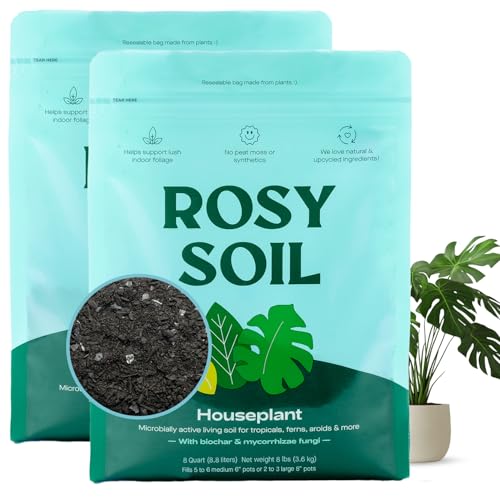
A shelf full of pothos, philodendron, and monstera needs a balanced indoor medium rather than a highly specialized cactus formula. Rosy Soil Houseplant Soil replaces peat moss with biochar, worm castings, mycorrhizae, compost, and bark fines. That ingredient list supports both moisture management and biologically active soil around indoor roots.
The two 8-quart bags provide a useful volume for multiple repottings, particularly for a collection that includes plants of different sizes. Compared with the 4-quart Rosy Soil Houseplant Soil, you get more material and less frequent purchases, although the larger bags require more shelf or closet space.
A Few Strong Suits
✓A peat-free formula gives indoor containers a different base from traditional peat-heavy mixes.
✓Bark fines help provide physical structure around roots.
✓Biochar contributes to water retention and aeration within the blend.
✓Compost and worm castings supply organic matter.
✓Mycorrhizae and beneficial microbes make the medium biologically active.
Points To Note
•The two-bag format takes more storage space than a single smaller bag.
•This general houseplant formula is less specialized than the cactus and succulent blend.
The Right Fit
This soil suits indoor gardeners repotting several leafy plants and favoring a peat-free, biologically active medium.
Not Your Match When
Rosy Soil Cactus & Succulent Mix 4 qt., 2-Pack is a better match for arid plants that need rapid drainage.
Your first indoor repotting does not require a complicated amendment routine. Miracle-Gro Houseplant Potting Mix provides a ready-to-use foundation containing the elements and nutrients indoor plants need, and it feeds planted greenery for up to six months. That built-in feeding period makes it a practical choice for beginners who want a straightforward starting point.
Compared with Rosy Soil Houseplant Soil, this option offers a more familiar general-purpose format and a smaller 4-quart package. The tradeoff is that you start with a standard indoor mix rather than the specifically peat-free composition offered in the Rosy Soil blend.
Where It Excels
✓The mix supplies nutrients and supports houseplants for up to six months after potting.
✓A 4-quart bag remains manageable for a first repotting or a small plant shelf.
Small Caveats
•You may need another bag for a larger collection, and later feeding becomes necessary after the stated six-month feeding period.
Key Product Details
Feature
Specification
Why It Matters
Format
4-quart bag
Convenient for individual repotting tasks
Planting use
Indoor houseplants
Formulated for containers grown inside
Feeding duration
Up to 6 months
Reduces the need for immediate follow-up feeding
Made For
This mix suits new houseplant growers repotting a few plants and seeking an easy-to-use medium.
A compact bag of organic houseplant soil suits a single repotting day in a busy apartment. Rosy Soil Houseplant Soil combines biochar, worm castings, mycorrhizae, compost, and bark fines without peat moss or synthetic fertilizers. The result is a natural, biologically active medium designed for indoor containers.
This single 4-quart bag carries the same core formulation as the larger Rosy Soil Houseplant Soil pack, so your choice mainly comes down to quantity and storage. It also differs from Miracle-Gro Houseplant Potting Mix by using a peat-free ingredient list rather than a standard general-purpose indoor blend.
Useful Strengths
✓Peat-free ingredients give indoor containers a more natural base.
✓Biochar supports both aeration and moisture retention.
✓Mycorrhizae and compost contribute biological activity.
✓The manageable bag size suits limited storage areas.
Details To Watch
•A single 4-quart bag may not cover several large pots.
•Its general houseplant focus is unnecessary for a collection made entirely of succulents.
Whose Shelf It Belongs On
This bag suits apartment growers wanting organic, peat-free potting soil for a small group of houseplants.
Look Elsewhere When
Rosy Soil Cactus & Succulent Mix 4 qt., 2-Pack fits arid indoor plants that require a grittier medium.
A mixed indoor garden benefits from a balanced blend that can handle leafy plants and plants with moderate moisture needs. Miracle-Gro Indoor Potting Mix combines sphagnum peat moss, coir, and perlite in a lightweight medium designed to retain and release water. Two 6-quart bags give you enough material for several containers.
Compared with the peat-free Rosy Soil Houseplant Soil, this formula uses sphagnum peat moss and serves a more general indoor role. Its balance may suit a varied plant shelf, while the cactus mix remains the clearer choice for plants that need unusually free drainage.
Where It Helps
✓Sphagnum peat moss provides moisture-holding capacity for indoor containers.
✓Coir adds water retention while improving the blend’s structure.
✓Perlite creates visible space for root growth and drainage.
✓The lightweight blend suits a broad range of standard indoor plants.
✓Two 6-quart bags cover several repotting tasks.
Where It May Fall Short
•The moisture-retentive components make it less aligned with gritty cactus soil.
•Two bags require more storage space than one 4-quart bag.
Core Details
Feature
Specification
Why It Matters
Primary components
Sphagnum peat moss, coir, and perlite
Combines moisture retention with aeration
Texture
Lightweight blend
Easier to handle during potting
Water behavior
Retains and releases water
Supports a gradual moisture cycle
Package
Two 6-quart bags
Provides 12 quarts in total
Who Will Love This
This mix suits households with several conventional houseplants and a preference for a familiar peat-based medium.
## Match The Mix To Your Plant’s Water Needs
### Read The Plant Profile
Ferns, peace lilies, and many tropical foliage plants generally benefit from a medium that holds more moisture than a cactus formula. Succulents, snake plants, and desert species need air around their roots and faster moisture release. Your watering habits and the room’s humidity also affect which texture feels easiest to manage.
### Look At The Growing Medium
A complete potting mix provides the growing medium your plant occupies. An amendment such as Rosy Soil Biochar Booster is mixed into soil to improve structure, water behavior, or biological activity. Mixing the two roles can create unnecessary complexity for a new indoor gardener, so choose one clear purpose for each container.
### Check Drainage Before Moisture Retention
Every pot needs drainage holes, and the mix should complement them rather than compensate for their absence. A loose cactus soil can still remain too wet in a container without drainage. A moisture-retentive houseplant blend in a large pot also needs careful watering so the root zone does not remain saturated.
### Account For Pot Size And Storage
A 4-quart bag suits a small plant shelf or one repotting session. Two larger bags make sense for a substantial collection, but your storage space matters because open soil can spill and dry unevenly. Choose a quantity you can keep sealed or covered in a convenient location.
## Potting Soil Decisions That Matter
### Common Shopping Slip Ups
Do not select a mix only because the label mentions indoor plants. Ferns and succulents can live in the same room while needing different moisture profiles. Check the plant group first, then confirm that the soil actually supports the drainage or retention that group requires.
### What Separates Premium From Basic
Basic mixes often center on one familiar ingredient, while developed formulas combine structural materials with compost, biochar, or biological components. The useful upgrade depends on your setup: a specialist cactus mix helps drainage, and a living amendment supports soil biology. Pay for the feature your plants and routine genuinely need.
## Frequently Asked Questions
### What Type Of Potting Soil Is Best For Most Indoor Plants?
A balanced houseplant potting mix works for many leafy indoor plants. Look for a lightweight blend that retains and releases moisture without becoming packed down.
### Do Succulents Need Special Potting Soil?
Succulents benefit from a loose, fast-draining mix with low moisture retention. A cactus and succulent blend also provides appropriate structure for aloe, jade, lithops, and similar plants.
### Is Potting Soil The Same As Garden Soil?
No. Potting soil is formulated for containers, while garden soil can be denser and may not provide the aeration roots need in a pot. Use an amendment to improve garden soil rather than treating it as container medium.
### Does Peat-Free Potting Soil Dry Out Faster?
Peat-free potting soil can dry differently from peat-based mixes because its ingredients hold water through different mechanisms. Check the blend for biochar, coir, compost, or other moisture-holding components before watering.
### How Much Potting Soil Do You Need For A Houseplant?
Choose enough soil to fill the container while leaving room for the plant’s root ball and a watering margin. A 4-quart bag suits a small potting task, while larger packs help with multiple containers.
## Closing Remarks
Your plant type should make the first decision, followed by drainage needs, container size, and how much soil you can store. Cacti and succulents benefit from the specialized Rosy Soil mix, leafy plants have several practical houseplant options, and Biochar Booster serves a different soil-improvement role. Match the blend to the pot rather than expecting one mix to handle every plant in the room.