A row of strawberry crowns looks simple until you consider drainage, root space, and how much moisture the planting mix will hold between waterings. Container gardeners need a loose medium, while raised-bed growers often benefit from an amendment that improves ordinary garden soil. The six options below cover pots, indoor mixes, soil boosters, and plant food for a practical strawberry setup.
This mix makes more sense beside a strawberry pot than beneath a strawberry crown. Its loose, open texture suits jade, aloe, snake plants, and other plants that prefer quick drainage, so it serves a mixed-container household well when each plant receives its own pot.
Strawberries need a different balance of moisture retention and drainage, which makes this your least direct match for the main strawberry planting. Its specialty use is clear, though, and the chunky structure gives drought-tolerant roots the open medium they prefer.
Standout Benefits
✓The coarse texture lets excess water escape more readily than dense potting mixes.
✓Worm castings, fungi, and microorganisms add biological material to the root zone.
✓Each resealable 4-quart bag fills roughly two or three containers.
Honest Caveats
•It is formulated for drought-tolerant plants rather than strawberry roots, so keep it out of the strawberry’s primary container.
Key Specs
Feature
Specification
Why It Matters
Package
Two 4-quart bags
Stores separately between uses
Texture
Loose, chunky, peat-free
Supports drainage-sensitive plants
Growing additions
Worm castings and beneficial organisms
Adds biological material
Right Fit
This option suits growers keeping succulents alongside a separate strawberry container.
Consider Something Else When
Rosy Soil Houseplant Soil 8-Quart Pack is a better fit when the strawberry itself is growing in a container.
A raised strawberry bed gives this amendment room to work. Biochar is a stable, carbon-rich material made by heating organic matter in limited oxygen; here, it is combined with mycorrhizae, worm castings, bokashi, and compost to support soil structure and root-zone activity.
For most established garden beds, blending it into the top soil offers a more useful approach than replacing the entire bed. You gain a long-term structural component without asking the product to perform as a complete potting medium.
Practical Pluses
✓The porous carbon structure can hold moisture and nutrients between waterings.
✓Mycorrhizae form a root association that can expand access to available nutrients.
✓The blend works in raised beds, vegetable gardens, container media, and outdoor soil.
✓One 8-quart bag covers up to 5 cubic feet of soil.
Points To Note
•This is an amendment rather than a ready-made soil, so it cannot replace the base medium in a container.
•The recommended application is about 5% of the soil volume, or roughly 1 cup per cubic foot.
Technical Sheet
Feature
Specification
Why It Matters
Volume
8 quarts
Covers a meaningful bed area
Application rate
About 1 cup per cubic foot
Keeps the blend manageable
Coverage
Up to 5 cubic feet
Useful for raised beds
Components
Biochar, mycorrhizae, castings, bokashi, compost
Combines carbon with biological material
Made For
This is a practical match for raised-bed and outdoor strawberry growers who want to improve existing soil.
A Better Fit Elsewhere
Organic Plant Magic Compressed Potting Soil suits gardeners creating a new container mix that does not require a separate amendment step.
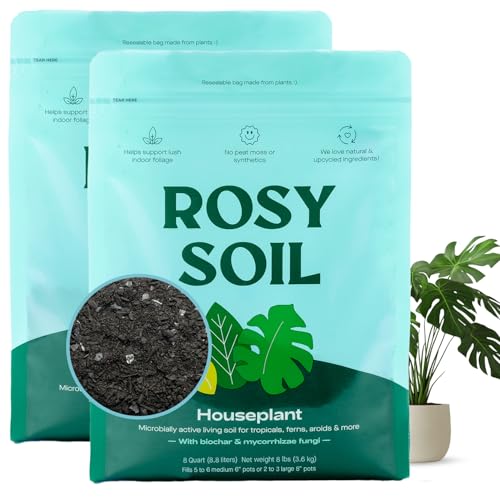
Two 8-quart bags cover several strawberry containers, making this the more useful package for a porch or balcony setup. The peat-free houseplant mix combines biochar, worm castings, mycorrhizae, compost, and bark fines for a loose indoor growing medium.
That combination may suit strawberry roots better than the cactus mix, particularly when the container has drainage holes and the mix is not allowed to compact. The organic formulation also avoids synthetic fertilizers and added fillers, which can matter to gardeners building a peat-free indoor setup.
Positive Takeaways
✓The large two-bag package supports multiple pots without frequent repurchasing.
✓Bark fines and biochar create a porous medium suited to container drainage.
✓Mycorrhizae and compost add biological components to the planting mix.
Small Caveats
•You need containers with drainage holes, since a loose mix cannot correct a pot that traps excess water.
•The larger package requires more storage room than the 4-quart alternative.
Best Suited To
This mix fits balcony growers planting several strawberries in separate or divided containers.
Another Choice May Suit
Rosy Soil Houseplant Soil 4 Quarts is easier to handle for one or two small pots.
A 4-quart bag removes the storage burden of a larger mix when you are planting one or two strawberry containers. Its biochar, bark fines, compost, worm castings, and mycorrhizae produce a similar peat-free approach to the larger Rosy Soil package, just in a smaller format.
That makes it a sensible starting point for a first-time container gardener, although you may need another bag once root volume increases. The honest read is simple: choose this for convenience, and choose the two-bag pack for several pots.
Benefits That Matter
✓The manageable volume is easy to carry, store, and pour into a pot.
✓Peat-free ingredients give indoor gardeners an alternative to conventional peat-based mixes.
✓Compost and worm castings provide useful organic material within the medium.
Trade Offs
•One 4-quart bag may not fill a large strawberry container.
•It is designed for indoor plants, so outdoor bed growers need a more substantial soil volume.
Core Details
Feature
Specification
Why It Matters
Volume
4 quarts
Convenient for small containers
Base
Biochar and bark fines
Creates a porous indoor medium
Biological components
Mycorrhizae, compost, worm castings
Supports root-zone activity
Who Will Love This
This option suits first-time strawberry growers working with one compact container setup.
Reach For A Different Pick When
Rosy Soil Houseplant Soil 8-Quart Pack is more convenient for filling several containers at once.
A compressed bag takes up far less shelf space than loose potting soil, a useful advantage in apartments or small garden sheds. Add water and the granules expand up to four times their original volume, producing as much as three gallons of planting medium.
Coconut coir and worm castings form the natural base, while the mix includes more than 55 trace minerals. It can be used indoors or outdoors, so strawberries in hanging baskets, patio containers, or compact outdoor beds all fit within the stated use.
Useful Highlights
✓Compressed packaging keeps the soil compact until you need it.
✓The granules expand to as much as three gallons when mixed with water.
✓Coconut coir provides a lightweight base for portable containers.
✓More than 55 trace minerals supplement the coir and worm castings.
Practical Considerations
•You must add water and allow the compressed material to expand before planting.
•Mixing produces a larger volume, so you need a container or bed with room for it.
Feature Snapshot
Feature
Specification
Why It Matters
Expansion
Up to 4 times
Reduces storage volume
Expanded yield
Up to 3 gallons
Fills several small containers
Base materials
Coconut coir and worm castings
Supports indoor or outdoor use
Trace minerals
55-plus
Adds mineral nutrition to the mix
Built With In Mind
This compressed mix suits small-space growers who value portability and shelf-efficient soil storage.
Where Another Pick Shines
Rosy Soil Biochar Booster 8 Quarts is a stronger choice for a permanent raised bed where you can blend an amendment into existing ground.
This is plant food, not soil, so it belongs alongside your strawberry mix rather than replacing it. The concentrated organic fertilizer makes at least 32 gallons of liquid plant food, which is a practical quantity for a garden containing strawberries, herbs, vegetables, flowers, and houseplants.
Its all-purpose format is the main convenience. You can prepare one liquid feed for several growing areas, although you still need to follow the mixing and application directions on the product rather than estimating the concentration.
What Earns Its Place
✓A 1/2-pound package produces at least 32 gallons of liquid fertilizer.
✓One formula serves vegetables, herbs, fruit plants, flowers, trees, and indoor plants.
✓The concentrated form reduces the storage occupied by a ready-to-use liquid feed.
Less-Strong Areas
•It adds nutrition but supplies no root-supporting soil structure.
•Strawberries still need a suitable planting medium and a container with drainage.
The Right Fit
This fertilizer suits households wanting one organic liquid feed for strawberries and other plants across the garden.
Swap It Out When
Organic Plant Magic Compressed Potting Soil is the better choice when you need the growing medium itself rather than an additional nutrient feed.
## What Matters Before You Fill a Strawberry Pot
Start With Drainage
Strawberry roots need soil that holds moisture without becoming packed. A loose mix with bark, coir, or other structural material gives roots room and lets excess water move away from the crown.
Every container needs drainage holes. A porous medium cannot correct trapped water, so check the pot before you buy the soil.
Choose Containers or Beds
Container growers need a ready-to-use potting medium, while raised-bed growers can improve existing soil with a biochar amendment. Peat-free indoor mixes suit compact setups, and compressed soil helps where storage space is limited.
Match the product to the planting area rather than judging it only by the number of quarts on the bag.
Separate Soil From Plant Food
Potting mix provides physical support, while plant fertilizer supplies nutrients. Some mixes already contain compost, castings, or other nutritional components, so account for those ingredients before adding another feed.
For a mixed garden, a concentrated liquid food can serve strawberries alongside herbs, vegetables, and houseplants without juggling several separate formulas.
## Details That Shape Your Choice
Common Shopping Slip Ups
Choosing a mix solely by color or by the word “organic” can hide a poor structural match. Look for drainage-related ingredients and use cactus mix for succulents, not strawberry crowns.
Also account for expansion. Compressed soil needs water and room to open up before planting.
What The Higher Tier Buys
A larger or more specialized soil may cost more because it includes broader biological ingredients, greater volume, or a storage-conscious format. That extra expense makes sense for multiple containers or a permanent bed, while a smaller bag may be enough for one pot.
## Frequently Asked Questions
### What soil works best for planting strawberries?
A loose, well-draining planting mix gives strawberry roots air while retaining enough moisture for steady growth. Container soil should also be paired with a pot that has drainage holes.
### Can I use cactus and succulent soil for strawberries?
Rosy Soil Cactus & Succulent Potting Mix is designed for plants that prefer dry, fast-draining conditions. It is not the best primary medium for strawberry roots.
### Is biochar booster a complete soil?
No, Rosy Soil Biochar Booster is an amendment meant to improve existing soil. Blend it into garden soil at the recommended rate rather than using it as the sole medium in a container.
### Should I choose the 4-quart or 8-quart houseplant soil?
The 4-quart bag suits one or two small containers and is easier to store. The two-bag 8-quart package offers more medium for several strawberry pots.
### Do I need fertilizer with potting soil?
Potting soil may already contain compost, worm castings, or other nutrient-bearing ingredients. Organic Plant Magic Plant Food provides an additional liquid feed when routine nutrition is needed.
## Final Verdict
For container strawberries, the Rosy Soil houseplant mixes provide the most direct fit, with the 4-quart bag favoring small setups and the two-bag pack serving more pots. Raised-bed growers get more from Rosy Soil Biochar Booster, while compressed soil helps where storage is tight. Plant food supports the planting but never replaces the growing medium. Start with the container, drainage, and volume your strawberry patch actually needs.