

A raised bed turns an awkward patio corner, compact backyard, or patchy lawn into a more controlled growing space. You decide what goes in the soil, how high you want to work, and whether you need modular expansion or a built-in watering system. The six options below cover everything from small balcony gardens to deep-rooted vegetables and tree care, so your choice comes down to the space, plants, and routine you actually have in mind.
An Overview Of The Picks
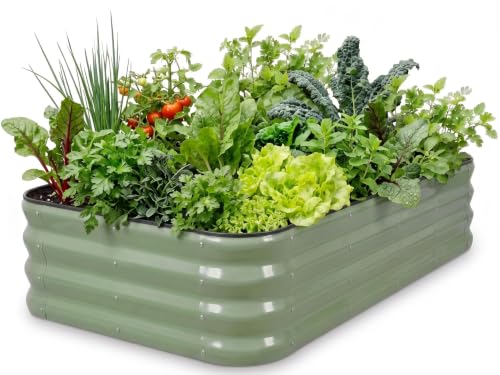
1MORE 4-in-1 Modular Raised Bed 5x3x1ft

Permasteel EnGrow Raised Garden Bed with Legs, 40x20x37 in

Vego 8-Inch Raised Tree Surround with Watering Ring

Anleolife 8x4x2ft Oval Raised Garden Bed

Anleolife 2-Pack 3x24in Round Raised Beds

Anleolife 6x3x2ft Oval Raised Garden Bed
What Each Pick Brings To The Table
A narrow balcony or an awkward patch beside the shed can become useful growing space once the bed height and drainage are right. The 1MORE panels connect in multiple arrangements, so you can work with a compact rectangle now and expand later without buying a completely different container.
Rounded corners, double-rolled edges, and protective rubber strips make this a sensible fit for households where children or pets share the gardening area. The 5-by-3-by-1-foot format suits herbs, salad crops, and flowers, while the open bottom relies on the ground beneath for natural drainage.
Useful Touches
- Four panels can form squares or longer rectangles, giving you more layout options than a fixed bed.
- The included butterfly nuts and screwdriver simplify assembly without a separate tool kit.
- Curved supports reinforce the panel structure and help the bed retain its shape.
- The open bottom promotes drainage and air movement around plant roots.
Things To Consider
- Several connected units create a larger footprint that needs a level, clear patch of ground.
- At one foot tall, it provides less root depth than the deeper Anleolife beds.
Quick Facts
Made For Flexible Growth
You benefit most from this bed when you garden on a balcony or patio and want the freedom to rearrange the panels as your planting plan changes.
A Better Fit Elsewhere
The Anleolife 6x3x2ft Oval Raised Garden Bed suits you better when deep-rooted vegetables need substantially more soil volume.
Water sitting at the bottom of a container can leave roots in soggy soil, and that is the problem this Permasteel design works to address. Its elevated soil platform sits above an Eco-Chamber, a lower reservoir that catches excess water while fresh air moves through tubing around the root zone.
For balcony or patio growers, the 40-by-20-inch footprint and raised working height are especially useful. A water-level indicator shows when the chamber needs attention, although the system still depends on checking that signal and draining the reservoir as directed.
Benefits That Matter
- The separated soil platform keeps planting mix above collected water.
- Air tubing supports oxygen movement through the soil when the chamber is properly drained.
- The indicator provides a visible cue for removing excess water from the reservoir.
- Locking wheels make the raised design easier to reposition in many outdoor or indoor spaces.
- A lower shelf adds storage space for supplies beneath the planting area.
Small Caveats
- The reservoir requires regular checking, so this suits a routine gardener rather than a hands-off setup.
- Its fixed 40-by-20-inch shape offers less planting width than the larger oval beds.
Feature Snapshot
Right Fit For Busy Growers
You benefit most from this bed when you want a self-watering structure and can build a regular check of the indicator into your gardening routine.
Another Choice May Suit
The Anleolife 2-Pack 3x24in Round Raised Beds gives you two separate planting circles for herbs, flowers, and compact vegetables.
A newly planted tree benefits from controlled soil, undisturbed mulch, and steady moisture near its roots. This Vego surround creates a defined 8-inch-high ring around the trunk, separating the tree’s growing area from the surrounding lawn.
The included watering ring holds 16 gallons and releases water slowly, which can make regular irrigation less abrupt. It is a specialized choice, so you gain more from it than the general-purpose Anleolife beds when your immediate goal is establishing a tree rather than filling a vegetable plot.
The Value In It
- The raised ring provides a separate soil area for a young tree.
- The 16-gallon watering ring supports gradual moisture delivery around the roots.
- Its donut shape fits around the trunk and beneath or above mulch.
Worth Noting
- It serves one tree rather than a mixed planting bed.
- The ring must be positioned so water reaches the root zone without pooling against the trunk.
Built With Tree Care In Mind
You benefit most from this surround when establishing a young tree and want a dedicated soil and watering area around its trunk.
Look Elsewhere When
The 1MORE 4-in-1 Modular Raised Bed 5x3x1ft suits you better when you plan to grow herbs, vegetables, and flowers instead of caring for a tree.
Tomatoes, potatoes, and other plants with substantial root systems need more usable soil depth than a one-foot planter can provide. This 8-by-4-foot oval bed reaches 24 inches high and has a listed capacity of 478 gallons, giving you room for vegetables that develop deeper roots.
The oval shape also creates a broad planting area without the sharp corners of a rectangular container. Its 22-gauge, 0.8-millimeter galvanized steel panels and layered powder coating suit exposed outdoor placement, while the open bottom supports drainage and direct access to the soil below.
Everyday Advantages
- Two feet of depth supports medium and deep-rooted vegetables.
- The 8-by-4-foot footprint offers a large growing area for substantial beds.
- Rounded ends make the perimeter easier to work around.
- The 24-inch height reduces bending while tending plants near the center.
Practical Considerations
- Its size demands a generous, level patch of ground.
- Filling the bed to its listed capacity calls for substantial soil and a little planning.
- It offers less flexibility than the smaller 1MORE modular layout.
Key Product Details
Made For Serious Food Crops
You benefit most from this bed when you have a spacious yard and want deep soil for tomatoes, potatoes, or a mixed vegetable planting.
Swap It Out When
The Permasteel EnGrow Raised Garden Bed with Legs, 40x20x37 in suits you better when a smaller footprint and managed watering matter more than maximum depth.
Two circular beds give you a simple way to separate crops, flowers, or kitchen herbs without committing to one large rectangle. Each bed measures about 3 feet across and stands 24 inches high, creating a comfortable working level for patios and smaller yards.
The open bottom helps excess water leave the soil and makes the bed suitable for plants that prefer a freely draining root zone. Compared with the 8-by-4-foot Anleolife model, this pair takes less space per bed, although you gain less continuous planting width for sprawling crops.
Strong Points
- Two beds let you organize separate plants without connecting them.
- The 24-inch height keeps everyday tending closer to waist level.
- Galvanized 22-gauge steel provides a rigid frame for outdoor growing.
Details To Watch
- Each circular bed has less width than a rectangular Anleolife option.
- You need enough space for two separate 3-foot circles rather than one continuous bed.
Who Will Love This
You benefit most from this pair when you want separate patio planters for herbs, flowers, or compact vegetables.
Where A Sibling Pick Shines
The Anleolife 8x4x2ft Oval Raised Garden Bed suits you better when maximum soil volume and deep-root crops are the priority.
The 6-by-3-foot oval bed offers a middle ground between the smaller round pair and the much larger 8-by-4-foot model. Its 24-inch height provides useful depth for medium and deep-rooted vegetables, while the narrower width makes it easier to fit into a backyard with a moderate amount of room.
Galvanized 22-gauge steel with multi-layer powder coating creates a rigid outdoor frame, and the open bottom supports drainage and direct contact with the ground. For a balanced backyard food garden, this format may feel more manageable than filling one of the widest beds with soil.
A Few Highlights
- The 6-by-3-foot oval footprint balances planting width with easier placement.
- A 24-inch profile supports deeper roots and comfortable access to the soil.
- The coated galvanized steel panels suit outdoor vegetable growing.
- The open bottom promotes drainage and keeps plant roots connected with the ground.
Points To Note
- The bed still requires a level six-foot-by-three-foot area and a considerable amount of filling soil.
Technical Highlights
Best Suited To
You benefit most from this bed when you want substantial rooting depth and a broad food garden without the footprint of the 8-by-4-foot model.
Consider Something Else When
The Vego 8-Inch Raised Tree Surround with Watering Ring suits you better when you are establishing a tree rather than growing a mixed vegetable bed.
Plan Around Your Space and Plants
Raised beds work best when their size matches the space you can realistically prepare and maintain. A narrow balcony may limit both the container footprint and the weight of wet soil, while a backyard can support deeper containers with more fill. Measure the finished area rather than relying on the panel dimensions alone.
Start With Available Space
The 1MORE bed fits the tightest layouts because its four panels can be rearranged, while the Permasteel option occupies a defined 40-by-20-inch footprint. The Anleolife containers become increasingly substantial, especially once you account for the soil needed to fill them. Leave working room around the outside for access, assembly, and lawn equipment.
Match Height to Plant Roots
A 12-inch bed can support many herbs, greens, flowers, and compact vegetables. The 24-inch Anleolife models provide the greater depth needed for medium and deep-rooted crops. The Vego tree surround has a different purpose, creating a defined root zone around a young tree.
Compare the Growing System
An open bottom relies on natural drainage and contact with the ground. The Permasteel EnGrow system instead separates soil from a lower water chamber and adds an indicator for reservoir maintenance. That mechanism may suit a regular watering routine, but it demands attention rather than removing every watering decision.
What to Check Before Assembly
Wrong Turns To Avoid
Do not select by height alone. A deep bed needs level ground, enough soil, and a clear assembly area, while a modular system needs enough elbow room to connect its panels. Measure the site first and consider how you will reach every planting area.
What Separates Premium From Basic
Additional features matter only when they match your routine. Reservoir systems help with managed irrigation, deeper frames support larger root zones, and tree rings concentrate care around a trunk. Simple open-bottom beds remain sensible when drainage and straightforward access are your main priorities.
Frequently Asked Questions
What size raised bed is best for a small patio?
A compact, modular bed works well when your patio has limited space. The 1MORE 4-in-1 Modular Raised Bed 5x3x1ft can be arranged as a square or rectangle, giving you a useful fit for herbs, greens, and flowers.
Are deeper raised beds better for vegetables?
Deeper beds provide more soil for plants with substantial root systems. The 24-inch Anleolife models suit tomatoes, potatoes, and other medium or deep-root crops, while shallower beds work well for compact vegetables and herbs.
Do raised beds need an open bottom?
An open bottom allows excess water to drain and gives plant roots contact with the ground below. Beds with a reservoir use a different system that separates excess water from the soil, and you must drain that chamber as directed.
How much space should remain around a raised bed?
Leave enough room to assemble the container, reach the soil, and move nearby lawn equipment. A wide bed also needs access from more than one side, particularly when you are watering, harvesting, or adding compost.
Can a raised bed be used for a tree?
A tree-specific surround gives you a defined soil area and slow-release watering ring around the trunk. The Vego 8-Inch Raised Tree Surround with Watering Ring is designed for that focused purpose rather than for a broad mixed planting bed.
Wrap Up
Your raised bed should reflect the space you have, the roots you want to grow, and the maintenance routine you will keep. Small gardens benefit from modular layouts, busy patios may suit managed watering, and deep-rooted crops need a taller profile. Start with those practical limits, and the right option becomes much easier to recognize.
