

A lawn full of leaves can turn a quick Saturday cleanup into several trips to the compost pile. A tow-behind sweeper collects grass clippings, pine needles, twigs, and dry leaves while you drive, making it a practical tool for anyone who already uses a riding mower or lawn tractor and maintains a large yard. The working width, meaning the span covered in one pass, and the hopper capacity both determine how quickly the job gets done.
These models range from 42-inch sweepers with compact hoppers to 52-inch units that handle substantial collections. Your tractor, available storage, and the amount of debris on the lawn matter more than the largest number on the box.
The Shortlist At A Glance
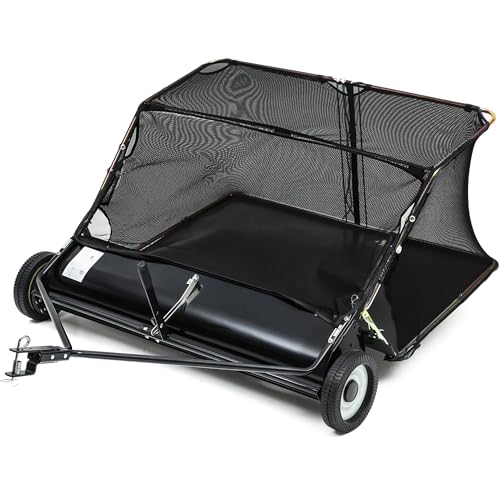
YITAMOTOR 50-Inch Lawn Sweeper

YITAMOTOR 42-Inch Tow-Behind Sweeper

YITAMOTOR 42-Inch Sweeper 12 cu.ft.

Ginkman 48-Inch Sweeper 25.16 cu.ft.

YITAMOTOR 48-Inch Sweeper 20 cu.ft.
Ginkman 52-Inch Sweeper 27 cu.ft.
Why These Options Stand Out
A 50-inch sweep path is built for yards where 42-inch models would require extra passes. This YITAMOTOR attaches to a riding mower or lawn tractor, gathering material into a 25 cu.ft. collector. For most people managing a broad property, the combination of width and capacity keeps the work moving.
The tradeoff appears after collection. A 25 cu.ft. hopper holds plenty of leaves, but you still need a disposal plan and somewhere to store the attachment. It suits established lawns with open driving lanes more than compact urban gardens.
What Works In Its Favor
- The 50-inch working width covers a substantial lawn in fewer passes.
- The 25 cu.ft. hopper reduces emptying stops during heavy cleanup.
- Quick attachment suits a seasonal cleanup routine.
- A riding mower or lawn tractor handles the towing role.
Points To Note
- The wide frame and deep collector need dedicated storage space.
- Confirm that your towing machine and available shed space can accommodate the attachment.
Quick Facts
Built With In Mind
Large-property owners with a riding mower or lawn tractor and frequent leaf buildup will benefit most from its generous collection setup.
A Better Fit Elsewhere
The Ginkman 52-Inch Sweeper 27 cu.ft. suits people with even more open lawn who want the broadest path and largest collector.
Compared with the 50-inch YITAMOTOR, this model takes up less room while retaining a roomy 20 cu.ft. hopper. That balance works well for regular yard maintenance, especially when your lawn produces a mixture of leaves, grass, and light debris rather than deep seasonal piles.
Its adjustable sweeping height helps you accommodate changing lawn conditions. For most homeowners, the 42-inch path is easier to maneuver around landscaping than a 48- or 52-inch model, although broader properties will take more passes.
Real-World Strengths
- The adjustable height allows the brush setting to match different lawn conditions.
- The 20 cu.ft. hopper handles ordinary clippings and leaves without becoming oversized.
- Its 42-inch path suits yards containing beds, paths, or other obstacles.
Worth Noting
- The narrower path creates more passes than the 48-inch and 52-inch alternatives.
- A large lawn may fill the 20 cu.ft. collector before the job is finished.
Made For
Homeowners with a medium lawn and mixed yard debris will find this a practical fit for routine seasonal cleanup.
Another Choice May Suit
The YITAMOTOR 50-Inch Lawn Sweeper is the better option for expansive lawns where fewer passes and larger collections take priority.
This 42-inch model shares the working width of the 20 cu.ft. YITAMOTOR but uses a smaller 12 cu.ft. collector. That distinction makes it easier to store and potentially better suited to yards with obstacles, though the 42-inch attachment still needs a straight path for efficient use.
Quick hookup to a riding mower or lawn tractor keeps setup straightforward. You gain the convenience of towing the collection rather than raking, but you may stop more often when leaves accumulate heavily.
Real Benefits
- The 42-inch width balances coverage with manageable dimensions.
- The 12 cu.ft. collector takes up less storage space than larger hoppers.
- Quick hookup supports straightforward lawn-care routines.
- Leaves and grass can be gathered during a mower or tractor session.
Small Caveats
- Its smaller hopper holds less than the 20, 25, and 27 cu.ft. alternatives.
- Heavy leaf fall will require more frequent emptying.
Feature Snapshot
The Right Fit
People with a smaller lawn, limited storage, and a riding mower or lawn tractor will appreciate the lighter collection footprint.
Consider Something Else When
The YITAMOTOR 42-Inch Tow-Behind Sweeper is better for autumn cleanup because its 20 cu.ft. hopper holds substantially more material.
The Ginkman pairs a 48-inch path with a 25.16 cu.ft. collector, placing it between the wider YITAMOTOR and the larger Ginkman 52-inch model. It suits broad lawns where 42-inch sweepers feel narrow but a 52-inch attachment would be cumbersome.
Its collection range covers leaves, grass clippings, pine needles, small twigs, and other dry debris. A pull rope empties the hopper from the seat, which is a useful detail when you want to empty the collector without leaving the driver position.
What It Does Well
- The 48-inch width suits long, open sections of lawn.
- The 25.16 cu.ft. hopper supports fewer emptying stops.
- Adjustable sweeping height accommodates changing grass conditions.
- The collection design handles several common types of dry yard debris.
- The pull rope allows convenient emptying from the seat.
Trade Offs
- Its path is narrower than the 52-inch Ginkman option.
- The 48-inch frame and large hopper still require ample storage space.
Key Product Details
Who Will Love This
Large-lawn owners who collect several debris types and want convenient seat-position emptying will find this a strong fit.
Reach For A Different Pick When
The Ginkman 52-Inch Sweeper 27 cu.ft. better serves expansive properties with long, unobstructed runs and heavy seasonal piles.
The 48-inch path gives this YITAMOTOR a useful middle position between the 42-inch models and the 52-inch Ginkman. Its 20 cu.ft. collector is large enough for routine leaf pickup, yet less bulky than hoppers above 25 cu.ft. That makes it a sensible middle ground for many mid-size properties.
Adjustable cleaning height lets you account for different lawn conditions, while the towing format works naturally with a riding mower or lawn tractor. You gain a quicker cleanup without committing to the largest attachment in the group.
The Helpful Details
- The 48-inch width reduces passes compared with 42-inch models.
- The 20 cu.ft. hopper balances collection volume and storage needs.
- Height adjustment helps suit changing lawn conditions.
Details To Watch
- The 20 cu.ft. hopper is smaller than the Ginkman 48-Inch Sweeper 25.16 cu.ft.
- Check towing compatibility and storage clearance before purchase.
Best Suited To
Mid-size lawn owners who want a broad sweep path without the storage demands of the largest hopper are the strongest audience for this model.
Where A Sibling Pick Shines
The Ginkman 48-Inch Sweeper 25.16 cu.ft. is the better fit for people with heavy debris and a strong preference for seat-position emptying.
A 52-inch working path makes this Ginkman the natural choice for expansive lawns with few obstacles. Its 27 cu.ft. hopper is also the largest in the group, so heavy leaf seasons can continue with fewer pauses. The honest read is that its size rewards open space rather than compact gardens.
Like the smaller Ginkman, it handles leaves, grass, pine needles, and small twigs. Adjustable height and a seat-accessible pull rope add practical control, while the broad path favors long, straight passes across large properties.
Standout Benefits
- The 52-inch width covers the most ground per pass here.
- The 27 cu.ft. collector supports the fewest emptying stops.
- Seat-position emptying keeps the operator near the tractor controls.
- The design accommodates several common forms of dry yard debris.
Practical Considerations
- The 52-inch frame needs generous storage clearance.
- Narrow or heavily decorated lawns may be awkward to sweep.
Technical Highlights
Whose Shelf It Belongs On
Owners of large open properties with riding mowers or lawn tractors will get the most value from its width and generous collector.
Swap It Out When
The YITAMOTOR 42-Inch Sweeper 12 cu.ft. is a better choice for compact lawns, tighter storage areas, and lighter debris loads.
Match The Sweeper To Your Lawn And Routine
Start With The Towing Setup
A tow-behind sweeper depends on your riding mower or lawn tractor, so confirm that the attachment suits your existing setup before focusing on capacity. You also need a clear path between the tractor and the sweeper, plus enough room to maneuver around trees, garden beds, and irrigation heads.
Weigh Working Width Against Maneuverability
A wider working path covers more lawn in fewer passes, but that speed comes at the cost of a larger frame. A 42-inch model is easier to guide through a detailed yard, while 48- and 52-inch options favor open lawns with long, straight runs.
Read Hopper Capacity As Disposal Capacity
The hopper holds collected leaves and clippings until you empty it. Larger capacities reduce pauses, yet they also require more storage space and create larger loads to move or dispose of. For frequent maintenance, a moderate 20 cu.ft. hopper may be more practical than an oversized one.
Account For The Debris You Actually Collect
Leaves, grass clippings, pine needles, and small twigs may accumulate in different proportions around your property. Adjustable sweeping height is useful for changing lawn conditions, while a broad path is most effective in areas without tight turns.
Common Mistakes Worth Avoiding
Mistakes Worth Dodging
Choosing only by the largest width can leave you with an attachment that is awkward to store or guide. Check the towing connection, available space, and typical debris load before deciding, because a 42-inch model may serve a detailed yard better than a 52-inch unit.
The Case For Spending Up
Higher-priced versions in this category generally direct more of the cost toward sweep width and hopper capacity. That additional size pays off for large, open lawns and heavy leaf seasons, while a smaller model remains more rational for compact properties.
Frequently Asked Questions
How wide should a pull behind leaf sweeper be?
A 42-inch model works well for smaller or obstacle-filled lawns, while 48- and 52-inch paths suit larger properties. You should choose a width your tractor can tow comfortably through your yard.
Does a larger hopper mean fewer stops?
Yes, a larger collector holds more debris before it must be emptied. The added convenience comes with greater storage needs and a larger load to handle during disposal.
Can these sweepers collect grass clippings?
These tow-behind models collect grass clippings along with leaves and other dry yard debris. Adjustable sweeping height can help you accommodate changing lawn conditions.
Is a 48-inch or 52-inch sweeper better for large lawns?
A 52-inch sweeper covers more ground per pass than a 48-inch model. A 48-inch unit may be easier to store and maneuver, particularly around landscaping and narrow access areas.
Do I need a riding mower or lawn tractor?
A towing mower or tractor provides the pulling power and attachment point these sweepers need. Confirm compatibility and clearance before ordering to avoid an installation mismatch.
Final Verdict
Your best fit comes down to lawn size, debris volume, and storage. A 42-inch model handles lighter jobs, 48-inch options balance coverage and control, and 52-inch sweepers suit expansive properties with room to work. Measure your typical cleanup area, check the towing setup, and choose the combination that will be convenient to use rather than merely impressive to own.
