

A bare fence can leave a patio exposed, while a crowded garden may not have room for a full hedge. You need screening that matches the setting: a tall living plant for a sunny yard, a compact boxwood for a low border, or an artificial hedge panel for a balcony. Each option below solves a different space and upkeep problem, so the right choice comes down to footprint, light, and how much maintenance you want.
How The Shortlist Stacks Up

Plants by Mail Blue Point Juniper

Proven Winners Sprinter Boxwood
SylvanVerse UV-Resistant Boxwood Roll 48×120 Privacy Hedge Panels

NatraHedge Laurel Leaf Privacy Wall 20×50

SylvanVerse UV-Resistant Boxwood Roll 40×120 Privacy Hedge Panels

ECOOPTS 20×20 Artificial Ivy Privacy Fence Screen Boxwood Panel
What Each Pick Brings To The Table
A bare fence line calls for height, dependable foliage, and a plant that can carry a narrow vertical shape. Blue Point Juniper is a conifer, meaning an evergreen plant with needle-like foliage, and its silvery-blue coloring gives a fence or formal garden a crisp appearance. Its tight, conical form stands apart from the broad leaves of the Sprinter Boxwood later in this list.
This is a substantial screening plant rather than a potted patio accent, reaching 8 to 12 feet tall and spreading 4 to 6 feet. The 2.5-quot container holds a young landscape plant, so you should decide on placement before planting and allow it room to mature. Once established, it can handle dry periods, although performance still depends on the soil and local conditions.
What Works In Its Favor
- Creates a tall, year-round screen with a narrow footprint.
- Silvery-blue needles add strong color and vertical structure.
- Works in full sun, including formal hedges and topiary.
- Needs only occasional trimming after establishment.
- Adapts across USDA zones 4 through 9.
Practical Considerations
- Plan for the 4-to-6-foot mature spread so it does not crowd a walkway.
- The plant cannot ship to California, making shipping eligibility an important fit check.
Key Product Details
Made For Tall Screens
You benefit most from this plant in a sunny yard with room for a mature 8-to-12-foot evergreen specimen.
Where Another Pick Suits Better
Proven Winners Sprinter Boxwood is the better fit for a low hedge or border that remains within 4 feet of both height and width.
Where Blue Point Juniper towers over a property line, Sprinter Boxwood stays within reach of a garden bed. Its upright growth habit suits low hedging, edging, and formal borders, and its glossy evergreen leaves keep the structure visually present through every season. For most homes, that combination of modest height and dense foliage is more immediately useful than a towering conifer.
Sprinter is selected for faster growth, which means a new hedge can fill space more quickly than many boxwoods. The listing includes two plants in 2-gallon containers, giving you a practical start for a paired section. It also accepts full shade to part sun, a different light profile from the juniper’s requirement for at least six hours of direct sunlight.
Positive Takeaways
- Fast growth helps close gaps in a new low hedge.
- Glossy evergreen foliage provides year-round structure.
- An upright habit works neatly for edging and formal beds.
Things To Weigh
- Fast growth can require regular shaping as the hedge develops.
- The final size reaches 2 to 4 feet in both width and height.
- Its listed range of USDA zones 5 through 9 narrows placement options in colder regions.
Quick Facts
The Right Fit
This boxwood suits gardeners creating a low evergreen border near a path, patio, or mixed flower bed.
A Better Fit Elsewhere
Plants by Mail Blue Point Juniper makes more sense when the main goal is a towering screen above eye level.
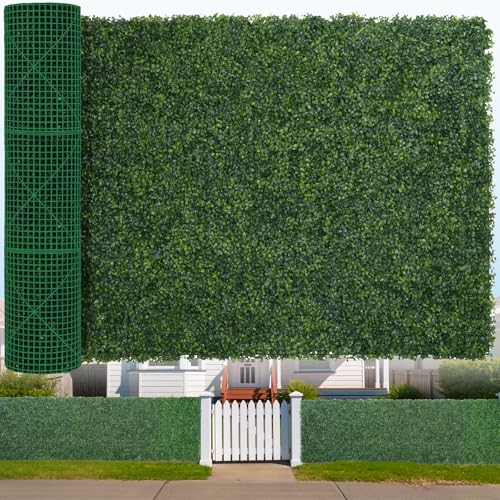
Not every privacy problem has an open planting area. This SylvanVerse roll covers 40 square feet and is intended for fences, patios, balconies, gardens, and backyards, giving you a way to add visual screening without allocating soil to a living hedge. Compared with Sprinter Boxwood, it provides broad coverage on an existing vertical surface without waiting for plants to grow.
The construction uses high-density polyethylene, or PE, a dense plastic used to create the textured leaves and stems. Its three-dimensional design, color variation, and shadowing help the panel look less flat at a distance. UV resistance means the material is designed to withstand sunlight without losing color as quickly as an untreated decoration.
The Practical Payoff
- Covers a substantial fence section in a single roll.
- Creates visual screening without needing garden soil.
- Textured leaves, color variation, and shadows improve depth.
- Odorless PE construction works in indoor or outdoor decorating.
Small Caveats
- At 48 inches tall, it screens lower areas rather than creating a full-height visual barrier.
- Measure your fence and plan the attachment points before ordering a large roll.
Feature Snapshot
Built With In Mind
This panel works for apartment residents and patio owners who need broad visual screening on a balcony, fence, or enclosed outdoor area.
Another Choice May Suit
NatraHedge Laurel Leaf Privacy Wall is the better option for a much smaller balcony section where a 20-by-50-inch panel is easier to place.
A small balcony does not need a 40-square-foot wall of greenery. The NatraHedge panel measures 20 by 50 inches, making it a more manageable decorative screen than the 48-by-120-inch SylvanVerse roll. Its laurel-leaf styling gives a patio fence, porch, or balcony the appearance of an ivy-covered surface while adding a defined layer of visual privacy.
This approach works particularly well for a single awkward section, such as the area beside a door or a railing that leaves you exposed to a neighboring view. The panel is intended to serve as both a privacy element and a decorative accent, rather than a replacement for a living shrub. Nothing flashy, just a practical leafy backdrop sized for a modest surface.
Where It Helps
- Adds leafy visual screening to a balcony or patio fence.
- Laurel-leaf styling offers a distinct alternative to boxwood texture.
- The compact size suits a single gap, porch, or railing section.
Points To Note
- Its 20-by-50-inch coverage requires more than one panel for a broad fence.
Who Will Love This
This panel suits apartment residents or patio owners who want a small decorative screen rather than full-wall coverage.
Consider Something Else When
ECOOPTS 20×20 Artificial Ivy Privacy Fence Screen offers a more square format that can suit a compact accent area or movable decorating setup.
The 40-by-120-inch SylvanVerse roll occupies the middle ground between a small decorative panel and a broad wall covering. It spans 33.33 square feet, making it 8 inches shorter and 6.67 square feet smaller than the 48-by-120-inch version. That modest difference can make placement easier around fences with lower sections, garden walls, patios, and balconies.
You retain the same three-dimensional foliage design, color variation, and shaded depth that give the larger panel a dimensional appearance. High-density polyethylene forms the leaves and stems, while the UV-resistant construction suits exposed garden and patio placement. The roll remains an artificial visual screen, so its appeal depends on decoration and coverage rather than living growth.
Where It Delivers
- Covers 33.33 square feet with a single flexible roll.
- Provides a 120-inch span for broad fence sections.
- Uses dimensional leaves, color gradients, and shadowing.
- Designed for both indoor and outdoor decorative spaces.
Possible Compromises
- Its 40-inch height offers less screening than the taller 48-inch version.
- Plan how the roll will attach to the supporting surface before installation.
Made For In Mind
This roll suits homeowners who want generous wall coverage without the extra height of the 48-inch SylvanVerse option.
Where A Sibling Pick Shines
SylvanVerse UV-Resistant Boxwood Roll 48×120 Privacy Hedge Panels fits better when maximum coverage height matters more than placement flexibility.
One 20-by-20-inch panel changes how you approach artificial screening. Rather than committing to a long roll, you can start with a square section that fits a railing post, balcony corner, or decorative gap. The mixed-leaf design gives it a varied appearance, and the boxwood-style form lets you use it as part of a broader artificial hedge arrangement.
The panel uses high-density polyethylene, the same type of dense plastic used in many artificial foliage products. It is designed to resist ultraviolet exposure and outdoor weather while avoiding the fading associated with less resilient décor. Its odorless construction also makes it suitable for covered patios and indoor decorative spaces, where an artificial plant can add greenery without a planting routine.
What Earns Its Place
- The square footprint fits smaller gaps and corners.
- Mixed leaves create a less uniform decorative appearance.
- PE construction is designed for indoor and outdoor use.
- UV-resistant, weather-resistant construction suits exposed locations.
Details To Watch
- The pack includes one panel, so broad coverage requires multiple units.
- Confirm the attachment method and support surface before installation.
Core Details
Who Should Grab It
This panel suits renters, apartment residents, and decorators who want flexible greenery for a small patio or indoor accent.
Reach For A Different Pick When
NatraHedge Laurel Leaf Privacy Wall is the better fit for a narrow balcony that needs a wider 20-by-50-inch decorative screen.
Matching The Screen To Your Space
Start With The Required Height
A living evergreen offers the most complete long-term screening, but its mature size determines where it can grow. Blue Point Juniper reaches 8 to 12 feet, while Sprinter Boxwood remains between 2 and 4 feet tall. Artificial panels provide a different option: the SylvanVerse rolls cover 4 feet of fence height, while the smaller panels suit railings and decorative gaps.
Check The Light Before Choosing A Plant
Full sun means receiving at least six hours of direct sunlight each day, and Blue Point Juniper needs that exposure. Sprinter Boxwood has a broader light range, covering full shade to part sun. The artificial options avoid soil and planting conditions, so location depends more on attachment, weather exposure, and the visual effect you want.
Match Coverage To The Surface
Measure the fence, patio wall, or balcony section before ordering. The two SylvanVerse rolls cover approximately 40 and 33.33 square feet, while the NatraHedge panel covers 20 by 50 inches and the ECOOPTS panel covers 20 by 20 inches. Larger coverage reduces the number of sections you need to join, but smaller panels can be easier to position around corners and outdoor furniture.
Decide How Much Care You Want
Blue Point Juniper requires occasional shaping and well-drained soil, although established plants tolerate dry periods. Sprinter Boxwood grows quickly and needs regular trimming as the hedge fills in. Artificial panels need no watering or pruning, making them practical for containers, balconies, and areas without suitable planting space.
Avoiding Common Screening Mistakes
Mistakes Worth Dodging
Do not choose a plant solely by its current size, since a nursery container offers little indication of mature spread. Blue Point Juniper needs room well beyond its pot for a narrow but substantial screen. Artificial panels have a similar trap: a small sample can make a large fence look easier to cover than it is, so calculate square footage before ordering multiple rolls.
What Separates Premium From Basic
Larger coverage and denser foliage are the main differences among the artificial options. The SylvanVerse rolls use high-density polyethylene and offer broader coverage, while the ECOOPTS and NatraHedge panels serve smaller sections. A larger premium panel makes more sense for continuous coverage, while a compact panel is the sensible choice for a balcony accent or isolated gap.
Frequently Asked Questions
Are Live or Artificial Privacy Shrubs Easier to Maintain?
Artificial panels require no watering, pruning, or soil, making them easier to maintain. Live plants provide natural growth and fuller screening over time, but they need suitable light, soil, watering, and occasional trimming.
How Much Space Does a Privacy Shrub Need?
A living Blue Point Juniper needs space for an 8-to-12-foot height and 4-to-6-foot spread. Artificial panels vary widely, with examples ranging from a 20-by-20-inch square to a 40-by-120-inch roll.
Can Artificial Hedge Panels Provide Privacy?
Artificial hedge panels provide visual screening by blocking direct sightlines with dense artificial foliage. The degree of privacy depends on panel height, placement, and the amount of exposed space around the supporting surface.
Which Live Plant Works Best in a Sunny Yard?
Blue Point Juniper is suited to sunny yards because it needs at least six hours of direct sunlight and tolerates drought once established. Sprinter Boxwood is more appropriate for a low hedge where mature height needs to stay near 4 feet.
How Should Artificial Privacy Panels Be Installed?
The secure attachment method depends on your fence, railing, or wall material. Measure the surface, mark the panel placement, and use a support approach suited to the structure before attaching the foliage.
Final Verdict
Choose Blue Point Juniper for a tall, living screen in a sunny yard, or Sprinter Boxwood for a low evergreen hedge with faster filling. For patios and balconies, the SylvanVerse rolls cover broad fences, while the NatraHedge and ECOOPTS panels fit smaller spaces. Match the mature size or panel dimensions to the surface, and your choice will feel far more practical.
