

A snake plant in a dense, moisture-retentive pot can struggle long before you notice problems above the soil line. The right potting medium gives its thick roots room, drains freely, and supports the dry, oxygen-rich conditions that snake plants naturally favor. You’ll find a focused mix, a soil amendment, and several plant-specific alternatives below, with the best fit depending on whether you’re repotting one small plant or refreshing a larger collection.
The Shortlist At A Glance

Rosy Soil Cactus Mix 4 Quarts

Rosy Soil Biochar Booster
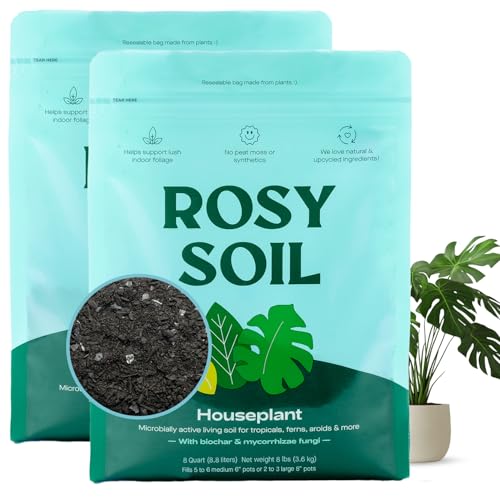
Rosy Soil Houseplant Soil 8 Qt

Rosy Soil Houseplant Soil 4 Quarts

Rosy Soil Orchid Mix 4 Qt

Rosy Soil Herb Mix 4 Quarts
The Picks, Examined More Closely
The loose, gritty structure here directly suits a snake plant’s preference for fast drainage. Unlike the general-purpose mixes later in the list, this formula is explicitly intended for snake plants and other drought-tolerant plants, so you don’t have to infer its drainage profile from the category label.
Each 4-quart bag also contains beneficial organisms, worm castings, and no peat, according to the manufacturer. For a repotting project, that makes it the most direct match in the group. The honest catch is that two bags may provide more medium than a single indoor pot requires.
Notable Gains
- Open texture helps excess water leave the pot more quickly.
- Peat-free composition suits plants that prefer a lighter medium.
- Beneficial fungi and worm castings add biological components to the mix.
- The 4-quart bags support a manageable number of repotting projects.
Practical Considerations
- Confirm your pot size because each bag fills roughly two to three plants.
- This is a specialized mix, so it is less relevant for moisture-loving houseplants.
Feature Snapshot
The Right Fit
This mix best suits beginners and experienced growers repotting snake plants in standard indoor containers.
A Better Fit Elsewhere
Rosy Soil Houseplant Soil 4 Quarts may suit you better when one general-purpose indoor mix must serve several different houseplants.
Biochar is a stable, carbon-rich material made by heating organic matter with little oxygen. This product adds that amendment to soil rather than serving as a complete potting medium, making it useful for a gardener who already has a suitable base mix.
Mixed into a coarse houseplant medium, it can support aeration and water retention without replacing the drainage-focused structure a snake plant needs. The manufacturer recommends about 5% by volume, roughly one cup per cubic foot, so a small amendment application makes more sense than filling an entire pot with it.
The Practical Payoff
- Biochar helps create pore space and holds moisture within the mix.
- Mycorrhizae are root-connected fungi that support nutrient uptake.
- The 8-quart volume works for raised beds, containers, or planting soil.
Trade Offs
- It is an amendment, not a ready-made medium for repotting a snake plant.
- Applying too much can unbalance the mix you already use.
- The broad garden focus is less convenient than a dedicated houseplant blend.
The Numbers That Matter
Built With In Mind
This booster works for gardeners maintaining larger containers or improving existing soil around multiple plants.
Another Choice May Suit
Rosy Soil Cactus Mix 4 Quarts is the easier choice for a direct repotting job because it requires no ratio calculation.
This larger houseplant mix is built around biochar, worm castings, mycorrhizae, compost, and bark fines rather than peat moss. Those components give a snake plant a biologically active base, although the bark component makes this a general indoor mix rather than the most direct succulent choice.
The two 8-quart bags make practical sense for a home with several pots or a routine of repotting different indoor plants. For a single small snake plant, the 4-quart version may simply be easier to store and handle.
The Good Stuff
- Peat-free ingredients reduce reliance on conventional peat-based mixes.
- The larger package supports several indoor repotting projects.
Where It May Fall Short
- A specialized cactus mix more directly matches the moisture needs of a snake plant.
Who Will Love This
This option suits plant owners who want one organic-style medium for several indoor species and multiple containers.
Where A Sibling Pick Shines
Rosy Soil Cactus Mix 4 Quarts is the stronger fit when drainage for one snake plant is the deciding factor.
The 4-quart houseplant mix offers the same broad indoor focus as its larger sibling without the extra storage volume. Biochar, bark fines, compost, worm castings, and mycorrhizae replace peat in this organic blend, giving snake plants a supportive medium with a more active biological component.
That balance makes it a reasonable choice for a mixed houseplant shelf, though a snake plant-only collection may benefit from a grittier formula. In most homes, one manageable bag is easier to place in a utility closet than two bulky containers.
The Value In It
- The compact package suits a single repotting or a small plant shelf.
- Organic components support a more varied indoor collection.
- Biochar contributes additional pore space to the mix.
- Mycorrhizae and compost add biological material to the root zone.
Things To Consider
- Its general indoor focus is less specific than a cactus and succulent formula.
- Check the pot volume before ordering to avoid leftover medium.
- Snake plants still need a container with drainage openings.
At A Glance
Made For
This bag best fits apartment growers and beginners repotting one or two indoor plants.
Reach For A Different Pick When
Rosy Soil Cactus Mix 4 Quarts is more appropriate for a collection consisting only of snake plants and similar drought-tolerant plants.
Orchid bark, pumice, and biochar create an open, fast-draining blend designed around the airy root conditions orchids favor. That structure also looks promising for a snake plant, but the formula is marketed for orchids rather than snake plants, so the choice is more about shared texture than plant-specific design.
Mycorrhizae and beneficial microbes add another layer to the mix. You may find this useful for a mixed display of air-loving plants, though a cactus blend remains the clearer recommendation for a dedicated snake plant.
Where It Delivers
- Pumice contributes a coarse, open planting structure.
- Orchid bark and biochar promote an airy root environment.
- Mycorrhizae support the plant’s relationship with soil fungi.
Possible Compromises
- The formula targets orchids rather than snake plants specifically.
Quick Facts
Whose Shelf It Belongs On
This mix suits growers keeping orchids alongside other plants that prefer open, fast-draining media.
Swap It Out When
Rosy Soil Cactus Mix 4 Quarts serves a snake plant more directly because it names that plant in its intended uses.
This formula is intended for basil, thyme, mint, parsley, cilantro, lavender, rosemary, and other culinary herbs. Biochar, worm castings, and mycorrhizae provide a biologically active base, making it a practical choice for a windowsill planter beside your kitchen.
It is not a natural fit for a snake plant, and using it for one would mean ignoring the plant-specific formulation. Keep this mix for edible herbs, where its intended use gives you a clearer reason to choose it over the general houseplant options.
Standout Benefits
- Formulated for a broad range of culinary herbs.
- Works for both indoor windowsills and outdoor planters.
Points To Note
- It is not formulated for snake plants or succulent root conditions.
- The 4-quart bag needs storage space between herb-planting projects.
Best Suited To
This mix fits home cooks growing herbs in kitchen containers or compact outdoor planters.
Look Elsewhere When
Rosy Soil Cactus Mix 4 Quarts is the better choice whenever the pot is intended for a snake plant.
What Matters in a Snake Plant Medium
Drainage Comes First
Snake plants store water in their leaves and thick roots, so consistently wet soil creates the wrong balance. A loose mix with mineral-based particles allows air around the roots and lets excess water escape. Dense, fine-textured potting soil can retain more moisture than these plants generally want.
The Pot Should Support Airflow
Even a suitable mix cannot correct a container that holds water against the root ball. Select a pot with drainage openings and avoid placing it in a decorative cachepot without allowing water to drain. The added space around the roots also helps air move through the root zone.
Organic Components Are Only One Part
Worm castings and compost contribute organic material, while mycorrhizae are fungi that associate with plant roots. These ingredients can support biological activity, but they do not replace the open structure required by a snake plant. Rosy Soil Cactus Mix 4 Quarts is the most direct match because its formula and intended plant list both point toward dry, well-draining conditions.
Check the Intended Use Before Volume
A 4-quart bag may suit one small repotting, while two larger bags make more sense for several pots. Read the listed plants before choosing a general houseplant, orchid, or herb blend. A product made for a different plant can still have an attractive texture, but its formulation was not designed around the same care requirements.
Common Mistakes and Better Decisions
Common Shopping Slip Ups
Choosing a mix only because the word “organic” appears on the label can distract from drainage. The plant list, texture, and pot type matter more than that description. You’ll also want enough medium for the job without creating excess storage clutter.
What The Higher Tier Buys
A larger package mainly adds convenience for multiple pots. Specialized formulas, such as the cactus mix, offer a more direct match to snake plant conditions, while amendments serve a different purpose and require measured mixing.
Frequently Asked Questions for Potting Soil for Snake Plants
Is cactus mix suitable for snake plants?
Yes. Rosy Soil Cactus Mix 4 Quarts explicitly lists snake plants among its intended plants and provides a loose, fast-draining formula.
Should snake plant soil contain peat moss?
A peat-free mix can be a sensible choice because it avoids the water retention associated with peat-heavy formulas. The important goal is an open structure that drains freely around the roots.
Can I use regular houseplant potting soil for a snake plant?
You can use a general houseplant mix, but a cactus or succulent blend more closely reflects the drier conditions snake plants prefer. A drainage-hole pot remains essential.
Is biochar a complete potting soil?
No. Rosy Soil Biochar Booster is designed to amend existing soil, and the manufacturer recommends mixing it into a suitable base at about 5%.
How much potting soil does one snake plant need?
The right amount depends on the pot’s volume. A 4-quart bag can cover several small projects, while one small snake plant may need considerably less.
Final Verdict
Rosy Soil Cactus Mix 4 Quarts is the most direct choice for a snake plant because its loose, peat-free formula and intended plant list align with the plant’s drainage needs. The general houseplant mixes work for broader collections, while the biochar booster, orchid mix, and herb mix make more sense for their named uses. Choose the medium that matches the plant, then give it a pot that can drain.
