

A windowsill full of plants makes wrong soil easy to spot. A cactus wilts in dense mix, an orchid struggles in fine potting soil, and leafy flowers need a balanced medium that holds moisture without suffocating roots.
You need different growing conditions for each plant. Use these six mixes to match drainage, aeration, and nutrient support to the flowers, herbs, and succulents growing in your home.
The Choices Worth Comparing

Rosy Soil Cactus & Succulent Mix 4 Quarts

Rosy Soil Biochar Booster 8 Quarts
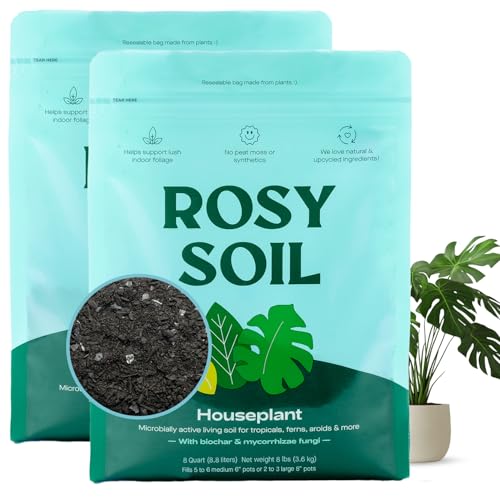
Rosy Soil Houseplant Mix 8 Quarts 2-Pack

Rosy Soil Houseplant Mix 4 Quarts

Rosy Soil Orchid Mix 4 Quarts

Rosy Soil Herb Mix 4 Quarts
Why These Options Stand Out
Drought-tolerant flowers rarely appreciate dense, moisture-heavy soil. The chunky structure in Rosy Soil Cactus & Succulent Mix keeps the root zone open, which matters for aloe, jade, snake plants, and other plants prone to rot in compacted mix.
Unlike the general-purpose houseplant blends in this list, this one is built around fast drainage. Peat-free ingredients, worm castings, beneficial organisms, and open packaging make it a practical choice for beginners setting up a first succulent shelf.
A Few Highlights
- Loose texture gives roots space while allowing excess water to drain.
- Worm castings and soil organisms support active root growth.
- The peat-free formula suits low-moisture growing conditions.
- Each resealable 4-quart bag fills roughly two or three plants.
Things To Consider
- This specialized mix does not suit moisture-loving flowers as naturally as a general-purpose indoor blend.
- Plan storage space for the 4-quart bags before opening them.
Key Specs
Who It Suits Best
Beginner succulent growers benefit most from this targeted, open mix and its printed planting guidance.
A Better Fit Elsewhere
Rosy Soil Houseplant Mix 4 Quarts suits leafy flowering houseplants that need a more balanced medium.
The cactus mix handles a pot on its own, while Rosy Soil Biochar Booster takes on the soil around existing plants. Biochar is a stable, carbon-rich amendment made by heating organic matter in low oxygen, giving the blend a porous structure that can retain moisture while supporting aeration.
This matters most in raised beds and large containers, where repeated watering and watering can compress soil. For a small indoor pot, you would blend it into fresh potting mix rather than fill the container with the amendment alone.
Useful Highlights
- Improves water retention without packing soil tightly.
- Mycorrhizae, worm castings, compost, and bokashi enrich the root zone.
- Works in raised beds, garden soil, and container mixes.
- The stable biochar structure supports long-term soil improvement.
- One 8-quart bag covers substantial garden or container space.
Worth Noting
- It is an amendment rather than a ready-to-use potting medium.
- Correct mixing matters because too much changes the intended soil structure.
At A Glance
Made For
Raised-bed growers and container gardeners benefit most from its broader soil-building role.
Another Choice May Suit
Rosy Soil Cactus & Succulent Mix 4 Quarts is more convenient for a single pot of drought-tolerant plants.
The amendment and succulent options solve very different problems, while this houseplant mix lands between them. Its biochar, worm castings, mycorrhizae, compost, and bark fines create an organic, peat-free medium suited to everyday indoor containers.
The two 8-quart bags give you room for multiple repotting projects, which is useful for a collection of flowering houseplants. Compared with Rosy Soil Houseplant Mix 4 Quarts, the main difference is quantity rather than plant type or formula.
Where It Delivers
- Bark fines and compost provide a balanced indoor growing medium.
- Mycorrhizae and beneficial organisms support root development.
- The peat-free composition suits container planting.
- Two large bags simplify frequent repotting and propagation work.
Trade Offs
- It is less specialized than the cactus, orchid, and herb mixes in this list.
- You need adequate storage for 16 quarts of total potting soil.
Right Fit For
Houseplant collectors with several leafy or flowering indoor plants receive the most practical benefit from the larger volume.
Look Elsewhere When
Rosy Soil Houseplant Mix 4 Quarts is more convenient when you are repotting only one or two small plants.
The 4-quart houseplant mix narrows the same balanced formula to a more manageable size. A single bag works well for repotting a few indoor flowers, replacing tired soil, or filling small containers without leaving unused mix stored for months.
Compared with the two-pack houseplant option, the ingredients and plant focus remain the same. Storage convenience is the deciding factor, particularly in an apartment where shelf space is already occupied by pots and plants.
Where It Helps
- Biochar, compost, and bark fines support a balanced indoor medium.
- Worm castings and mycorrhizae encourage active root-zone conditions.
- The peat-free formula contains no synthetic fertilizers.
Minor Gripes
- You may need another bag for a sizable collection of houseplants.
- The general-purpose formula is less open than an orchid medium and less specialized than a cactus mix.
Who Will Love This
Apartment dwellers and beginners repotting a single flowering houseplant benefit from the compact format.
Swap It Out When
Rosy Soil Houseplant Mix 8 Quarts 2-Pack makes more sense for frequent repotting or several new plants.
For a windowsill full of mixed foliage plants, the houseplant blends fit well, but an orchid needs a much more open medium. Orchid bark, pumice, and biochar give Rosy Soil Orchid Mix the large air spaces associated with orchids growing on trees rather than buried in dense soil.
That structure helps water move through the pot while leaving root zones ventilated. For a phalaenopsis moved from a nursery pot into a decorative container, the coarse components also make the change from fine media less abrupt.
The Upside
- Orchid bark creates a coarse, airy root environment.
- Pumice adds mineral structure to the open blend.
- Biochar supports water retention without closing the air spaces.
- Mycorrhizae and beneficial microbes support root development.
Practical Considerations
- Use it for orchids rather than ordinary garden flowers.
- Because the blend is open, watering frequency still depends on the pot and growing conditions.
Core Details
The Right Fit
Potted orchid owners benefit most from a medium specifically structured around exposed, air-loving roots.
Where A Sibling Pick Shines
Rosy Soil Houseplant Mix 4 Quarts suits non-orchid flowering plants that prefer a more balanced medium.
Herbs sit between thirsty houseplants and drought-tolerant succulents, so a general indoor blend can miss the mark. Rosy Soil Herb Mix targets basil, thyme, mint, parsley, cilantro, lavender, and rosemary in windowsill pots or outdoor containers.
Biochar, worm castings, and mycorrhizae support roots and nutrient uptake without relying on synthetic fertilizers. Compared with Rosy Soil Houseplant Mix 4 Quarts, the formulation is aimed at herbs rather than ornamental foliage plants.
What It Does Well
- The formula is designed for common culinary and medicinal herbs.
- Works in both indoor and outdoor containers.
- Worm castings and mycorrhizae support root development.
- Biochar helps balance moisture retention and aeration.
Possible Compromises
- Large containers may require more than one 4-quart bag.
- Plants with different moisture needs still benefit from separate pots.
Feature Snapshot
Built With In Mind
Home cooks growing herbs in small indoor or patio containers benefit most from this targeted blend.
Reach For A Different Pick When
Rosy Soil Houseplant Mix 4 Quarts is the better fit for ornamental flowering houseplants rather than edible herbs.
Match the Mix to Your Plants and Pots
Start With Water Needs
Flowering plants do not all want the same soil. Cacti and succulents need a coarse medium that releases excess water quickly, while leafy houseplants generally benefit from a balanced mix that retains more moisture. Group plants with similar needs so you can water them consistently.
Check Drainage and Airflow
A porous medium gives roots oxygen and reduces the chance of waterlogged compost. Orchids need especially large air spaces because their roots are adapted to exposed surfaces rather than compact soil. Every container should also have drainage openings at the bottom.
Read the Blend Before Mixing
Biochar, bark, pumice, compost, worm castings, and mycorrhizae each contribute differently. A ready-to-pot medium can be used directly, while a soil amendment needs careful mixing at the recommended rate. Check whether your plants need a dedicated medium or an addition to an existing blend.
Mistakes Worth Dodging
Avoid choosing soil by the word “organic” alone, since drainage and structure still matter. Using one mix for cacti, herbs, and leafy houseplants can leave roots in unsuitable moisture conditions. Never fill a decorative pot without confirming that it has drainage holes.
What Separates Premium From Basic
Specialized mixes cost more because their bark, pumice, biochar, and biological components are selected for particular plants. The added expense matters when a collection includes orchids, succulents, or herbs that need distinct drainage. For a single ordinary houseplant, a smaller general-purpose bag may be enough.
Frequently Asked Questions
Can one potting soil work for most flowering houseplants?
Rosy Soil Houseplant Mix 4 Quarts and Rosy Soil Houseplant Mix 8 Quarts 2-Pack suit typical indoor flowering plants. Succulents, orchids, and herbs benefit from more specialized media.
What is the most important feature in potting soil for flowers?
Drainage and root aeration matter most because saturated, compact soil limits oxygen around roots. A balanced mix then adds moisture retention and organic matter for foliage and flowering growth.
Does peat-free soil require less watering?
No. Peat-free formulas may drain differently, but watering still depends on the plants, pot size, and growing conditions. Check the soil rather than following a fixed schedule.
Should Biochar Booster be mixed into container soil?
Yes. Blend it into fresh potting soil at roughly the recommended rate, or work it carefully into the upper soil around an established plant. It is an amendment rather than a standalone container medium.
Which mix suits a windowsill herb garden?
Rosy Soil Herb Mix 4 Quarts is formulated for basil, thyme, mint, parsley, cilantro, lavender, and rosemary in indoor or outdoor containers. Separate pots still help you manage plants with different watering needs.
Final Verdict
Match the medium to the plant, not simply to the container. Rosy Soil Cactus & Succulent Mix 4 Quarts handles dry-loving plants, Rosy Soil Orchid Mix 4 Quarts gives orchids open root space, and Rosy Soil Herb Mix 4 Quarts targets kitchen herbs. The two houseplant mixes cover general indoor use, while Rosy Soil Biochar Booster 8 Quarts improves existing garden and container soil.
