

Container roses struggle when their potting mix stays soggy, dries out too quickly, or collapses into a dense mass. You need an open root zone that drains well while still holding enough moisture for buds and new growth. The options below range from a specialized cactus blend to versatile houseplant soil and a biochar amendment, so you can match the medium to your climate, pot size, and watering habits.
A Fast Comparison Of The Options

Rosy Soil Cactus & Succulent Mix 4 Quarts

Rosy Soil Biochar Booster 8 Quarts
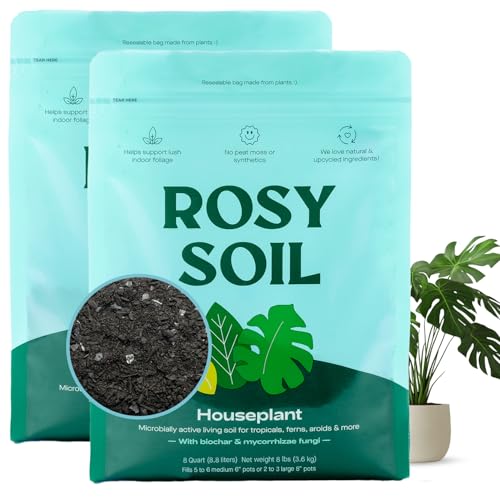
Rosy Soil Houseplant Mix 8 Quarts

Rosy Soil Organic Houseplant Mix 4 Quarts

Rosy Soil Orchid Mix 4 Quarts

Rosy Soil Herb Mix 4 Quarts
Why These Options Stand Out
This mix makes the most sense for a desert rose in a sunny patio pot, where fast drainage matters more than the moisture retention a conventional rose might prefer. Its loose, gritty structure can also suit a drought-tolerant rose that wilts quickly in ordinary potting mix. The catch is that a flowering climbing rose may find this blend too lean and dry during hot weather.
Two 4-quart bags give you room to repot more than one plant, and the printed planting instructions help first-time growers avoid compacting the mixture too heavily. The honest read is that this is a targeted choice for the right rose type, not a general-purpose container rose medium.
Bright Spots
- Open, coarse texture promotes drainage around sensitive roots
- Worm castings and microorganisms add biological material to the mix
- The formula contains no peat, reducing the risk of persistent saturation
- Printed guidance helps you pot without overpacking the soil
- Each resealable 4-quart bag covers roughly two or three plants
Things To Consider
- The dry, mineral-forward structure may require more frequent watering for a lush climbing rose
- Its strongest fit is with desert roses and similarly low-moisture plants
Key Specs
Built With In Mind
Desert rose growers and gardeners in warm, dry climates get the strongest benefit from this open cactus and succulent blend.
Another Choice May Suit
Rosy Soil Houseplant Mix 8 Quarts is a better fit for climbing roses that need a more balanced container medium.
Biochar Booster is an amendment rather than a complete potting medium, which gives you control over the final rose mix. Biochar is a stable, carbon-rich material made by heating organic matter with limited oxygen; its porous structure can retain water and nutrients while adding physical space to dense soil. That makes it useful for combining with a suitable base rather than filling a pot by itself.
The blend also contains mycorrhizae, which are beneficial fungi that associate with plant roots, along with worm castings, bokashi, and compost. For a gardener rebuilding soil for a large container rose, the measured application rate and broad planting compatibility are more useful than a single-purpose bag.
Positive Takeaways
- Allows you to tailor drainage and moisture retention for your own mix
- Mycorrhizae and compost support biological activity around roots
- Works in containers, raised beds, and outdoor planting areas
- The 8-quart bag covers a substantial planting area
Practical Considerations
- You need another soil component to create a complete container mix
- Its application rate requires measurement, so a 5 percent blend is easier to handle than an arbitrary scoop
Feature Snapshot
Made For
Experienced container gardeners who want to build a structured rose mix around biochar benefit most from this amendment.
Reach For A Different Pick When
Rosy Soil Organic Houseplant Mix 4 Quarts is easier for a first-time gardener who wants a complete medium without calculating a blend.
Rosy Soil Houseplant Mix 8 Quarts offers a more practical starting point than the cactus blend, especially for a climbing rose that needs moisture and nutrients without the dense weight of ordinary garden soil. Its components include biochar, worm castings, mycorrhizae, compost, and bark fines, creating a mixture with both organic material and drainage-oriented structure.
Two 8-quart bags make this suitable for repotting a group of containers or replacing the upper layer in several large pots. For one small balcony rose, the volume may be more than needed, but the plant still receives a thoughtfully composed indoor medium.
A Few Strong Suits
- Biochar and bark fines add structure to container soil
- Compost and worm castings contribute organic material
- Mycorrhizae support the relationship between fungi and roots
- Two 8-quart bags suit larger repotting projects
Details To Watch
- Check the finished pot volume before opening both bags
- Container roses still need a pot with unobstructed drainage holes
Core Details
Who It Suits Best
Gardeners repotting several medium or large container roses appreciate the generous supply and complete mix.
Look Elsewhere When
Rosy Soil Herb Mix 4 Quarts makes more sense when your immediate task is filling a small herb planter rather than a rose pot.
A 4-quart bag fits the scale of a balcony rose, compact patio pot, or a careful top-dressing job. Compared with the two-bag houseplant option, this package is easier to store and less likely to leave unused soil. The blend uses biochar, worm castings, mycorrhizae, compost, and bark fines without relying on peat.
That combination provides organic material and a loose structure without the extreme dryness of the cactus mix. Depending on your rose and local conditions, you may still need to adjust watering habits carefully, since a container’s temperature and pot size can change how quickly moisture disappears.
Good Reasons To Consider
- A convenient volume for one or two smaller pots
- Biochar, bark fines, and compost create a mixed structure
- Mycorrhizae and worm castings add biological components
- Contains no synthetic fertilizers or fillers
Minor Gripes
- One bag may be insufficient for a large rose container
- Its blend is designed for indoor houseplants rather than roses specifically
The Right Fit
Balcony gardeners with a smaller rose pot and limited storage space get the most practical balance here.
Swap It Out When
Rosy Soil Biochar Booster 8 Quarts is the better option when you want to customize a large rose mix rather than replace the medium entirely.
Rosy Soil Orchid Mix is built around orchid bark, pumice, and biochar, producing the open structure that orchid roots favor. That same openness can be useful for a bonsai-style rose in a shallow, fast-draining container, but it does not make the mix a natural choice for a conventional potted climbing rose.
Mycorrhizae and beneficial microorganisms add biological support to the coarse medium. The catch is straightforward: this is a specialized plant formula, so a rose gardener without a collection of orchids or bonsai will get more value from one of the houseplant mixes.
Where It Helps
- Bark, pumice, and biochar create an open root zone
- The coarse structure supports orchids and bonsai-style planting
Where It May Fall Short
- The mix is not formulated for the moisture needs of ordinary climbing roses
- Its very open composition may dry quickly in warm or exposed locations
- Using it for roses is less straightforward than choosing a houseplant medium
Whose Shelf It Belongs On
Orchid collectors and bonsai growers benefit most from this specialized, fast-draining formulation.
Where A Sibling Pick Shines
Rosy Soil Organic Houseplant Mix 4 Quarts is a better fit for a standard container rose that needs a balanced indoor medium.
This blend is made for herbs such as basil, thyme, mint, parsley, cilantro, lavender, and rosemary, either on a windowsill or in an outdoor planter. It can support a compact herb garden placed near a container rose, but the plants should have separate containers so their root zones and watering requirements remain distinct.
Biochar, worm castings, and mycorrhizae give the medium organic matter and root-supporting biology. For a rose-and-herb patio arrangement, that makes this a convenient companion product rather than the primary medium beneath the rose.
What Earns Its Place
- Formulated for common culinary and fragrant herbs
- Works in both windowsill and outdoor containers
- Biochar supports drainage and soil structure
- Worm castings and mycorrhizae add biological material
- The 4-quart size suits a compact herb planter
Less Ideal Details
- It is not a rose-specific medium and should not replace the rose’s soil
- Mint and other vigorous herbs need separate pots to prevent crowding
Important Details
Who Should Grab It
Home cooks creating a separate herb container beside their roses get the clearest benefit from this mix.
Not Your Match When
Rosy Soil Houseplant Mix 8 Quarts is the better choice for filling the actual rose container and supporting several indoor plants.
What Matters In A Container Rose Medium
Drainage Without Constant Watering
Container roses need moisture, but waterlogged soil cuts off oxygen around the roots. An open mix helps excess water leave the pot, while components that retain some moisture prevent the root ball from becoming bone dry between drinks. The right balance changes with your climate, pot size, and whether the rose sits in sun or shade.
Pot Size And Root Volume
A small pot dries quickly because it has little soil and a high surface area. Larger containers offer more root space and more consistent moisture, but they also need a structured medium that does not compact. Match the quantity to the pot and avoid filling a large container with a small bag of medium.
Organic Components And Long-Term Structure
Biochar, compost, worm castings, and bark fines serve different purposes. Biochar adds stable carbon and pore space, compost and worm castings contribute organic material, and bark helps create an open structure. Mycorrhizae are fungi that form associations with roots and participate in nutrient uptake.
Rose Type And Local Conditions
Desert roses and drought-tolerant climbing roses have different needs. A gritty cactus mix may suit a sunny, dry patio better, while a houseplant blend offers more moisture control for a rose that wilts between waterings. Watch how quickly the pot dries before deciding whether the medium needs more water-retentive components.
Common Mistakes In Container Planting
Mistakes Worth Dodging
Choosing an extremely dry mix for a moisture-loving rose can lead to frequent watering without fixing the underlying imbalance. Equally important, using a dense medium in a pot without drainage holes makes wetness unavoidable. Match the rose type, container, and watering schedule as a single system.
What The Higher Tier Buys
Biochar-based amendments add stable structure and biological components that a basic soil amendment may not provide. The extra investment is most useful when you are rebuilding a large or repeatedly used pot. For one small rose, a complete houseplant mix offers a simpler starting point.
Frequently Asked Questions
What Is The Best Potting Soil For Container Roses?
A loose, well-draining potting mix with some moisture retention works best for most container roses. A biochar-enhanced houseplant mix is a practical starting point, while a cactus blend suits desert roses and hot, dry conditions.
Should Container Roses Use Cactus Potting Soil?
Cactus soil works well for desert roses and drought-tolerant varieties that need fast drainage. Conventional climbing roses usually benefit from a more balanced houseplant mix that retains somewhat more moisture.
Is Biochar Safe To Mix With Potting Soil?
Biochar is commonly blended into soil and potting media. Mix it at a measured rate with a suitable base, rather than using it alone, so the final medium has both drainage and enough moisture retention for rose roots.
Do Container Roses Need Potting Soil With Fertilizer?
Container roses eventually exhaust the nutrients available in their growing medium. Organic components can support early root development, but regular feeding based on the plant’s needs remains part of routine container care.
How Much Potting Soil Does A Container Rose Need?
Fill the pot to leave enough space for planting and watering without pushing the root ball too deep. More important than an exact volume is having enough room for the root system and a medium that remains open rather than compacting.
Final Verdict
Rosy Soil Houseplant Mix 8 Quarts offers the most practical balance for typical container roses, while the 4-quart version suits smaller pots. The cactus mix belongs with desert roses, biochar serves gardeners building their own blend, and the orchid and herb mixes work best for their specialized planting companions. Match the medium to the rose, container, and local watering pattern rather than choosing by product label alone.
