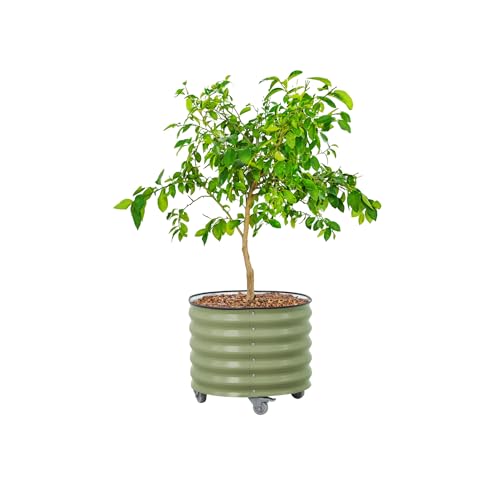
A raised bed can make a small patio productive, but the right planter depends on how much room you have and how you tend it. You may need a large modular bed for vegetables, a rolling pot for a citrus tree, or an elevated planter that keeps tools close at hand. These six options cover everything from compact patios to generous outdoor plots, with different heights, capacities, and mobility features to suit your gardening routine.
The Choices Worth Comparing
PickWhy We Picked ItBest ForAction
Heavy Duty Pick
Vego garden 4′ x 10′ 17″ Modular Metal Raised Garden Bed
Large outdoor plots need more usable soil space than a basic rectangular planter can offer, and this Vego garden bed expands to as much as 40 square feet. Its 17-inch height supports deeper root zones while keeping everyday harvesting above the worst of the bending and kneeling involved in ground-level gardening.
Unlike the compact rolling options later in this list, the modular layout can change as your growing plans develop. For households planting substantial vegetable rows, the 4-by-10-foot format makes this a strong long-term foundation.
Practical Pluses
✓Up to 40 square feet gives vegetables, herbs, and flowers room to spread out.
✓Twenty-three possible arrangements let you reshape the bed around a yard or garden plan.
✓The 17-inch depth provides more soil for root development and improved drainage.
✓Rust-resistant VZ 2.0 steel includes protective coatings for outdoor durability.
Things To Consider
•Its full 4-by-10-foot footprint requires substantial space and assembly of several panels.
•Large soil volume means filling the bed can take time and effort.
Key Specs
Feature
Specification
Why It Matters
Maximum growing area
Up to 40 sq. ft.
Supports a generous mixed planting
Height
17 inches
Provides more rooting depth and easier tending
Material
VZ 2.0 coated steel
Protects against rust and decay outdoors
Made For Ample Outdoor Plots
You will benefit most from this bed if you have a generous garden area and want to grow a substantial mix of vegetables, herbs, and flowers.
Another Choice May Suit
The Vego garden 9-in-1 8′ x 2′ Metal Raised Garden Bed suits smaller layouts that need more shape flexibility than this oversized bed.
A bed that can change shape is useful when you want to experiment with row lengths or turn a long strip into a wider planting area. This 9-in-1 kit provides several arrangements from an 8-by-2-foot format, giving you more flexibility than a fixed rectangular bed without moving to a completely different planter.
Compared with the 4-by-10-foot Vego garden bed, this model prioritizes adaptable dimensions over maximum soil volume. That makes it a practical choice for patios, side yards, and gardeners who are still settling on a permanent layout.
What Pays Off
✓Nine configuration choices make the panels adaptable to different spaces.
✓Coated steel combines zinc, magnesium, and aluminum for outdoor use.
✓The 17-inch height supports deeper roots and easier access to crops.
Trade Offs
•The longest arrangement is still a narrow 8-foot strip rather than a broad growing area.
•You may need to plan the layout before assembly, since changing it later means disassembling and rebuilding the bed.
•Compared with the larger Vego garden option, it offers less total soil capacity for intensive vegetable production.
Built With Changing Gardens In Mind
This kit suits flexible gardeners who want a substantial raised bed without committing to one permanent rectangular footprint.
A Better Fit Elsewhere
The Vego garden 4′ x 10′ 17″ Modular Metal Raised Garden Bed is a better fit for a spacious plot where maximum growing area matters more than changing dimensions.
A large container becomes much easier to manage once locking wheels let you move it away from harsh afternoon sun or reposition it for seasonal changes. This round planter measures about 24 inches across and is designed for patio use, with a 30-gallon format suited to olive trees, citrus, tomatoes, and other substantial plants.
Unlike the broad garden beds that stay in one location, this planter brings the growing area with you. It makes sense for renters, balcony gardeners, and anyone who wants a tree or large container close to a door, though the circular shape gives you less planting width than a rectangular bed.
Real-World Strengths
✓Locking wheels make a heavy container easier to reposition.
An elevated bed solves two common patio problems at once: it lifts the growing area to a comfortable working height and gives tools a home underneath. This 2-by-4-foot Vego garden model adds rolling movement and a lower storage rack, making it useful in patios, courtyards, and other hardscaped spaces.
Where the round citrus planter favors one large container plant, this rectangular bed can serve a mixed planting in a defined 8-square-foot area. Its stated 700-pound capacity is generous for a raised planter, though your actual load will depend on evenly distributed soil and plants.
Notable Upsides
✓Elevated legs reduce the need to bend over the planting area.
✓Rolling wheels add mobility to an otherwise stationary raised bed.
✓A storage rack keeps frequently used garden tools within reach.
✓The 2-by-4-foot footprint fits comfortably along many patio walls.
✓VZ 2.0 coated steel is described as having a service life of more than 20 years.
Things That May Matter
•The storage rack reduces clearance beneath the bed, so check room for larger tools.
•Eight square feet is less growing area than the 4-by-10-foot Vego garden bed.
Core Details
Feature
Specification
Why It Matters
Growing area
2 x 4 feet
Fits a compact raised-bed layout
Stated load capacity
700 lbs
Accommodates a substantial soil load when distributed
Material
VZ 2.0 coated steel
Provides corrosion-resistant outdoor construction
Storage
Lower rack
Keeps tools close to the planting area
Right Fit For
This raised bed suits patio gardeners who want an elevated planting area, convenient tool storage, and the ability to move the bed as needed.
Where A Sibling Pick Shines
The DDK Galvanized Round Raised Garden Bed 4′ x 4′ suits gardeners who want more soil capacity and an open-bottom design instead of elevated storage.
HDPS, a durable plastic used here for the planter body, changes the ownership equation because it does not need the oil treatment associated with untreated wood. The brown finish also blends more naturally into a garden or patio than bright green metal, making this a less conspicuous option for herbs beside a door.
It offers about 3.1 cubic feet of soil across a 7-inch planting depth, plus a lower rack for tools. Compared with the rolling elevated Vego garden bed, it provides similar organization without wheels, while its lighter material may be easier to reposition by hand.
Advantages To Know
✓Weather-resistant HDPS resists cracking, fading, peeling, and rot.
✓Reinforced side and bottom bars support the raised planting area.
✓The lower shelf stores tools within easy reach.
✓A standing design reduces bending during planting and harvesting.
Points To Keep In Mind
•The 7-inch soil depth suits herbs and shallow-rooted crops better than deep-rooted plants.
•Fixed legs mean the planter cannot be rolled away when you need to change its position.
•At roughly 44.5 inches long, it needs a straight, open placement area.
Who Should Grab It
This planter suits beginners, balcony gardeners, and cooks who want a low-maintenance standing bed for herbs and vegetables.
Consider Something Else When
The Vego garden Rolling Elevated Raised Garden Bed 2′ x 4′ is a better fit when you value wheels and a more substantial steel structure over plastic construction.
Root vegetables, fruiting crops, and deep-rooted flowers need more soil depth than a shallow herb box can provide. This DDK bed is 18 inches deep, holds up to 22 cubic feet of soil, and measures 4 feet across, giving you a roomy circular growing area for a substantial backyard planting.
Galvanized metal adds a different ownership profile from the plastic LUE BONA planter, while the open bottom lets excess water drain and gives roots a path into the ground soil. Unlike the elevated Vego garden model, this bed sits directly on the ground, so your final height depends on the terrain beneath it.
What Helps Most
✓An 18-inch depth creates ample soil for roots and larger vegetables.
✓The 22-cubic-foot capacity reduces the need for frequent soil replacement.
✓Galvanized steel provides a protective finish for outdoor use.
✓The open bottom supports drainage and direct contact with ground soil.
Details To Watch
•The 4-foot circular footprint requires a level, open patch of ground.
•Its open bottom is less useful on a hard patio surface without additional planning.
Feature Snapshot
Feature
Specification
Why It Matters
Dimensions
4 x 4 x 1.5 feet
Provides a broad, circular growing area
Depth
18 inches
Supports deeper root systems
Soil capacity
Up to 22 cubic feet
Creates room for substantial plantings
Bottom
Open
Promotes drainage and ground contact
Built With Deeper Roots In Mind
You will find this bed useful for backyard vegetables, fruiting plants, and flowers that benefit from abundant soil and deeper rooting space.
Reach For A Different Pick When
The Rolling Metal Citrus Tree Planter 24″ with Wheels is a better fit for a single large container plant that needs to move between locations.
## Plant-Ready Bed Decisions That Matter
### Match the bed to your growing area
Start with the space you actually have, not the size you hope to fill. A 4-by-10-foot bed suits a broad vegetable plot, while the 2-by-4-foot elevated option fits along a patio wall. Measure the footprint and leave a workable path around the bed for watering, pruning, and harvesting.
### Check root depth before choosing
Soil depth determines which plants can develop comfortably. The 18-inch DDK bed and 17-inch Vego garden beds offer more rooting volume, while the 7-inch LUE BONA box is better suited to herbs and crops with modest root needs. Deep soil also gives you room to add compost or adjust the planting mix as the season progresses.
### Decide whether mobility matters
Rolling planters add convenience when you want to move plants for sunlight, weather protection, or cleaning. The fixed elevated bed and ground-level galvanized bed trade wheels for a more permanent setup. In a busy patio, mobility can be valuable, but it matters less in a stable garden plot.
### Account for soil volume and assembly
Large beds may look simple until you need to fill them with soil. The Vego garden 4-by-10-foot model offers the most room, while the compact rolling planter and narrow herb box are more manageable. Modular beds also require you to settle on a configuration before assembly.
## Lessons From Comparing Garden Beds
### Mistakes Worth Dodging
The most common mistake is choosing a bed by footprint alone. A large container can still have shallow soil, and a narrow bed can still be difficult to reach. Check depth, working height, drainage, and wheel access together before buying.
### What Separates Premium From Basic
Higher-cost garden beds often add more useful capacity, easier movement, or organized storage rather than basic planting space. A larger steel bed may be worth the added expense for a serious vegetable plot, while a simple plastic box can meet the needs of a small herb garden. Match the upgrade to how often you will use it.
## Frequently Asked Questions
### What plants work well in a 17-inch raised bed?
Vegetables with moderate to deep roots, including tomatoes, peppers, leafy greens, and many root crops, fit a 17-inch raised bed well. The extra depth gives roots more room than a shallow herb box.
### Is a rolling garden bed better than a fixed one?
Rolling beds are easier to reposition and work well on patios or hard surfaces. Fixed beds suit permanent garden plots where mobility has little value and a broader, deeper soil area is the priority.
### How deep should a raised bed be for vegetables?
A 7-inch depth works well for many herbs and compact vegetables. Beds around 17 to 18 inches deep provide more flexibility for larger crops and deeper root systems.
### What size raised bed is easiest to manage?
A compact raised bed with a modest soil volume is usually easier to fill, move, and tend. Larger beds support more planting but require more soil, assembly effort, and physical space.
### Do raised beds need a bottom?
No. An open bottom promotes drainage and allows roots to reach surrounding soil, but it works best on ground where water can drain away. Closed containers need reliable drainage holes.
## Final Verdict
Your ideal garden bed comes down to space, soil depth, and how often you want to move it. Large vegetable plots favor the Vego garden modular beds, compact patios suit rolling or elevated planters, and deep-rooted crops benefit from the DDK bed. Match the container to your plants and your available space, then you can tend it with less frustration.