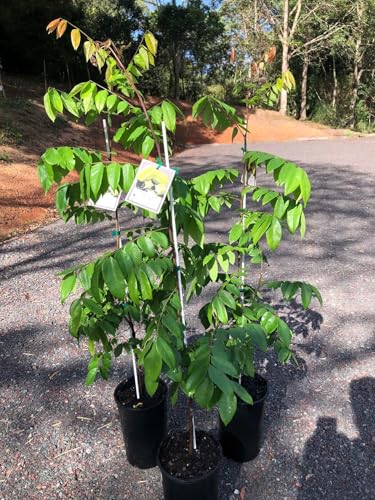
Starting a fruit tree involves two practical decisions: selecting a healthy live plant and preparing a practical way to gather the harvest. The right combination depends on your climate, available space, and the size of the tree, from a compact starfruit seedling to a broad catcher net for orchard-scale gathering.
A 19.7-by-13.1-foot net gives a medium-sized tree a generous collection area without requiring an orchard-sized sheet. For home growers tired of chasing individual plums or walnuts, spreading it beneath the canopy turns a scattered harvest into a more orderly task.
Compared with the square 13.1-foot option, this rectangle covers more ground along its longer edge, though it is still less expansive than the 26.2-foot version. For most backyard orchards, that middle size appears easier to position and store.
Well-Handled Touches
✓High-density polyethylene, or HDPE, resists UV exposure, oxidation, and age-related wear during outdoor use.
✓Double-stitched seams and fine mesh help the net remain stable while holding fruit, leaves, and small debris.
✓Rust-proof grommets provide reinforced attachment points for hanging the net around a tree.
✓The closely woven surface cushions fallen fruit and makes collection easier than picking from bare soil.
Details To Watch
•The rectangular shape needs enough clearance on two sides, so measure the tree’s drip area before laying it out.
•Outdoor exposure still calls for prompt removal of collected fruit and leaves rather than leaving damp material inside the mesh.
Feature Snapshot
Feature
Specification
Why It Matters
Dimensions
19.7 x 13.1 ft
Provides broad coverage beneath a medium tree.
Material
HDPE mesh
Offers outdoor durability with relatively little weight.
Reinforcement
Double stitching and grommets
Supports ground placement or hanging around a trunk.
Built With In Mind
You benefit most from this net when you grow a medium-sized fruit tree in a yard with enough open ground for a rectangular layout.
Where A Sibling Pick Shines
Brivoxine 26.2 x 13.1 ft Fruit Net suits you better when one tree has a wide canopy or several nearby trees need coordinated coverage.
The extra length in the 26.2-by-13.1-foot Brivoxine net makes it the most expansive gathering surface in this group. It suits a broad tree, a row of smaller trees, or a garden where you want one sheet to catch walnuts, olives, plums, and seasonal leaves.
Where the 19.7-foot version offers a more manageable middle ground, this larger net prioritizes coverage. You may find it useful to position diagonally beneath a spreading canopy, although the full rectangle requires more open space than a compact setup.
A Favorable Mix
✓The extended surface reduces the need to move or reposition the net repeatedly under a wide canopy.
✓HDPE construction provides outdoor durability without making the net cumbersome to handle.
✓Tight mesh protects fruit from direct contact with rough ground and soil.
✓Reinforced edges and grommets suit either flat placement or suspension around a tree.
Practical Considerations
•Its size makes storage and folding more cumbersome than with the Brivoxine 13.1 x 13.1 ft Fruit Net.
•One net may not reach every tree in a multi-tree orchard, so assess the spacing between trunks before placing it.
Quick Facts
Feature
Specification
Why It Matters
Coverage
26.2 x 13.1 ft
Suits wider trees and orchard rows.
Construction
HDPE, double-stitched mesh
Combines outdoor resistance with tear-reinforced edges.
Made For
This net serves gardeners with large fruit trees, several closely spaced trees, or a harvest area where broad coverage matters more than compact storage.
Reach For A Different Pick When
Brivoxine 19.7 x 13.1 ft Fruit Net is the easier choice for a medium tree or a yard where folding and repositioning a larger sheet would be inconvenient.
A 13.1-foot square is the straightforward choice for a small tree or a compact section of a yard. Its symmetrical shape also makes it easier to center beneath a young tree, and the smaller footprint folds away with less fuss than the two rectangular Brivoxine nets.
Compared with the 26.2 x 13.1 ft Fruit Net, coverage is the obvious limitation. For a modest canopy in a neat planting bed, though, that smaller footprint may feel more useful because you can lift, shake, and reposition it without dragging a large sheet across the ground.
A Strong Showing
✓The square layout sits neatly under a young or compact fruit tree.
✓Lightweight HDPE mesh makes the net straightforward to spread, gather, and carry.
✓Fine weaving helps separate fruit from the ground while reducing soil contact.
✓Double stitching and grommets support both flat use and hanging placement.
Small Caveats
•A spreading mature tree may extend beyond the net’s edges, leaving some fruit outside the collection area.
•Several smaller nets may be needed across a larger garden, which can be less convenient than using one broad sheet.
The Right Fit
You benefit most from this compact net when you tend a young tree, a narrow planting bed, or a small yard where easy handling matters.
Consider Something Else
Brivoxine 26.2 x 13.1 ft Fruit Net offers a better fit for a wide mature canopy or a group of nearby fruit trees.
The starfruit plant offers a direct starting point for a home orchard in zones 8 through 11. You receive a live plant measuring about 10 to 18 inches, which gives you a manageable tree to transplant into a suitable site rather than starting from seed.
Unlike the Brivoxine nets, this item adds a plant rather than supporting the harvest later. Its fruit is not included, so your first step is establishing the tree in suitable growing conditions before planning for crop collection.
Positive Takeaways
✓The live 10-to-18-inch plant gives you a head start compared with beginning from seed.
✓Starfruit, also called carambola, offers an unusual fruit option for gardeners in warmer zones.
✓The compact nursery size is practical for initial planting and relocation.
Factors To Consider
•Zones 8 through 11 are a firm fit check because the plant is intended for those growing regions.
•The shipment contains the tree rather than fruit, so you will not receive a ready-to-eat crop.
Core Details
Feature
Specification
Why It Matters
Plant size
10 to 18 inches
Indicates a young nursery plant ready for site selection.
Growing zones
8 through 11
Identifies the regions suited to this starfruit tree.
Who Will Love This
This plant suits you best if you live in zones 8 through 11 and want to establish a starfruit tree in a sunny home orchard or suitable garden space.
Another Choice May Suit
Brivoxine 19.7 x 13.1 ft Fruit Net serves you better once you already have a producing tree and need a dependable ground-level collection surface.
The blue American agave brings a strong architectural accent to a rock garden or dry landscape. Its large, thick leaves grow from a central crown and arch outward, creating a sculptural focal point without relying on flowers for visual impact.
Unlike the Generic Carambola Starfruit Live Plant, this is a foliage and landscape-design choice rather than an edible crop. For gardeners shaping a low-water-style bed, the 3-gallon listing provides a practical starting size, although location rules need checking before ordering.
The Upside
✓Blue-green foliage adds a strong visual anchor to rock gardens and open beds.
✓Arching leaves create a bold, fountain-like form from a central crown.
✓The plant’s origins in dry regions of Mexico support its suitability for dry-landscape planting.
✓A 3-gallon size gives you a more developed starting point than a very small nursery specimen.
Worth Noting
•Orders are canceled for residents of Arizona because of federal restrictions.
•This agave does not provide fruit, so it serves a decorative role within a fruit-growing landscape.
Who Should Grab It
You benefit most from this agave if you are designing a rock garden, dry landscape, or bold container composition outside Arizona.
Look Elsewhere
Generic Carambola Starfruit Live Plant is a better fit for your project when your priority is growing edible fruit in zones 8 through 11.
A 3-to-4-foot Moonglow juniper gives you a substantial upright plant while remaining small enough for an entryway or mixed border. Its silvery-blue color provides a cooler visual counterpoint to green shrubs and broad-leaved perennials.
Hardiness refers to a plant’s tolerance of conditions within its suitable growing range, and hardiness is one of the stated strengths of this juniper. The main restriction is geographic, however, so confirm your location before committing to it.
Practical Pluses
✓Silvery-blue foliage adds year-round visual structure to a landscape plan.
✓The upright form works well near entrances, paths, and mixed garden borders.
✓A 3-to-4-foot tree provides noticeable height without the footprint of a full-size landscape tree.
✓Its adaptable character suits a range of ornamental garden settings.
Where It May Fall Short
•Orders are canceled for residents of Alaska, Arizona, California, and Hawaii because of federal restrictions.
•The plant serves as a landscape accent rather than a fruit-producing tree.
Feature Facts
Feature
Specification
Why It Matters
Height at listing
3-4 ft.
Provides an established start for borders and entryways.
Foliage color
Silvery-blue
Creates a cool-toned accent among green plants.
Form
Upright
Adds vertical definition to a garden design.
Whose Garden It Belongs On
This juniper suits you best when you want a silvery-blue vertical accent and your location is outside the four restricted states.
Swap It Out When
Generic Carambola Starfruit Live Plant is the stronger choice for a productive edible tree in zones 8 through 11.
## Matching Garden Projects With The Right Option
Start with the role the plant will play in your garden. A live starfruit tree needs a suitable climate and space to mature, while the three Brivoxine nets address the later task of gathering fruit from established trees. The agave and juniper serve decorative roles and should be selected for design rather than food production.
Measure the area before choosing a net. The 13.1-foot square suits a compact tree, the 19.7-by-13.1-foot rectangle offers a balanced middle ground, and the 26.2-by-13.1-foot version covers broader ground. A clearly defined area makes positioning the net under the canopy easier and helps you avoid leaving part of the harvest outside the mesh.
For live plants, climate and shipping restrictions deserve equal attention. The starfruit plant is listed for zones 8 through 11, while federal restrictions prevent orders for the agave in Arizona and the juniper in Alaska, Arizona, California, and Hawaii. Confirm those details before arranging the rest of your garden.
Finally, think about how each object will be used. A catcher net folds, carries, and gets placed beneath a tree, while a nursery plant needs an established planting site. Decorative plants can complement an orchard, but they should not be mistaken for edible additions to your harvest.
## Practical Checks Before Ordering
### Mistakes Worth Dodging
Do not judge a catcher net only by its listed length. The 13.1-foot width also determines how much of a spreading canopy it can cover, so compare both dimensions with the area beneath your tree.
Avoid ordering a live plant before checking climate zones, current restrictions, and the planting location. A suitable species can still struggle when the site does not match its growing needs.
### What The Upgrade Pays For
Larger fruit nets spend more space on coverage, which matters under broad canopies or beside several trees. The Brivoxine 19.7 x 13.1 ft Fruit Net offers a practical middle ground when the largest sheet feels cumbersome.
Higher-value choices here are not automatically better. The smaller square net, compact starfruit plant, agave, and juniper each serve a different garden task, so the most useful option depends on the job rather than on a single feature.
## Frequently Asked Questions
### Where can I order fruit trees for home planting?
The product page is the direct starting point for checking the available live plant and related harvesting equipment. Confirm climate suitability, shipping restrictions, and dimensions before placing an order.
### Which option is an actual fruit-bearing plant?
Generic Carambola Starfruit Live Plant is the edible fruit tree in this group, and it is intended for zones 8 through 11. The remaining choices are harvesting nets or ornamental landscape plants.
### Which fruit-catching net provides the most coverage?
Brivoxine 26.2 x 13.1 ft Fruit Net has the largest listed area, with a 26.2-foot length and 13.1-foot width. That size suits broad trees or multiple nearby trees but takes more room to handle and store.
### Can the Brivoxine nets have uses beyond fruit collection?
Yes, the nets can also catch leaves and serve as protective barriers in gardens or around pools. Their reinforced edges and grommets support several placement arrangements.
### Can I order the agave and juniper in every state?
No. The agave cannot be ordered in Arizona, while the juniper is unavailable in Alaska, Arizona, California, and Hawaii because of federal restrictions.
## Final Verdict
Start with the project you actually want: a live fruit tree, a dependable harvest net, or a landscape accent. The starfruit plant fits zones 8 through 11, the three Brivoxine sizes cover different orchard footprints, and the agave and juniper add structure where the climate and shipping rules permit. Match the choice to the space and the job, and the garden plan becomes much easier to manage.