

A windowsill full of basil or mint can fail for reasons that have little to do with your care routine. The container may drain too quickly, the growing medium may compact, and the planter may demand more attention than a busy kitchen can provide. This lineup covers both soil mixes and self-watering planters, giving you practical options for starting herbs on a countertop, windowsill, patio, or balcony.
The Lineup, Simplified

Vego garden Mini Herb Planter with Trellis, Sage Green 2 Pack
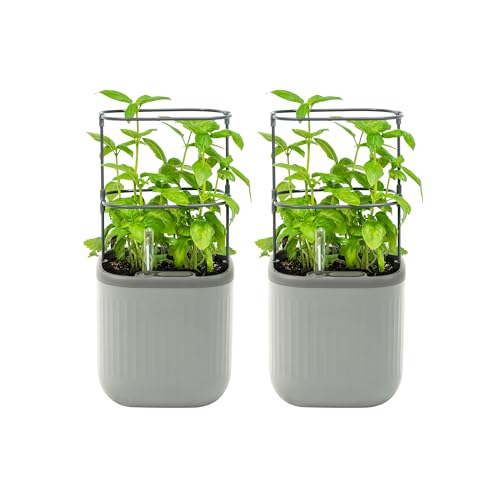
Vego garden Mini Herb Planter with Trellis, Fog Gray 2 Pack

Vego garden EZ Leafy Planter Self-Watering Soil-Based Box with Humidity Dome

Hoffman 10410 Cactus and Succulent Soil Mix, 10 Quarts

Miracle-Gro Organic Outdoor Potting Mix, 16 qt.

Back to the Roots Organic Coir, 51 Quarts
What Each Pick Brings To The Table
This pair fits a countertop where mint, climbing vegetables, or small flowering plants need both a pot and vertical support. The curved trellis gives stems somewhere to climb, while the sage-green finish looks more decorative than the usual basic nursery container.
Its reservoir stores about 1.1 liters and can supply plants for up to 15 days after filling, though actual intervals vary with heat, growth, and water use. A visible gauge and adjustable lever help you avoid both dry roots and standing water. The honest read is that this is a planter system, not a soil substitute, so you still need a suitable growing medium.
Notable Gains
- The reservoir reduces the daily watering habit required by open pots.
- The water gauge makes reservoir levels visible without opening the planter.
- Internal vents and side windows support airflow around the root zone.
- The curved trellis gives climbing plants a practical place to grow upward.
- Two planters suit separate herbs or grouped patio planting.
Points To Keep In Mind
- Check the available countertop and vertical clearance before choosing a trellised format.
- Adjust the water control according to the plant’s needs rather than leaving it fully engaged.
Quick Facts
Built With In Mind
This option suits indoor cooks and apartment growers who want climbing herbs in a compact, low-attention self-watering container.
Another Choice May Suit
The Vego garden EZ Leafy Planter is a better fit for lettuce, spinach, and tender seedlings that benefit from a humidity dome rather than a climbing trellis.
The fog-gray version shares the same practical foundation as the sage-green set: a reservoir, water gauge, ventilated inner planter, and curved support. Its distinguishing feature is visual rather than technical, making it easier to place beside stainless-steel appliances, gray cabinetry, or other understated kitchen finishes.
Two units provide separate homes for basil and mint or a coordinated setup on an office desk. Compared with the sage-green pair, the planting capacity and watering arrangement remain the same, so your decision comes down to the color and how it fits your room. Nothing about the design is flashy, which is exactly why it works well in a modern space.
The Good Stuff
- Self-watering storage reduces the need for constant top-up visits.
- The neutral finish sits comfortably beside modern kitchen appliances.
- Integrated trellis support gives climbing herbs room to develop.
Small Caveats
- The trellis adds height, so low cabinets and shelves may not have enough clearance.
- A two-pack occupies more counter space than one compact herb pot.
- Color alone should not outweigh the need for a separate soil medium.
The Right Fit
This pair works for style-conscious growers who want a coordinated self-watering herb setup in a neutral-toned kitchen or office.
Where A Sibling Pick Shines
The sage-green Vego garden Mini Herb Planter offers the same core functions and is a better fit when a warmer color coordinates better with your space.
This planter is built around food crops that stay compact above the soil. Lettuce, spinach, kale, basil, and cilantro can share the box, making it useful for small kitchens where a row of separate containers would waste space. The soil-based format also gives roots a familiar medium rather than the limited rooting area found in many countertop hydroponic systems.
Its reservoir and wicking system move moisture toward the soil, while the clear humidity dome helps maintain humidity around young seedlings. Unlike the trellised Vego garden Mini Herb Planter, this model prioritizes leafy greens and early growth. You may find the dome especially useful during seed starting, then less necessary once plants become established.
Where It Helps
- The wicking system supports steadier moisture around the root zone.
- The humidity dome creates a more controlled setting for seed germination.
- Its compact shape suits a windowsill, kitchen counter, apartment, or office.
- Soil-based growing suits cooks who prefer soil cultivation for leafy herbs.
Things To Consider
- Confirm that your available counter and windowsill space can accommodate the dome.
- The design is better suited to compact greens than plants requiring a tall climbing support.
Feature Snapshot
Who Will Love This
This planter suits apartment cooks and beginners who want fresh lettuce or kitchen herbs in one soil-based countertop system.
A Better Fit Elsewhere
Miracle-Gro Organic Outdoor Potting Mix is the better fit for patio containers that need a larger supply of conventional potting medium.
Hoffman 10410 is the specialized pick rather than a general herb mix. Its cactus-and-succulent formula is formulated to loosen dense clay, reduce caking, and improve drainage and aeration. That makes it a sensible amendment for pots where ordinary garden soil tends to become compressed or stays wet for too long.
Most culinary herbs prefer a more moisture-retentive medium than cacti do, so this mix makes more sense for containers holding rosemary, thyme, or other dry-adapted herbs than for water-loving basil and mint. The 10-quart size also gives you room to refill several small pots. Nothing flashy, just a focused soil blend for drainage-sensitive containers.
The Practical Payoff
- Improved drainage helps prevent compacted soil from remaining saturated.
- The loose formula supports oxygen movement around roots in clay-heavy mixtures.
Possible Compromises
- Its cactus focus makes it less suitable as the primary mix for moisture-loving herbs.
- Check your pot drainage holes because a fast-draining mix still needs somewhere for excess water to go.
Made For
This soil serves gardeners growing cacti, succulents, or dry-adapted herbs in containers with strong drainage.
Consider Something Else When
Back to the Roots Organic Coir is a better fit for seedlings and general potting when moisture retention and compact storage matter more than a mineral-heavy cactus formula.
Miracle-Gro Organic Outdoor Potting Mix is the practical option for patios, balconies, and other outdoor containers. Its quick-release natural fertilizer feeds container plants for up to two months, which removes the need to add a separate fertilizer at the outset. That built-in support is particularly useful for herbs that will live in the same pot for an extended stretch.
The formula also uses responsibly sourced peat and is crafted for container gardening rather than field use. The 16-quart package suits multiple pots, although patio planters can consume a surprising amount of medium. Compared with the Back to the Roots Organic Coir, this is a ready-to-use mix with included plant nutrition rather than a compressed block that must be expanded with water.
What Pays Off
- Quick-release natural fertilizer supports plants for up to two months.
- The ready-to-use formula saves time compared with expanding a compressed soil block.
- A 16-quart quantity works well across several outdoor herb containers.
Details To Watch
- Its outdoor-container focus makes it less directly aimed at indoor windowsill planting.
- The included feeding period may not cover the entire life of a long-season herb.
- Confirm that each container has adequate drainage before filling it.
Important Details
Who Should Grab It
This potting mix suits patio growers and balcony gardeners who want a ready-mixed medium with initial nutrition included.
Reach For A Different Pick When
Back to the Roots Organic Coir fits better when compact storage, indoor use, and the ability to control the expanded volume are your main priorities.
Back to the Roots Organic Coir starts as a compact block rather than a heavy bag of loose medium. Adding water expands it into 2 cubic feet of coconut coir, making it a practical choice for apartments, garden sheds, or anyone with limited storage space. The coir supports both water retention and aeration, which are useful balancing qualities in container soil.
You can use the expanded material for indoor or outdoor planting, including seed starting and pot filling. The block is straightforward to store before use, though you need a container large enough for it to expand and enough time to prepare the medium before planting. Compared with Miracle-Gro Organic Outdoor Potting Mix, coir gives you a base growing material without the ready-mixed fertilizer included in that option.
A Favorable Mix
- The compressed block takes up much less room before expansion.
- One block expands into 2 cubic feet for seed starting or potting.
- Coir helps balance moisture retention with root-zone aeration.
- The same expanded medium suits indoor and outdoor containers.
- It avoids the inconvenience of storing a full bag of loose potting soil.
Minor Gripes
- You must add water and allow the block to expand before using it.
- Plan the final container volume carefully because the compressed product expands substantially.
The Main Details
Whose Shelf It Belongs On
This coir block suits small-space growers and seed starters who value compact storage and flexible indoor-to-outdoor use.
Swap It Out When
Miracle-Gro Organic Outdoor Potting Mix is a better fit for outdoor containers where you want a ready-to-use mix with natural fertilizer already included.
What Matters in a Potted Herb Medium
Match the Mix to the Plant
Herbs fall into different moisture groups. Basil and mint favor consistently moist soil, while thyme, rosemary, and other Mediterranean herbs prefer sharper drainage. General container potting mix works well for the first group, and a looser cactus-and-succulent blend can suit the second group.
A drainage hole remains essential in either case. Soil that holds too much water deprives roots of oxygen, while a mix that drains instantly may demand frequent watering in hot weather.
Decide Between Ready Mix and Coir
Ready-mixed potting soil saves preparation time and may include an initial supply of nutrients. Coir begins as a compact block, expands with water, and gives you control over the final volume. It also suits seed starting and mixed container projects.
Account for the full expansion before choosing a storage vessel or mixing tub. The compressed format only saves space until water is added.
Think About the Container System
A self-watering planter changes how moisture reaches the roots. Reservoirs and wicking systems reduce the need for daily watering, while vents help maintain airflow around the root zone. A humidity dome serves a different purpose, creating a controlled environment for tender seedlings and young herbs.
The trellised Vego garden planters are better suited to climbing plants, while the EZ Leafy Planter favors compact greens. Choose the system around plant form rather than treating every countertop herb the same way.
Watch the Details Before You Pot
Common Shopping Slip Ups
Choosing by the word “organic” alone can hide an important mismatch. A cactus mix may be excellent for drainage yet poorly suited to thirsty basil. Always check drainage, plant type, and the amount of growing medium needed before filling a pot.
What The Higher Tier Buys
Additional cost may buy included plant food, a specialized soil structure, or a complete self-watering system. Those extras help when you value convenience or have a specific crop in mind. A straightforward coir block can be the more economical choice for mixing and seed starting.
Frequently Asked Questions
Can I Use Cactus and Succulent Soil for Herbs?
Yes for dry-adapted herbs such as thyme or rosemary, provided the container drains freely. Basil, mint, and other moisture-loving herbs generally perform better with a more moisture-retentive potting mix.
Should Garden Soil Be Used in Herb Pots?
Ordinary garden soil can compact inside containers and may not drain consistently. A potting mix formulated for containers is usually a more dependable starting point for herbs grown in pots.
Does Organic Potting Mix Contain Fertilizer?
It depends on the product. Miracle-Gro Organic Outdoor Potting Mix includes quick-release natural fertilizer that feeds plants for up to two months, while the coir option is presented as a base growing medium.
Is Coir Better Than Potting Mix for Containers?
Coir wins on compact storage and flexible use, while ready-mixed potting soil offers more convenience and may include initial nutrition. The better choice depends on storage, watering habits, and how much preparation you want.
Do Self-Watering Planters Include Soil?
No, the Vego garden planters shown here are growing containers rather than soil products. You still need to add a suitable growing medium, and the plant’s moisture preferences should guide your choice.
Closing Thoughts
The best fit depends on whether you need a growing medium, a complete planter, or a specialized soil blend. Start with your herbs’ moisture needs, then account for drainage, space, and the amount of daily attention you want to give the pot. The right setup makes watering simpler and keeps your growing routine easier to maintain.
