

A tomato bed can look healthy above the soil while still lacking what plants need for steady fruit production. The right fertilizer depends on your growing medium, how you apply nutrients, and whether you want a broad-purpose feed, a planting-stage amendment, or a tomato-specific formula. These six options cover soil-based beds, containers, raised beds, and coco-based setups, with each approach suited to a different level of gardening experience.
The Leading Options At A Glance

Miracle-Gro Plant Food 12.5 lb.

Espoma Bio-Tone Starter Plus 4-3-3 with Mycorrhizae, 25 lb.

BUILD A SOIL Premium Worm Castings for Gardens, 2 Gallon

Espoma Plant-Tone 5-3-3 Natural & Organic, 36 lb.

Farmer’s Secret Tomato Booster 3-8-7 with Humic Acid, 32 oz
More Details On Our Top Picks
Mixing a water-soluble feed into your watering routine makes this a practical choice for a large, mixed garden. The 24-8-16 formula supplies nitrogen for leafy growth, phosphorus for root and flower development, and potassium for general plant vigor, with tomatoes included among the supported vegetables.
Unlike the slow-release organic options later in this list, this product puts nutrients into the watering solution for relatively quick uptake. For most home beds, the generous 12.5-pound container and coverage of approximately 5,000 square feet make it easier to serve tomatoes, flowers, houseplants, and nearby shrubs with one product.
Useful Strengths
- One formula fits tomatoes, roses, flowers, vegetables, houseplants, trees, and shrubs.
- Water-soluble granules give you control over each watering-can application.
- The 24-8-16 analysis supplies a balanced mix of three primary plant nutrients.
- The container can cover approximately 5,000 square feet of garden space.
Things To Consider
- Outdoor dilution is different from the indoor rate, so keep the two instructions separate.
- A general-purpose feed does not provide the crop-specific formulation offered by Farmer’s Secret Tomato Booster.
Key Specs
Made For
This feed suits gardeners who want one simple product for a large, mixed planting area rather than separate formulas for every crop.
Where Another Pick Suits Better
Espoma Plant-Tone 5-3-3 is a better fit for gardeners prioritizing an organic, slow-release approach over soluble feeding.
Transplanting day calls for a different approach than routine feeding, and Bio-Tone Starter Plus is designed for that moment. You mix it into the soil used to fill the planting hole, placing the amendment around the new plant’s root zone instead of dissolving it in a watering can.
This makes it especially useful for beginning gardeners setting out tomato transplants in native soil or prepared garden beds. The 4-3-3 analysis provides nitrogen, phosphorus, and potassium, while endo and ecto mycorrhizae, beneficial fungi that interact with plant roots, add a distinct biological element.
Everyday Perks
- Supports tomatoes and other plants at planting or transplanting time.
- Includes both endo and ecto mycorrhizae in the blend.
- The 25-pound bag suits multiple new plantings in one garden.
- Its 4-3-3 analysis includes 5% calcium for root-zone establishment.
Practical Considerations
- It is a transplant-stage product rather than a simple weekly feed for established tomatoes.
- Thorough blending with backfill soil takes more preparation than pouring granules into a watering can.
Who It Suits Best
It fits gardeners planting or transplanting tomatoes directly into soil and preparing the root zone from the outset.
Consider Something Else When
Miracle-Gro Plant Food is a better fit when you want to fertilize established plants through routine watering.
Tomato plants in containers often have less soil available for buffering nutrients than plants growing in a broad garden bed. These worm castings, made from earthworm digestion and used as vermicompost, give you an organic material to incorporate into container or raised-bed soil rather than a premeasured liquid feed.
The two-gallon format is manageable for a busy potting bench, and the material is described as screened, evenly moist, and dark in color. For gardeners building soil gradually, that physical form can be more useful than trying to correct an entire bed with one concentrated fertilizer.
Why It Works Well
- Works as both a soil amendment and a garden fertilizer material.
- Fits raised beds, containers, and outdoor vegetable plots.
- The 2-gallon volume is easier to handle than a large dry fertilizer sack.
Smaller Limitations
- You will need additional quantities for a sizable raised bed.
- Its benefit depends on blending it into the growing medium rather than treating it as a complete replacement for targeted feeding.
Quick Facts
Built With In Mind
This option suits gardeners improving container soil or preparing a small raised bed with organic material.
A Better Fit Elsewhere
Espoma Bio-Tone Starter Plus is the better choice for a planting hole that needs a measured, ready-to-apply starter fertilizer.
Plant-Tone takes a steadier approach than the soluble Miracle-Gro option because its natural organic ingredients break down gradually. That slow release can suit gardeners who want to nourish tomatoes, peppers, squash, lettuce, flowers, trees, and shrubs without treating every watering session as a feeding opportunity.
The 5-3-3 analysis includes 5% calcium, and the product carries natural and organic positioning without being limited to new transplants. In a mixed kitchen garden, that flexibility makes it easier to maintain one feeding routine across several types of vegetables.
The Upside
- Slow nutrient release suits established tomatoes and mixed beds.
- One product covers vegetables, flowers, trees, and shrubs.
- The 36-pound bag supports repeated use across a larger garden.
- Tomatoes are specifically included among the supported vegetables.
Trade-Offs
- Slow-release feeding offers less immediate control than a water-soluble formula.
- Its general-purpose analysis is less focused than a tomato-specific 3-8-7 blend.
Feature Snapshot
The Right Fit
It fits gardeners with an established, mixed vegetable bed who favor organic feeding over quick soluble nutrition.
Look Elsewhere When
Farmer’s Secret Tomato Booster is a better fit for a garden devoted mainly to tomatoes and seeking a higher-phosphorus formula.
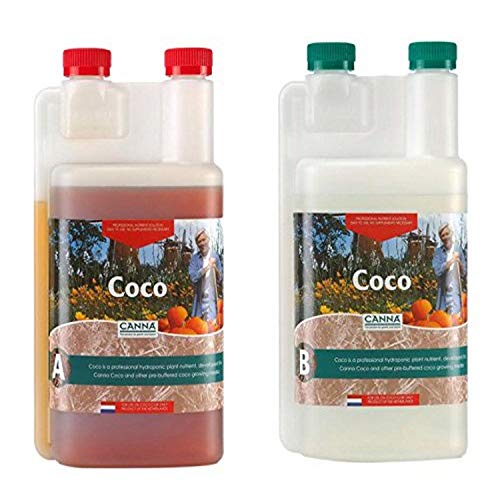
Coco growing changes the fertilizer equation because the growing medium supplies little of the nutrient buffering found in garden soil. This A-and-B set is tailored for pre-buffered Canna Coco used in pots or growing bags, where tomatoes need nutrients delivered through the growing system rather than through a broad soil amendment.
The two components have separate analyses: A supplies 4-0-1, while B provides 0-4-2. They must be used in equal amounts, which gives experienced indoor or greenhouse growers a controlled feeding system designed for rapid plant availability.
Everyday Wins
- Formulated specifically for pre-buffered Canna Coco.
- Separate A and B formulas provide complementary nutrient analyses.
- The nutrients are designed to become quickly available in a controlled system.
- The set works with both pots and growing bags.
Where It Is Less Suited
- It is a specialized coco feed rather than a general garden fertilizer.
- Using A and B in unequal amounts breaks the intended balance.
Whose Shelf It Belongs On
It belongs with growers using Canna Coco in controlled indoor, greenhouse, or soilless tomato setups.
Another Choice May Suit
Espoma Plant-Tone 5-3-3 suits gardeners growing tomatoes in ordinary garden soil or containers.
A bed devoted entirely to tomatoes gives you a clearer case for a crop-specific formula. Tomato Booster uses a 3-8-7 ratio, placing more emphasis on phosphorus than the general-purpose 5-3-3 Plant-Tone blend, and it also includes humic acid, iron, and calcium.
Its concentrated format makes dilution simple: two teaspoons per gallon, applied weekly through the growing season. For a gardener maintaining several tomato plants, the tomato-specific analysis is the meaningful upgrade, while the 32-ounce container is less about bag storage and more about repeated liquid feeding.
Everyday Advantages
- The formula is designed specifically for tomatoes across their growing cycle.
- The 3-8-7 ratio gives tomatoes a phosphorus-forward nutrient profile.
- Humic acid supports nutrient availability and soil interactions.
- Iron and calcium round out the targeted blend.
- Two teaspoons per gallon creates a straightforward weekly mixing routine.
Points To Note
- The weekly application schedule requires consistent watering and mixing.
- Its tomato focus offers less value for a mixed bed of vegetables and flowers.
Technical Highlights
Best Suited To
It suits gardeners growing multiple tomato plants who want a dedicated formula and a predictable weekly feeding routine.
Reach For A Different Pick When
BUILD A SOIL Premium Worm Castings is a better fit for building container soil before planting rather than feeding established tomato plants.
Planting a Tomato Bed With Fertilizer That Fits
Start With the Growing Medium
Your growing medium determines which form makes practical sense. Garden soil and potting mix can receive slow-release granular products, while pre-buffered coco relies on a controlled liquid feeding system. Raised beds may need amendments, and containers require closer attention because their limited soil volume cannot buffer nutrients as effectively as a deep bed.
Read the NPK Ratio
NPK describes the proportion of nitrogen, phosphorus, and potassium in a fertilizer. Nitrogen supports leafy growth, phosphorus contributes to roots and reproductive development, and potassium supports general plant function, but a tomato bed does not benefit from selecting a ratio by guesswork alone.
Match Feeding to Growth Stage
Starter fertilizer concentrates on the period immediately after planting or transplanting, when new roots enter their growing medium. Established plants may receive broader feeding through the season. Concentrated tomato formulas require accurate dilution and regular application, while slow-release products fit a lower-intensity routine.
Check Mixing, Coverage, and Storage
Compare the label directions with your watering can, bed size, and available storage. A large dry bag may suit a broad garden, a concentrated liquid needs accurate measuring, and worm castings require enough space to blend with soil. Checking these details before opening a container prevents the most common application headaches.
Mistakes Worth Dodging
Avoid choosing solely from the word “natural,” since that label does not tell you the nutrient analysis, release pattern, or application method. Also resist applying several fertilizers together, because excess nitrogen or overlapping nutrient products can make feeding harder to manage. Match the product to your growing medium and follow its dilution or placement instructions.
What Separates Premium From Basic
Higher cost may reflect concentration, biological ingredients, a narrower crop focus, or packaging that reduces measuring and mixing. Those extras make sense when they match your setup, such as a root-zone starter for new transplants or a tomato-specific liquid feed for a dedicated crop. A basic broad-purpose option can be more sensible for a small, mixed garden.
Frequently Asked Questions
What Does Natural Fertilizer Mean for Tomato Plants?
Natural fertilizer generally refers to inputs or processing methods rather than a universal performance standard. You still need to compare the nutrient analysis, application method, and release pattern against your soil and growing setup.
Can Any of These Fertilizers Be Used on Tomatoes?
All six have some relevance to tomatoes, but their roles differ. Espoma Bio-Tone Starter Plus targets planting and transplanting, CANNA Coco A & B serves coco systems, and the remaining choices offer broader soil, soluble, or tomato-focused feeding.
Is a Higher NPK Ratio Always Better for Tomatoes?
No, because NPK represents a nutrient proportion rather than a simple strength score. A suitable ratio depends on the crop stage, existing soil nutrients, growing medium, and the product’s complete ingredient profile.
Are Worm Castings Better Than Granular Fertilizer?
Worm castings are especially useful for improving or blending growing media. Granular or liquid fertilizers provide more defined nutrient ratios, so established tomato plants can still benefit from a targeted feeding program.
Can CANNA Coco A & B Be Used in Regular Garden Soil?
No, it is formulated for pre-buffered Canna Coco rather than ordinary garden soil. Use a soil-based or container amendment such as worm castings and a crop-appropriate plant food for conventional beds.
Final Verdict
For most soil-based tomato gardens, Espoma Plant-Tone offers the most balanced organic approach, while Bio-Tone Starter Plus handles the critical transplant stage. Water-soluble Miracle-Gro suits flexible routine feeding, CANNA Coco A & B belongs with controlled soilless systems, and Tomato Booster serves dedicated tomato plantings. Match the format to your medium and follow the application directions carefully.
