

Japanese maples look their best when their soil supports steady growth, healthy leaves, and strong branching. The right fertilizer can help there, but tree age, planting conditions, and watering habits matter just as much. I have narrowed the field to seven useful options, including water-soluble acid plant food, slow-release spikes, and mycorrhizal soil inoculants, so I can help home gardeners match the product to the job that actually needs doing.
The Essentials At A Glance

Miracle-Gro Acid Plant Food 5 lb.

Jobe’s Evergreen Spikes, 15-Pack
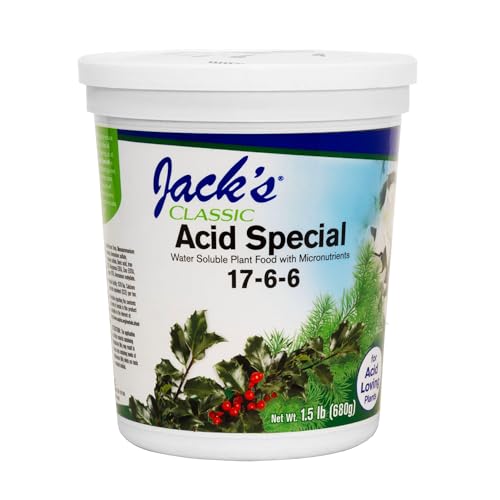
Jack’s Classic Acid Special 17-6-6, 1.5 lb.

Organo Republic Mycorrhizal Soil Inoculant 4 oz, 100,000 Propagules

Organo Republic Mycorrhizal Soil Inoculant 1 lb, 400,000 Propagules

Organo Republic Mycorrhizal Soil Inoculant 8 oz, 200,000 Propagules

Great White Mycorrhizal Fungi 4 oz, 3-in-1 Formula
The Details Behind The Selections
A Japanese maple in a large container cannot reach the feeding patterns of a tree rooted in open ground, and that makes regular liquid feeding easier to control. Miracle-Gro Acid Plant Food is a water-soluble option made for acid-preferring plants, including azaleas, camellias, rhododendrons, gardenias, hibiscus, hollies, hydrangeas, and orchids.
That cross-species list makes it more versatile than a narrowly named tree feed, particularly for mixed containers. Unlike Jack’s Classic Acid Special, which also allows foliar application, this 5-pound package centers on straightforward watering-based feeding. I see it as a sensible choice for container maples and mixed acid-loving plantings.
Notable Upsides
- Water solubility makes measured feeding straightforward.
- Supports a broad collection of acid-preferring plants.
- The 5-pound size suits several containers or a recurring routine.
- A familiar option for mixed garden and container plantings.
Things To Consider
- It is a general acid-plant food rather than a Japanese-maple-specific formula.
- Concentration and watering frequency still need to follow the label.
Key Specs
Made For
I recommend this formula for container gardeners, beginners, and mixed plantings that already include several acid-preferring plants.
A Better Fit Elsewhere
Jack’s Classic Acid Special 17-6-6, 1.5 lb. suits gardeners who need both root and foliar feeding options.
Some planting areas receive water reliably, while others stay untouched for weeks. Jobe’s Evergreen Spikes remove much of the regular mixing and measuring involved with liquid fertilizer, releasing nutrients slowly near the root zone over a full year. That extended schedule works well for low-maintenance beds where occasional watering is the norm.
The important qualification is the word evergreen. These spikes are formulated for evergreen trees and shrubs, while Japanese maples are deciduous, so I would not treat this as a first-choice maple feed. The compact installation and slow-release format may still be attractive in mixed plantings where a Japanese maple shares the bed with compatible evergreens.
What Works In Its Favor
- Slow release supports an extended feeding schedule.
- The spike format reduces mixing and measuring.
- Rain can carry released nutrients toward the root area.
- Fifteen spikes cover several planting sites.
Worth Noting
- The formula specifically targets evergreen plants.
- Each spike requires placement in the surrounding soil.
Feature Snapshot
Right Fit For
I see this as a practical option for gardeners tending Japanese maples in mixed evergreen beds and prioritizing low-maintenance feeding.
Look Elsewhere When
Miracle-Gro Acid Plant Food 5 lb. fits container maples and acid-loving plants more directly.
Japanese maples often grow in beds where alkaline soil limits the availability of iron and other nutrients. Jack’s Classic Acid Special addresses that setting with a 17-6-6 analysis, elevated iron and sulfur, and a formula designed for acid-loving plants. It can also help lower the soil pH, which may matter near concrete foundations or in naturally alkaline locations.
What I like most is the choice of delivery. The water-soluble powder may be mixed for root feeding, applied to leaves, or used in a continuous-feed system. That flexibility makes it useful for established maples and container plants, although the label directions remain essential for correct mixing and frequency.
What Stands Out
- Supports both foliar and root feeding.
- Iron and sulfur suit acid-preferring plants.
- The 17-6-6 analysis provides a substantial nitrogen component.
- Works with a continuous-feed watering setup.
- Powder format can be portioned for different jobs.
Minor Gripes
- Accurate measurement is important when making a concentrated solution.
- The 1.5-pound package may be modest for a large collection of maples.
Core Details
Best Suited To
I recommend this fertilizer for gardeners managing maples in alkaline-leaning soil or seeking foliar and root feeding from one product.
Another Choice May Suit
Great White Mycorrhizal Fungi 4 oz, 3-in-1 Formula better serves gardeners establishing a new tree rather than routine feeding.
The moment a Japanese maple goes into a container or a new bed is quite different from routine maintenance. This Organo Republic inoculant is built for that transition, introducing mycorrhizal fungi into the root zone so the tree can begin forming associations with soil microorganisms. For a small number of new plantings, the 4-ounce format is easy to keep on hand.
Unlike the nutrient-focused Miracle-Gro Acid Plant Food 5 lb., this product is a soil inoculant rather than a regular feeding program. It may be useful during transplanting, when a tree’s root system is establishing itself, but routine fertilization and mycorrhizal inoculation solve different problems. I would use the two according to the stage of the tree.
Strong Points
- Contains 100,000 propagules in a compact 4-ounce pack.
- Targets the soil around developing roots.
- OMRI Listed for gardeners following organic-system preferences.
- Useful at the initial planting or transplanting stage.
Practical Considerations
- It serves as a soil treatment rather than a complete fertilizer.
- Several large planting projects may require more than one pack.
Built With In Mind
I recommend this compact pack for container gardeners and anyone transplanting a small number of Japanese maples.
Reach For A Different Pick When
Organo Republic Mycorrhizal Soil Inoculant 1 lb, 400,000 Propagules suits broader planting projects.
A new Japanese maple planting project can involve several beds, containers, or replacement trees. The 1-pound Organo Republic pack raises the stakes from a small container job to a broader garden application, with 400,000 propagules and a 1-pound supply in one package. I see that scale as useful for nurseries, landscape contractors, and gardeners planting several trees at once.
Its purpose remains specific: introducing beneficial fungi into the soil around roots as plants establish. The concentrate is described for root stimulation and improved plant growth, but it does not replace the balanced nutrition provided by Jack’s Classic Acid Special 17-6-6, 1.5 lb. The strongest result comes from using each product for its proper stage and purpose.
A Favorable Mix
- The 400,000-propagule count supports larger planting work.
- A 1-pound package reduces the need for several small packs.
- OMRI Listed for organic-system gardening preferences.
- Concentrated soil format saves storage space.
- Suitable for tree installation and transplanting.
Some Limits To Know
- It is an inoculant, not a stand-alone tree fertilizer.
- A large pack is unnecessary for a single container.
Quick Facts
Made For
I recommend this larger pack for gardeners planting multiple Japanese maples or maintaining a broad collection of container trees.
Consider Something Else When
Organo Republic Mycorrhizal Soil Inoculant 4 oz, 100,000 Propagules is more proportionate to a small project.
Eight ounces lands between the compact 4-ounce pack and the larger 1-pound option, making this Organo Republic version useful for a focused garden project rather than a single potted tree. With 200,000 propagules, it offers a substantial fungal count while keeping the supply manageable. I would consider it for a group of new Japanese maples, a few replacement trees, or a larger container installation.
The key distinction is still timing. Mycorrhizal fungi are most relevant while roots are establishing a relationship with garden soil, whereas an established tree’s feeding needs call for a product formulated to deliver nutrients. Great White Mycorrhizal Fungi 4 oz, 3-in-1 Formula takes a similar soil-focused approach but pairs mycorrhizae with beneficial bacteria, which may appeal to gardeners establishing several plants at once.
Points In Its Favor
- Middle-size 8-ounce package suits multiple plantings.
- Each pack contains 200,000 propagules.
- Supports soil biology during transplantation.
- Concentrated form remains compact to store.
Points To Keep In Mind
- It does not supply the complete nutrient profile of a conventional fertilizer.
- Application timing is most relevant during initial establishment.
The Right Fit
I recommend this size for gardeners transplanting a small group of maples or preparing several large containers.
Swap It Out When
Great White Mycorrhizal Fungi 4 oz, 3-in-1 Formula is a stronger fit when beneficial bacteria are part of the planting plan.
Starting a Japanese maple from seed or moving a young tree into open ground calls for attention to the root area from the beginning. Great White Mycorrhizal Fungi 4 oz, 3-in-1 Formula combines mycorrhizal fungi with beneficial bacteria in a concentrated root powder. That combination makes it a sensible planting companion rather than a conventional source of plant food.
The formula is designed to support germination, rooting, and the development of flowers and fruit across different plants. For Japanese maple propagation, I see its strongest role at the beginning of the root-establishment period. The trade-off is simple: it complements fertilizer rather than replacing a balanced feeding plan for a mature tree.
The Case For It
- Combines mycorrhizal fungi and beneficial bacteria.
- The concentrated powder suits seed starting and transplanting.
- Supports early rooting and plant establishment.
- The 4-ounce package is manageable for propagation work.
- The 3-in-1 format reduces the need for separate microbial products.
Small Caveats
- It is intended for root-zone and establishment needs.
- Established trees still need a suitable feeding schedule.
Feature Breakdown
Who Will Love This
I recommend it for propagators, gardeners transplanting young maples, and anyone building a strong soil biology from the start.
Where A Sibling Pick Shines
Jack’s Classic Acid Special 17-6-6, 1.5 lb. serves established maples that need direct nutritional feeding.
Feeding Japanese Maples With The Right Approach
Start With The Tree’s Stage
A newly planted Japanese maple needs different support from a mature tree. Mycorrhizal inoculants make the most sense during transplantation, while soluble acid fertilizer becomes more relevant once the tree has established roots. Routine care should follow the tree’s health, soil condition, and the label directions rather than a fixed schedule.
Match Nutrients To The Soil
Japanese maples prefer acidic soil, and alkaline conditions can restrict the availability of iron and other nutrients. Jack’s Classic Acid Special stands apart through its 17-6-6 analysis, elevated iron and sulfur, and root or foliar application options. A soil test can prevent unnecessary correction where the planting already provides suitable conditions.
Choose Convenience With Intent
Water-soluble food offers control over concentration and application timing. Spikes reduce mixing and handling, although Jobe’s Evergreen Spikes are formulated for evergreen trees and shrubs rather than deciduous maples. Mycorrhizal products address soil biology around developing roots, so they complement rather than replace direct feeding.
Account For Scale And Storage
Container gardens and small planting projects suit smaller packages. Larger bundles make more sense for multiple trees, while concentrated powders require careful storage and accurate measurement. I also check the storage area before purchasing, since fertilizer and inoculant packages need to remain dry and easy to handle.
Practical Fertilizer Mistakes To Avoid
Wrong Turns To Avoid
The most common error is treating every soil problem as a nutrient shortage. Leaves, soil color, watering habits, and recent weather all provide clues, while a soil test gives a clearer starting point. Another mistake is ignoring the tree’s stage: inoculants belong near newly forming roots, while established trees may need a more direct nutrient program.
What Separates Premium From Basic
Larger packs and higher propagule counts matter when planting several trees. More flexible formulations earn their place through multiple application methods or broader plant compatibility. The useful upgrade is the feature that solves a real garden constraint, not simply a larger container.
Frequently Asked Questions
Is Japanese Maple Fertilizer Different From General Tree Fertilizer?
Japanese maple fertilizer is usually selected for acidic-soil plants, with iron and sulfur included to support plants that struggle in alkaline conditions. General tree fertilizer may provide useful nutrients but does not necessarily suit the maple’s soil preferences.
Can Fertilizer Fix Yellow Leaves On A Japanese Maple?
Yellow leaves can result from alkaline soil, nutrient availability, watering problems, or root stress, so fertilizer alone may not resolve the cause. Jack’s Classic Acid Special is designed for acid-loving plants, while a soil test can clarify whether a feeding product addresses the underlying issue.
Should Japanese Maples Receive Mycorrhizal Fungi?
Mycorrhizal fungi are most relevant when a Japanese maple is planted or transplanted and its roots are establishing relationships with the soil. Great White Mycorrhizal Fungi and the Organo Republic options support that stage, but they do not replace routine nutrition for an established tree.
Are Fertilizer Spikes Safe For Japanese Maples?
Spikes concentrate fertilizer near the root zone, and placement matters. Jobe’s Evergreen Spikes are intended for evergreens rather than deciduous Japanese maples, so an acid-plant fertilizer or controlled foliar feeding is the more direct choice for a maple.
How Often Should A Japanese Maple Be Fertilized?
Feeding frequency depends on the product, tree age, soil, and season. Soluble fertilizers require careful measurement and regular watering, while slow-release products spread nutrients over a longer period. The product label and the tree’s current condition should guide the routine.
Final Verdict
For routine feeding, Jack’s Classic Acid Special 17-6-6 offers the most direct fit for acid-preferring Japanese maples, while Miracle-Gro Acid Plant Food 5 lb. serves mixed acid-loving plantings and containers. Mycorrhizal products take over at planting and transplanting, with the Organo Republic sizes covering different project scales and Great White adding beneficial bacteria. The right choice depends on whether the priority is nutrition, root establishment, or low-fuss application.
