

Choosing the right riding lawn mower is crucial for effective lawn care. Your lawn size and terrain significantly impact your decision. For example, 25% of homeowners prefer riding mowers, which can cut mowing time by up to 50% compared to push mowers. The right mower enhances your efficiency and satisfaction. Features like ergonomic seats and larger cutting decks make mowing more comfortable and faster. Assessing these factors helps you select a mower that meets your needs.
Key Takeaways
Consider your lawn size and terrain when choosing a riding lawn mower. Larger lawns need more horsepower and wider cutting decks for efficiency.
Understand the different types of riding mowers: lawn tractors for small yards, zero-turn mowers for speed, and garden tractors for heavy tasks.
Look for comfort features like adjustable seats and smooth drive systems. These enhance your mowing experience and improve efficiency.
Follow a regular maintenance checklist to keep your mower in top shape. This includes checking oil levels and sharpening blades to extend its lifespan.
Read product reviews and expert recommendations before purchasing. This helps you avoid common mistakes and choose the best mower for your needs.
Lawn Size and Terrain
Assessing Lawn Size
When choosing a riding lawn mower, you must first consider your lawn size. The size of your lawn directly influences the horsepower you need. Larger lawns require more powerful mowers to handle the increased workload efficiently. Here’s a quick reference table to help you determine the recommended mower type based on your lawn size:
Lawn Size Range | Recommended Mower Type |
|---|---|
1/3 acre to 3 acres | Two-wheel steering mower |
3 acres and more | Four-wheel steering mower |
5 acres and more | Zero-turn radius mower |
For lawns under 1 acre, a basic riding mower may suffice. However, if your lawn spans over 3 acres, you should consider a zero-turn mower. These mowers offer superior maneuverability and speed, allowing you to cover large areas quickly.
Additionally, more powerful engines reduce mowing time. Horsepower is crucial for optimal performance, especially if you plan to use tractor accessories like mulching kits or baggers.
Evaluating Terrain Types
The terrain of your lawn plays a significant role in selecting the right mower. Different terrains can affect the performance and safety of your mowing experience. For instance, if your lawn has steep slopes, you need to be cautious. Riding mowers can lose grip on slopes steeper than 10 degrees, leading to stability issues. In fact, when operating on slopes of 15 degrees or more, riding mowers have a higher incident rate compared to walk-behind mowers.
Here’s a table that illustrates the incident rates for riding and walk-behind mowers on various slope angles:
Slope Angle | Ride-On Mower Incident Rate | Walk-Behind Incident Rate |
|---|---|---|
15° | 8.2 incidents/1k hours | 1.1 incidents/1k hours |
20° | 17.6 incidents/1k hours | 2.4 incidents/1k hours |
25° | 39.1 incidents/1k hours* | 3.8 incidents/1k hours |
*Data reflects emergency room admissions for riding mower rollovers (CPSC 2022)
If your lawn features uneven or sloped terrain, consider the following points:
Conventional mowers often have an imbalanced weight distribution, leading to instability on slopes.
Weight shifts during operation can decrease traction, making it harder to control the mower.
Using the wrong mower can impair steering and braking, increasing the risk of accidents.
Improper handling can result in collisions or damage to the mower.
Operating a conventional mower on steep slopes significantly raises the risk of serious injury or fatal accidents.
By assessing both your lawn size and terrain, you can make an informed decision about which riding lawn mower best suits your needs.
Types of Riding Lawn Mower
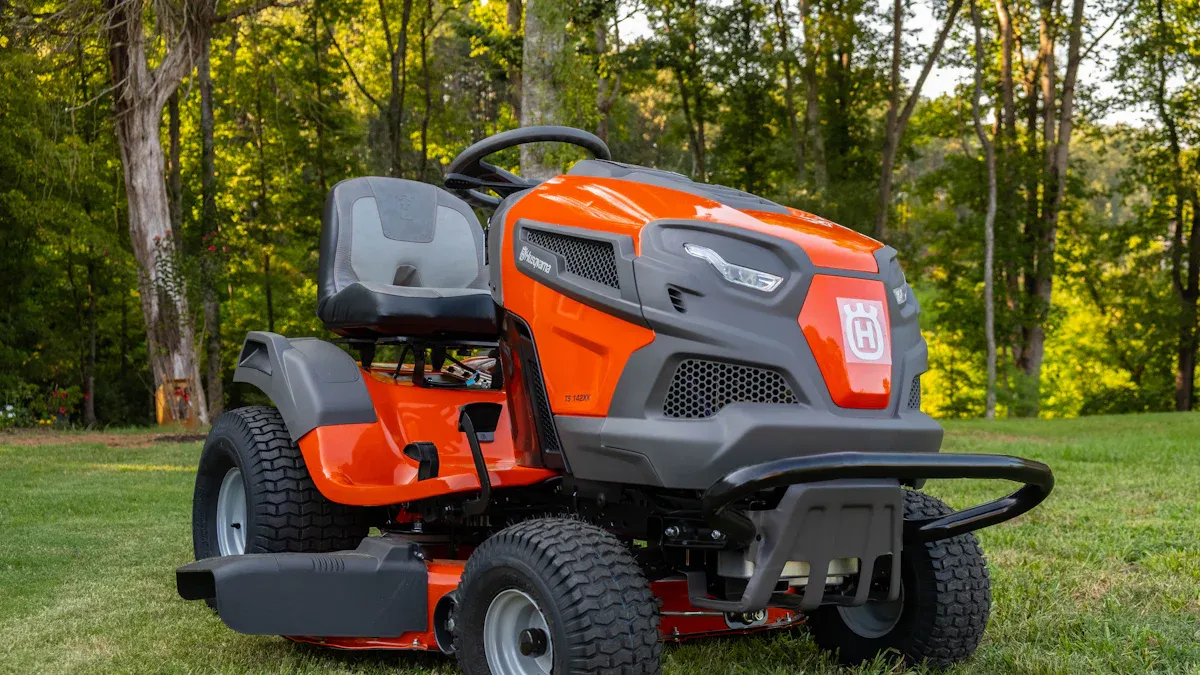
When selecting a riding lawn mower, understanding the different types available can help you make an informed choice. Each type serves specific needs and offers unique features. Here’s a closer look at three popular types of riding lawn mowers: lawn tractors, zero-turn mowers, and garden tractors.
Lawn Tractors
Lawn tractors are ideal for small to medium-sized yards. They feature user-friendly controls that resemble those of a car, making them easy to operate. These mowers are versatile and can handle various tasks with the right attachments. You can use them for mowing, mulching, and even towing small trailers.
Horsepower: Lawn tractors typically have lower horsepower compared to other types. They are designed primarily for mowing grass, making them suitable for residential properties with smaller lawns.
Price Range: The average price for lawn tractors ranges from $1,651 to $4,462, with most models averaging around $2,531.
Zero-Turn Mowers
Zero-turn mowers are designed for speed and precision. They can pivot 360 degrees, allowing you to maneuver around obstacles easily. This feature provides superior maneuverability and significantly reduces mowing times.
Advantages | Disadvantages |
|---|---|
Efficiency and speed | Traction problems |
Reduces mowing time and fuel costs | High repair costs |
Professional appearance and quality cut | Difficulties on uneven terrain |
Best suited for flat, level lawns | May leave corners and angles uncut |
Zero-turn mowers excel in large, flat areas where you need to cover ground quickly. However, they may struggle on uneven terrain. The price range for zero-turn mowers varies widely, from $2,800 to $13,225, with an average price of about $4,700.
Garden Tractors
Garden tractors are built for heavier tasks and larger attachments compared to lawn tractors. They often feature higher horsepower engines, making them suitable for demanding jobs like plowing or tilling.
Feature | Garden Tractors | Lawn Tractors |
|---|---|---|
Engine Power | Higher horsepower engines for demanding tasks | Lower horsepower engines for mowing |
Attachments | Can haul, plow, till, and tow with various attachments | Primarily for mowing and small tasks |
Size | Larger footprint, heavier for stability and power | More compact for easier navigation |
Durability | Heavy-duty components for tough jobs | Built for lighter tasks |
Ideal Use | Large areas, diverse tasks | Smaller lawns, straightforward mowing |
Garden tractors are perfect for larger properties where you need to perform multiple tasks. Their versatility makes them a valuable investment for homeowners with extensive lawn care needs.
By understanding the differences between these types of riding lawn mowers, you can choose the one that best fits your lawn care requirements.
Key Features of Riding Lawn Mowers
Understanding Horsepower
Horsepower is a critical factor when selecting a riding lawn mower. It determines how effectively the mower can handle various tasks. Generally, more horsepower means better performance, especially for larger lawns or tougher terrains. For instance, if you have a lawn over 2 acres, look for mowers with at least 20 horsepower. This power allows you to tackle thick grass and uneven ground without straining the engine.
Cutting Deck Width
The cutting deck width significantly affects your mowing efficiency. A wider deck allows you to cover more ground in less time. Here’s a quick reference table to help you choose the right cutting deck width based on your lawn size:
Typical Property Size | Common Deck Range | Why It Works |
|---|---|---|
Up to 1 acre | 42″–46″ | Fits tighter spaces and most gates |
1–2 acres | 48″–54″ | Good balance of speed and maneuverability |
2+ acres | 54″–60+” | Maximizes productivity on open ground |
Choosing the right cutting width ensures you can mow efficiently without missing spots or taking too long.
Comfort and Efficiency Features
Comfort features enhance your mowing experience. Look for mowers with adjustable seats and ergonomic designs. Here are some popular comfort and efficiency features to consider:
Feature Type | Description |
|---|---|
Premium Comfort | Adjustable 18” seat with thick cushions and arm rests |
Smooth Drive | Hydrostatic drive operates like a car with foot pedals |
Convenience | LED headlights and cruise control |
These features not only make mowing more enjoyable but also improve your overall efficiency. You can focus on the task without discomfort or distractions.
By understanding these key features, you can select a riding lawn mower that meets your needs and enhances your lawn care experience.
How to Use a Riding Lawn Mower
Starting and Stopping
To safely start and stop your riding lawn mower, follow these steps:
Before starting, walk through the yard to remove sticks, rocks, and other debris. This prevents hazardous projectiles while you mow.
Ensure no children or pets are in the area before mowing.
Never disable any safety features on your mower.
Always turn off the mower before crossing sidewalks and driveways.
Shut off the engine before getting off the mower or making adjustments.
Use a broom handle or stick to clear grass and debris; never insert your hands or feet into the mower.
Allow the engine to cool completely before adding fuel.
Following these steps helps ensure a safe mowing experience.
Tip: Always read and follow the manufacturer’s recommendations in the owner’s manual for safe operating procedures.
Maneuvering Around Obstacles
Maneuvering your riding lawn mower around trees, flower beds, and other obstacles requires careful attention. Here are some techniques to help you navigate effectively:
Technique | Description |
|---|---|
Use Appropriate Attachments | Utilize edging tools and grass catchers for better navigation around obstacles. |
Maintain Safe Distances | Keep at least a foot away from obstacles to avoid damage. |
Adjust Speed and Deck Settings | Modify speed and deck height for better maneuverability around tight spots. |
Regular Maintenance | Ensure your mower is well-maintained for effective navigation and cleaner cuts. |
Safety First | Always wear protective gear and ensure the area is clear of children and pets while mowing. |
By applying these techniques, you can navigate your lawn safely and efficiently. Remember, safety features like blade guards and dead man’s switches are standard on most modern riding lawn mowers. These features protect you from accidents and ensure a safer mowing experience.
Maintenance Tips for Longevity
Regular Maintenance Checklist
To keep your riding lawn mower in top shape, follow a regular maintenance checklist. This ensures your mower operates efficiently and lasts longer. Here’s a helpful table outlining essential tasks and their frequency:
Frequency | Tasks |
|---|---|
Before each use | Check the oil level, gas level, tire pressure, clean the deck, check the air filter, sharpen the blades (if necessary). |
Every 25-50 hours of operation | Change the oil, check or replace the air filter, clean the deck, sharpen the blades. |
Every 100-200 hours of operation | Change the spark plug, clean the carburetor, check the belts and pulleys, grease the bearings. |
In addition to these tasks, remember to perform oil changes every 100 hours of operation or annually. Sharpen the blades every 20 to 25 hours of mowing, typically once or twice per season. Check the air filter at least once per mowing season to ensure proper airflow.
Seasonal Care Tips
Preparing your mower for seasonal changes is crucial for its longevity. Here are some tips to help you with storage and maintenance:
Clean the deck underside and let it dry to prevent moisture retention.
Remove debris around the engine to ensure proper cooling and airflow.
For gas-powered mowers, stabilize the fuel or remove it to avoid engine damage.
For electric mowers, remove the battery and store it in a stable environment.
Inspect belts and address any issues before spring.
Store the mower in a dry place to prevent corrosion from humidity.
By following these maintenance requirements, you can extend the life of your riding lawn mower. A well-maintained mower can last between 1,000 to 1,500 hours or more, translating to approximately 15 to 20 years of service if used regularly.
Tip: Regular upkeep not only enhances performance but also saves you money on repairs in the long run.
Choosing the right riding lawn mower involves several key factors. First, consider your lawn size and terrain. A larger lawn may require a mower with a wider cutting deck. If your yard has slopes or obstacles, select a mower that can navigate these challenges effectively.
Also, think about your lifestyle. How often will you use the mower? This can influence your choice. For example, a zero-turn mower offers speed and ease of use, making it popular among professionals.
Finally, read product reviews and expert recommendations. This helps you make informed decisions. Avoid common mistakes, such as overlooking the need for attachments or not considering your budget. By following these guidelines, you can find a mower that meets your needs and enhances your lawn care experience.
FAQ
What should I consider when buying a mower?
You should consider your lawn size, terrain type, and desired features. Assessing these factors helps you choose a mower that meets your specific needs and enhances your mowing experience.
How often should I maintain my mower?
Perform regular maintenance before each use. Change the oil every 25-50 hours of operation. Sharpen the blades every 20-25 hours to ensure optimal performance.
Are zero-turn mowers worth the investment?
Yes, zero-turn mowers offer speed and precision. They reduce mowing time significantly, making them ideal for larger lawns. However, consider your terrain before purchasing.
Where can I find mower ratings?
You can find mower ratings on various gardening and home improvement websites. Look for customer reviews and expert evaluations to help you make an informed decision.
What attachments can I use with my mower?
You can use various attachments, such as baggers, mulchers, and tow-behind carts. These attachments enhance your mower’s versatility and allow you to perform multiple tasks.