
Taking care of your lawn isn’t just about looks; it brings environmental benefits too! A well-maintained yard captures rain, reduces air pollution, and even helps with temperature regulation. Understanding the basics of mowing, watering, and fertilizing is key to achieving a healthy lawn. By following some best practices from our Lawn Care Guide, you can create an inviting space that boosts your property value and enhances your outdoor experience. So, let’s dive into the world of easy lawn maintenance!
Key Takeaways
Choose the right grass type for your climate to ensure a healthy lawn.
Mow regularly and at the correct height to promote strong root growth and a lush appearance.
Water your lawn early in the morning to maximize moisture absorption and reduce evaporation.
Fertilize based on your grass type and soil needs to provide essential nutrients for growth.
Implement weed and pest management strategies to maintain a vibrant and healthy yard.
Lawn Basics
When it comes to creating a healthy lawn, understanding the basics is crucial. Let’s break down the key components: grass types, soil types, and climate considerations.
Grass Types
Choosing the right grass for your lawn can make a big difference in its health and appearance. Here’s a quick look at some common grass types:
Grass Type | Characteristics |
|---|---|
Kentucky Bluegrass | Soft texture, deep green color, traffic tolerance, rhizomes, canoe-shaped leaf tip, prominent midrib. |
Perennial Ryegrass | Quick germination, traffic tolerance, shiny leaf blade back, reddish purple stem base, compact seed head. |
Fine Fescue | Shade-tolerant, narrow leaves, delicate appearance, lighter green color. |
Turf-type Tall Fescue | Heat and drought tolerant, traffic tolerant, wide leaf blades, no prominent midrib, panicle seed head. |
Bermudagrass | Coarse texture, aggressive growth, drought tolerant, small hairs at leaf base, bird’s foot seed head. |
Soil Types
The type of soil in your yard affects how well your grass grows. Here’s a breakdown of common soil types and their characteristics:
Soil Type | Water Infiltration | Nutrient Availability | Root Development |
|---|---|---|---|
Sandy Soil | Fast | Poor | Limited |
Loamy Soil | Ideal | Excellent | Optimal |
Clay Soil | Slow | Limited | Poor |
Loamy soil is often the best choice for lawns because it balances water retention and drainage.
Climate Considerations
Your local climate plays a significant role in lawn care. Different grass types thrive in various climates. Here’s a quick guide:
Agronomic Zone | Grass Type | Climate Characteristics |
|---|---|---|
Northern Zone | Cool-Season Grass | Thrives in cooler climates; survives hot summers and cold winters; dormancy in winter. |
Southern Zone | Warm-Season Grass | Thrives in hotter climates; withstands extreme summer temperatures; dormancy in winter. |
Transition Zone | Mixed Grass Types | Overlaps between northern and southern zones; varying climate and soil conditions. |
Additionally, consider local microclimates. Areas with varying sunlight and shade can affect moisture levels and care needs. Urban areas may be warmer due to human activity, impacting your lawn care schedule.
By understanding these basics, you can choose the right grass, improve your soil, and adapt your lawn care routine to your climate. This knowledge sets the foundation for a thriving lawn!
Mowing Tips for a Healthy Lawn
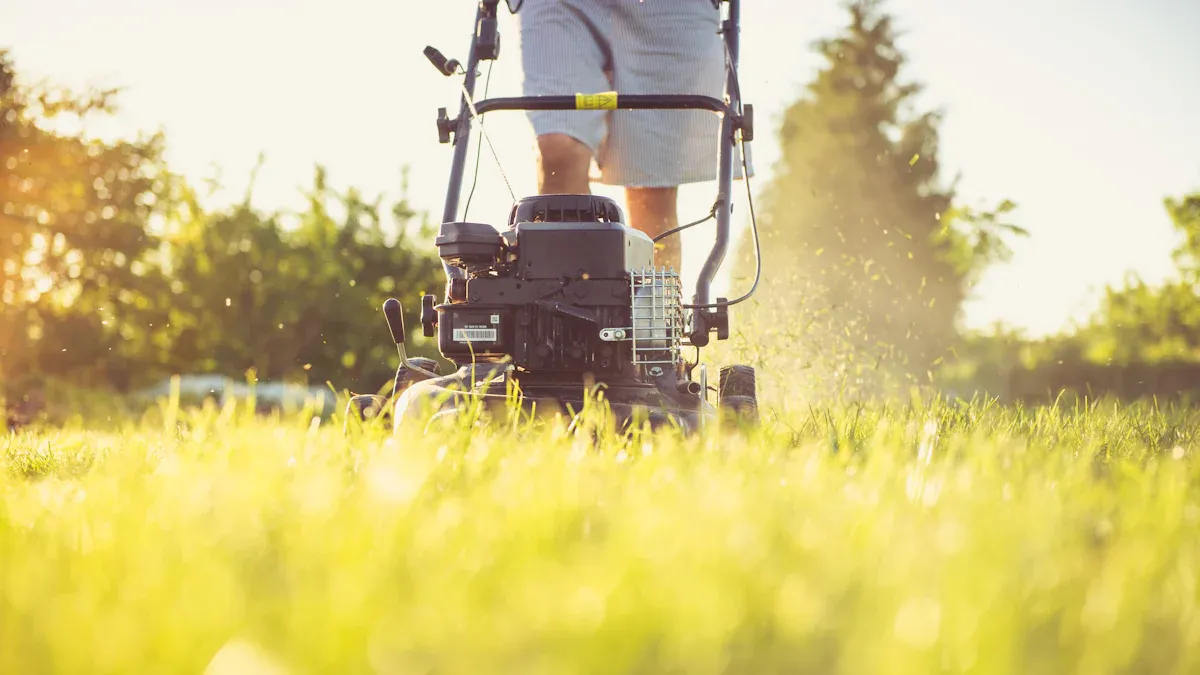
Mowing is a crucial part of your lawn care guide. It helps keep your grass healthy and looking great. Here are some essential tips to ensure you’re mowing effectively.
Mowing Frequency
How often you mow your lawn can significantly impact its health. Turf experts recommend a few key practices:
Mow at least once every 7 days for tall fescue.
During rapid growth in spring, consider mowing every 4 to 5 days.
Always avoid removing more than one-third of the leaf surface at once.
Regular mowing prevents your grass from becoming too tall. When grass gets too long, it can stress the plants and lead to poor health. Keeping a consistent mowing schedule helps maintain a lush, green lawn.
Ideal Mowing Height
The height at which you mow your grass matters more than you might think. Here’s what you should know:
Keep grass at a height of 3 to 3.5 inches during cooler seasons.
Raise the height to about 4 inches in warmer months to reduce stress.
Mowing at the right height encourages deeper root development. Higher mowing heights allow for better leaf extension and photosynthesis, which helps your grass access moisture more effectively. This is especially important during dry spells, as deeper roots can reach water reserves that surface roots cannot.
Mowing Patterns
Changing your mowing pattern can also benefit your lawn. Here’s why you should consider varying your approach:
Benefit | Explanation |
|---|---|
Prevents Ruts and Soil Compaction | Alternating mowing patterns distributes pressure evenly, reducing soil compaction and ruts. |
Encourages Upright Grass Growth | Changing directions helps grass grow upright, improving appearance and mowing efficiency. |
Helps Control Weeds | A denser lawn from varied mowing patterns shades soil, reducing weed growth and maintenance. |
Promotes Healthier Roots | Regularly changing mowing direction encourages deeper root growth, enhancing lawn resilience. |
By switching up your mowing patterns, you can improve the overall health of your lawn. An experiment showed that the angle of leaf blades affects light reflection. When you alternate mowing directions, you change the orientation of the grass blades, which can enhance light reflection and improve turfgrass health.
Watering for a Healthy Yard
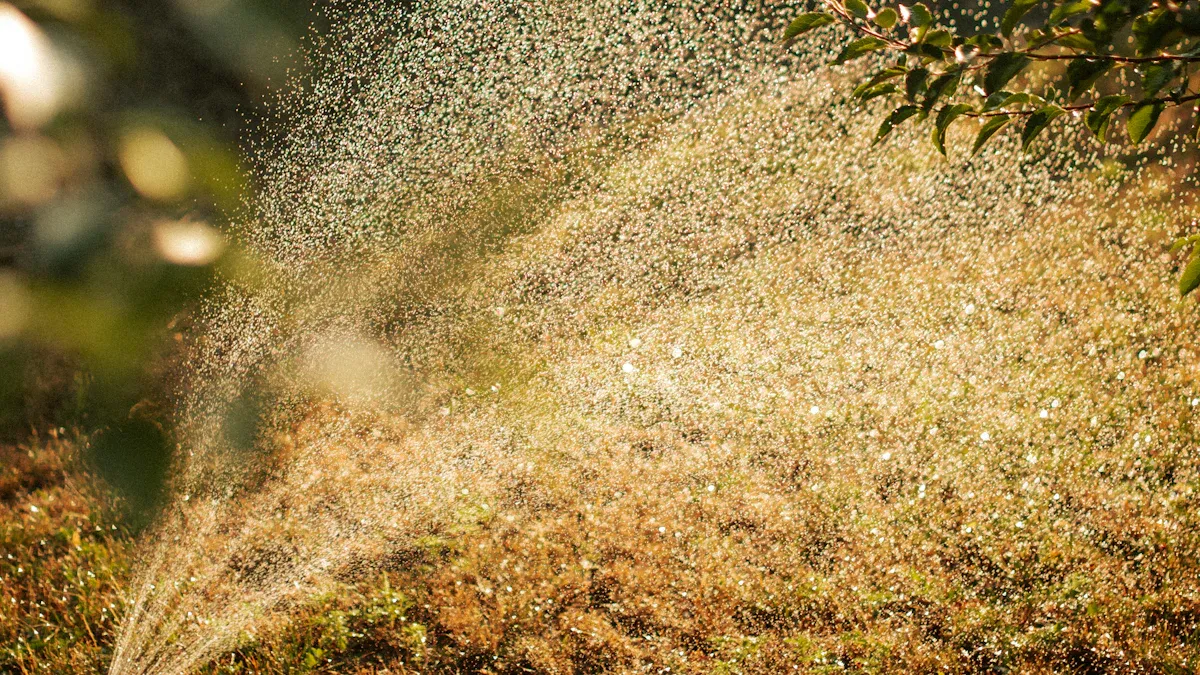
Watering is essential for maintaining a healthy yard. It ensures your grass gets the moisture it needs to thrive. Let’s explore the best times to water, how much water your lawn needs, and some tips for conserving water.
Best Times to Water
Timing your watering can make a big difference in how well your lawn absorbs moisture. Here are some key points to consider:
The best time to water your lawn is early morning, specifically between 4 AM and 10 AM. This timing allows for better water penetration and minimizes evaporation losses.
Watering in the early morning helps grass blades dry fully before nightfall, which prevents fungal growth.
Avoid watering during midday heat. This reduces water waste due to evaporation.
Seasonal changes also affect when you should water. Here’s a quick guide:
Season | Watering Guidance |
|---|---|
Spring | Start watering as soon as grass begins growing, typically around April or May. |
Summer | Increase frequency during hot and dry periods; adjust based on local weather. |
Fall | Gradually reduce watering as temperatures cool; continue until ground freezes. |
Winter | Watering is generally unnecessary as grass is dormant. |
How Much to Water
Knowing how much to water your lawn is just as important as when to do it. Healthy lawns require approximately 1 inch of water weekly, which can come from rainfall or irrigation. Here are some tips on how to achieve this:
A typical lawn needs about one inch of water per week, often divided into two 30-minute watering sessions. This helps ensure deep root growth.
Overwatering can lead to several issues. For instance, it can cause root rot and weak root systems, making your grass more susceptible to diseases.
Here’s a quick overview of the impacts of overwatering:
Impact | Description |
|---|---|
Root Rot and Weak Roots | Waterlogged soil suffocates roots, leading to rot and weak systems. |
Fungal Diseases | Damp conditions promote fungal infections, such as brown patch and leaf spot. |
Nutrient Loss | Excess water leaches nutrients, causing yellowing and stunted growth. |
Compacted Soil | Overwatering compacts soil, reducing aeration and nutrient retention. |
Encourages Weeds and Pests | Overwatered lawns attract invasive weeds and pests. |
Damages the Soil | Water replaces air in soil, harming microbial populations. |
Water Conservation Tips
Conserving water is crucial for a healthy yard and the environment. Here are some effective techniques to help you save water while keeping your lawn lush:
Adjust irrigation practices based on weather conditions to avoid overwatering.
Select drought-tolerant grass species, such as fine fescues, which require less water.
Use water-saving technologies like smart irrigation controllers and soil moisture sensors.
Improve soil quality through practices like aeration and top-dressing with compost.
Recycle water using rain barrels to irrigate your lawn.
Additionally, consider these practices:
Irrigate infrequently, ensuring water penetrates to a depth of six inches.
Water during the morning to minimize evaporation.
Audit your irrigation system to ensure efficiency.
By following these watering tips, you can maintain a healthy yard while conserving water. Remember, a well-watered lawn not only looks great but also contributes to a healthier environment!
Fertilizing Strategies
Fertilizing your lawn is essential for maintaining its health and vibrancy. Understanding the different types of fertilizers, when to apply them, and the differences between organic and synthetic options can help you achieve a lush yard.
Types of Fertilizers
You have several options when it comes to fertilizers. Here’s a quick overview of the main types:
Nitrogen Type | Advantages | Disadvantages |
|---|---|---|
Fast-Release | 1. Quick response for greening. | 1. May cause excessive growth. |
Controlled-Release | 1. Uniform grass growth. | 1. May not work well in cold soil. |
Nitrogen is the key nutrient for your lawn, fueling green growth and promoting a healthy appearance. Recommended ratios of N-P-K (Nitrogen-Phosphorus-Potassium) for lawn fertilizers include 3:0:2 or 4:0:2.
Application Frequency
Knowing when to fertilize is just as important as choosing the right product. Here’s a simple guide based on grass type:
Grass Type | Recommended Frequency | Soil Type |
|---|---|---|
Kentucky bluegrass | 3-6 times per year | Sandy soils |
Tall fescue | 1-2 times per year | Clay soils |
Warm-season grasses | Every 6-8 weeks in late spring/summer | N/A |
For cool-season grasses, the best time to fertilize is in early spring and fall. For warm-season grasses, aim for late spring and early fall. This schedule helps ensure your lawn gets the nutrients it needs when it’s actively growing.
Organic vs. Synthetic Fertilizers
When deciding between organic and synthetic fertilizers, consider their differences:
Aspect | Organic Fertilizers | Synthetic Fertilizers |
|---|---|---|
Nutrient Release | Nutrients are released slowly, improving soil health over time. | Nutrients are available immediately but can wash away quickly. |
Environmental Impact | Enhances soil structure but may lead to excess phosphorus. | Can harm the environment if over-applied, but are often cheaper and more concentrated. |
Effectiveness | Provides long-term benefits but may require more frequent applications. | Offers immediate results but can degrade soil health over time. |
Organic fertilizers improve soil structure and promote beneficial microorganisms, which are vital for a thriving lawn. On the other hand, synthetic fertilizers can provide quick results but may lead to long-term soil issues.
By understanding these fertilizing strategies, you can keep your lawn healthy and vibrant. Remember, proper lawn fertilizing is key to achieving that lush, green yard you desire!
Additional Lawn Care
Taking care of your lawn goes beyond mowing and watering. You also need to manage weeds, pests, and soil health. Here’s how you can tackle these important aspects of lawn care.
Weed Control Methods
Weeds can quickly take over your yard if you don’t manage them. Here are some effective methods to keep them at bay:
Method Type | Description |
|---|---|
Pre-emergent Herbicides | Apply these in early spring to block weed seed germination. |
Post-emergent Herbicides | Use these for weeds that have already sprouted, targeting them without harming your grass. |
Cultural Practices | Regular fertilization and proper lawn care promote healthy grass that can outcompete weeds. |
Manual Removal | Hand-pulling or using tools like dandelion weeders can effectively remove weeds. |
Proper Mowing Height | Maintain grass at recommended heights to prevent weed seed germination. |
Overseeding | Fill bare spots promptly to prevent weeds from establishing, especially effective in fall. |
To keep your lawn healthy, consider using a combination of these methods. Remember, a well-maintained lawn can outcompete weeds naturally!
Pest Management
Pests can wreak havoc on your lawn if left unchecked. Here are some strategies to manage them effectively:
Regularly inspect your lawn for signs of pests, like chewed leaves or wilting plants.
Maintain proper lawn care practices, such as mowing at the right height and watering deeply but infrequently.
Promote biodiversity by planting various species to attract beneficial insects.
Aerate and dethatch your lawn to improve soil drainage and reduce hiding spots for pests.
Common pests like grubs and chinch bugs can damage your grass roots, leading to brown patches. Understanding their habits helps you manage them better.
Aeration Techniques
Aeration is vital for a healthy lawn. It allows air, water, and nutrients to penetrate deep into the soil. Here’s how to do it right:
Select the Best Tools: Choose the right aerator based on your lawn size and needs, such as spike or plug aerators.
Proper Technique: Mow your lawn short before aerating and follow a pattern for thorough coverage.
Ideal Aeration Depth: Aim for a penetration depth of 2 to 3 inches to promote deeper grass root growth.
Consider Soil Type and Grass Species: Aerate more frequently if you have sandy soil, and time aeration for warm-season grasses during their peak growing season.
Aeration transforms compacted lawns into vibrant green spaces, ensuring your grass stays hydrated and resilient, especially during hot summer days.
You’ve learned some essential practices for keeping your lawn healthy. Regular mowing, proper watering, and effective fertilizing all play a vital role in lawn care. Here’s a quick recap:
Mow at the right height and frequency to strengthen your turf.
Water early in the morning to maintain moisture and prevent evaporation.
Fertilize appropriately to provide nutrients that enhance growth and resilience.
A well-maintained yard not only looks great but also helps prevent pollution from soil erosion. By following these tips, you can enjoy a vibrant lawn that thrives with minimal effort. So, get out there and start implementing these practices for a healthier yard!
FAQ
What is the best time to mow my lawn?
Mow your lawn in the late afternoon or early evening. This timing helps avoid heat stress on the grass and allows for better recovery after cutting.
How often should I water my lawn?
Water your lawn about once a week, providing around 1 inch of water. Adjust based on rainfall and temperature to keep your grass healthy.
Can I use any fertilizer on my lawn?
Not all fertilizers are suitable for every lawn. Choose a fertilizer based on your grass type and soil needs for the best results.
How can I tell if my lawn needs aeration?
If your lawn feels compacted or has poor drainage, it likely needs aeration. Look for signs like water pooling or difficulty growing grass.
What should I do about weeds in my lawn?
Regularly inspect your lawn for weeds. Use pre-emergent herbicides in spring and consider manual removal for small infestations to keep your yard healthy.