

For a 1-acre yard, the right push mower has to do more than cut grass, it has to fit your stamina, your terrain, and how often you mow. Some yards call for a lighter 18-inch gas model that turns easily around beds and fences, while others make a 21-inch deck or a self-propelled drive feel much more sensible. You also have to weigh bagging, mulching, side discharge, and deck height changes against the kind of grass and growth you deal with week to week.
The eight picks below lean toward real yard work, not showroom talk. You’ll see gas, battery, and manual options, plus a few clear trade-offs so you can match a mower to your lawn instead of forcing your lawn to fit the mower.
Quick Shortlist For Larger Yards

PowerSmart EasyCut 18-Inch 144cc Gas Lawn Mower

PowerSmart EasyGlide 21-Inch Gas Lawn Mower

Fiskars Push Mower 17-Inch Manual Reel Mower

Greenworks 60V 21 in Push Lawn Mower

PowerSmart 18-inch 144cc Gas Lawn Mower
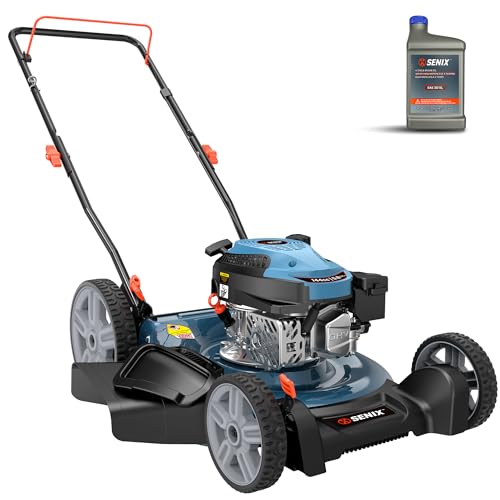
SENIX 21-Inch Gas Push Lawn Mower

AMERISUN 21-Inch 2-in-1 Gas Push Lawn Mower

PowerSmart 21-inch Gas Self-Propelled Lawn Mower
More Details On Our Top Picks
An 18-inch deck keeps this PowerSmart easier to swing around trees, edging, and narrow side yards than the 21-inch models below. The 144cc four-cycle OHV engine gives you gas-powered independence without adding a lot of visual clutter, and the steel deck should suit regular suburban mowing where durability matters more than fancy extras.
For smaller sections of a 1-acre lot, this kind of mower feels nimble rather than bulky, especially around fences and garden borders. The trade-off is simple: you cover less ground per pass than with the wider PowerSmart EasyGlide or the self-propelled PowerSmart 21-inch, so larger open lawns will take more time.
Strong Points
- 18-inch cutting width helps in tighter spaces and around landscaping.
- Three cutting modes let you mulch, bag, or discharge as conditions change.
- Steel deck adds a sturdier feel for regular yard use.
- Six height settings make seasonal trim changes easier to manage.
Things To Consider
- Narrower coverage means more passes on an open acre.
- Gas mowers need routine fuel care and storage space.
- Push-only operation asks more from you on thicker growth.
Feature Snapshot
Who It Suits Best
Homeowners with smaller lawns, mixed borders, or lots of tight corners will get the most from this compact gas option.
A Better Fit Elsewhere
PowerSmart EasyGlide 21-Inch Gas Lawn Mower suits a wider open yard better, especially when you want fewer passes across a bigger stretch of grass.
This 21-inch deck is the kind of change that matters on a larger property, because each pass clears more ground than the 18-inch PowerSmart EasyCut. The 144cc four-stroke OHV engine points to a familiar gas-mower setup, and that usually suits homeowners who want steady cutting without thinking about batteries.
For a 1-acre yard with broad sections and fewer obstacles, the wider cut can trim a noticeable amount of time from the routine. The catch is that the larger deck can feel less nimble around tight beds, so the EasyCut still makes sense for cluttered areas with lots of turns.
What We Like
- 21-inch deck helps reduce pass count on larger lawns.
- Three cutting paths give you flexible clipping management.
- Steel deck adds a durable feel for regular use.
- Six height settings cover a broad range of grass lengths.
- Gas power fits long mowing sessions without charging pauses.
Softer Spots
- Bulkier footprint can feel less handy in tight yard layouts.
- Push-only setup still asks for more effort on hills.
- Gas upkeep is part of the ownership routine.
At A Glance
Who Will Love This
You’ll appreciate this most on a broad yard where speed matters more than tight maneuvering.
Swap It Out When
PowerSmart EasyCut 18-Inch 144cc Gas Lawn Mower fits better in compact or obstacle-heavy yards where a smaller deck is easier to guide.
Manual reel mowing changes the whole rhythm of yard work, because you’re doing the work instead of relying on a motor. Fiskars keeps the setup clean and straightforward with a 17-inch cut width and steel blades, which makes sense for a smaller, neat lawn where maintenance is light and regular.
Compared with the gas models in this list, it’s quieter by nature and simpler to store, since there’s no fuel system or battery to manage. The honest read is that a 1-acre property is a lot for a reel mower unless you’re only maintaining a very small, consistently trimmed section of it.
Positives
- No motor means very little day-to-day upkeep compared with gas models.
- Steel blades are designed for a clean grass cut on short turf.
- Simple storage suits garages with limited shelf space.
- Works well for homeowners who want a quieter mowing routine.
Minor Gripes
- Manual pushing can get tiring on larger lots.
- Less practical for tall or overgrown grass.
- Best fit is a smaller, well-kept section rather than a full acre.
Core Details
The Right Fit
You’ll get the most from this on a small, tidy lawn where simplicity matters more than speed.
Reach For A Different Pick When
Greenworks 60V 21 in Push Lawn Mower suits you better for a larger property, especially when you want less physical effort and a wider cut.
Battery power changes the feel of mowing in a good way, especially for anyone who wants less startup fuss than a gas machine. Greenworks gives you a 60V platform with a 5.0 Ah battery and charger, so the package is aimed at straightforward yard routines where cord-free movement matters.
That 21-inch deck puts it in the same size class as the wider gas models, but the ownership experience is different, since you’re dealing with charging instead of fuel. It makes a lot of sense for suburban yards with a normal mowing cadence, though a very large acre can still stretch battery runtime more than a gas setup would.
Highlights
- Battery setup avoids fuel handling and pull-start habits.
- 21-inch width helps cover more ground per pass.
- Included battery and charger simplify the first setup.
- Good fit for regular mowing in neighborhood settings.
- Less storage fuss than a gas mower with fuel left over.
Room For Improvement
- Runtime planning matters more on larger or thicker lawns.
- Battery charging adds a step before each session.
- Wide lawns can still demand careful pacing.
Feature Rundown
Best Suited To
You’re a strong match for this mower when you want battery convenience and mow on a regular schedule.
Where A Sibling Pick Shines
PowerSmart 21-inch Gas Self-Propelled Lawn Mower is the stronger fit for hilly ground, since rear-wheel drive reduces the effort of pushing uphill.
Side discharge gives this PowerSmart a very practical role, because it helps you keep moving through thicker or faster-growing grass without stopping to bag clippings. The 18-inch deck keeps it compact, so it’s easier to guide than the wider 21-inch mowers, especially along beds or tight fence lines.
For a 1-acre yard that gets uneven growth after rainy stretches, that setup is useful because you can keep momentum without overcomplicating cleanup. The compromise is that you won’t get the same clippings-handling flexibility as the three-in-one models above it.
Upsides
- Side discharge helps with quick mowing in heavier grass.
- Compact deck makes steering easier around obstacles.
- Five height settings support simple seasonal trim changes.
- Gas power suits longer mowing sessions away from outlets.
Points To Note
- Only side discharge is emphasized here, so clipping handling is narrower in scope.
- Smaller deck means more passes on broader lawns.
- Gas upkeep remains part of regular ownership.
Details At A Glance
Whose Shelf It Belongs On
You’ll suit this best when you want a straightforward gas mower for fast cleanup and easier handling.
Look Elsewhere When
PowerSmart EasyGlide 21-Inch Gas Lawn Mower makes more sense for open ground where wider coverage trims the mowing time.
SENIX keeps the formula familiar, a 21-inch deck, 144cc engine, and a two-in-one cutting setup that leans on mulching and side discharge. That combination fits routine residential yards well, especially when you want less clutter than a machine packed with extras you’ll rarely use.
Against the PowerSmart EasyGlide, this one trims a similar swath but drops the bagging function, so it suits shoppers who mostly mulch or blow clippings outward. The honest read is that the simpler setup can feel easier to live with, but it gives you fewer cleanup options after longer mowing gaps.
Reasons To Buy
- 21-inch width helps cover a yard without too many passes.
- Two cutting modes keep the setup focused and simple.
- Six height positions give you useful trim control.
- Gas engine suits normal residential mowing without charging pauses.
Worth Noting
- No bagging option means less flexibility for clipping cleanup.
- Push design still asks for steady effort on slopes.
- Gas storage and maintenance remain part of ownership.
Technical Sheet
Who Should Grab It
You’re a strong match for this mower if you want a straightforward 21-inch gas option with fewer extras.
Another Choice May Suit
PowerSmart EasyGlide 21-Inch Gas Lawn Mower fits better for you when bagging matters, since it adds that third clipping mode.
The AMERISUN stands out for its wheel sizing, because the 7-inch front wheels and 10-inch rear wheels are the kind of detail that can help the mower feel steadier over rough patches. That matters on yards with minor dips, roots, or uneven spots, where a mower that rolls more confidently can feel less fussy.
Its 1.5 to 3.9-inch cutting range is broader than some basic machines, so you get a little more room to match grass height to the season. The trade-off is that this is still a 2-in-1 setup, so it’s simpler than the three-mode PowerSmart models and a touch less flexible for clipping management.
Best Bits
- 21-inch deck keeps coverage efficient for a larger yard.
- Different front and rear wheel sizes help on uneven ground.
- 1.5 to 3.9-inch height range gives useful trim flexibility.
- Two cutting modes keep ownership straightforward.
Areas To Watch
- Two-in-one design leaves out bagging.
- Push-only operation still asks for effort on slopes.
- Like most gas mowers, it needs routine fuel care and storage space.
Quick Facts
Built With In Mind
You’ll suit this best if your yard has a few rough patches and you want a steady, everyday gas mower.
Skip It When
PowerSmart EasyGlide 21-Inch Gas Lawn Mower is a better match when you want bagging in the mix for cleaner clipping control.
The rear-wheel-drive setup is the big reason this PowerSmart belongs in the conversation for hilly yards and larger properties. You’re not just steering the mower, you’re letting the drive system help move it forward, which takes pressure off your legs during long sessions.
Compared with the push mowers above it, this one is the most sensible choice for a 1-acre lawn that includes slopes or long stretches of grass. The trade-off is cost and extra mechanical complexity, so it’s better for someone who’ll actually use that assistance rather than just wanting a larger mower body.
Bright Spots
- Self-propelled rear-wheel drive reduces pushing strain on hills.
- 21-inch deck helps cover larger lawns more efficiently.
- Three cutting modes add flexibility for clipping cleanup.
- 170cc OHV engine gives it extra muscle for heavier mowing days.
- Six height settings help you tune the cut to the season.
- Alloy steel deck adds a sturdier ownership feel.
Honest Caveats
- More moving parts mean more upkeep than simpler push models.
- Extra drive hardware can add weight and bulk.
- Push mowers still make more sense for tiny, flat yards.
Core Details
The Right Fit
You’ll want this most for a hillside or medium-to-large yard where pushing a mower all afternoon gets tiring fast.
Where Shoppers Go Wrong
PowerSmart EasyGlide 21-Inch Gas Lawn Mower is the easier pick for flatter ground, since a standard push mower usually feels simpler to own.
How To Choose The Right Push Lawn Mowers For 1 Acre
Cut Width And Yard Shape
A 21-inch deck makes the most sense for open ground, because it reduces the number of passes across a bigger lot. An 18-inch deck feels easier in narrow side yards, around shrubs, and near garden beds, where every turn matters more than raw speed.
Manual reel mowers belong on small, tidy sections, not on sprawling property. For a full acre, a wider gas or battery mower usually fits the workload better, especially when the lawn has a few obstacles.
Power Source And Effort Level
Gas mowers suit longer sessions and thicker grass, since you are not waiting on charging. Battery mowers bring a calmer routine, with less fuel handling and less engine noise, though runtime planning matters more as yard size grows.
Manual reel mowers are the lightest on upkeep, but they ask the most from your legs. That trade-off is fine for a small, neatly kept yard, yet it becomes tiring fast across larger stretches.
Drive System, Height Control, And Clipping Options
Self-propelled drive is the most useful upgrade for slopes or heavy turf, because the mower helps pull itself forward. Rear-wheel drive especially helps when the yard tilts or feels uneven underfoot.
Height adjustment matters more than it sounds, since it lets you shift from a higher summer cut to a shorter finish later on. Mulching keeps nutrients cycling back into the lawn, bagging suits cleanup-minded routines, and side discharge helps when growth is too thick to slow down for collection.
Maintenance, Storage, And Real Use
Gas mowers need fuel care, seasonal storage, and more cleanup after use. Battery mowers need charging space and battery management, while reel mowers need little more than blade care and dry storage.
For a 1-acre lawn, the best choice is usually the one you’ll actually keep using without dreading the setup. That’s why the right answer often comes down to your terrain, your storage room, and how much pushing you want to do on a Saturday morning.
A Quick Reality Check
Common Shopping Slip Ups
Many people focus on deck width alone and ignore hills, clipping mode, and storage needs. A wide mower sounds efficient, but it becomes awkward fast in a yard full of trees, slopes, or narrow gates.
Another common miss is choosing a manual reel mower for a lawn that grows fast or unevenly. That style works best on short, controlled grass, not on a property that regularly gets ahead of you.
When Paying More Pays Off
Higher-tier mowers usually cost more because of stronger drive systems, larger engines, better deck materials, or fuller clipping options. Those extras matter most on hills, thick grass, and larger properties where a basic mower starts feeling like work instead of help.
Spending up makes sense when your yard is large enough that comfort changes the whole mowing experience. It also pays off when you want fewer compromises, especially around self-propulsion and wider cutting decks.
Frequently Asked Questions
What deck size works best for 1 acre?
A 21-inch deck is the most practical starting point for most one-acre lawns. An 18-inch deck still works, but it usually means more passes.
Are battery mowers enough for a full acre?
Battery mowers can work well on a smaller acre with regular mowing habits. A 1-acre yard with thick growth or slopes makes runtime planning more important.
Is self-propelled worth it on flat ground?
On flat ground, it can still reduce fatigue during long sessions. The value rises fast once the yard includes hills or rough patches.
Do reel mowers make sense for this size yard?
They make sense only for very small, tidy sections of a larger property. For most one-acre lawns, they are too much work.
What’s the most versatile clipping setup?
Three-in-one mowers give you the most flexibility because you can mulch, bag, or discharge. That helps when your grass changes with the season or weather.
Closing Thoughts
The right mower for a 1-acre yard depends less on a headline feature and more on how your lawn behaves on a normal weekend. A 21-inch deck makes sense for open space, self-propelled drive helps on slopes, and battery power suits a cleaner, lower-fuss routine. For small sections or tight turns, the compact PowerSmart models make a lot of sense, while the Fiskars reel mower is better reserved for smaller turf areas. Pick the machine that fits your terrain and the amount of effort you want to spend, and mowing starts feeling manageable instead of a chore.
