

Keeping a lawn in decent shape usually means dealing with two different problems, weeds and insects, and sometimes fungus too. The right pick depends on what’s actually happening in your yard, whether you’re treating a patchy front lawn, a larger landscape, or a home garden that gets regular pressure from pests. This roundup focuses on products with different jobs, so you can match the formula to the problem instead of guessing.
The Shortlist At A Glance

Spectracide Weed Stop For Lawns Plus Crabgrass Killer Concentrate 32 Ounces
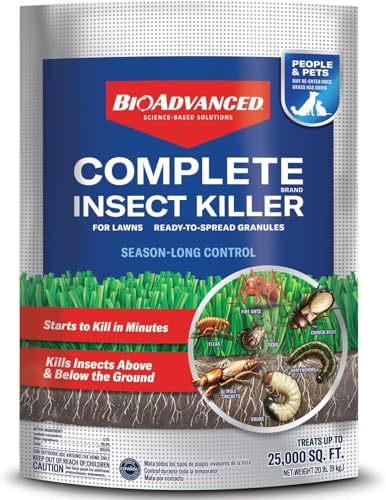
BioAdvanced Complete Brand Insect Killer for Lawns Granules 20 lb Bag

Agrisel Bifenthrin Pro 7.9 Insecticide 1 Gallon

Atticus Gunner 14.3 MEC Propiconazole Fungicide 32oz

Ortho Outdoor Insect Killer Concentrate 32 fl. oz.

Atticus Mineiro 2F Flex Imidacloprid Systemic Insecticide for Grubs 1Gal

Amdro Quick Kill Insect Killer Ready-to-Spray 32 Oz

BioAdvanced Complete Brand Insect Killer Ready-to-Spray 32 oz Bottle
More Details On Our Top Picks
Spectracide’s concentrate is built for the common headache of mixed broadleaf weeds and crabgrass in one lawn. The formula format suits homeowners who already have a sprayer and want to handle spot treatment without dragging out a hose-end attachment.
The trade-off is simple, you’re mixing and applying the product yourself, so neat coverage matters more than with a ready-to-spray bottle. That makes it a solid fit for tidy suburban yards, but less convenient for anyone who wants the quickest possible setup.
Strong Points
- Concentrate format gives you control over how much you mix for each treatment.
- Targets both weeds and crabgrass, which helps when your lawn problem is split across two pest types.
- Works well for spot work around walkways, borders, and patchy problem areas.
- Compact bottle storage is easier than hauling a larger application system.
Small Caveats
- You’ll need a separate sprayer, so setup takes a little more effort.
- Uneven mixing can affect coverage, especially on larger lots.
Feature Snapshot
Who It Suits Best
You’re the right fit here if you already handle lawn care yourself and want a focused weed treatment.
Where A Sibling Pick Shines
BioAdvanced Complete Brand Insect Killer Ready-to-Spray, 32 oz Bottle suits shoppers who want insect coverage with less mixing and less prep.
This granular option fits yards where coverage matters more than speed, especially around larger turf areas with recurring insect pressure. Granules are spread rather than sprayed, so you get a more walk-and-work application style that feels straightforward in open spaces.
Compared with Spectracide’s smaller concentrate bottle, this one is better suited to broad treatment jobs and less suited to tiny patch fixes. The honest read is that it rewards a steady spreader setup and a bit of planning, especially after mowing or before a forecasted watering window.
What We Like
- Granular form is easy to distribute over bigger lawn sections.
- Good fit for above-ground and below-ground insect pressure.
- Large bag format suits repeated treatment across a season.
- Less mixing means a simpler workflow than spray concentrates.
Points To Note
- Needs a spreader for the most even coverage.
- Bulkier storage can be awkward in small garages.
Quick Facts
Built With In Mind
You’re the better match here if your lawn is large enough that granules make more sense than small-batch sprays.
A Better Fit Elsewhere
Amdro Quick Kill Insect Killer Ready-to-Spray, 32 Oz suits homeowners who want a faster setup for smaller treatment passes.
This is the kind of spray concentrate that makes sense in a yard with more than one kind of insect trouble. Bifenthrin is a synthetic pyrethroid, meaning it’s a common spray-active ingredient used for broad insect control, so the appeal here is range rather than a single narrow target.
Compared with BioAdvanced’s granules, Agrisel’s liquid format gives you more flexibility in how you apply it, especially around ornamental beds and mixed landscape edges. The trade-off is that you’ll need a sprayer and a little care with mixing, so it suits hands-on yard work better than casual use.
Upsides
- One-gallon concentrate format supports larger treatment plans.
- Broad insect coverage makes it useful in mixed outdoor spaces.
- Liquid application reaches areas that are awkward for granular spreading.
- Useful for homeowners who already keep a pump sprayer on hand.
- Good fit for landscape beds, lawn edges, and crop-adjacent areas.
Areas To Watch
- Requires mixing and sprayer cleanup after use.
- Liquid handling is less casual than a ready-to-spray bottle.
- Coverage depends on how evenly you walk and spray.
Technical Sheet
Right Fit For
You’re best matched here if your yard work already includes mixing concentrates and covering several outdoor zones.
Another Choice May Suit
Ortho Outdoor Insect Killer Concentrate, 32 fl. oz. is easier to handle for shoppers who want a smaller spray bottle for general yard care.
Fungus control sits in a different lane from the insect killers above, and this Atticus bottle is aimed at that narrower problem. Propiconazole is a systemic fungicide, which means the formula is designed to move within plant tissue rather than sit only on the surface.
That matters most in humid climates and on lawns that regularly show patchy disease pressure after rain or dense growth. It’s a more specialized tool than Spectracide or Ortho, so it’s useful only when fungus, not insects, is the thing you need to address.
Best Bits
- Specialized fungicide role makes the use case clear.
- Helpful for lawn diseases that show up in warm, damp stretches.
- Liquid concentrate format supports targeted mixing.
- Useful for homeowners who want to keep one bottle for recurring fungus issues.
Honest Caveats
- It is not the right tool for insect problems.
- Concentrate use means sprayer cleanup and storage matter.
- Best results depend on matching the treatment to the actual disease pattern.
Details At A Glance
The Right Fit
You’ll appreciate this most in a yard that already shows recurring fungus pressure and needs a focused treatment plan.
Swap It Out When
BioAdvanced Complete Brand Insect Killer for Lawns Granules, 20 lb Bag is the better match when the issue is insects in a larger turf area.
Ortho’s concentrate lands in the middle of the pack in the useful sense, because it covers yard, garden, and landscape spaces without getting too specialized. The listing points to ants, spiders, fleas, and ticks, so it works best for households that want one spray concentrate for several listed insect problems around the property.
Compared with the more targeted Atticus products, this one is easier to place in a general maintenance routine. The catch is that you’re still mixing and spraying, so it asks for a little more effort than a ready-to-spray bottle like Amdro or BioAdvanced.
Positives
- Useful across yard, garden, and landscape zones.
- Broad listed pest coverage keeps the bottle versatile.
- Concentrate format stretches into multiple treatment sessions.
- Good choice for people who already use a pump sprayer.
Worth Noting
- Needs mixing before use, which adds a step.
- Sprayer cleanup is part of ownership.
- Small spot jobs may feel easier with a ready-spray product.
Core Details
Whose Shelf It Belongs On
You’re a good match for this bottle if your outdoor spaces need one general insect treatment rather than several separate products.
Look Elsewhere When
Amdro Quick Kill Insect Killer Ready-to-Spray, 32 Oz is easier to live with for quick pass-through treatments and less prep.
Grub control is where this Atticus bottle earns its keep, especially in lawns that show turf damage below the surface before the problem is obvious above ground. Imidacloprid is a systemic insecticide, which means it’s intended to move through the plant rather than stay only where you spray it.
That makes it a more specialized purchase than the broad outdoor sprays earlier in the list. For homeowners dealing with Japanese beetles or grub-related lawn stress, the one-gallon format is practical, though it also means you’ll want storage space and a sprayer plan.
Reasons To Buy
- Focused on grub-related lawn pressure.
- Systemic action suits root and turf protection needs.
- One-gallon size supports larger treatment plans.
- Useful for yards where surface sprays have not been the right fit.
Room For Improvement
- Specialized use means it’s not a general insect bottle.
- Requires sprayer handling and careful storage.
- May be more than you need for a small yard with mild pest issues.
Feature Rundown
Perfect Match For
You’re in the sweet spot here if grub pressure is the main reason you’re shopping.
Not Your Match When
Spectracide Weed Stop For Lawns Plus Crabgrass Killer Concentrate is the better choice when your main job is weed control rather than turf pests.
A ready-to-spray bottle like this keeps things simple, and that matters in real yards where time is short and the problem is visible. The listing’s focus on lawn and landscape use makes it a convenient maintenance product for routine perimeter treatment rather than a specialty solution.
It stands apart from the concentrate options because you skip mixing altogether. The trade-off is less control over custom dilution, but for casual lawn care or smaller properties, that convenience is often the point.
Bright Spots
- Ready-to-spray format saves setup time.
- Useful for lawn and landscape areas around the house.
- Claims of lasting control make it practical for routine care.
- Easy storage compared with larger concentrate containers.
Minor Gripes
- Less flexible than a concentrate for custom application strength.
- Sprayer bottles can be awkward to store once opened.
Feature Card
Made For
You’re the right match here if you want a simple bottle that’s easy to use on a normal weekend lawn pass.
Where Shoppers Go Wrong
Agrisel Bifenthrin Pro 7.9 Insecticide 1 Gallon is the better fit when you want a concentrate with wider mixing flexibility.
This BioAdvanced bottle sits close to Amdro in convenience, but the coverage claim gives it a more turf-focused angle. It’s a ready-to-spray option for lawns and soil, so it works well for homeowners who want a straightforward bottle without extra equipment.
Compared with the concentrate products, it’s easier to store and easier to start using right away. The trade-off is the usual one for ready-spray formats, less control over mixing and less flexibility than a concentrate in a pump sprayer.
Highlights
- Ready-to-spray setup keeps application simple.
- Works across soil and turf, which broadens its use.
- Compact bottle is easy to keep on a shelf.
- Good fit for routine lawn treatment without extra gear.
Areas To Watch
- Less custom control than a concentrate formula.
- Best suited to straightforward treatment jobs rather than precise mixing.
Core Details
The Right Fit
You’ll like this most if you want an uncomplicated yard spray that doesn’t ask for much setup.
Reach For A Different Pick When
BioAdvanced Complete Brand Insect Killer for Lawns Granules, 20 lb Bag makes more sense for larger properties where granular spread coverage matters more.
How To Choose The Right Pesticides For Lawns
Match the product to the problem
The biggest mistake in lawn care is buying a strong-looking formula for the wrong issue. Weed killers, insect killers, and fungicides serve different jobs, and a bottle that helps with one problem usually does very little for the others.
For broadleaf weeds and crabgrass, a weed-specific concentrate like Spectracide makes more sense than a general insect spray. For grubs or soil pests, a systemic insecticide such as Atticus Mineiro 2F Flex fits better because it works below the surface instead of only on visible foliage.
Pick the format that fits your routine
Concentrates reward people who already own a sprayer and don’t mind mixing. Ready-to-spray bottles cut setup time, which matters in a busy yard after work or before a weekend gathering.
Granules suit larger lawns and open turf because they spread evenly with less fuss. The trade-off is storage size and the need for a spreader, so a 20-pound bag only feels convenient when your yard is big enough to justify it.
Think about coverage, not just labels
Square-foot coverage, bottle size, and application style matter more than flashy packaging. A 32-ounce ready-spray bottle is handy for smaller jobs, while a one-gallon concentrate or 20-pound granular bag serves bigger properties more comfortably.
You also want to think about maintenance after the job. Sprayers need rinsing, spreaders need cleaning, and leftover product needs a dry storage spot, so the easiest option on paper is not always the easiest one to live with.
Use-use case should shape the final choice
A homeowner with a few weed patches near the driveway wants something different from a yard with seasonal insect pressure. The right call feels a bit like choosing the right wrench, the shape matters more than the shine.
That’s why a narrow tool like Atticus Gunner belongs with fungus issues, while BioAdvanced Complete Brand Insect Killer Granules belongs with broader turf insect control. You get a cleaner result when the product matches the problem instead of trying to do everything at once.
What To Weigh Before You Click Through
Mistakes Worth Dodging
A common slip is treating all lawn pest products as interchangeable. Another is ignoring the application method, since a concentrate without a sprayer quickly turns into extra work.
It also helps to check whether you’re dealing with insects above ground, below ground, or plant disease. A ready-spray bottle can feel simple, but it won’t replace the depth of a grub treatment or the specificity of a fungicide.
The Upgrade Payoff
Higher-tier options usually cost more because of format, volume, and specialization. Bigger bags, one-gallon concentrates, and systemic formulas ask more of the formula and the packaging, then give you wider coverage or a more targeted job.
That upgrade makes sense when your lawn problem is recurring or your property is large. For a smaller yard and a one-time issue, a simpler ready-spray product often feels easier to own and easier to store.
Frequently Asked Questions
What’s the difference between weed killers and insect killers for lawns?
Weed killers target unwanted plants, while insect killers focus on pests living on or under turf. The right choice depends on whether your lawn problem is green growth in the wrong place or insect damage in the soil and grass.
Are ready-to-spray products easier than concentrates?
Yes, ready-to-spray bottles skip mixing and are usually quicker to use. Concentrates give you more control, but they ask for a sprayer and a little more cleanup.
Do granules work better for large lawns?
Granules often suit larger lawns because they cover open turf quickly and evenly. They’re also easier to manage when you want less mixing and fewer liquid steps.
Why would you choose a systemic insecticide?
A systemic insecticide is useful when the pest issue affects roots or tissue below the surface. That makes it a smart fit for grub-heavy lawns or certain recurring turf pests.
Can one product handle every lawn pest problem?
No single product fits every issue well. Weed pressure, insects, and fungus each call for a different kind of formula, which is why matching the product to the symptom matters so much.
Closing Thoughts
Your best lawn pesticide choice comes down to the problem in front of you, not the loudest label on the shelf. The weed concentrate, granular insect control, ready-spray bottles, and fungus treatment here each solve a different job, and that separation is what makes the list useful. Choose the format that fits your yard size, your storage space, and how much setup you’re willing to handle. That keeps your lawn care routine simple, and simple usually gets done.
