

You want grass cleanup to feel less like a weekend chore and more like a tidy finishing step. These lawn sweepers suit different yard sizes, from small push models for tight paths to tow-behind picks that cover wider lawns with fewer passes.
The right choice depends on hopper size, sweep width, brush layout, and how much pulling or pushing your space can handle. A good match collects clippings without turning every mow into a second job.
Quick Look At The Shortlist
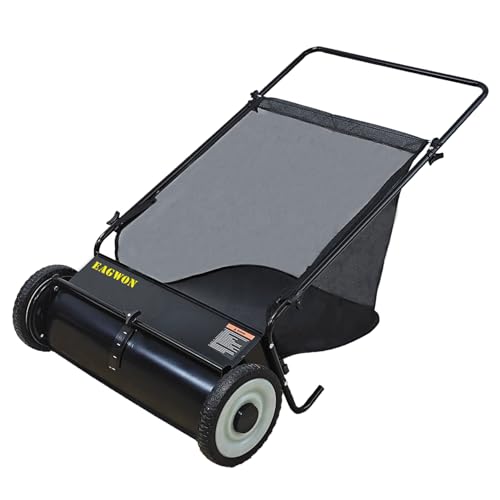
EAGWON Push Lawn Sweeper 26-Inch, 7 Cu. Ft. Hopper

VEVOR Tow Behind Lawn Sweeper 42-Inch, 12 Cu.Ft.

boldworks Push Lawn Sweeper Yard Leaf Collector 21-Inch, 103L

YINTATECH 42-Inch Tow Behind Lawn Sweeper, 20 Cu.Ft.

PPOLB 48-Inch Lawn Sweeper Tow Behind, 25.16 Cu.Ft.

GreenSweep Pickup Pro V26 with AntiLock Drive

GarveeLife Push Lawn Sweeper 21-Inch, 3.5 Cu. Ft.
More Details On Our Top Picks
A 26-inch sweep path gives this EAGWON model a sensible footprint for regular clipping cleanup, especially around walkways and modest lawns. The 7 cu. ft. hopper means fewer stops to empty, which matters more than it sounds after a full mow.
The steel frame should feel more reassuring than lighter all-plastic builds, while the rubber wheels help it roll across pavement and turf without feeling overly fussy. You may still prefer a tow-behind model for bigger acreage, but for push-style cleanup this lands in a practical middle ground.
Strong Points
- Four spinning brushes help lift loose clippings and leaves from the turf surface.
- Adjustable height lets you match shorter grass or thicker yard debris more closely.
- The 7 cu. ft. hopper reduces how often you stop to empty collected material.
- Steel frame construction adds a sturdier feel for routine yard work.
- Rubber wheels suit mixed surfaces, from driveway edges to lawn strips.
Minor Gripes
- Push operation asks more of your arms and pace than a tow-behind design.
- The wider hopper can feel bulky to store in a tight shed corner.
- Brush height may need a little adjustment as grass conditions change.
Feature Snapshot
Who It Suits Best
Homeowners with small to midsize lawns who want a push sweeper with a more substantial feel will get the most from this one.
Where A Sibling Pick Shines
PPOLB 48-Inch Lawn Sweeper Tow Behind fits larger properties better, especially for shoppers who want to cover more ground with a tractor or lawn vehicle.
Once your yard gets broad enough that push models start feeling like extra exercise, a tow-behind sweeper becomes the calmer option. The 42-inch sweep width and 12 cu. ft. capacity point to fewer passes and fewer interruptions, which suits regular cleanup after mowing or leaf drop.
The dumping rope is the useful detail here, because it lets you empty the hopper without wrestling the whole unit into an awkward position. The trade-off is simple, though, since this style makes the most sense behind a tractor or mower rather than by hand on a narrow property.
What We Like
- Wide 42-inch sweep path covers more ground per pass than compact push units.
- 12 cu. ft. hopper suits larger cleanup jobs and reduces stop-and-dump cycles.
- Dumping rope adds a handy way to empty collected debris from the seat.
- Adjustable sweeping height helps you tune pickup as grass length changes.
- Tow-behind format saves effort during repeated lawn maintenance sessions.
Areas To Watch
- Needs a compatible towing setup, so it is not a standalone hand tool.
- Wide coverage can feel unwieldy in tight side yards or around dense landscaping.
- Storage takes more space than a smaller push sweeper.
Details At A Glance
Who Should Grab It
This suits property owners with a mower or tractor who want to handle a wider yard without repeated manual passes.
Another Choice May Suit
EAGWON Push Lawn Sweeper 26-Inch works better for smaller yards and tighter storage areas where a tow-behind setup would feel excessive.
The 21-inch body makes this boldworks sweeper easier to thread through narrower stretches of yard than the wider EAGWON and VEVOR picks. Its 103L hopper gives you a decent collection bin for clipper-heavy weekends without making the unit feel oversized.
The easy-storage angle matters here, especially for garages already crowded with mowers and garden tools. One thing worth considering is that this style suits lighter cleanup better than very dense leaf piles, but for everyday clipping pickup it stays pleasantly simple.
Highlights
- Narrower 21-inch sweep width works well in tighter yard sections.
- 103L hopper gives you a practical amount of collecting space.
- Adjustable sweeping height helps you adapt to grass and debris levels.
- Storage-friendly build suits garages where space is already spoken for.
Worth Noting
- Smaller sweep path means more passes on broader lawns.
- Light-duty shape is better suited to routine clippings than heavy cleanup loads.
- The product page leaves some details sparse, so setup expectations stay modest.
Core Details
Right Fit For
This is a smart match for smaller properties and tidy storage spaces where a lighter push sweeper feels more natural.
A Better Fit Elsewhere
GreenSweep Pickup Pro V26 with AntiLock Drive suits users who want a more controlled push feel and a larger-capacity hopper.
YINTATECH keeps the same 42-inch tow-behind format as the VEVOR unit, but the 20 cu. ft. collector gives it a more generous holding bin for longer cleanup sessions. That larger bin is useful on properties where clipping piles build up fast after mowing, though it also means the setup asks for a vehicle and a little more storage room.
The adjustable brush height is the feature that saves this from feeling generic, since brush contact makes a real difference in how much surface debris gets lifted. The honest read is that this kind of sweeper pays off most on regular lawn care routes, not on tiny yards where maneuvering matters more than volume.
Bright Spots
- 42-inch width covers a wide lane without moving into oversized territory.
- 20 cu. ft. collector gives you room for substantial clipping loads.
- Adjustable brush height helps tailor pickup to turf conditions.
- Tow-behind layout keeps the work moving with less walking effort.
Softer Spots
- Requires a towing machine, so it is not meant for manual-only use.
- Large collector and frame need a fair bit of storage space.
- Bulk can feel unnecessary on compact lots or narrow garden paths.
Spec Overview
The Right Fit
This suits tractor owners who want a larger-capacity tow-behind sweeper for recurring grass clipping cleanup.
Look Elsewhere When
boldworks Push Lawn Sweeper Yard Leaf Collector fits better for smaller properties that do not need tow-behind scale.
This PPOLB model pushes farther into large-yard territory than the 42-inch tow-behind picks, and that extra sweep width is the whole story. A 25.16 cu. ft. hopper also means longer runs between empties, which can make a noticeable difference on bigger lawns or shared grounds.
The adjustment lever and dumping rope make it feel more thoughtfully set up than a bare-bones pull-behind unit. The trade-off is that size, while useful, makes it less sensible for smaller suburban yards where turning radius and storage start to matter more.
Upsides
- 48-inch sweep width helps cover wide lawn sections quickly.
- 25.16 cu. ft. hopper supports long cleanup sessions.
- Adjustable brush height lever gives you control over pickup depth.
- Dumping rope simplifies emptying from the towing position.
- Best suited to bigger properties that need fewer passes.
Small Caveats
- Large footprint is not a neat fit for cramped garages.
- May feel excessive on small or heavily segmented lawns.
- Needs towing equipment, so it is tied to vehicle-based use.
Feature Rundown
Whose Shelf It Belongs On
This belongs with property owners who have broad lawns and want a larger tow-behind sweeper for heavier seasonal cleanup.
Skip It When
EAGWON Push Lawn Sweeper 26-Inch fits better for smaller areas where a compact push tool is easier to store and steer.
The AntiLock Drive name suggests a more controlled push feel, which should appeal to anyone tired of push sweepers that feel awkward on uneven turf. Paired with a large-capacity hopper, this model looks aimed at frequent clipping pickup rather than occasional leaf gathering.
Compared with the simpler GarveeLife unit, this one leans into a more refined push experience and a broader debris-load mindset. That extra capability is useful, but it also puts this in a more specialized lane for homeowners who value smoother handling over a stripped-down tool.
Reasons To Buy
- AntiLock Drive points to steadier push control on varied lawn surfaces.
- Large-capacity hopper suits repeated cleanup after mowing.
- Push format stays practical for properties without towing equipment.
- Good fit for clipped grass, garden debris, and similar loose material.
Points To Note
- Drive system adds a layer of complexity beyond simpler manual sweepers.
- Large hopper can make emptying feel heavier than on compact models.
- The listing gives limited dimension detail, so storage planning is less exact.
Technical Sheet
Built With In Mind
This suits homeowners who want a push sweeper with a more guided feel and plenty of room for yard debris.
Where Shoppers Go Wrong
GarveeLife Push Lawn Sweeper 21inch is the simpler route for smaller lawns where a basic manual design feels easier to store and use.
GarveeLife keeps things straightforward with a 21-inch push layout, a 3.5 cu. ft. mesh hopper, and two spinning brushes. That combination makes sense for smaller lawns or touch-up cleanup after mowing, especially when you want a manual tool that does not crowd the garage.
The thickened steel frame should add a more solid feel than lighter entry-level sweepers, though the smaller hopper means you will empty it more often. For routine clipping pickup, that trade-off feels fair, but larger yards will probably want something with more width and capacity.
Positives
- 21-inch width keeps the tool easy to steer in smaller spaces.
- 3.5 cu. ft. mesh hopper works well for lighter clipping cleanup.
- Two spinning brushes help lift loose debris from the turf surface.
- Thickened steel frame adds a more durable-feeling build.
Room For Improvement
- Small hopper means more frequent emptying during bigger jobs.
- Two brushes offer less pickup coverage than four-brush designs.
- Best suited to smaller lawns rather than broad properties.
At A Glance
Who Will Love This
This works best for homeowners with compact yards who want a simple push sweeper for occasional clipping collection.
Where Another Pick Suits Better
EAGWON Push Lawn Sweeper 26-Inch is the stronger fit for anyone who wants a larger hopper and more brush action in a push model.
How To Choose The Right Lawn Sweepers For Grass Clippings
Sweep Width And Yard Size
Sweep width is the span the brushes cover in a single pass, and it shapes how fast you finish the job. A 21-inch or 26-inch push sweeper suits narrow paths, small lawns, and storage sheds with little spare room, while 42-inch and 48-inch tow-behind units make more sense on broad properties.
Wider is not always better. In tight landscaping, a giant tow-behind can feel like parking a truck in a bicycle lane, so the cleaner fit is the one that matches your turns and gate openings.
Hopper Capacity And Emptying Rhythm
Hopper capacity tells you how much debris the basket or bag can hold before you stop to dump it. Smaller models around 3.5 cu. ft. to 7 cu. ft. work fine for routine clipping pickup, while 12 cu. ft. to 25.16 cu. ft. helps on larger lawns or after heavier mowing sessions.
Think about how often you want to interrupt the route. A bigger hopper saves trips, but it also adds bulk and can be less pleasant to store or lift when emptying.
Brush Count, Adjustment, And Surface Fit
Brushes matter because they do the lifting. Four brushes usually give broader contact and better pickup across uneven grass, while two brushes suit lighter, simpler cleanup jobs.
Adjustable brush height is useful on lawns that shift between short-cut grass and thicker clippings. It lets you tune contact without forcing the sweeper too deep into the turf.
Push Versus Tow-Behind
Push sweepers suit smaller properties, quick touch-ups, and garages where every inch counts. Tow-behind sweepers fit mower owners who want to cover more ground with less walking.
The trade-off is effort versus reach. Push models ask more from you, while tow-behind models ask more from your equipment and storage space.
What To Weigh Before You Decide
Traps First Timers Fall Into
Many shoppers focus on width alone and ignore storage, turning radius, and how often the hopper needs emptying. That usually leads to a tool that sounds efficient but feels awkward the moment it meets a narrow path or crowded shed.
Another common miss is choosing a collector that is too small for the lawn. A tiny basket can work fine on a tidy patch, then become annoying the minute clippings start piling up after a full mow.
Where The Extra Money Goes
Higher-tier sweepers usually spend more on width, hopper volume, sturdier frames, and more comfortable operation. In this category, that often means less stop-and-go work and a calmer cleanup rhythm across larger lawns.
The upgrade makes sense when you sweep often, manage a broad property, or want the tool to feel steadier over rougher ground. For occasional clipping pickup on a small lot, a simpler model often covers the same need without the extra bulk.
Frequently Asked Questions
Do lawn sweepers work well for grass clippings?
Yes, they can gather loose clippings well, especially after a dry mow. Shorter, lighter clippings are easier to lift than damp, matted grass.
What size lawn sweeper suits a small yard?
A 21-inch or 26-inch push sweeper usually fits smaller yards best. It is easier to steer, store, and empty.
Are tow-behind sweepers better than push models?
Tow-behind models suit larger lawns because they cover more ground with less walking. Push models still make sense for tighter spaces and simpler storage.
Why does adjustable brush height matter?
Brush height helps the sweeper match your grass length and debris level. That can improve pickup without forcing the brushes too deep into the lawn.
What maintenance keeps a lawn sweeper working smoothly?
Clear grass buildup from the brushes and hopper after use, then store the unit dry. A quick check for loose parts before the next mow helps keep operation steady.
