

Keeping an irrigation schedule steady gets easier when the controller matches your yard, your zones, and how hands-on you want to be. The right unit can take the edge off dry patches, overwatering, and the weekly chore of resetting timers after weather changes. For a compact courtyard, a simple dial can be enough. For a larger property with mixed beds and turf, app control and more zones start to matter fast.
Quick Look At The Shortlist

Rain Bird ESP-TM2 8 Station WiFi Ready Indoor/Outdoor Controller TM2-8

Hunter X-Core XC800i Indoor Sprinkler Timer 8 Zone Irrigation Controller
Hunter X-Core XC400i Indoor Sprinkler Timer 4 Zone Irrigation Controller
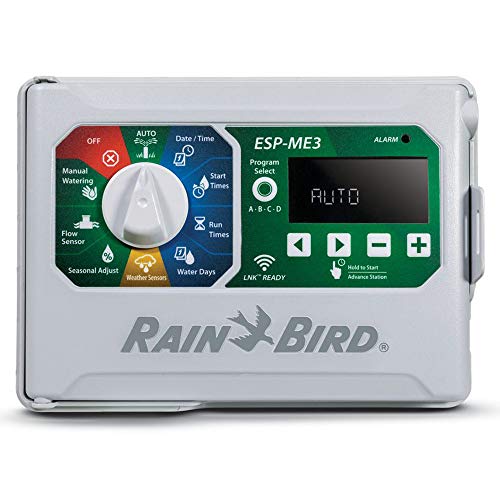
Rain Bird ESP-ME3 4 Station WiFi Ready Indoor/Outdoor Controller ESP-ME3-A1

Orbit B-hyve XR Smart Sprinkler Timer 16-Zone WiFi-Enabled Indoor/Outdoor Irrigation Controller
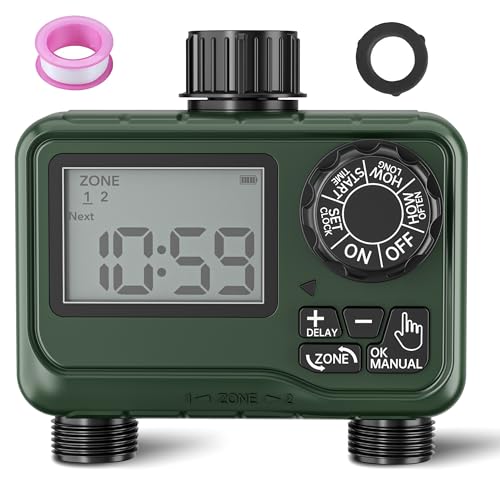
BN-LINK Outdoor Water Timer for Lawn 2 Zone Programmable Sprinkler Timer

Irritrol RD600-EXT-R Rain Dial 6 Station Outdoor Irrigation Controller
More Details On Our Top Picks
Rain Bird’s ESP-TM2 sits in the middle ground that works well for many homes, especially where you want a controller that can live indoors or outside. The 8-station layout gives you enough room for separate lawn, bed, and drip areas without jumping into a huge system. For a house with a few distinct watering needs, that balance matters more than flashy extras.
The WiFi-ready design is the key detail here, because it leaves room for app-connected control without forcing you into that setup on day one. That makes it a smart fit for homeowners who want a familiar controller now and a more connected setup later. The trade-off is simple, it’s more controller than a tiny yard needs, so smaller properties may be paying for unused capacity.
Strong Points
- Eight stations cover a varied yard without feeling overbuilt.
- Indoor or outdoor placement gives you more install options.
- WiFi-ready design leaves room for future smart control.
- Good fit for homes with mixed turf and planting zones.
Things To Consider
- Eight zones can be more than a compact yard needs.
- WiFi readiness still depends on the rest of your setup.
- Outdoor mounting takes a little more planning than a basic indoor timer.
Feature Snapshot
Who It Suits Best
You’re a strong match for this controller when your yard has several watering zones and you want a setup that can grow with the property.
Where Another Pick Suits Better
Hunter X-Core XC400i Indoor Sprinkler Timer is the cleaner fit for smaller, indoor-only setups with fewer zones to manage.
The XC800i leans into simple indoor control, and that makes it appealing for homeowners who want a familiar dial instead of a screen-heavy layout. Eight zones give you room for a larger irrigation plan, while manual control and seasonal adjust help you fine-tune watering without a steep learning curve. In a garage, utility room, or closet-style install, that straightforward approach can be easier to live with than app-first gear.
Compared with the Rain Bird ESP-TM2, this Hunter keeps the focus tighter on classic timer use rather than flexible indoor-outdoor placement. The honest trade-off is that you give up some installation freedom, but you gain a setup that feels easy to understand at a glance. That’s a strong fit for anyone who wants fewer moving parts in the day-to-day routine.
What We Like
- Dial-based layout keeps programming approachable.
- Eight stations handle multi-zone properties well.
- Manual controls help with quick overrides.
- Seasonal adjust supports simpler schedule changes through the year.
Room For Improvement
- Indoor-only placement limits where you can mount it.
- It feels more traditional than connected systems like the Orbit B-hyve XR.
- Large zone counts may be unnecessary for smaller lawns.
Core Details
Made For
You’re the right fit for this timer when you want a dependable indoor controller for a bigger yard and prefer physical controls over app-heavy systems.
A Better Fit Elsewhere
Rain Bird ESP-ME3 4 Station WiFi Ready Indoor/Outdoor Controller suits homeowners who want a more flexible mounting choice with fewer zones to manage.
The XC400i trims the idea down to four zones, and that makes it easier to fit a smaller home, townhouse, or modest front-and-back layout. You still get the same style of easy programming, manual control, seasonal adjust, and dial operation as the larger Hunter model, just with less room for extra circuits. For a neat, indoor install, that smaller footprint can feel like a relief.
Compared with the XC800i, this one makes more sense when your irrigation plan is simple and you do not want unused zones sitting around. The trade-off is obvious, fewer zones mean less future expansion, so it’s not the one to choose for a property you expect to keep growing. Still, for compact lots, the simpler shape is the point.
Upsides
- Four zones suit smaller irrigation plans.
- Dial-based control keeps setup approachable.
- Manual operation is handy for quick changes.
- Seasonal adjust helps you trim schedules without fuss.
Softer Spots
- Four stations can feel tight for expanding yards.
- Indoor-only mounting narrows placement options.
- It gives you less headroom than the 8-zone Hunter XC800i.
At A Glance
Best Suited To
You’re looking at a solid match for a smaller property, especially one where the irrigation zones stay simple and easy to track.
Swap It Out When
Rain Bird ESP-TM2 8 Station WiFi Ready Indoor/Outdoor Controller is the better call for a larger yard that needs more zones and outdoor placement.
Rain Bird’s ESP-ME3 lands in a useful spot for property owners who want four zones now but like the idea of a more expandable controller later. Its indoor-outdoor design gives you placement flexibility, which matters in garages, protected exterior spaces, or utility rooms where wiring routes decide the install. That makes it feel a little more future-friendly than the tighter indoor-only Hunters.
The 4-station base keeps the setup from becoming bulky, yet it still leaves room for a more serious irrigation plan than a basic hose timer. In a home with a front lawn, a side strip, and a couple of beds, it can be the middle path that avoids both clutter and overkill. The caveat is that a bigger property may outgrow four zones quickly, so you want to think about tomorrow, not just this season.
Reasons To Buy
- Indoor or outdoor placement gives you flexibility.
- WiFi-ready design supports a smarter setup path.
- Four zones suit many modest properties.
- Feels more expandable than a basic timer.
Minor Gripes
- Four zones may run out of room on larger lots.
- WiFi-ready features still depend on your broader setup.
- It asks for a bit more planning than a simple hose timer.
Details At A Glance
Who Will Love This
You’re a good match for this controller if you want a flexible install and plan to build a slightly more advanced watering setup over time.
Look Elsewhere When
Orbit B-hyve XR Smart Sprinkler Timer is the stronger fit for larger properties that need many more zones and app-led control.
The B-hyve XR is the broadest option in this group, and that shows in the 16-zone layout right away. For larger homes, multi-bed properties, or spaces where the irrigation plan keeps getting more layered, that extra headroom matters a lot. App control and a weatherproof watering system frame it as the modern, connected pick in the lineup.
Compared with the Rain Bird and Hunter units above, this Orbit leans far more into smart control and scale. The trade-off is that it can feel like more system than a small yard needs, and setup may take more thought than a basic dial controller. For households managing several watering areas, though, the extra room can save you from outgrowing the controller too soon.
Bright Spots
- Sixteen zones handle large or layered irrigation plans.
- WiFi control suits app-first routines.
- Indoor or outdoor design keeps installation flexible.
- Custom programs help you separate different watering needs.
Points To Note
- It can be more controller than a small yard needs.
- App-led features add setup steps.
- The larger feature set means more to learn at first.
Core Details
Built With In Mind
You’re the right fit for this controller when your yard has many zones and you want app control to keep the schedule organized.
Where Shoppers Go Wrong
BN-LINK Outdoor Water Timer for Lawn is the simpler match for hose-based watering, especially where you only need a compact two-zone setup.
The BN-LINK timer stands apart because it works more like a hose-side controller than a full irrigation panel. Two zones, rain delay, and manual or auto modes make it useful for garden hose routines, drip lines, or smaller yard sections that do not need a wall-mounted multi-station box. For patio planters and tidy drip layouts, that’s often enough.
Compared with the larger Rain Bird and Hunter controllers, this one is easier to wrap around quickly, but it also has a narrower job to do. The outdoor format is practical, though you’ll want to keep the housing clean and protected from rough handling in a busy yard. It feels best for straightforward watering, not a full property-wide irrigation rebuild.
Positives
- Two zones keep hose watering simple.
- Rain delay helps you pause schedules during wet stretches.
- Manual and auto modes cover different routines.
- Works well for garden hose and drip use.
Small Caveats
- Two zones are a modest fit, not a large-system answer.
- It serves hose-based setups more than full irrigation panels.
- Outdoor placement calls for sensible protection and care.
Spec Overview
Whose Shelf It Belongs On
You’re in the sweet spot for this timer when you water through hose lines, drip systems, or a compact garden setup.
Skip It When
Orbit B-hyve XR Smart Sprinkler Timer is the better match for a large property that needs app control and far more zones.
The Irritrol Rain Dial is built for an outdoor install, and that alone will matter to anyone who wants the controller placed where the irrigation wiring naturally runs. Six stations give you a middle-sized zone count, enough for a fair amount of garden management without jumping into a huge control panel. In a garage-adjacent or exterior cabinet setup, that practical shape tends to make sense.
Compared with the Rain Bird ESP-TM2 and the Orbit B-hyve XR, this Irritrol leans more toward durable placement than smart features. The trade-off is that you’re choosing a more focused controller, not the most connected one in the bunch. For homeowners who care more about location and steady station control than app features, that can be the right balance.
What We Like
- Outdoor design suits exterior irrigation installs.
- Six zones offer a useful middle ground.
- Good fit for properties with several watering areas.
- Straightforward station control keeps the setup practical.
Areas To Watch
- Outdoor placement may need a little more install care.
- It is less feature-heavy than connected smart controllers.
- Six stations may be either enough or limiting, depending on yard size.
Feature Rundown
The Right Fit
You’re the best match for this controller when you want a solid outdoor unit for a mid-sized irrigation layout and do not need app-based extras.
Where Shoppers Go Wrong
Rain Bird ESP-ME3 4 Station WiFi Ready Indoor/Outdoor Controller is the better choice for someone who wants indoor-outdoor placement with a smaller four-zone base.
How To Choose The Right Lawn Sprinkler Controllers
Match The Station Count To The Yard
Station count is the first number to check, because it tells you how many separate watering areas the controller can manage. A 4-zone unit suits a tidy front yard and a couple of beds, while 8 or 16 zones make more sense for split lawns, side strips, and drip lines.
Don’t pay for capacity you won’t use. Too many zones can make the interface feel bigger than the job, while too few zones can force awkward workarounds later.
Decide Between Indoor, Outdoor, And Flexible Mounting
Placement matters as much as zone count. Indoor controllers fit utility rooms, garages, and closets, while outdoor models make more sense near the irrigation wiring and weatherproof housing needs of the property.
A flexible indoor-outdoor design helps when the install point is not obvious. That kind of layout can save you from running extra wiring or squeezing gear into a space that never felt right in the first place.
Choose Between Dial Simplicity And App Control
Dial-based controllers are easy to read and quick to adjust, which helps when you want a set-it-and-forget-it routine. Smart models with WiFi and app control add convenience for schedule changes, weather adjustments, and multi-zone organization.
That extra convenience usually comes with a learning curve. For households that adjust watering often, the upgrade can be worth it, but a simpler dial can feel calmer and more reliable for basic weekly use.
Think About The Property’s Future, Not Just Today
A controller that looks sufficient now can feel cramped after a patio project, a new garden bed, or a lawn expansion. Leaving room for growth avoids replacing the whole unit sooner than you planned.
The sweet spot is a controller that fits today’s yard without boxing you in tomorrow. That balance is where the better long-term value usually lives.
A Quick Reality Check
Hidden Buying Traps
A common mistake is picking a controller for the interface instead of the zone count. Another is ignoring whether the unit belongs indoors, outdoors, or in either place, which can turn installation into a headache.
It also helps to separate full irrigation controllers from hose timers. The BN-LINK makes sense for hose and drip use, but it won’t fill the same role as a wall-mounted multi-zone system.
The Upgrade Payoff
Higher-tier controllers usually cost more because they support more stations, more flexible placement, or connected scheduling. Those extras matter most on larger properties, mixed planting layouts, or homes where watering changes often through the season.
For a small yard, the extra features can be overkill. For a property with several zones and a changing schedule, the extra control can make the whole system easier to live with.
Frequently Asked Questions
How many zones do most homes need?
A small yard often works well with 4 zones, while larger or more complex layouts usually benefit from 6, 8, or more. The right number depends on how many separate watering areas you manage.
Is WiFi control worth it for a sprinkler controller?
WiFi control helps when you want easier schedule changes and a more connected routine. It matters less for a simple yard that rarely changes.
Can an indoor controller be used outside?
Indoor-only models belong in protected spaces such as garages or utility rooms. Outdoor use calls for a model built for that placement.
What makes a hose timer different from a full controller?
A hose timer handles smaller watering jobs at the faucet or hose line. A full controller manages multiple irrigation zones from a central location.
Should you choose more zones than you need right now?
Extra zones can help if your yard is likely to grow or change. Too much unused capacity can also make the controller more complicated than necessary.
