

Steep ground changes the whole mowing job. Traction, steering control, slope rating, and cutting range matter a lot more than glossy extras, especially on yards that turn slick after rain or feel uneven underfoot.
This roundup focuses on robot mowers and remote-control models that fit slanted lawns in different ways. You’ll see compact wire-free options for smaller yards, plus heavier track-driven machines for rough terrain and bigger stretches of grass.
The Shortlist At A Glance

ANTHBOT M5 Robot Lawn Mower 1/8 Acre with Garage

WORX Robot Lawn Mower WR320
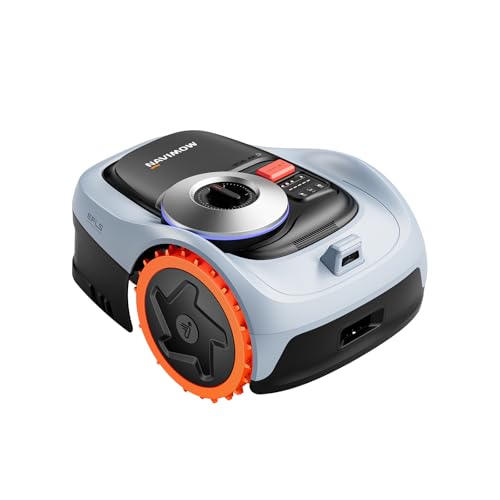
Segway Navimow i206 AWD Robot Lawn Mower
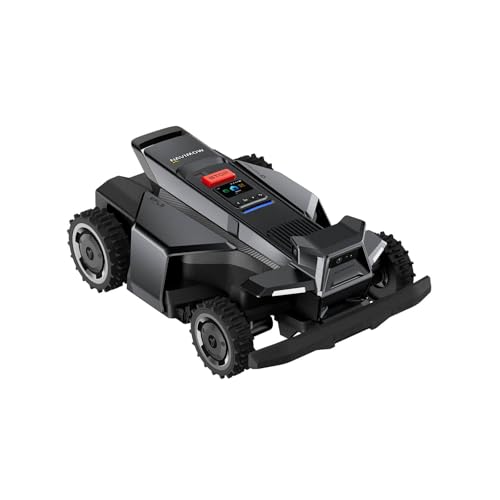
Segway Navimow X430 Robot Lawn Mower Wire Free
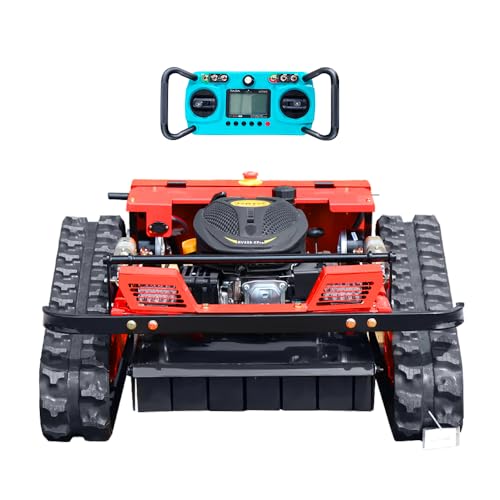
Infront Remote Control Lawn Mower 20 Inch Cutting Width

INFRONT Remote Control Lawn Mower All Terrain Tracks

AIWEIYA Remote Control Lawn Mower Oil-Electric Hybrid
More Details On Our Top Picks
The ANTHBOT M5 suits smaller, sloped yards where wire-free setup matters as much as traction. Its dual-vision approach and full-band NRTK positioning point toward cleaner boundary handling than a basic robot mower, and the garage adds a tidy storage home.
For a townhouse lawn, narrow side yard, or compact back garden, that mix feels sensible rather than flashy. You may find the 1/8-acre coverage more than enough for regular trimming, but it still calls for a yard that fits its size range and app-based setup style.
Strong Points
- Wire-free setup cuts out perimeter cable work.
- Dual vision and NRTK guidance support tighter navigation on tricky layouts.
- Garage storage keeps the unit and dock area more orderly.
- App control makes zone handling easier from your phone.
- 45% slope capability fits steeper home lawns better than many lighter robot mowers.
Things To Consider
- Best suited to smaller properties, not broad acreage.
- Camera-based navigation can depend on how busy or cluttered the lawn looks.
- App setup takes more patience than a simple push mower.
Feature Snapshot
Built With In Mind
Homeowners with a smaller sloped yard and a preference for app-managed mowing fit this model well.
Where A Sibling Pick Shines
Segway Navimow X430 Robot Lawn Mower Wire Free suits larger properties and steeper banks more comfortably.
Compared with the smaller ANTHBOT M5, this WORX WR320 reaches a half-acre class that suits a more typical suburban lot. The mix of cloud navigation, AI obstacle awareness, and auto mapping gives you a more hands-off feel once the layout is learned.
That said, the best fit is a lawn with clear lanes and a few predictable obstacles, not a yard packed with narrow dead ends. For most homes that need wire-free mowing across a medium property, the WR320 sits in a very workable middle ground.
Highlights
- Half-acre coverage suits larger suburban yards.
- AI obstacle awareness helps it steer around common clutter.
- RTK cloud navigation supports mapped mowing paths.
- No perimeter wire reduces setup work.
- App control keeps zone and schedule changes simple.
Worth Noting
- Obstacle-heavy yards may need more layout patience during setup.
- Wire-free systems still depend on stable placement and clear mapping.
- Medium-size coverage can feel unnecessary for tiny lawns.
Feature Rundown
Whose Shelf It Belongs On
Shoppers with a medium lawn and a few trees, beds, or yard features should find the feature set appealing.
Look Elsewhere When
ANTHBOT M5 Robot Lawn Mower 1/8 Acre with Garage makes more sense for a compact sloped yard with tighter space.
The i206 AWD leans into tight-yard precision, and the 20-zone app control tells you a lot about its intended use. Compared with the WORX WR320, it feels more tuned to multi-area lawns where the boundaries and transitions matter just as much as total acreage.
The 2 to 3.6 inch cutting range is useful for trimming styles that change through the season, though it’s still a compact machine in scope. In a small yard with split sections, that combination can feel easier to live with than a bigger mower built mainly for acreage.
Upsides
- Wire-free setup keeps installation simpler.
- 45% slope handling suits steeper home terrain.
- Zero-turn steering helps with tight corners and narrow turns.
- Twenty app-managed zones support more complex yard layouts.
- Cutting height range offers useful trim flexibility.
Small Caveats
- Its 0.15-acre range is for small lawns, not larger properties.
- Multi-zone use adds planning time during setup.
- The compact footprint can feel limited for open acreage.
Core Details
Made For
You’ll get the most from this model in a small, segmented yard where precise app control matters more than raw coverage.
Another Choice May Suit
WORX Robot Lawn Mower WR320 is the more natural fit for a medium lawn that needs broader half-acre coverage.
This is the most terrain-focused robot in the group, and the 4WD layout makes that obvious. Compared with the i206 AWD, the X430 steps into a different lane entirely, aiming at larger properties where traction and slope handling matter as much as mowing coverage.
The 2 by 180W motors and zero-turn behavior point toward a machine built for control, not just straight-line mowing. For a broad lawn with steep banks, that can be a serious advantage, though it also means you’re looking at a more specialized setup than a simple backyard bot.
Reasons To Buy
- Up to 1 acre coverage fits larger properties.
- 4WD support is well suited to steep ground.
- Zero-turn motion helps protect lawn surfaces in tighter turns.
- Dual 180W motors suggest strong drive support.
- Wire-free operation skips boundary cable installation.
Areas To Watch
- Its size and capability are more than many small lawns need.
- High-capacity features make setup feel more involved than simpler robot mowers.
- The stronger hardware can be more mower than a flat, tidy yard requires.
At A Glance
Right Fit For
Large-property owners with steep sections and a strong need for wire-free automation fit this model best.
Skip It When
Segway Navimow i206 AWD is the easier match for a smaller, more segmented lawn.
The Infront remote-control mower moves away from the autonomous robot format and toward hands-on control, which some sloped properties really need. The 20-inch cutting width gives you more ground per pass than the smaller robot mowers above, and the tracked base is a good sign for uneven terrain.
For tall grass, rough patches, or land that feels too irregular for a mapping robot, this style can make more sense. The trade-off is that you’re guiding the cut yourself, so it suits owners who want control rather than full automation.
Best Bits
- Track design supports grip on rough terrain.
- 20-inch width helps cover larger swaths quickly.
- 0.79 to 5.9 inch height range gives wide trim flexibility.
- Remote control suits direct steering in awkward spots.
Room For Improvement
- Hand-guided mowing takes more effort than robot operation.
- Track systems usually need regular cleaning after muddy use.
- Large-lawn performance depends on how much steering time you want to spend.
Details At A Glance
The Right Fit
You’ll appreciate this most on rough, sloped ground where direct steering feels safer than setting up a mapping robot.
Reach For A Different Pick When
Segway Navimow X430 Robot Lawn Mower Wire Free is a better fit for hands-off coverage on a very large steep yard.
That gas-electric hybrid layout makes this INFRONT model feel more serious than the remote mower above, especially for larger land parcels that need longer working windows. The all-terrain tracks and 45 degree slope rating point toward steadier movement on land that would be awkward for a standard push mower.
For estate edges, farm-style grass, or steep banks, the blend of power source and traction matters more than a tidy, lightweight frame. It’s a stronger fit than the compact robot options, though the added hardware means you’re choosing capability over simplicity.
Bright Spots
- Gas-electric hybrid setup offers more flexible power support.
- All-terrain tracks suit rough and sloped ground.
- 45 degree climbing capability fits steep sections well.
- Remote control gives you direct oversight in tricky spots.
Points To Note
- Hybrid machinery usually asks for more upkeep than a robot mower.
- Track surfaces need routine cleaning after dusty or muddy use.
- Its power-first design is more machine than casual lawn tool.
Spec Overview
Who Should Grab It
Owners with steep, wide, or rough land who want remote control and stronger power support will get the most value here.
Swap It Out When
Infront Remote Control Lawn Mower 20 Inch Cutting Width is simpler to manage on smaller rough lawns.
The AIWEIYA model feels built for professional grounds and large turf areas where slope work is part of the job, not an occasional headache. Compared with the INFRONT hybrid above, it keeps the crawler-tracks idea but leans even harder into estate and landscape use.
The 1.1 to 5.9 inch cutting range gives you room to shape grass differently across seasons, which matters on bigger properties with mixed growth. You may find the remote-control format more practical than a robot mower on terrain that changes character from one section to the next.
Standout Traits
- Oil-electric hybrid setup supports demanding mowing jobs.
- Crawler tracks help with traction on steep turf.
- Professional and estate use case fits large properties.
- Wide cutting-height range supports varied grass lengths.
Softer Spots
- It’s a specialized machine, so lighter lawns may not need this much hardware.
- Hybrid and tracked gear usually brings more maintenance than a small robot mower.
- Remote operation asks for your attention through the cut.
Core Details
Who Will Love This
You’ll get the most from this pick on a large estate, managed turf, or steep land that needs serious coverage and traction.
Not Your Match When
ANTHBOT M5 Robot Lawn Mower 1/8 Acre with Garage fits a smaller home lawn with far less effort at setup.
How To Choose The Right Lawn Mowers For Slopes
Start With The Ground, Not The Brand
Slope rating matters because traction changes fast once grass gets damp or the grade tilts sharply. A 45 percent or 45 degree climb rating tells you more about real-world confidence than glossy marketing does.
Track drive, 4WD, and crawler-style movement help in different ways, but they solve the same basic problem, keeping the mower planted. For a yard with loose soil or uneven seams, that grip matters more than a fancy app.
Match The Mower To Your Yard Size
Coverage numbers are easy to ignore, then easy to regret. A 0.15-acre robot suits a compact backyard, while a 1-acre machine makes sense only when the grass area genuinely needs it.
Smaller yards usually benefit from wire-free robots with zone control. Bigger, rougher properties often fit remote-control or hybrid-track machines better because you get more direct handling.
Choose Navigation Based On Layout
Wire-free mapping helps a lot, but only when the yard has a shape the system can learn cleanly. Multi-zone app control works well for split lawns, side strips, and beds that force repeated turns.
Camera-based obstacle avoidance helps around trees and furniture, yet it still asks for a reasonably organized space. A crowded yard can make even smart navigation feel less smooth.
Think About Maintenance And Handling
Robot mowers reduce day-to-day effort, but they still need charging, cleaning, and occasional software attention. Track-based or hybrid machines usually ask for more upkeep, though they can handle tougher terrain with less hesitation.
For steep lawns, the honest trade-off is simple, easier ownership versus stronger physical control. Pick the style that fits your terrain first, then the features you’ll actually live with.
A Quick Reality Check
Wrong Turns To Avoid
Don’t size a mower only by acreage numbers. A yard with narrow turns, wet shade, or split sections can need a different machine than the square footage suggests.
Another common miss is choosing a slope mower that sounds powerful but offers no clear steering or navigation plan. On tricky ground, control matters as much as muscle.
The Upgrade Payoff
Higher-tier models usually cost more because traction systems, mapping hardware, and stronger motors take more engineering. Wire-free navigation and multi-zone control also add convenience that basic machines leave out.
The upgrade makes sense for steep, complex, or expansive properties where time and control matter. For a simple small yard, a lighter model can still be the cleaner fit.
Frequently Asked Questions
What slope rating should you look for?
A steeper yard benefits from a higher slope rating, especially when the grass gets damp or uneven. Match the rating to the hardest part of the lawn, not the flattest stretch.
Are wire-free mower setups hard to manage?
They usually reduce installation work because you skip perimeter cable. The trade-off is a setup process that depends more on mapping, app control, and yard layout.
Do tracked mowers work better on hills?
Tracks usually help with grip on rough or slanted ground. They also tend to feel more capable on uneven terrain than lighter wheels alone.
Which type suits a small sloped yard?
A compact wire-free robot mower often fits best because it handles maintenance without taking much storage space. Multi-zone control helps too when the yard has narrow corners or split sections.
When does a remote-control mower make more sense?
A remote-control model fits steep, rough, or overgrown ground that calls for direct steering. It also suits land where you want more control than a mapping robot can offer.
