

Broadcasters make yard work feel less like a chore and more like a controlled routine. For small patches, cramped walkways, and quick touch-ups, a handheld model can save time, while larger lawns call for a push or tow-behind setup that keeps coverage steadier.
You get the best results from the right hopper size, flow control, and wheel style for your ground. That mix matters even more on uneven turf, where a shaky spread pattern can turn a neat afternoon into extra cleanup.
Quick Look At The Shortlist

Jonathan Green (10947) New American Lawn Hand Broadcast Spreader
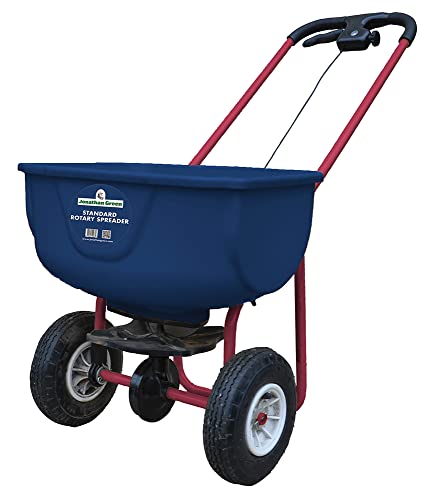
Jonathan Green (10937) New American Lawn Standard Rotary Broadcast Spreader

EarthWay 2150 Commercial 50 LB Broadcast Fertilizer Spreader

EarthWay 2050P 80lb Broadcast Spreader

Chapin Tow-Behind Turf Spreader with Auto-Stop Waste-Free Coverage

Titan Attachments 50 lb Professional Fertilizer Push Broadcast Spreader

66LBS Walk-Behind Broadcast Spreader with 13" All-Terrain Pneumatic Tires
More Details On Our Top Picks
A handheld spreader like this fits the small, awkward jobs that a push model can make feel oversized. The blue body keeps the footprint simple, and the listed coverage of up to 1,500 square feet suits narrow side yards, quick seed touch-ups, and patches around paths.
The trade-off is obvious, though, since hand-crank spreading asks more from your wrist and pacing than a wheeled unit does. For townhomes, small front lawns, and spot treatment around garden edges, that lighter format can be exactly the right amount of tool.
Strong Points
- Easy to carry across tight spaces without dragging a full-size frame behind you.
- Coverage for smaller lawns keeps you from overbuying a larger spreader than you need.
- Simple format works well for quick passes around walkways, corners, and fence lines.
- Good match for storage shelves or garage hooks, since it takes little room.
Things To Consider
- Handheld spreading can feel tiring during longer sessions, especially on broader lots.
- The compact size is less suited to wide open turf where a wheeled model saves time.
- Cleaning after granular material matters, since small housings can trap residue in creases.
Feature Snapshot
Who It Suits Best
Small-yard owners and apartment townhome gardeners get the most from this compact setup.
Where Another Pick Shines
EarthWay 2050P 80lb Broadcast Spreader suits you better once your lawn stretches beyond spot care and needs longer, steadier passes.
This is the more natural next step after the handheld Jonathan Green model, since a rotary spreader handles everyday lawn coverage with less effort. The 10,000 square foot reach makes sense for typical suburban yards where you want fewer refill pauses and a smoother walking rhythm.
Rotary spreading means the material fans out from a spinning disc, which helps cover ground evenly as you walk. The honest read is that it suits regular yard care better than cramped spaces, so you may prefer it most when your lawn has room to breathe.
What We Like
- Coverage up to 10,000 square feet fits many standard home lawns.
- Wheeled push design keeps the spread pattern more consistent than a hand unit.
- Good middle ground for homeowners who want one spreader for several seasons of routine use.
- Less arm strain than the handheld Jonathan Green option during longer passes.
Points To Note
- It still takes storage space, so garage room matters more than with the handheld model.
- Turn-heavy yards can take more steering work than a tow-behind setup.
- After use, the hopper and underside benefit from a careful rinse or wipe-down.
Details At A Glance
Made For
Homeowners with standard suburban lawns and regular fertilizer or seed routines will get the best fit here.
A Better Fit Elsewhere
Chapin Tow-Behind Turf Spreader with Auto-Stop Waste-Free Coverage suits you better for larger properties where towing behind a tractor or utility rig saves effort.
Uneven turf is where the EarthWay 2150 starts to make sense, because the 13-inch pneumatic tires are built for rougher ground than the Jonathan Green push spreaders. Pneumatic means air-filled, and that usually gives a softer ride across bumps, ruts, and patched soil.
The clog-free grate is a practical touch for granular material that can clump on damp days or after storage. You can slide that grate out when you do not need it, which keeps the hopper easier to manage for different jobs.
Highlights
- 13-inch air-filled tires help the frame roll more smoothly over rough lawn sections.
- Rust-resistant poly rims are a sensible fit for damp storage areas and seasonal use.
- Clog-helping grate keeps material moving more evenly through the hopper.
- Wide-tread handling suits driveways, patchy grass, and less forgiving ground.
Room For Improvement
- Its commercial-style build can feel like more machine than a casual front-yard user needs.
- Weight and size make it less convenient than the compact handheld Jonathan Green spreader.
Spec Overview
Built With In Mind
Property owners dealing with bumpy lawns, gravel edges, or frequent seasonal material changes will appreciate this setup.
Reach For A Different Pick When
EarthWay 2050P 80lb Broadcast Spreader is the cleaner fit for broader lawns where extra hopper capacity matters more than rough-ground handling.
The 80-pound hopper is the big reason this EarthWay stands out, because it lets you cover larger areas with fewer pauses for refills. For bigger suburban lots or broad front-and-back lawn routines, that extra capacity can feel like a real time saver.
Side spread control gives you a better way to steer material away from sidewalks or flower borders, which matters more than many shoppers expect. You may still want careful calibration on your first pass, since wider-capacity spreaders reward a steady walking pace and a measured hand.
Upsides
- 80-pound hopper size supports longer sessions and larger properties.
- Side spread control helps narrow the output along edges.
- Pre-assembled setup is appealing for anyone who dislikes long setup work.
- Works well for seed and fertilizer routines across broad areas.
Small Caveats
- Large capacity can tempt you to overload the hopper more than the task needs.
- Big coverage tools take more storage room than a handheld or compact push unit.
- Regular cleanup helps prevent residue from sticking around after granular use.
Core Details
Right Fit For
Homeowners with large yards who want one push spreader for seed and fertilizer will get the most out of it.
Another Choice May Suit
Titan Attachments 50 lb Professional Fertilizer Push Broadcast Spreader fits smaller storage spaces and lighter-duty routine care a little better.
Big-property maintenance is where a tow-behind spreader starts to feel sensible, because the load rides behind an ATV, UTV, or lawn tractor instead of in your hands. The 150-pound capacity gives you room for broader routes, and the auto-stop feature helps cut waste as you move between sections.
Dual impellers matter here because they move material outward from two points, which can support broader coverage on large open areas. The enclosed bearings are a quiet detail, but they matter for smoother rolling and less grime exposure over time, especially on fields, long drives, or acreage-style lawns.
Bright Spots
- 150-pound hopper size suits larger properties and fewer fill stops.
- Works with ATV, UTV, and lawn tractor setups for towing convenience.
- Auto-stop function helps reduce waste at stops and turns.
- Dual impellers support broader output across open ground.
- Enclosed bearings are a useful touch for smoother rolling and easier upkeep.
Worth Noting
- Tow-behind gear takes more storage room and a suitable tow vehicle.
- It makes less sense for small yards where a handheld or push unit is simpler.
- Attachment and cleanup take a little more time than with a basic push spreader.
Feature Rundown
The Right Fit
Property owners with tractor-accessed acreage or long drive-connected lawns will get the most practical use from it.
Skip It When
Jonathan Green (10937) New American Lawn Standard Rotary Broadcast Spreader makes more sense for a standard yard where towing equipment would be overkill.
Titan takes a more utilitarian path than the EarthWay 2050P, with a 50-pound hopper that still feels substantial without moving into oversized territory. The listed 10 to 12 foot spread range helps with broad passes across a lawn, and it keeps the unit useful for winter salt or ice-melt work as well.
A three-position flow handle gives you a simple way to change output without a fussy setup, which is handy for routine lawn care. The pneumatic tires and gearbox combination suggest easier movement across mixed ground, and that matters most when the yard includes packed soil, driveway edges, or rougher side sections.
Reasons To Buy
- 50-pound hopper offers useful capacity without feeling overly bulky.
- Works across multiple seasons, from fertilizer to salt spreader use.
- 10 to 12 foot spread range suits general lawn coverage.
- Three-position flow control keeps output changes straightforward.
- Pneumatic tires support smoother rolling over mixed terrain.
Softer Spots
- It sits below the EarthWay 2050P in hopper size, so refills come sooner on large jobs.
- Winter use adds cleaning duties after salt or melt products.
- The broader frame is less nimble than a handheld spreader in tight landscaping.
Technical Sheet
Whose Shelf It Belongs On
Homeowners who want one spreader for year-round outdoor chores will get solid use from this Titan model.
Look Elsewhere When
EarthWay 2050P 80lb Broadcast Spreader is the better match for larger lawns where more hopper room matters more than general-purpose flexibility.
This Toolsempire model leans into broad coverage with a 66-pound hopper and a stated spread width up to 6.5 feet, which helps on open stretches of lawn. The 13-inch pneumatic tires are a useful plus on grass, gravel, mud, and light snow, so the frame feels more adaptable than a basic push spreader.
The 30-level adjustable dial gives you finer control than a simple open-and-close lever, and the three-hole drop system supports more even release of granular material. The hopper screen is a small but useful feature, since it helps keep debris and clumped granules from interrupting the flow.
Best Bits
- 66-pound hopper supports longer sessions with fewer refill breaks.
- Up to 6.5 feet of spread width helps cover open areas faster.
- 30-level adjustment gives you a finer handle on output changes.
- Three-hole drop system supports steadier release of material.
- All-terrain pneumatic tires help on grass, gravel, mud, and light snow.
- Hopper screen helps reduce clogging from debris or stuck granules.
Areas To Watch
- The wider spread path can be more than you need for narrow side yards.
- More adjustment points usually mean you’ll want a little setup patience at first.
- After winter use, the frame and hopper benefit from careful cleanup.
Feature Card
Best Suited To
Shoppers with mixed-surface property routes and broad yard areas will find this one especially practical.
Swap It Out When
Jonathan Green (10947) New American Lawn Hand Broadcast Spreader is the simpler choice for tight spaces and quick spot work.
How To Choose The Right Lawn Broadcast Spreaders
Match Capacity To Your Property
Capacity matters because it decides how often you stop to refill. A 1,500 square foot handheld tool fits touch-ups and compact yards, while 50 to 80 pound hoppers make more sense for larger lawns that need longer passes. Tow-behind units with 150-pound capacity sit at the far end of that scale and suit acreage-style work.
Storage matters just as much, especially in a garage that already holds mowers, trimmers, and garden tools. Bigger hoppers usually mean bigger frames, so the practical question is not only how much you can spread, but also where you’ll keep the spreader between uses.
Choose The Drive Style That Fits Your Routine
Handheld models work best for patch repairs, narrow borders, and very small lawns. Push spreaders feel steadier for most home yards because the wheels help regulate movement and coverage, and rotary designs spread material in a wider fan as you walk.
Tow-behind spreaders make the most sense once the yard is large enough that walking behind a hopper gets tiring. They also pair well with ATVs, UTVs, or lawn tractors, which is handy on bigger properties with long lanes or open turf.
Pay Attention To Control And Terrain
Flow control is the feature that decides how much material leaves the hopper, so it affects consistency more than many shoppers expect. Multi-level dials, side spread control, and drop systems all help you trim waste near driveways, beds, and sidewalks.
Tires matter too. Pneumatic, or air-filled, tires cushion rough ground better than rigid wheels, so they suit bumpy yards, gravel edges, and damp patches where a spreader needs balance more than speed.
Think Beyond Spring Jobs
Some spreaders stay useful all year because they handle grass seed, fertilizer, and salt or ice melt. That broader use can justify a sturdier frame, especially for homes that see both lawn care and winter driveway work.
The honest read is that extra versatility usually comes with more cleaning and storage care. Granular residue, salt, and damp material can build up fast, so easier access to the hopper and moving parts becomes part of the real ownership value.
What To Weigh Before You Narrow The List
Wrong Turns To Avoid
Many shoppers focus on capacity alone and miss the shape of the yard. A big hopper feels appealing, but it’s awkward in tight side yards, and a compact handheld can be frustrating on broad lawns that need repeated refills.
Another common miss is ignoring tire style and control range. Uneven ground, sloped areas, and long driveway edges punish flimsy movement and imprecise output, so the spreader should match the terrain, not just the seed bag.
When Paying More Pays Off
Higher-tier spreaders usually cost more because they use sturdier frames, larger hoppers, better wheel setups, and more refined control systems. Those details matter most on bigger properties, rougher terrain, or seasons where you use the tool often enough to notice sloppy flow.
The upgrade is worth it when refill breaks, uneven coverage, or hard-to-manage terrain keeps slowing you down. For smaller yards, though, a simpler model can be the smarter fit, since extra hardware only adds weight and storage demands.
Frequently Asked Questions
What size spreader works for a small yard?
A handheld model or a compact push spreader usually fits best. The Jonathan Green (10947) model covers up to 1,500 square feet, which suits patch work and smaller home lots.
Do I need pneumatic tires?
Air-filled tires help most on bumpy ground, gravel edges, and yards that are not perfectly smooth. They are less critical on flat, even turf, but they do add comfort and balance.
What’s the difference between rotary and tow-behind spreaders?
A rotary spreader throws material outward as you push it, which works well for standard yards. A tow-behind model follows behind an ATV, UTV, or tractor and suits larger properties.
Can one spreader handle seed, fertilizer, and salt?
Some can, especially models that mention year-round use or winter material support. Check the product details closely, since not every hopper or control layout is suited to all materials.
How do you keep a spreader working smoothly?
Empty leftover material, wipe the hopper, and clear any buildup after use. That routine matters even more after damp fertilizer or salt, which can cling to the frame and moving parts.
