

Picking the right lawn aeration and spreading gear can save you from uneven seed drops, patchy fertilizer coverage, and a whole lot of backtracking. For larger yards, tow-behind setups bring reach and less walking, while manual aerators make more sense for small patches, tighter storage, and hands-on control. The right choice depends on your yard size, soil condition, and how much setup you want to deal with on a weekend. You’ll see both spreaders and aerators here, since many lawns need one or the other, sometimes both.
The Shortlist At A Glance

EarthWay 2050P 80lb Broadcast Spreader
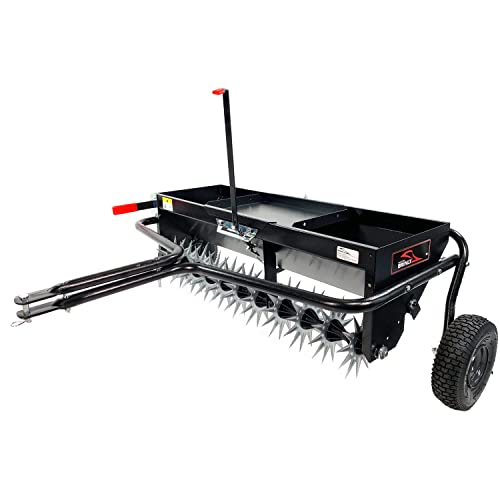
Brinly Tow Behind Combination Aerator Spreader 40-Inch

Walensee Rolling Lawn Aerator 42 Spikes

Landzie Hollow and Spike Tine Lawn Aerator Set

Grenebo Lawn Aerator Tool with 16 Spikes

Amazon Basics Fertilizer Spreader for Lawn

Saker Manual Lawn Aerator Tool with 15 Iron Spikes
More Details On Our Top Picks
EarthWay’s 80-pound hopper gives you room for larger lawn jobs without constant refills, which matters on broad front yards or long driveways. The rustproof poly hopper is a sensible touch for humid storage areas, though the real payoff is the adjustable drop rate that helps you avoid heavy strips along edges.
Compared with the manual aerators later in this list, this one is about covering ground faster rather than pulling plugs or poking holes. It fits homeowners who want a spreader that feels straightforward and low-drama, though pre-assembled gear can still need a quick check of settings before you start.
Strong Points
- 80-pound capacity cuts down on refill stops during larger applications.
- Adjustable drop control helps you pace seed or fertilizer more evenly.
- Poly hopper resists rust better than bare metal in damp storage.
- Pre-assembled setup saves time for weekend lawn care routines.
Things To Consider
- It’s a spreader, not a plug-pulling aerator, so it covers one half of the job.
- Larger hopper size adds bulk in a shed or garage.
- Even coverage still depends on a steady walking pace and proper calibration.
Feature Snapshot
Who It Suits Best
You’ll get the most from this on a medium or large property where seed or fertilizer coverage matters more than storage size.
A Better Fit Elsewhere
Brinly Tow Behind Combination Aerator Spreader with Weight Tray suits tractor or mower owners who want to aerate and spread in one pass.
Brinly’s 40-inch tow-behind format is built for people who already have a mower or tractor doing the pulling. The weight tray is the useful part here, because added mass can help the aerator section stay planted while the spreader side does its work.
That combo approach makes sense for larger lawns that need seasonal overseeding, yet the trade-off is obvious, you need towing equipment and more storage room than a handheld tool. Compared with the EarthWay spreader, this one leans toward multi-step lawn care in fewer passes rather than simple walk-behind convenience.
What We Like
- Combines aeration and spreading in one tow-behind setup.
- 40-inch working width helps cover broad turf more efficiently.
- Weight tray can support steadier ground contact.
- Flat black finish keeps the look restrained and practical.
Points To Note
- You need compatible towing equipment, so it’s not a standalone solution.
- The larger footprint takes more room in a garage or shed.
- Unavailable status on the listing can make timing less predictable.
Core Details
Who Will Love This
You’re a strong match for this model if your lawn care routine already revolves around a riding mower or lawn tractor.
Another Choice May Suit
EarthWay 2050P 80lb Broadcast Spreader works better for smaller properties that only need walk-behind spreading.
The rolling style gives this model a familiar manual feel, and the 42 spikes are the part that matter most for compacting soil that needs more air movement at the surface. The 71-inch length and adjustable handle make the layout friendlier for taller users, though manual rolling still asks for steady effort on tougher ground.
Compared with the Brinly tow-behind, this is much more hands-on and easier to store, which suits small to mid-size yards that don’t justify a ride-on attachment. It feels especially sensible for patch work along walkways or tight side yards, where a powered pull-behind setup can be awkward.
Highlights
- 42-spike head gives you broad manual contact in one pass.
- Adjustable handle helps fit different user heights more comfortably.
- Rolling design keeps movement straightforward on flat lawn sections.
- Good match for spot aeration along narrow paths and borders.
Softer Spots
- Manual rolling takes more physical effort than tow-behind gear.
- Long tool length can feel awkward in cramped storage areas.
- Dense or very dry soil may slow progress considerably.
Details At A Glance
Best Suited To
Yards with moderate space and a need for regular manual touch-ups suit this tool well.
Where A Sibling Pick Shines
Saker Manual Lawn Aerator Tool with 15 Iron Spikes is easier to store for quick spot work in smaller spaces.
Landzie stands out because it gives you both hollow and spike tine options, so you can match the tool to the state of the turf. Hollow tines remove plugs, while spike tines open channels without pulling material, which makes this a flexible hand tool for mixed lawn conditions.
That flexibility is appealing for people who like to adjust the approach from season to season, though it does add more parts to manage. Compared with the Walensee roller, this set asks for a little more hands-on decision-making, but it rewards you with more ways to tackle a stubborn patch.
Upsides
- Includes both hollow and spike tine options.
- One aerator plus six replaceable tines adds versatility.
- Manual format keeps the tool storage-friendly.
- Stainless steel build suits regular outdoor use.
- Good for lawn owners who want to switch methods by area.
Small Caveats
- More parts mean more to keep track of between sessions.
- Manual use can feel slower than tow-behind gear on large properties.
- Plug removal style works best when soil is not overly rocky.
Quick Facts
Perfect Match For
You’ll appreciate this most if you like manual lawn tools with more than one aeration approach.
Look Elsewhere When
EarthWay 2050P 80lb Broadcast Spreader fits better for people whose main job is seed or fertilizer distribution rather than aeration.
Grenebo keeps the design straightforward, with a 16-spike layout that targets small manual aeration jobs without feeling overbuilt. The automatic soil-ejection feature is the practical bit, because it helps reduce the stop-and-clear rhythm that can slow a hand tool down.
For small lawns, side strips, or touch-up areas near garden beds, this is an easy tool to keep on hand. Compared with the Landzie set, it offers less versatility but also fewer parts to maintain, which is a fair trade for casual use.
Bright Spots
- 16 spikes give you a compact manual aeration pattern.
- Automatic soil release helps keep work moving.
- Pre-assembled format reduces setup fuss.
- Black and green finish keeps it visually simple in storage.
Areas To Watch
- Manual force is still required, so larger lawns will take time.
- Fewer spikes mean less ground contact than bigger rolling tools.
- Hand tools like this need cleaning after use to keep soil from packing in.
Core Details
The Right Fit
Casual lawn owners with a modest yard and a light aeration routine will get the most from this compact tool.
Swap It Out When
Walensee Rolling Lawn Aerator 42 Spikes suits you better for broader manual coverage and a rolling motion.
This spreader is built around even application, and the multi-gear system is the part that matters most for controlled lawn feeding. Coverage of 5,000 square feet per load gives you a useful reference point for routine suburban yards, though the real-world result still depends on material type and walking pace.
It sits between the heavy EarthWay hopper and the more manual aeration tools, which makes it a sensible middle ground for regular maintenance. The 33-pound, 0.53-cubic-foot body is manageable for many garages, but it won’t feel as roomy as the bigger capacity pick above.
Best Bits
- Multi-gear system supports more controlled spreading.
- Covers up to 5,000 square feet per load.
- Moderate 33-pound capacity keeps the unit easier to handle.
- Works well for repeat seasonal feeding routines.
Worth Noting
- It handles spreading, not aeration, so it covers only one part of lawn care.
- Larger properties may still need multiple refills.
- Even application depends on steady operation and proper settings.
Technical Sheet
Whose Shelf It Belongs On
You’re in the sweet spot for this model if your lawn care is mostly regular feeding and occasional overseeding.
Reach For A Different Pick When
EarthWay 2050P 80lb Broadcast Spreader makes more sense for bigger properties that want more hopper space between refills.
Saker’s manual aerator is the smallest-feeling option here, and that’s exactly why it works for quick jobs around patios, beds, and narrow side yards. The double-layer soil-ejecting spring helps clear debris as you work, while the adjustable height makes the handle fit less awkward for different users.
It also comes with gloves, which is a nice practical touch for a hand tool that will spend time in rough soil. Compared with the Grenebo model, this one has one fewer spike but a slightly more adjustable setup, so it suits you better when storage space is tight and the job stays light.
Reasons To Buy
- 15 iron spikes give you a compact aeration footprint.
- Adjustable height helps fine-tune hand position.
- Soil-ejecting spring reduces repeated clearing.
- Included gloves add a handy starter touch for manual work.
Room For Improvement
- Hand-powered use is best for lighter tasks, not broad lawns.
- Smaller spike count means slower coverage than rolling tools.
- Iron parts need basic care after use and storage.
Feature Rundown
Built With In Mind
This suits you best for small lawns, tight corners, and occasional maintenance rather than full-property work.
Skip It When
Walensee Rolling Lawn Aerator 42 Spikes is the better call for users who want broader coverage with less repetition.
How To Choose The Right Lawn Aerator Spreader Comboes
Match The Tool To Your Yard Size
Small yards usually favor manual aerators and compact spreaders because you can store them easily and cover the whole area without towing gear. Larger properties start to justify bigger hoppers, tow-behind formats, and wider working paths, especially when you’re handling seed and fertilizer across multiple sections.
The useful question is how often you want to stop and refill, reposition, or switch tools. A roomy spreader such as the EarthWay 2050P suits broader coverage, while a hand tool like the Saker or Grenebo stays more manageable for quick touch-ups.
Choose Between Aeration And Spreading
Aeration opens the soil, while spreading delivers seed, fertilizer, or similar lawn material across the surface. Those are different jobs, and many properties need both at different times of year, so a combo tool can save steps only when the design truly combines both tasks.
That matters because a spreader alone won’t loosen compacted ground, and a manual aerator won’t distribute lawn treatment evenly. Brinly’s tow-behind combo makes sense for that split need, while stand-alone tools work better when you already own the other half of the routine.
Pay Attention To Control And Effort
Drop rate, gear systems, spike count, and tine style all change how a tool behaves in real use. Fine control helps along edges and narrow strips, while a higher spike count or broader coverage path matters more on larger open turf.
Manual tools ask for more effort but less storage room, which is why rolling aerators and hand-push models keep showing up for smaller properties. Tow-behind gear reduces physical strain, yet it asks for a mower or tractor and more room in the shed.
Think About Storage And Maintenance
Poly hoppers are easier to live with in damp spaces than bare metal, and stainless steel or iron parts need the usual cleanup after use. Soil that packs into spike heads, tines, or release channels can slow the next job, so a quick rinse or brush-down after use goes a long way.
For busy homes, the easiest tool is often the one you can grab without a long setup session. That’s where pre-assembled manual options and simple spreaders earn their place.
What To Weigh Before You Click Through
Hidden Buying Traps
One common mistake is buying a spreader and expecting it to aerate, or buying an aerator and expecting it to distribute seed evenly. Another is underestimating storage space, since tow-behind tools and large hoppers take up much more room than compact hand tools.
It also helps to check how much effort the tool asks from you, because a manual roller can be fine for a patchy front strip and tiring on a wide back lawn. Matching the tool to the job keeps the work from feeling like a chore.
The Upgrade Payoff
Higher-tier models usually cost more because they cover more ground, use tougher materials, or add features like adjustable flow, weight trays, or interchangeable tines. Those details matter most on large lawns, mixed soil conditions, or routines that happen every season rather than once in a while.
The extra spend makes the most sense when you want fewer refills, cleaner control, or more than one way to treat the lawn. For smaller spaces, a simpler manual tool can be the smarter, easier ownership choice.
Frequently Asked Questions
Can One Tool Handle Both Aeration And Spreading?
Yes, but only models built for both jobs, such as the Brinly tow-behind combo, actually do both tasks. A standard spreader or a standard aerator handles just one side of lawn care.
Which Option Works Best For A Small Yard?
Compact manual tools are usually the easiest fit for small lawns and narrow side areas. The Saker and Grenebo models keep storage simple and avoid the bulk of tow-behind gear.
Do Spike Aerators Work The Same As Hollow Tine Aerators?
No, they work differently. Spike aerators open channels in the soil, while hollow tine designs remove small plugs for a different kind of soil opening.
What Matters Most In A Broadcast Spreader?
Capacity and control matter most, because they shape how often you refill and how evenly material lands. Adjustable drop rate or gear control can make a big difference on larger lawns.
Is Tow-Behind Gear Worth It For Home Use?
It makes sense when you already use a mower or tractor and want to cover a broad yard with less manual effort. For smaller spaces, the storage and setup trade-off is usually harder to justify.
