

Broadcast spreaders make it easier to cover lawn seed, fertilizer, ice melt, or salt without the patchy streaks that hand scattering can leave behind. The right one depends on your yard size, how often you spread, and whether you want a handheld tool, a push model, or something that rides behind a mower or ATV. You’ll also want to think about hopper size, flow control, and how much effort you want to put into turning and pushing across uneven ground.
That mix matters more than most people expect. A compact hand spreader can be enough for walkways and small yards, while a tow-behind unit makes more sense for larger properties that need steady coverage.
Quick Look At The Shortlist

Jonathan Green (10947) New American Lawn Hand Broadcast Spreader

EarthWay 2150 Commercial 50 LB Broadcast Fertilizer Spreader

Agri-Fab Tow Behind Broadcast Spreader for Seed and Fertilizer 85 lb Poly Hopper Capacity

EarthWay 2050P 80lb Broadcast Spreader

Uniqwamo Handheld Power Spreader Compatible for Dewalt 20V/60V Battery

Chapin Tow-Behind Turf Spreader with Auto-Stop Waste-Free Coverage

Yhtpouqe Hand held Spreader
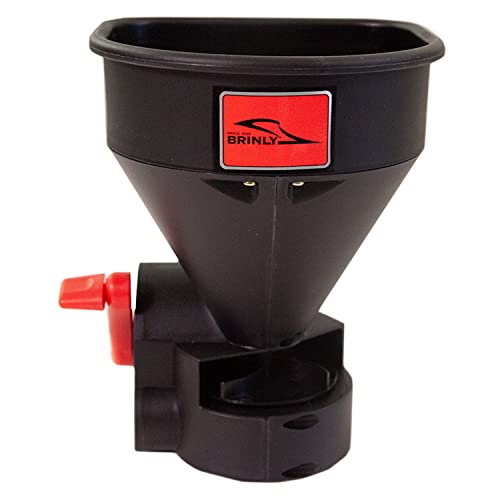
Brinly 5lb. All-Season Handheld Spreader

EarthWay 3100 40 LB Professional Chest Mount Hand Crank Broadcast Spreader

AquaDoc Handheld Seed Spreader for Lawns
More Details On Our Top Picks
For small lawns, this handheld spreader keeps the job straightforward. Its 1,500 square foot coverage claim points to touch-ups, small front yards, and narrow side strips where a larger hopper would feel like overkill.
The blue housing keeps the footprint easy to store, and that matters in a garage already packed with rakes and hoses. The trade-off is obvious, though, because a handheld tool asks more of your arm than a push model like the EarthWay 2050P.
What We Like
- Handheld format keeps storage simple.
- Small-yard coverage suits quick seasonal jobs.
- Light carrying style works well for edging zones and tight paths.
- Less setup than a push or tow model.
Points To Note
- Arm effort rises on longer sessions.
- Best suited to lighter-duty coverage, not full-property treatment.
Feature Snapshot
Who Should Grab It
You benefit most from this pick if your yard is modest and your spreading jobs stay occasional rather than heavy.
A Better Fit Elsewhere
EarthWay 2050P 80lb Broadcast Spreader suits you better for larger lawns, especially when you want to reduce the amount of back-and-forth walking.
Uneven ground is where this EarthWay makes sense. The 13-inch pneumatic stud tires are built to roll over rough turf with less fuss, which helps on older lawns, sloped driveways, and bumpy edges where smaller wheels tend to drag.
The clog-free grate is the quiet advantage here, since it separates clumps before they reach the hopper opening. That said, the 50-pound class still asks for more storage space than a handheld unit like the Jonathan Green model, so it suits people with room for a sturdier walk-behind.
Upsides
- Large wheels help on uneven lawn sections.
- Clog-reducing grate supports smoother flow.
- Adjustable drop rate gives better control over coverage.
- Walk-behind design suits longer spread sessions.
- Driving handle supports steadier pushing posture.
Small Caveats
- Walk-behind size needs more storage room than handheld options.
- Heavier format feels more involved for tiny patch jobs.
Core Details
Who Will Love This
You fit this model best if your lawn has rough patches and you want a walk-behind that feels steadier than a compact hand spreader.
Where A Sibling Pick Shines
EarthWay 2050P 80lb Broadcast Spreader is the better fit for you when capacity matters more than maneuvering through awkward ground changes.
Property owners who already mow with a tractor or tow setup will appreciate how naturally this Agri-Fab fits into that routine. The 85-pound poly hopper gives you a decent working window before refilling, and the cable flow control keeps the spread rate in reach from the driver’s seat.
The poly hopper also avoids the rust concerns that can come with metal contact after wet yard work, which is handy in damp climates. The trade-off is simple, because this style only makes sense once you already have the equipment to pull it, so it is less flexible than the EarthWay 2150 walk-behind.
Reasons To Buy
- Tow-behind format reduces walking on bigger lawns.
- Cable flow control lets you adjust output while moving.
- Poly hopper is a practical fit for wet storage areas.
- Seed and fertilizer use broadens year-round usefulness.
Areas To Watch
- Needs a compatible tow vehicle.
- Less convenient for small or segmented yards.
- Turning radius depends on your tractor or ATV setup.
Feature Rundown
Built With In Mind
You suit this spreader best if your mowing setup already includes a tractor, ATV, or similar pull-behind arrangement.
Look Elsewhere When
Jonathan Green (10947) New American Lawn Hand Broadcast Spreader is the easier choice for compact yards where storage and quick carry matter more than hopper volume.
This EarthWay model leans toward homeowners with larger lawns who want a solid middle ground between a hand spreader and a tow-behind rig. The 80-pound capacity means fewer refill pauses, and the pre-assembled setup takes some of the usual frustration out of first use.
The rustproof poly hopper is the detail that matters most over time, especially when fertilizer residue or wet conditions are part of the routine. Compared with the Agri-Fab tow-behind, this one keeps you on foot, which is easier for properties that do not justify pulling equipment.
Highlights
- 80-pound hopper supports wide-area work.
- Pre-assembled format saves setup time.
- Adjustable drop rate helps match product to the task.
- Poly hopper is easier to live with in damp storage spaces.
Room For Improvement
- Still more storage-hungry than handheld tools.
- Best suited to larger lawns, not tiny touch-ups.
Details At A Glance
The Right Fit
You fit this model well if your yard is large enough to justify a sturdy walk-behind, but not so large that you need to tow a spreader.
Swap It Out When
Chapin Tow-Behind Turf Spreader with Auto-Stop Waste-Free Coverage makes more sense for you once your lawn care routine already involves an ATV or lawn tractor.
Tool-platform users will notice the appeal right away, because this handheld spreader is designed around DeWalt 20V and 60V batteries. That compatibility can make it a neat fit for garages already organized around one battery family, especially for repeated seasonal jobs where plugging and hand cranking feel like extra chores.
Battery is not included, so the value really depends on whether you already own the right packs. Compared with the Brinly 5lb handheld model, this one leans more toward powered convenience than simple grab-and-go handling.
Bright Spots
- Battery-platform compatibility is convenient for DeWalt setups.
- Powered format reduces manual effort.
- Useful across seasons for seed and salt tasks.
- Handheld size keeps maneuvering easy around edges.
Worth Noting
- Battery is not included.
- Works best for people already in the DeWalt system.
- Powered tools need charging discipline between jobs.
Technical Sheet
Whose Shelf It Belongs On
You suit this option best if you already rely on DeWalt batteries and want a powered spreader for recurring lawn and winter chores.
A Better Fit Elsewhere
Brinly 5lb. All-Season Handheld Spreader is the simpler choice for you if you want a lighter manual tool without battery management.
Once you move into large-property work, auto-stop becomes the kind of feature that quietly saves time and material. This Chapin also brings a 150-pound capacity, dual-impeller system, and enclosed bearings, so it is aimed at smoother, longer spreading sessions behind an ATV, UTV, or lawn tractor.
The catch is that this is very much a tow-behind solution, not a casual one, so it rewards a setup that already lives in the garage. Compared with the Agri-Fab tow-behind, it pushes capacity and control a step further for people who spend serious time on acreage.
Standout Traits
- Auto-stop design helps cut waste at turns and stops.
- 150-pound capacity suits bigger maintenance runs.
- Dual-impeller system supports more even material movement.
- Compatible with ATV, UTV, and lawn tractor setups.
- Enclosed bearings are a smart maintenance detail.
Honest Caveats
- Needs a tow vehicle to make sense.
- Storage and turning space matter more than with smaller spreaders.
Core Details
Perfect Match For
You fit this spreader best if your property is large enough that every refill or overlap starts to add up.
Reach For A Different Pick When
Agri-Fab Tow Behind Broadcast Spreader for Seed and Fertilizer 85 lb Poly Hopper Capacity is the easier step for you if you want tow-behind use without moving into a larger, more involved setup.
This handheld model keeps things simple but still gives you some useful control. The three opening sizes help you tune the flow for salt, seed, or sand, which makes it practical for driveway edge work, garden paths, and quick winter touch-ups.
The included scoop and garden gloves are a small convenience, and the 80-ounce capacity reduces refill stops for short jobs. It feels more flexible than the Jonathan Green handheld spreader, though the larger jar-style format will take a bit more storage room.
Positives
- Three opening sizes add useful flow control.
- 80-ounce capacity keeps small jobs moving.
- Works across salt, seed, and sand tasks.
- Scoop and gloves help with filling and handling.
Minor Gripes
- Handheld format still asks for manual carrying.
- Bulkier than the smallest handheld spreaders.
Spec Overview
Right Fit For
You fit this pick well if you want a hand spreader with a little more control than the most basic compact options.
Another Choice May Suit
Brinly 5lb. All-Season Handheld Spreader works better for you if you want a smaller, simpler tool for very light touch-up work.
For quick jobs, small capacity can be a virtue. This Brinly handheld spreader is aimed at seed, ice melt, and fertilizer touch-ups, and its easy-fill design keeps the loading step from turning into a chore before you even start walking.
Its scale makes sense for porches, tight paths, and tiny lawn sections where larger spreaders would feel clumsy. The trade-off is straightforward, because the 5-pound capacity is for brief sessions, not long property runs like the EarthWay 2050P handles more comfortably.
Strong Points
- Very compact size is easy to store.
- Easy-fill setup helps shorten prep time.
- Works for seed, ice melt, and fertilizer.
- Good fit for small touch-up tasks.
Softer Spots
- Small capacity means more refills on wider areas.
- Not suited to big lawns or long passes.
Feature Card
Who It Suits Best
You fit this pick well if your spreader needs are modest and your storage space is tight.
Skip It When
Agri-Fab Tow Behind Broadcast Spreader for Seed and Fertilizer 85 lb Poly Hopper Capacity is the better path for larger properties that need far less refilling.
Chest-mount spreaders solve a real comfort problem, because they take the load off your hands and keep the hopper positioned close to your body. This EarthWay adds even spread technology, a 40-pound hopper, and an adjustable harness strap, so it suits users who want steady control during longer seed or fertilizer passes.
The rain cover is a thoughtful addition for weather-prone storage or sudden changes in the yard work plan. Compared with the Brinly handheld unit, this model asks for more setup but gives you a more stable carrying position once you start moving.
Best Bits
- Chest mount format can ease arm strain on longer jobs.
- Even spread technology supports steadier coverage.
- Adjustable harness helps dial in comfort.
- Rain cover adds practical protection between uses.
Points To Note
- Chest-mounted carry style is less familiar than handheld tools.
- Best suited to active use rather than short touch-ups.
Key Specs
Whose Shelf It Belongs On
You fit this spreader best if you want hands-free carrying and a more controlled feel than a plain handheld tool offers.
Where Shoppers Go Wrong
EarthWay 2050P 80lb Broadcast Spreader is the smarter match for you if capacity matters more than chest-mounted comfort.
This AquaDoc handheld spreader aims at the kind of all-purpose use that shows up in real garages, not just one season a year. The 2.5L capacity, multiple opening sizes, and broad material compatibility make it useful for seed, fertilizer, snow salt, and pool-related chemicals, so it covers more chores than a single-purpose yard tool.
The flexible opening sizes are the key advantage for controlled application, especially around small lawn sections or poolside areas where a heavy scatter would be messy. It gives you more range than the Brinly 5lb model, though that broader use range also means you’ll want to keep track of what material went through it last.
What We Like
- Multiple opening sizes support more careful dispensing.
- 2.5L capacity suits small to medium jobs.
- Works across lawn, winter, and poolside tasks.
- Handheld format keeps control close and direct.
Areas To Watch
- Handheld format still means manual carrying.
- Multi-use tools need a little more cleaning discipline between materials.
Core Details
The Right Fit
You fit this tool best if you want one handheld spreader for more than just lawn seed.
Look Elsewhere When
Yhtpouqe Hand held Spreader is the better choice for you if you want a simpler seasonal hand spreader without the extra multi-use scope.
How To Choose The Right Broadcast Spreaders For Lawns
Match The Spreader To Your Yard Size
Yard size should lead the choice before anything else. A handheld spreader suits touch-ups, narrow strips, and small front yards, while a push model or tow-behind unit makes more sense once you start covering broad open turf.
Capacity matters because it changes how often you stop to refill. Smaller hoppers are easier to store and carry, but they can feel tedious on larger properties where repeated refills slow the whole job down.
Pay Attention To Flow Control And Spread Width
Flow control is the setting that regulates how much material leaves the hopper. It matters because fertilizer and seed need steadier output than a quick winter salt pass, and uneven flow can leave thin or heavy patches.
Spread width tells you how wide each pass reaches. Wider patterns cut down on time, but they also ask for more careful overlap, especially near beds, sidewalks, and driveways.
Think About Terrain And How You Plan To Move
Rough or sloped ground changes the experience fast. Pneumatic tires, like the 13-inch wheels on the EarthWay 2150, help rolling over bumps, while chest-mount and handheld designs matter more when you want to stay nimble around tight spots.
Tow-behind spreaders are best for lawn tractors, ATVs, and larger properties. The honest read is that they shine once you already have the equipment and the space to use them well.
Choose Materials That Fit How You Store And Maintain Tools
Poly hoppers are practical for wet garages and damp climates because they avoid the rust concern that can come with metal. Metal-style hardware can still be durable, but you’ll want to think about cleanup after fertilizer or salt use so residue does not linger.
For seasonal tools, easy rinsing and simple storage often matter more than flashy extras. A spreader that feels convenient to clean and put away tends to get used more often, and that usually matters more than one extra feature on paper.
What To Weigh Before You Commit
Hidden Buying Traps
One common mistake is choosing capacity that looks impressive but does not fit the yard size. Another is overlooking the difference between handheld, push, and tow-behind styles, which can leave you with a spreader that feels awkward in the real routine.
Storage gets ignored too often. A larger hopper or wider frame can be a hassle in a cramped shed, so the space you have at home should matter as much as the coverage you want outside.
The Case For Spending Up
Higher-tier spreaders usually cost more because the frame, wheels, controls, and carry systems are built for longer use and smoother handling. Features like enclosed bearings, dual-impeller systems, and better harnesses can make a long lawn session feel less tiring.
That upgrade makes sense when you spread often, cover a lot of ground, or want tighter control around larger properties. For a small yard, simpler gear can be enough, and that keeps your setup lighter and easier to store.
Frequently Asked Questions
What type of broadcast spreader works best for small lawns?
A handheld spreader usually fits small lawns best because it stores easily and handles quick jobs well. The Jonathan Green 10947 and Brinly 5lb options are good examples of that compact approach.
Do tow-behind spreaders make sense for average homes?
They make sense only when you already have a tractor, ATV, or similar pull setup and enough lawn to justify it. For average suburban yards, a push or handheld model is often simpler.
Why does hopper material matter?
Poly hoppers are helpful in wet storage conditions because they resist rust concerns better than metal. That can make cleanup and long-term storage easier after fertilizer or salt use.
What is the benefit of adjustable flow settings?
Adjustable flow settings help you match the output to the material and the task. That matters because seed, fertilizer, and salt all behave a little differently.
Are handheld spreaders enough for winter chores?
Yes, for short walks, steps, and driveways, a handheld spreader can handle the job well. For larger surfaces, a bigger walk-behind or tow-behind unit saves time and effort.
Closing Thoughts
The right broadcast spreader should fit the way you actually maintain your yard, not just the size of the product page. Small lawns lean toward handheld tools, bigger properties benefit from push or tow-behind designs, and multi-use homes may appreciate a spreader that handles seed, fertilizer, and winter materials. Focus on capacity, control, and storage first, then choose the format that matches your routine. That keeps the work smoother and the tool easier to live with.
