

Automated lawn mowers make the most sense for yards that need steady upkeep without turning weekends into chores. You get cleaner edges, less pushing, and a better fit for slopes, narrow passages, and multi-zone layouts than a basic walk-behind can offer. The right model depends on lawn size, terrain, and how much mapping help you want. This roundup keeps the focus on real yard use, not glossy feature lists.
Quick Look At The Shortlist

ANTHBOT M5 Robot Lawn Mower 1/8 Acre

ECOVACS Goat O1000 RTK Robot Lawn Mower
YARDCARE V100 Robot Lawn Mower
Robot Lawn Mower, Mows Up to 1/4 Acre

Segway Navimow i210 AWD Robot Lawn Mower
Sunseeker S4 Robot Lawn Mower

Mammotion LUBA 3 AWD 1500H Robot Lawn Mower

MOVA LiDAX Ultra 3000 AWD Robot Lawn Mower
More Details On Our Top Picks
ANTHBOT’s M5 makes a strong case for smaller lawns that still have awkward corners and mixed obstacles. Dual vision and full-band RTK, which is satellite-guided positioning plus broader signal support, give you a more modern setup than a buried-wire system. That matters most when you want cleaner mapping without extra trenching.
The 45% slope claim also gives it more uphill confidence than the light-duty crowd, including the YARDCARE V100. You may find the 1/8-acre focus a little narrow for a growing yard, but for compact suburban spaces it keeps the machine matched to the job.
Reasons To Buy
- No perimeter wire keeps installation cleaner.
- Vision and RTK help it map a yard with more structure than basic random-path machines.
- Obstacle avoidance suits paths with beds, chairs, and other yard clutter.
- 45% slope support gives hilly sections more breathing room.
- Multi-zone mapping helps separate front and back sections without manual reshaping each time.
Points To Note
- The 1/8-acre size ceiling fits modest properties better than broad lawns.
- Vision-based routing can depend on how clearly your yard is laid out.
- App setup tends to reward a little patience during the first mapping pass.
Feature Rundown
Who It Suits Best
Small-property owners who want wire-free setup and have a few slope changes in the yard fit this machine well.
A Better Fit Elsewhere
Mammotion LUBA 3 AWD 1500H suits you better for larger, rougher ground where extra traction matters more than compact size.
ECOVACS leans hard into a wire-free setup, and that’s a real convenience for quarter-acre lawns that would otherwise need a more involved install. The 3D obstacle avoidance adds a stronger sense of yard awareness than plain vision systems usually provide, so toys, planters, and chair legs are less of a headache. The zero-edge cutting pitch is handy for owners who hate trimming borders by hand.
Compared with the ANTHBOT M5, this one feels more oriented toward tidy perimeter work than slope chasing. The trade-off is that the feature set asks you to be a little more deliberate during setup, especially around maps and app control.
What We Like
- Wire-free installation keeps the first setup cleaner.
- Automated mapping reduces the old wire-layout hassle.
- 3D obstacle avoidance is useful in yards with frequent clutter.
- Zero-edge cutting helps reduce border touch-up work.
Room For Improvement
- Quarter-acre coverage is a better match for moderate yards than larger properties.
- App-based mapping can take a careful first pass.
- Fine edging still depends on how your lawn is shaped.
Core Details
Who Should Grab It
Owners with a medium-size yard and lots of visible obstacles will get the most from this setup.
Where A Sibling Pick Shines
Segway Navimow i210 AWD gives you a stronger slope-focused match when your yard climbs more than this one needs to handle.
YARDCARE’s V100 is aimed at small lawns, and the 1,600-square-foot limit tells you exactly where it belongs. HD vision navigation and collision sensors make sense for a tight yard with flower beds, chairs, or a narrow run beside the house. Low-noise operation matters more here than on a big property, because a compact mower usually lives closer to patios and windows.
It feels easier to place than the bigger wire-free machines in this list, including the Mowro and Segway models. The honest read is that it’s a simpler tool, which is a good thing for small-lot owners who want basic automation without extra complexity.
Highlights
- Small-lawn sizing keeps expectations realistic.
- Vision navigation helps it make sense of a modest yard.
- Collision sensors add a useful buffer around obstacles.
- Low-noise operation suits homes close to living spaces.
Areas To Watch
- The 1,600-square-foot range is narrow for expanding lawns.
- Smaller capacity means it is less suited to future yard changes.
- Dense terrain may ask for a more advanced navigation stack.
Technical Sheet
Built With In Mind
Apartment-adjacent homes, townhouses, and other compact properties fit this mower best.
Another Choice May Suit
Mowro’s 1/4-acre model suits you better once your lawn spreads beyond the V100’s small-yard focus.
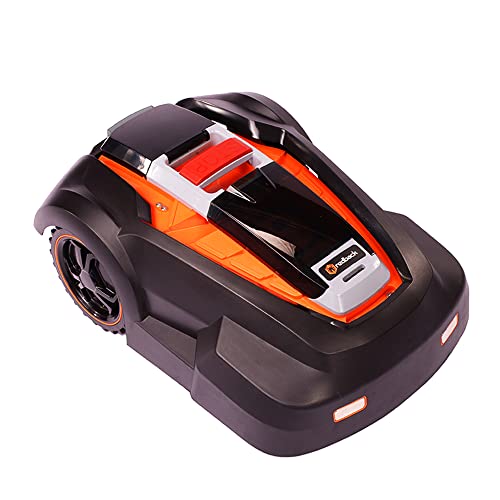
Mowro takes a straightforward route, and that can be refreshing in a category packed with dense app talk. The self-installation kit is the main clue that this model aims to help hands-on owners get started without a complicated setup path. Its 65 dBA noise rating is also practical for neighborhoods where a quieter lawn routine matters.
Compared with the YARDCARE V100, this pick stretches to a quarter acre and adds a rain sensor plus a stronger 50% slope claim. You may find it more appealing than the more camera-heavy options too, because it focuses on straightforward mowing instead of layered mapping tricks.
Best Bits
- Quarter-acre coverage works for many standard suburban yards.
- Self-installation kit can simplify the first setup.
- Rain sensor adds a sensible pause point for wet weather.
- 50% slope support gives it strong terrain flexibility.
- 65 dBA operation keeps noise in a manageable range.
Small Caveats
- Traditional setup still asks you to spend time learning the layout.
- It lacks the richer vision stack seen on some newer picks.
- Large, irregular lawns may benefit from a more advanced mapping system.
Details At A Glance
Right Fit For
Hands-on homeowners with a mid-size lawn and a few slope changes should feel right at home here.
Look Elsewhere When
Sunseeker S4 suits you better if your yard has more trees, tighter turns, and shaded routes to map.
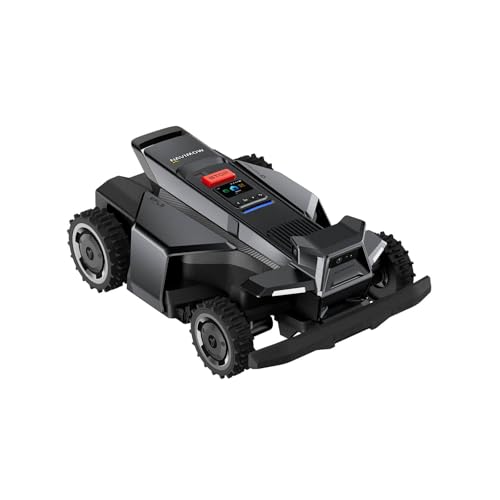
The i210 AWD feels built for owners who want more control from the app and more confidence on uneven ground. NRTK, which is a refined form of satellite positioning, pairs with vision-based mapping so the mower can trace a yard without perimeter wire. The 20-zone app control stands out in busy properties with separated patches, gates, or decorative breaks.
Compared with Mowro’s simpler layout, this Segway model asks for more planning but gives back a cleaner sense of control. For most backyards, the 2 to 3.6-inch cutting range is broad enough to suit common grass preferences without a lot of tinkering.
Positives
- Wire-free setup keeps the install path tidy.
- AWD adds traction confidence on rougher ground.
- 20-zone control helps manage segmented lawns.
- The 2 to 3.6-inch cut range gives you practical height flexibility.
- Battery capacity should suit steady suburban mowing routines.
Honest Caveats
- The app and mapping tools ask for a little setup time.
- Quarter-acre capacity keeps it in the medium-yard lane.
- Owners who prefer a simpler machine may find it more involved than needed.
Feature Snapshot
Whose Shelf It Belongs On
App-comfortable owners with a segmented quarter-acre yard will appreciate the control this mower offers.
Swap It Out When
ANTHBOT M5 makes more sense for a smaller yard where you want a lighter, less involved setup.
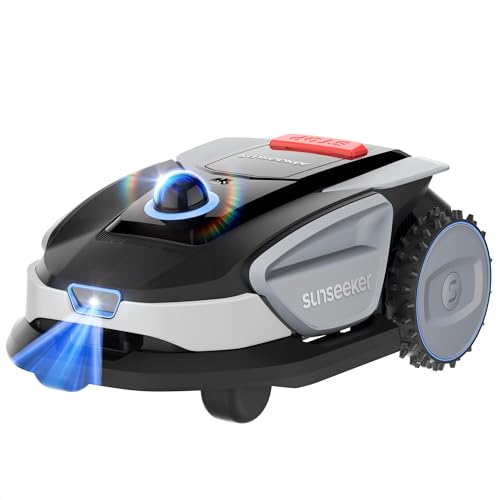
Sunseeker’s S4 is the kind of pick that makes sense in yards with trees, shade pockets, and narrow runs. 3D LiDAR, meaning laser-based distance mapping, works alongside Vision AI to help the mower read tighter spaces without depending on buried wire. That combination gives it a steadier feel than simpler camera-only models in crowded backyards.
It sits near the same quarter-acre class as the Segway i210, but the layout emphasis feels slightly more forgiving in mixed terrain. The trade-off is that you are paying for a richer sensing stack, so a very plain yard may not need all of this capability.
Strong Points
- 3D LiDAR adds depth-aware yard mapping.
- Vision AI helps it handle trees and narrow passes.
- Wire-free setup is friendlier than trench-based installs.
- Quarter-acre coverage fits many standard home lawns.
Worth Noting
- More advanced sensing makes sense most in complex yards.
- Plain, open lawns may not need this level of navigation.
- Initial mapping still deserves a careful first walkthrough.
Core Details
The Right Fit
Homeowners with trees, shade, and a few narrow passages should find this mower especially practical.
Where Another Pick Fits Better
YARDCARE V100 is the simpler path for smaller, flatter lawns where you do not need LiDAR-level mapping.
Mammotion’s LUBA 3 AWD 1500H is the first pick here that really leans into high-traction, high-complexity yard work. 360-degree LiDAR with AI vision gives it a broad sense of its surroundings, while AWD, or all-wheel drive, helps it stay composed on steep sections. The separate garage piece also hints at a more complete ownership setup, though it ships separately.
Compared with Sunseeker S4, this one is more about power and terrain confidence than compact simplicity. Owners with hills, zones, and awkward transitions may find that extra hardware worthwhile, but flatter yards probably do not need this much machine.
Upsides
- AWD suits difficult slopes better than lighter-drive models.
- 360-degree LiDAR and AI vision support strong yard awareness.
- 15-zone management fits properties split into multiple areas.
- 2.2 to 4.0-inch cutting range gives broad height flexibility.
- Wire-free setup avoids perimeter cable planning.
Minor Gripes
- The garage ships separately, so the setup has extra parts to track.
- Its strength makes most sense on uneven, demanding lawns.
- More system depth can mean more setup patience at the start.
Feature Card
Best Suited To
You get the most from this model when your yard mixes hills, zones, and multiple lawn segments.
Reach For A Different Pick When
MOWRO’s simpler 1/4-acre machine is a better fit for standard lawns that do not need AWD-level muscle.
The LiDAX Ultra 3000 is built for owners who want a broad mapping setup without relying on RTK. Dual maps, 360-degree 3D LiDAR, and AI dual-vision mapping make it a serious fit for large, busy yards that need more than a simple loop. The 4G connection also suggests a mower designed to stay connected without making the app the only path in.
Compared with Mammotion’s LUBA 3, this one stretches farther in lawn coverage and gives you dual-map flexibility for different spaces. The trade-off is straightforward, more hardware and more sensing usually mean a higher learning curve, so plain lawns may not need all of it.
Bright Spots
- Up to 0.75 acre makes it a strong large-yard option.
- Dual maps help manage separate lawn areas.
- 3D LiDAR plus dual vision mapping adds a detailed sense of space.
- AWD supports traction on challenging grades.
- 4G connectivity broadens how the mower stays linked.
Things To Consider
- Its feature depth makes the setup more involved than basic models.
- Large capability can be more than a simple lawn needs.
- Owners who want minimal app dependence may prefer a simpler mower.
Spec Overview
Who Will Love This
Large-yard owners with multiple mapped zones and active app use should appreciate how much ground this model covers.
Skip It When
Segway Navimow X450 makes more sense for an even bigger property where maximum range matters more than dual-map flexibility.
The X450 is the size-and-power statement in this roundup, with room for up to 1.5 acres and 4WD for very steep ground. The zero-turn approach is aimed at reducing scuffing while the mower works, and the pair of 180W motors points to a more forceful drive system than the smaller picks above. For big properties, that kind of hardware matters more than a tidy app screen.
Compared with MOVA’s LiDAX Ultra 3000, this Segway is more about very large acreage and strong slope handling than dual-map depth. The honest read is that it belongs on serious grounds, not a tidy patch of grass behind a townhouse.
Best Bits
- Up to 1.5 acres suits very large lawns.
- 4WD and 84% slope support help on demanding terrain.
- Zero-turn mowing aims to reduce turf scuffing.
- Two 180W motors suggest plenty of drive strength.
- 0.75 to 4-inch height range gives broad trim flexibility.
Room For Improvement
- Its scale makes it overkill for small yards.
- Large-hardware capability usually comes with more setup responsibility.
- Owners with flat, simple lawns can save complexity with a smaller pick.
Core Details
Built For In Mind
Large-property owners with steep transitions and broad mowing zones will get the most from this machine.
A Better Fit Elsewhere
Mammotion LUBA 3 AWD 1500H suits you better when your property is large but stops short of full-acre territory.
How To Choose The Right Automated Lawn Mowers
Match Coverage To Real Yard Size
Start with yard area, then add a cushion for slopes, tree beds, and side strips that take extra passes. A 1/8-acre mower can feel tidy and efficient on a compact lot, while a 1.5-acre model makes sense only when the property really stretches out.
That sizing choice matters because a mower that runs near its ceiling spends more time working and less time idling. You get a calmer routine when the capacity matches the property instead of forcing the machine to stretch.
Pay Attention To Navigation Style
Wire-free models use vision, RTK, LiDAR, or combinations of those tools to understand where they are. RTK means satellite-based positioning with correction data, while LiDAR uses light pulses to measure distance, so each system brings a different strength.
Vision-first picks can feel lighter to set up in some yards, but denser landscaping often rewards a stronger sensing stack. Trees, narrow gates, and awkward corners usually expose weak navigation faster than open grass.
Check Slope And Traction Claims
Hills are where automated mowers separate quickly. A model with AWD or 4WD handles traction better than a simpler drive system, especially after rain or on patchy ground.
Slope numbers matter because they hint at how much incline the mower can climb without bogging down. The catch is that yard texture still plays a role, so loose soil and uneven turf can demand more traction than the spec sheet suggests.
Think About App Control And Zones
Multi-zone mapping matters in split yards, front-and-back layouts, and properties with islands or access paths. A mower that can store several areas saves you from remaking the same map every season.
App control helps most when you want scheduling, zone edits, and boundary checks in one place. Owners who prefer a simpler routine may still want a mower with basic controls instead of a crowded interface.
Things Worth Knowing First
Common Shopping Slip Ups
Many people focus on acreage first and overlook layout complexity. A yard with trees, slopes, and narrow links needs better sensing than a plain rectangle of grass.
Another common miss is ignoring setup effort. Wire-free does not always mean effortless, because map creation and zone tuning still take some attention.
What The Higher Tier Buys
More expensive models usually buy you stronger sensing, broader drive systems, and more useful mapping tools. That matters most on large lawns, steep ground, or properties with several separate mowing areas.
Paying up also tends to make sense when you want fewer manual workarounds. The extra money goes toward traction, navigation depth, and control flexibility, not just a larger shell.
Frequently Asked Questions
Do automated lawn mowers work on hills?
Many do, but the slope rating has to match your yard. AWD or 4WD models are a better fit for steep sections.
What does wire-free setup actually mean?
It means you do not bury a perimeter cable around the lawn. Mapping happens through sensors, app guidance, or both.
Are these mowers better for small or large lawns?
Both sizes are covered here, but each model has a clear sweet spot. Smaller lawns do well with compact picks, while bigger properties need stronger range and traction.
Do trees and narrow passages cause problems?
They can, especially for simpler navigation systems. LiDAR, vision, and stronger mapping usually help in those conditions.
Is app control useful for everyday use?
Yes, especially for zones, schedules, and boundary adjustments. Owners who prefer hands-on simplicity may not need every app feature.
Closing Thoughts
Automated lawn mowers make the most sense when you match the machine to the yard instead of chasing the most feature-heavy option. A small lot can be served well by a compact model, while a steep or split property rewards stronger traction and better mapping. That balance is the real difference between a mower that fits your routine and one that adds extra setup work. Choose the one that suits your lawn shape, and the weekly grass chore gets a lot easier to live with.
