

You want a mower that fits your yard, your slope, and your patience level, not just a spec sheet. These robotic lawn mowers focus on wire-free setup, app control, edge work, and coverage ranges that suit anything from compact city lawns to larger suburban plots. The trade-off is simple: more mapping tech and hillside ability usually means a steeper step-up in price and setup attention. This roundup helps you sort the practical differences fast.
Quick Look At The Shortlist

Segway Navimow i110N Robot Lawn Mower 1/4 Acre

ECOVACS Goat A2000 LiDAR PRO Robotic Lawn Mower 1/2 Acre
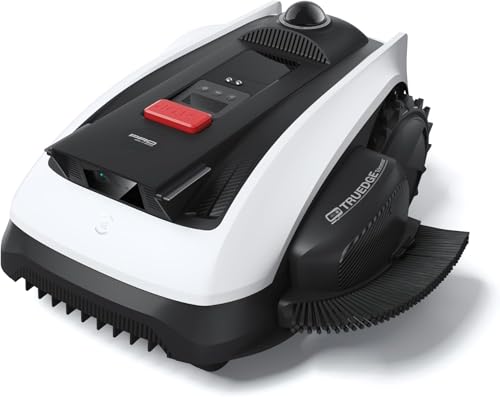
ECOVACS Goat O1000 LiDAR PRO Robot Lawn Mower 1/4 Acre
ECOVACS Goat A3000 LiDAR PRO Robotic Lawn Mower 3/4 Acre

WORX Robot Lawn Mower WR320 1/2 Acre
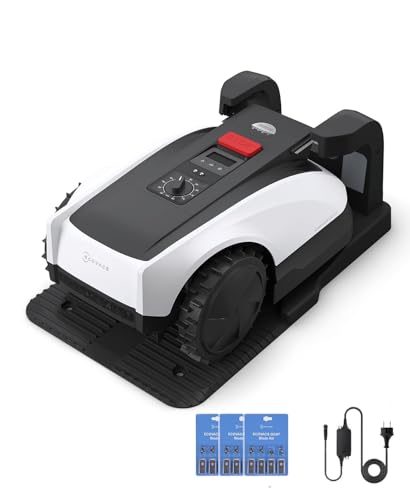
ECOVACS Goat O1000 RTK Care Kit Robotic Lawn Mower
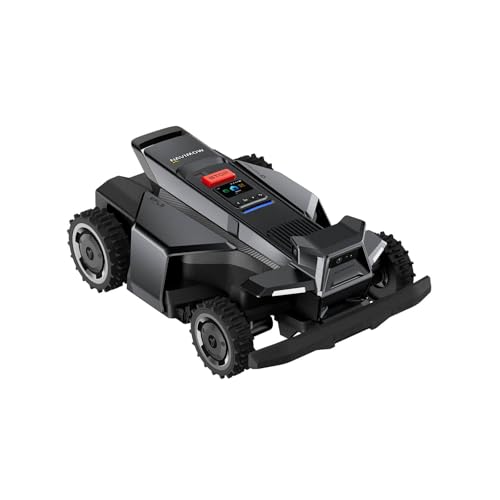
Segway Navimow X430 Robot Lawn Mower 1 Acre
More Details On Our Top Picks
The i110N fits the kind of yard where you want less setup drama and more routine trimming. RTK means real-time kinematic positioning, and paired with vision guidance, it helps the mower keep its place without a perimeter wire, which matters a lot in a yard with beds, paths, or a few awkward corners.
Its 58 dB(A) quiet rating is a real plus for close neighbors, though the smaller 1/4 acre coverage keeps it in the compact-lawn lane. For townhouse lawns or tidy suburban plots, it feels like a calm, sensible starting point rather than a big brute.
Strong Points
- Wire-free setup trims away the pain of burying boundary cable.
- AI-assisted mapping helps the mower learn shaped yards with less guesswork.
- The app control suits scheduled mowing and zone handling from the sofa.
- Quiet operation makes it easier to live with in tight neighborhoods.
Things To Consider
- The 1/4 acre range keeps it best suited to smaller spaces.
- Vision-based navigation can ask for cleaner yard organization than a very cluttered lawn.
- Owners who want steep-slope muscle will want to look higher in the lineup.
Core Details
Who It Suits Best
It suits you best if your lawn is small, neat, and easy to map, and you want wire-free automation without extra bulk.
A Better Fit Elsewhere
Segway Navimow X430 is the stronger match for steep, wide yards that need more drive traction and acreage headroom.
The A2000 leans into perimeter-free convenience with dual-LiDAR mapping, and LiDAR, short for light detection and ranging, uses laser pulses to read space around the mower. That kind of sensing matters in yards with trees, furniture, or tighter turns, because it gives the machine a richer picture than simple open-lawn routing.
The built-in TruEdge trimmer is the detail that makes this feel more polished than the i110N for boundary work. You do give up the quiet compactness of the Segway, though, so this one makes more sense for a mid-size yard where edge polish matters more than a tiny footprint.
Highlights
- Dual-LiDAR mapping gives the mower strong spatial awareness.
- Built-in edge trimming helps reduce the hand-finish pass along borders.
- AIVI 3D obstacle avoidance is a practical fit for yards with obstacles.
- App control keeps scheduling and mowing zones straightforward.
Worth Noting
- The larger feature set can mean a busier setup experience at the start.
- Its scale is better matched to mid-size lawns than compact postage-stamp yards.
- Current stock status can affect timing, so planning ahead helps.
Feature Snapshot
Whose Shelf It Belongs On
It belongs with you if you want a wire-free mower for a medium lawn and care about cleaner edges without constant manual touch-up.
Look Elsewhere When
ECOVACS Goat O1000 LiDAR PRO is the neater fit for smaller lawns where you do not need this much coverage or feature depth.
Compared with the A2000, this O1000 narrows the focus to smaller lawns, and that makes it easier to match to a typical starter property or a tidy side yard. LiDAR navigation gives it the same kind of space reading as the bigger ECOVACS model, so you still get a smart route without buying more coverage than you need.
Smart edge mowing is the part that matters most in day-to-day ownership, because it helps the mower stay useful around borders instead of leaving all the cleanup to you. The honest read is that this works best for simple yards where compact coverage is more useful than extra muscle.
Best Bits
- LiDAR navigation suits small yards with fixed features and clear boundaries.
- AI obstacle avoidance helps it work around common lawn clutter.
- Smart edge mowing adds value for trimming along borders.
- Its 1/4 acre sizing keeps the setup grounded and less overbuilt.
Small Caveats
- The smaller capacity is a strength only for compact lawns.
- Edge work still benefits from a tidy yard layout.
- Owners who want broader coverage will need to step up to a larger model.
At A Glance
Right Fit For
You fit this mower best if your lawn is compact, clearly shaped, and you want smart mapping without a larger machine in the garage.
Where A Sibling Pick Shines
ECOVACS Goat A2000 LiDAR PRO suits you better once your lawn grows past compact size and edge refinement matters more.
The A3000 is where the lineup starts to feel built for bigger homes, because the 3/4 acre coverage and faster mowing rate give it more room to earn its keep. Dual LiDAR should also help it stay composed around a larger layout, especially in yards that blend open stretches with structures and trees.
Compared with the A2000, this one is aimed at people who care more about speed and scale than keeping the machine compact. That makes it a strong fit for a busy property owner who wants fewer mowing sessions and a cleaner hand-off to automation.
Upsides
- 3/4 acre capacity suits larger suburban lawns well.
- Fast charging supports a more efficient mowing routine.
- High-efficiency mowing up to 400 m²/h helps it cover ground quickly.
- Built-in TruEdge trimming keeps border finishing more convenient.
Areas To Watch
- The larger footprint can feel like overkill for a small yard.
- Advanced capacity usually means more planning around layout and charging.
- Most of its value shows up only on lawns big enough to use it.
Details At A Glance
Made For
It’s made for you if your lawn is large enough that speed, coverage, and edge finish matter more than a compact machine.
Another Choice May Suit
ECOVACS Goat A2000 LiDAR PRO makes more sense for mid-size yards where the A3000’s extra reach would sit unused.
The WR320 takes a slightly different route from the ECOVACS models by pairing AI obstacle avoidance with RTK cloud navigation, which should appeal to you if you like a more connected setup. Its 30 percent slope rating also matters for yards that aren’t perfectly flat, because a little grade can make a mower feel much less capable than its specs suggest.
Compared with the Segway i110N, this WORX option pushes into a bigger lawn class and adds more terrain confidence. The catch is that the feature stack can feel more involved, so it suits a shopper who doesn’t mind a richer app-driven experience.
Bright Spots
- Wire-free operation keeps installation less invasive.
- RTK cloud navigation gives it a modern routing approach.
- AI obstacle avoidance helps with everyday yard clutter.
- 30 percent slope handling suits moderately uneven lawns.
Room For Improvement
- The software-heavy approach may feel less plain than simpler mowers.
- It makes the most sense only if your yard truly needs the 1/2 acre scale.
- Cloud-dependent features can be less appealing in spotty network conditions.
Quick Facts
The Right Fit
You’re in the right place with this model if your lawn has some slope and you want a wire-free mower with app-led control.
Swap It Out When
Segway Navimow i110N is the cleaner fit for a smaller, simpler lawn where you want less system complexity.
This O1000 version keeps the smaller-lawn format but shifts the angle toward ownership value, because the care kit includes 36 extra blades. That matters more than it sounds, since blade replacement is part of regular upkeep and having extras on hand reduces the chore of tracking down spares later.
RTK precision navigation and multi-zone management make it a tidy fit for a property split into a front patch and back patch. Compared with the plain O1000, this one is easier to justify if you want a package that feels more ready for the long run.
Reasons To Buy
- RTK precision navigation supports cleaner routing without perimeter wire.
- Auto mapping helps the mower learn the yard with less manual effort.
- Multi-zone management works well for separated lawn areas.
- The included blade pack adds practical ownership value.
Points To Note
- The smaller 1/4 acre reach keeps it in compact-lawn territory.
- Extra blades help, but routine maintenance still needs attention.
- Its strengths show most clearly in simple, well-kept yards.
Core Details
Perfect Match For
It suits you best if you have a small yard, want wire-free routing, and like the idea of having spare blades in the box.
Where A Sibling Pick Shines
ECOVACS Goat O1000 LiDAR PRO is the simpler alternative if you want the same compact scale without the added care-kit angle.
The X430 is the serious yard tool in this group, with 4WD, 84 percent slope handling, and a one-acre ceiling that pushes well beyond the smaller models here. Four-wheel drive gives it more traction over uneven ground, and the zero-turn design should help it move with less turf stress in tight maneuvers.
Compared with the i110N, this is the Segway for bigger properties and rougher conditions, not a neat little front lawn. The honest read is that it’s a strong match for a property where slope and size make ordinary robot mowers feel undersized.
Best Bits
- 1 acre coverage gives it broad residential reach.
- 4WD adds traction for more demanding ground conditions.
- 84 percent slope handling is unusually useful on steep lawns.
- Zero-turn behavior helps it work more carefully around turf.
Minor Gripes
- Its capability is more than many smaller yards will need.
- Larger machines often make storage and charging placement more important.
- The advanced drive system makes it a stronger fit for more demanding lawns than flat, simple ones.
Feature Rundown
Built With In Mind
You fit this mower best if your yard is large, sloped, or both, and you want a machine built for tougher ground.
Where Another Pick Suits Better
Segway Navimow i110N is the calmer fit for smaller, flatter lawns where the X430 would be too much machine.
How To Choose The Right Robotic Lawn Mowers
Coverage, Boundaries, And Yard Shape
Start with the lawn itself, not the gadget list. A 1/4 acre mower fits smaller properties with clear borders, while 1/2 acre and 3/4 acre models suit broader suburban yards, and a one-acre machine belongs on a much larger lot.
Boundary type matters just as much. Wire-free systems cut setup work, but your yard still needs a layout the mower can understand, especially around garden beds, narrow side runs, and separate zones.
Navigation Tech And Daily Use
RTK navigation, or real-time kinematic positioning, gives the mower more precise location awareness than basic random routing. LiDAR adds another layer by reading distance with laser-based sensing, which can help in busy yards with trees, furniture, or tighter paths.
That extra intelligence usually pays off in cleaner routes and less manual supervision. The trade-off is that richer mapping systems can ask more from initial setup and tend to cost more than simpler models.
Terrain, Slope, And Drive System
Flat lawns are forgiving, but hills change the picture fast. Four-wheel drive, slope ratings, and wider cut-height ranges matter most when your yard rolls, tilts, or has patches that stay uneven after rain.
A mower built for steep ground is worth the step up only when the lawn truly needs it. For level yards, those tougher specs can feel like carrying hiking boots to the mailbox.
Maintenance And Ownership Fit
Look at blade access, app control, and how much zone management you’ll actually use. Smaller models can be easier to store and keep tidy, while larger machines make sense only when the extra coverage saves real time week after week.
Replacement blades, charging placement, and easy cleaning all matter in the long run. A mower that fits your routine will feel far smoother than a model stuffed with features you never need.
What To Weigh Before You Click
Mistakes Worth Dodging
One common misstep is buying for acreage first and layout second. A compact yard can be overserved by a large robot, while a complex yard can frustrate a mower that lacks mapping or zone control.
Another slip is underestimating slope. A lawn with climbs, dips, or soft traction points can make a standard drive system feel out of its depth very quickly.
What The Upgrade Payoff Looks Like
Higher-tier models usually spend their extra cost on navigation precision, stronger obstacle sensing, better edge handling, and more capable drive systems. Those features matter most when your lawn has multiple zones, steep sections, or a lot of objects to work around.
Spending more makes sense once the mower saves time in places you actually notice, like cleanup along borders or repeated passes over difficult terrain. For a simple, flat lawn, a leaner model often feels easier to live with.
Frequently Asked Questions
Do Wire-Free Robotic Lawn Mowers Need A Lot Of Setup?
They usually need less physical installation than wired models, but mapping still takes some attention. A tidy lawn layout makes the process smoother.
Can A Robotic Lawn Mower Handle Slopes?
Some can, but the slope rating has to match your yard. Steeper ground calls for stronger drive systems and more careful model selection.
What Size Yard Works Best For These Mowers?
That depends on the model’s stated coverage, which ranges from compact lawns to one-acre properties in this roundup. Staying close to the covered area usually gives you the best fit.
Are App Controls Actually Useful?
They are useful for scheduling, zones, and quick status checks without walking outside. The value grows when your lawn has more than one section.
How Much Attention Do The Blades Need?
Blades wear with regular use and eventually need replacement. Models that include extras, like the O1000 RTK Care Kit, reduce how soon you need to think about that step.
Final Thoughts
Your best robotic lawn mower depends less on hype and more on how your yard behaves day after day. Small, tidy lawns fit the Segway Navimow i110N and ECOVACS Goat O1000 LiDAR PRO well, while larger or steeper properties call for the A3000 or Segway X430. The WORX WR320 and ECOVACS Goat A2000 sit in the middle with useful features for mixed layouts, and the O1000 RTK Care Kit adds a practical extras angle. Pick the machine that matches your ground, not the biggest spec list.
