

You need a mower that fits real work, not a showroom fantasy. For lawn care routes with tight turnarounds, mixed lot sizes, and plenty of curbs and corners, the right push model can save time without adding much bulk to the truck.
This lineup leans on straightforward gas mowers, one manual reel option, and one robotic outlier for low-touch mowing. The mix gives you a practical spread, from small-yard work to heavier weekly rounds.
Quick Look At The Shortlist

PowerSmart EasyCut 18-Inch 144cc Gas Lawn Mower

PowerSmart EasyGlide 21-Inch Gas Lawn Mower

Fiskars Push Mower 17-Inch Manual Reel Mower

PowerSmart 18-Inch 144cc Gas Lawn Mower

ANTHBOT M5 Robot Lawn Mower 1/8 Acre

PowerSmart EasyCut 18-Inch Gas Lawn Mower
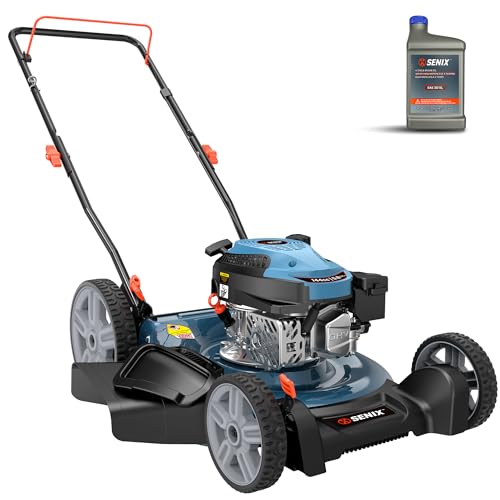
SENIX 21-Inch Gas Push Lawn Mower 144cc

AMERISUN 21-Inch 2-in-1 Gas Push Lawn Mower
More Details On Our Top Picks
The 18-inch deck makes this PowerSmart easier to thread through tighter commercial side yards than a wider machine, while the 144cc four-cycle OHV engine gives it the sort of straightforward gas setup that’s familiar on regular mowing routes. Three cutting paths, mulching, bagging, and side discharge, give you flexibility for clippings-heavy lawns and cleaner finish work.
That mix suits small crews working varied properties, especially where one lawn needs a neater look and the next just needs fast clearing. The steel deck should also hold up better than lighter plastic shells in day-to-day loading and unloading, though steel does usually mean a bit more weight to manage around steps and gates.
Strong Points
- 18-inch width helps in narrow runs and fenced side strips.
- Three grass-handling modes give you more control over finish and cleanup.
- Steel deck adds a sturdier feel for routine hauling.
- Four-cycle engine design keeps fuel handling familiar for gas mower users.
- Good fit for crews moving between tidy lawns and rougher cutbacks.
Worth Noting
- Smaller deck means more passes on broader open turf.
- Steel construction can feel less nimble on slopes or curb-heavy routes.
- The listing gives little help on storage height or handle folding.
Feature Snapshot
Who It Suits Best
Small lawn care teams and solo operators who need a compact gas mower for mixed residential work will get the most from it.
A Better Fit Elsewhere
PowerSmart EasyGlide 21-Inch Gas Lawn Mower makes more sense for crews that want wider coverage and fewer passes on open yards.
Compared with the 18-inch PowerSmart above, this 21-inch version is built for covering more ground with each pass, which matters on broad front lawns and rental properties with open stretches. The same 144cc four-stroke OHV engine keeps it in familiar gas-mower territory, and the three-way grass handling gives you flexibility for different cleanup styles.
That wider deck is the real story here, since it can trim repeated lap time on larger properties, though the trade-off is less agility in narrow side gates and around landscape beds. For most residential routes, that balance feels sensible, especially for teams that care more about coverage than about squeezing into cramped spaces.
What We Like
- 21-inch deck reduces the number of passes on wider lawns.
- Three mowing modes help match clippings to the site.
- Steel deck should suit regular hauling and weekly use.
- Four-cycle engine format is familiar for routine gas upkeep.
Small Caveats
- Wider cut can feel less handy near fences and tight corners.
- The larger frame may be more tiring on small, cluttered lots.
- As with many gas mowers, air filter and blade care still matter.
Core Details
Made For
You get the most from this one on bigger residential lawns where coverage time matters more than ultra-tight maneuvering.
Another Choice May Suit
PowerSmart EasyCut 18-Inch Gas Lawn Mower fits tighter yards and trailer-conscious crews that want a smaller footprint.
Right away, this reel mower stands apart from the gas models above because it has no motor at all. That manual design means you’re trading engine upkeep and fuel handling for a quieter push, and in a small, tidy yard that trade can feel refreshingly simple.
The steel blades are meant to stay sharp longer, which is useful for crews that want a cleaner cut on maintained turf without dealing with cords or fuel cans. The honest read is that it suits trimmed lawns far better than thick, overgrown grass, so it fits best as a specialty tool rather than a catch-all machine.
Highlights
- No engine means no fuel mixing or spark plug routine.
- 17-inch cut width works well in compact spaces.
- Steel blades support a cleaner, more controlled cut on maintained grass.
- Light-duty simplicity can be handy for quick touch-up work.
Points To Note
- Manual push effort rises as grass gets taller or denser.
- Less suited to rough commercial overgrowth than a gas mower.
- Blade care still matters, especially after sandy or gritty lawns.
At A Glance
Who Will Love This
You suit this best when your route includes small, well-kept lawns and you want a quiet push mower with very little mechanical fuss.
Where A Sibling Pick Shines
PowerSmart EasyCut 18-Inch 144cc Gas Lawn Mower is the smarter fit for thicker grass and jobs that need more drive from the machine itself.
This PowerSmart keeps the formula stripped down: 18-inch cutting width, 144cc four-stroke OHV engine, and side discharge only. Compared with the EasyCut model’s three-way mowing setup, it feels more direct, which can be a plus for route work where you mainly want to clear grass fast and move on.
Five height positions still give you room to adapt across season changes, and side discharge helps keep clippings moving on thicker lawns. The trade-off is obvious, though, since you give up mulching and bagging, so crews that want a tidier finish may prefer one of the earlier PowerSmart picks.
Upsides
- 18-inch deck keeps the machine manageable around common residential obstacles.
- Side discharge supports faster mowing on less-fussy properties.
- Five height settings let you make quick trim changes.
- Gas engine format suits regular weekly route work.
Areas To Watch
- No mulching or bagging means fewer finish options.
- Side discharge can leave more visible clippings behind.
- Basic setup may feel plain for crews wanting more versatility.
Details At A Glance
Right Fit For
You’ll appreciate this most on simple residential routes where side discharge is enough and you do not need bagging cleanup.
A Better Fit Elsewhere
PowerSmart EasyCut 18-Inch 144cc Gas Lawn Mower is the better call for crews that want three mowing modes in one machine.
This is the outlier in the list, and that matters. Instead of pushing through a route with you behind the handle, the ANTHBOT M5 is built for low-touch mowing on properties up to 1/8 acre, with no perimeter wire and app-based control handling the setup side.
Dual Vision and full-band NRTK positioning point to a much more automated approach than the gas mowers above, while multi-zone mapping makes sense for properties with distinct lawn sections. The catch is that this style fits a very different operation, so it’s better for a property owner or caretaker than for a crew needing fast turn-and-burn mowing across multiple addresses.
Reasons To Buy
- No perimeter wire keeps installation simpler than wired robotic setups.
- App control suits hands-off scheduling and zone management.
- Multi-zone mapping helps organize separated lawn areas.
- Garage included in the setup makes the system feel more complete.
- 45% slope capability opens up steeper yard layouts.
Honest Caveats
- Best fit stays within a small acreage footprint.
- Not a direct substitute for crew-driven push mowing on larger routes.
- Setup and app dependence may feel heavier than a simple gas mower.
Feature Rundown
Built With In Mind
You fit this best when you want automated mowing for a small property and value app control over manual pushing.
Look Elsewhere When
PowerSmart EasyGlide 21-Inch Gas Lawn Mower makes more sense for lawn care business routes that need fast physical cutting across several properties.
Among the gas choices here, this is the one that feels especially tuned for smaller yards and tighter transport space. The 18-inch deck and side discharge keep it simple, while the 144cc four-cycle engine gives you familiar push-mower behavior without moving into a heavier 21-inch frame.
Five height positions are enough for routine seasonal changes, and that narrower stance can be friendlier in trailer storage or crowded service vehicles. The trade-off is less flexibility than the three-in-one PowerSmart options, so you’re really choosing compact simplicity over finish variety.
Best Bits
- Smaller footprint suits tight storage and narrow side yards.
- Side discharge keeps operation straightforward for quick cuts.
- Five height positions give you practical trim adjustment.
- Gas engine setup is familiar for routine maintenance.
Room For Improvement
- No mulch or bag function limits cleanup options.
- 18-inch coverage means more laps on wider lawns.
- Smaller frame may feel less efficient on open properties.
Quick Facts
The Right Fit
You suit this best for small properties where storage space matters as much as mowing time.
A Better Fit Elsewhere
PowerSmart EasyCut 18-Inch 144cc Gas Lawn Mower is the better option when you want mulching and bagging along with side discharge.
The SENIX sits in a comfortable middle ground between compact 18-inch mowers and the more configurable 3-in-1 PowerSmart units. Its 21-inch deck gives you quicker coverage on residential lawns, while the two-in-one setup, mulching and side discharge, keeps the control panel simple.
That simplicity is useful on regular neighborhood routes, especially where you want broad coverage without stepping up to extra bells and whistles. The six-position height adjustment adds practical range, though crews who often bag clippings will notice the missing collection option right away.
Praise Points
- 21-inch deck helps cut down pass count on bigger lawns.
- Two mowing modes keep operation straightforward.
- Six height positions add flexibility across the season.
- Good fit for ordinary residential properties.
Softer Spots
- No bagging option narrows cleanup choices.
- Wider deck is less handy in cramped side yards.
- Simple feature mix may feel spare for mixed-finish work.
Feature Card
Whose Shelf It Belongs On
You fit this best on suburban routes where a wider deck matters, but bagging is not part of the usual workflow.
Skip It When
PowerSmart EasyCut 18-Inch 144cc Gas Lawn Mower makes more sense for tighter properties that need more finish options.
The AMERISUN leans on practical details that matter on uneven ground, starting with its 21-inch deck and larger rear wheels. That 7-inch front and 10-inch rear wheel setup should help the mower roll more comfortably over bumps, which is useful on yards that are a little less groomed than the postcard version.
You also get a 1.5 to 3.9 inch cutting range and two grass modes, mulching and side discharge, so the machine covers basic finish work without getting complicated. Compared with the SENIX, it feels a bit more terrain-aware, though the simpler two-function setup still leaves bagging to other picks in this list.
Positives
- Larger rear wheels help on rougher residential ground.
- 21-inch deck improves coverage on broader lawns.
- Cut height range gives you a wide seasonal span.
- Two mowing modes keep use straightforward.
Minor Gripes
- No bagging option means less cleanup flexibility.
- Larger wheels help rolling, but they do not make storage smaller.
- Best fit still sits in standard residential work, not heavy acreage.
Key Specs
Who Should Grab It
You fit this best for residential lawns with uneven patches, where wheel size matters almost as much as cut width.
Swap It Out When
PowerSmart EasyGlide 21-Inch Gas Lawn Mower is the better fit for crews that want the same broad coverage plus a three-way clipping setup.
How To Choose The Right Push Mowers For Lawn Care Business
Match Deck Width To Route Shape
Deck width controls how fast you cross open turf and how well you move through side gates, bed borders, and narrow strips. An 18-inch mower feels easier in cramped yards, while a 21-inch deck trims more grass per pass and suits broader suburban lawns.
That choice matters more than many shoppers expect. A wider deck looks efficient on paper, but it can slow you down around landscape edging, and a smaller deck can turn a large property into a long afternoon.
Choose The Grass Handling That Fits Your Finish
Mulching chops clippings finely and drops them back into the lawn, which can help reduce visible debris after a cut. Bagging collects clippings for a cleaner finish, while side discharge clears grass quickly during heavier growth.
For lawn care business work, that feature mix changes the whole day. Crews that handle a lot of tidy residential lawns often prefer mulching or bagging, while route-heavy work on thicker grass usually benefits from side discharge.
Think About Terrain, Storage, And Transport
Steel decks tend to feel sturdier, but they can add weight, and that shows up when you’re loading from a trailer, lifting over steps, or pushing across slopes. Larger rear wheels, like the AMERISUN’s, can help with uneven ground, which is useful on older lawns or patchy terrain.
Storage matters too. Compact frames are easier to stack in service vehicles, and simpler designs leave less to snag on straps, fuel cans, and tool bins.
Decide How Much Maintenance You Want
Gas push mowers bring familiar power, but they also ask for blade care, fuel handling, and the usual small upkeep tasks that come with engines. Manual reel mowers cut that burden way back, though they work best on smaller, maintained lawns and can be tiring on thicker grass.
Robot mowers move the job in a different direction entirely, since you trade pushing time for setup and app management. That works for a small property with predictable boundaries, but it does not replace a crew mower on a route with multiple stops.
Things Worth Knowing First
Mistakes Worth Dodging
One common miss is buying too much deck for the job. A 21-inch mower can feel efficient, then slow down badly once you start threading gates, beds, and tight corners.
Another is ignoring clipping control. Choosing side discharge only may be fine for rough cuts, but it leaves you with fewer finish options on tidy lawns.
The Upgrade Payoff
Higher-tier mowers in this category usually cost more because you get stronger deck materials, broader cutting width, more cutting positions, or smarter navigation hardware. That money often goes into real labor savings, not just extra features.
The upgrade makes sense when your route is busy enough that a few fewer passes or a cleaner finish saves time across the week. For simple small-yard work, a basic push mower often does enough without adding complexity.
Frequently Asked Questions
What size deck works best for lawn care routes?
An 18-inch deck suits tighter yards and side passages. A 21-inch deck makes more sense on broader lawns where you want fewer passes.
Is a manual reel mower practical for business use?
It can be practical for small, tidy properties and quiet touch-up work. It is a poor fit for tall, dense, or uneven grass.
Why choose side discharge over bagging?
Side discharge moves clippings away quickly during fast cuts. Bagging is better when you want a cleaner-looking finish.
Do robot mowers replace push mowers for route work?
Not really, because they suit small, defined properties rather than multi-stop service routes. They work more like a low-touch helper than a full crew substitute.
What matters more, engine size or deck width?
Both matter, but deck width often affects time on the lawn more directly. Engine size matters more once the grass gets thicker or the ground gets rougher.
Closing Thoughts
You have a solid spread here, from compact gas mowers to a manual reel option and a robotic outlier. For most lawn care business routes, the best fit comes down to how tight the property is, how you handle clippings, and how much upkeep you want to manage between jobs. The PowerSmart and SENIX models make the most sense for everyday push work, while the Fiskars stands out for quiet, simple mowing on smaller lawns. Choose the one that fits your route, not the loudest feature list.
