

Pro lawn care gets easier once the mower matches the property, not the other way around. Some yards need wire-free robot mapping and tight edge work, while others need a compact push mower that handles trim jobs without fuss. This roundup keeps the focus on actual yard shape, slope, acreage, and how much control you want day to day.
Quick Look at the Shortlist
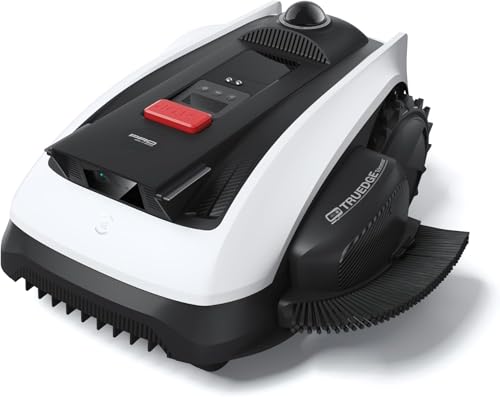
ECOVACS Goat O1000 LiDAR PRO Robot Lawn Mower Wire-Free Mapping

ECOVACS Goat A3000 LiDAR PRO Robotic Lawn Mower Dual LiDAR Navigation
ECOVACS Goat A2000 LiDAR PRO Robotic Lawn Mower Up to 1/2 Acre
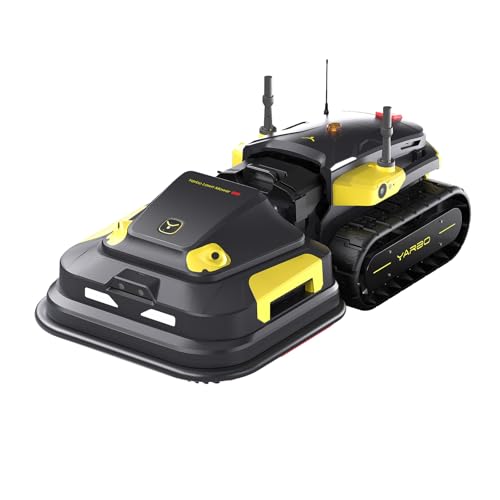
YARBO Robot Lawn Mower Pro Wire-Free for 6 Acres

13 Inch Cordless Lawn Mower 40V Electric Lawnmower
YARDCARE N1600 PRO Wireless Robotic Lawn Mower RTK & Vision Navigation

DREAME LiDAR 3500 Robot Lawn Mower A3 AWD Pro Wire Free No RTK
More Details On Our Top Picks
The O1000 makes the most sense for a smaller yard that still needs smart routing, not a patchwork of guesswork. LiDAR means light detection and ranging, a laser-based mapping method, so the mower can read boundaries without perimeter wire setup getting in the way.
That matters in a patio-heavy yard or a property with tight side passages, where the edge work can feel like the whole job. The trade-off is simple, it’s built for up to a quarter acre, so larger lawns will need something with more reach, such as the A2000 or A3000.
Strong Points
- Wire-free mapping keeps installation cleaner than a buried-wire setup.
- LiDAR navigation helps it make sense of narrow paths and shape changes.
- Smart edge mowing matters on lawns with patios, beds, and hard borders.
- App control gives you more say over schedules without standing at the machine.
Things To Consider
- Its 1/4-acre reach fits smaller properties better than broad suburban lots.
- Robot mowing still asks for occasional cleanup around toys, branches, and clutter.
- Property layouts with lots of separate zones may feel tight on a smaller-capacity unit.
Feature Snapshot
Who It Suits Best
Homeowners with a tidy small lawn and a busy schedule will get the most from this one.
A Better Fit Elsewhere
YARDCARE N1600 PRO Wireless Robotic Lawn Mower RTK & Vision Navigation suits you better for a more segmented yard that needs zone management.
The A3000 moves into bigger-yard territory without losing the wire-free appeal that makes this series practical. Dual LiDAR means two laser-sensing systems working together, which usually helps with mapping confidence and route planning in more complex spaces.
Its larger coverage range and high mowing rate make sense for a lawn that gets used hard and grows fast, especially around long borders or open runs. The honest read is that it still asks for orderly setup, because a robot that covers more ground only feels smart when the property layout is clear.
What We Like
- Dual LiDAR gives it a stronger sense of yard shape than a simpler single-sensor setup.
- Fast charging helps reduce downtime between mowing sessions.
- Built-in edge trimming reduces follow-up work near borders.
- Coverage for up to 3/4 acre fits larger suburban lawns well.
- The app keeps scheduling and zoning close at hand.
Small Caveats
- Its more advanced feature set makes it a fuller system to set up and manage.
- Larger robot mowers still need clear storage space and regular cleaning underneath.
- Open acreage can show the limits of any app-based route planning.
Core Details
Made For
This suits you best if your lawn is large enough to need more pace, but still residential rather than estate scale.
Where A Sibling Pick Shines
ECOVACS Goat A2000 LiDAR PRO Robotic Lawn Mower Up to 1/2 Acre fits better for a yard that sits between compact and oversized.
The A2000 sits in the middle of the ECOVACS range in a way that feels practical, not padded. Dual-LiDAR auto mapping gives you the same mapping logic as the larger siblings, while the 1/2-acre coverage target keeps it more grounded for many suburban lawns.
Its AIVI 3D obstacle avoidance is worth noting, since 3D vision tends to help a robot make better sense of toys, tools, and irregular garden objects. You may find this model the cleanest compromise if the O1000 feels too small and the A3000 feels more than you need.
Bright Spots
- Dual-LiDAR auto mapping supports cleaner routing than basic random-pass robot mowers.
- AIVI 3D obstacle avoidance adds another layer of object awareness.
- The built-in TruEdge trimmer helps with boundary polish.
- Half-acre coverage lands in a comfortable middle zone for many homes.
Areas To Watch
- Its usefulness depends heavily on whether your yard truly sits near the half-acre mark.
- Like any robot mower, it still benefits from a tidy lawn before each run.
- Temporary stock gaps can make timing a little unpredictable.
Details At A Glance
Perfect Match For
You fit this pick well if your yard is mid-size and you want a robot mower that feels more capable than entry-level models.
Skip It When
ECOVACS Goat O1000 LiDAR PRO Robot Lawn Mower Wire-Free Mapping is the simpler call for smaller lawns that do not need half-acre coverage.
YARBO plays in a very different league from the ECOVACS models, because this one is built around acreage rather than suburban trim work. Dual 300W motors, AI vision, and RTK navigation give it a large-property profile that suits broad lawns, steep sections, and long mowing routes.
RTK means real-time kinematic positioning, a GPS-based correction method that improves location accuracy, and that matters a lot on big grounds with fewer fixed landmarks. For most homeowners, this is more machine than needed, but estate owners and properties with rough grade changes may find the scale hard to ignore.
Reasons To Buy
- Six-acre coverage puts it far beyond the smaller robot mowers in this roundup.
- Dual 300W motors point to serious drive power for demanding terrain.
- 70% slope handling is useful on severe grades that overwhelm simpler units.
- 0.8-inch to 4.0-inch cutting range gives you more flexibility with finish height.
- 20-inch cutting width can shorten the number of passes on open ground.
- IPX6 water resistance helps it handle wet outdoor conditions better than a delicate build.
Points To Note
- Its size and scope make it better suited to large properties than average lawns.
- The system sounds more complex than a basic robot mower, so setup matters.
- Storage and maintenance will take more space than the compact options in this list.
Technical Sheet
Built With In Mind
Large-property owners who want a serious wire-free robot mower will get the most from this model.
Look Elsewhere When
ECOVACS Goat A3000 LiDAR PRO Robotic Lawn Mower Dual LiDAR Navigation fits better for a standard suburban yard that does not need acreage-level reach.
Not every pro lawn setup needs a robot, and this walk-behind option keeps the job more direct. The 40V system uses two 20V 4.0Ah batteries, which points to a cordless layout that suits small to medium lawns without a cord trailing behind you.
The 13-inch cutting width is narrow compared with the larger robot mowers above, but that’s useful around tighter paths, side yards, and patio borders. In a small garden, that smaller deck can feel like a nimble shoe instead of a heavy boot.
Upsides
- Cordless operation keeps movement cleaner than a plug-in mower.
- Two battery packs add more practical runtime support than a single pack layout.
- Five cutting heights let you adjust for seasonal growth or a neater finish.
- 30L bag capacity gives you a reasonable collection option for small lawns.
- Bagging and mulching modes make it easier to match cleanup style to your yard.
Room For Improvement
- The 13-inch deck is better for compact lawns than wide-open turf.
- Bagging setup means you’ll still deal with clippings and bag emptying.
- It lacks the automation of the robot picks, so your hands stay involved.
Quick Facts
Who Should Grab It
Small-yard homeowners who want a simple cordless mower with a tidy footprint will get the most from it.
Reach For A Different Pick When
ECOVACS Goat O1000 LiDAR PRO Robot Lawn Mower Wire-Free Mapping is the better fit for anyone who wants mowing to run on its own.
The N1600 PRO is built for lawns that stop being simple the moment you add pathways, zones, and odd corners. RTK plus vision gives it a more exact mapping backbone, and that combination usually pays off where a rougher navigation system would drift.
Virtual boundaries in the app remove the need for perimeter wire, and multi-zone control makes this one especially useful for split lawns or sections separated by walkways. You may find the auto-resume feature just as useful, because a mower that returns to charge and picks up where it left off feels far less hands-on.
Plus Points
- RTK and vision together support precise, repeatable mowing paths.
- No boundary wire keeps installation cleaner than a buried setup.
- Multi-zone mapping helps manage lawns that are split into sections.
- App control handles schedules, zones, and cut modes in one place.
- Auto resume reduces the need to monitor each charging cycle.
Worth Noting
- Its 0.4-acre coverage target is narrower than the larger robot options here.
- Complex mapping tools are helpful, but they also ask for a little setup patience.
- App-heavy control feels best when your phone stays close during setup.
Feature Rundown
The Right Fit
You fit this model well if your lawn layout is complicated and you want strong app-based control without a boundary wire.
A Better Fit Elsewhere
ECOVACS Goat A3000 LiDAR PRO Robotic Lawn Mower Dual LiDAR Navigation suits you better for a larger lawn that needs more coverage range.
The DREAME A3 AWD Pro lands as the most terrain-ready pick in this lineup, especially for sloped lawns that make simpler mowers feel tentative. Four-wheel drive, dual AI vision, and a 15.8-inch dual-disc cutting setup point to a mower built for wider, more demanding surfaces.
Its zero-edge approach is a practical touch around borders, and the 0.87-acre coverage target sits well above the midrange robot options without jumping into acreage-only territory. For a property with steep grades, the 4WD setup can be the difference between a mower that merely fits and one that feels properly matched.
Best Bits
- 4WD suits sloped lawns better than two-wheel drive alternatives.
- 38.7-degree slope handling gives it a strong hill-friendly profile.
- Dual AI vision helps it work through complex outdoor layouts.
- 15.8-inch dual-disc cutting can improve coverage on wider sections.
- Smart zero-edge design helps tighten work along lawn borders.
- 0.87-acre coverage fits larger residential lawns with room to spare.
Honest Caveats
- Its feature set makes the setup and management more involved than a plain mower.
- No RTK may matter more to you if your lawn depends heavily on satellite-style positioning.
- Wider capability usually means more machine to store and maintain.
Core Details
Whose Shelf It Belongs On
This belongs with you if your lawn is larger, sloped, and worth matching with a more capable robot mower.
Another Choice May Suit
ECOVACS Goat A3000 LiDAR PRO Robotic Lawn Mower Dual LiDAR Navigation fits better for a flatter yard where LiDAR coverage and faster mowing are the bigger priorities.
How To Choose The Right Pro Lawn Mowers
Match Coverage To The Yard, Not The Brochure
A mower’s coverage rating matters most when it matches your actual lawn size and shape. A quarter-acre robot can look tempting, but a split lawn with side paths and planting beds can feel much larger in practice.
For a simple rectangle, acreage is easy to read. For a yard with islands, gates, or awkward turns, the navigation system matters just as much as the number on the page.
Choose The Navigation Style That Fits Your Layout
LiDAR works well for structured mapping, especially around fences, patios, and narrow runouts. RTK-based systems suit broader lawns where satellite corrections can keep routes steady across open ground.
Vision-based systems add another layer of object awareness, which can help around toys, garden decor, and changes in terrain. The right pick usually comes down to which system fits your property shape rather than which one sounds more advanced.
Think Through Slope, Edge Work, And Maintenance
Hillier yards need drive stability and slope handling more than flashy app features. A mower that handles grades cleanly can save you a lot of manual touch-up work.
Edge trimming, bag capacity, cutting width, and cleaning access also shape day-to-day ownership. Wider decks and stronger drive systems can shorten mowing time, though they often bring more storage and upkeep demands too.
Things Worth Knowing First
Common Shopping Slip Ups
A lot of problems start with oversizing or undersizing the lawn rating. You avoid that by measuring the real mowing area, not just the lot size.
Another mistake is treating every wire-free robot the same. LiDAR, RTK, and vision each solve slightly different layout issues, so the yard should lead the choice.
The Upgrade Payoff
Higher-tier mower systems usually cost more because they bring better mapping, stronger drive hardware, and more refined edge handling. Those extras matter most on slopes, large lawns, and properties with several zones.
The upgrade makes sense when your yard work already takes serious time or when a basic mower would need too much manual help. On a small, tidy lawn, the extra spend can feel unnecessary.
Frequently Asked Questions
What size yard works best for a robot mower?
The best fit depends on the mower’s stated coverage and the way your lawn is divided. A smaller model can handle a simple yard, while a larger one suits more open or segmented space.
Do wire-free mowers still need setup?
Yes, they still need mapping, boundary planning in the app, and a tidy space to start from. They simply skip the buried wire step.
Is LiDAR better than vision navigation?
LiDAR usually helps with mapping and boundary awareness in structured spaces. Vision can help with object recognition, especially in yards with more clutter or changing scenery.
What matters most on a sloped lawn?
Drive system and slope handling matter first. A mower built for steep ground will usually feel steadier and less stressful to use.
Are walk-behind mowers still worth considering?
Yes, especially for smaller yards where a robot feels like overkill. A compact cordless walk-behind model gives you direct control without cords or gas.
Closing Remarks
You get the best result by matching the mower to the yard you actually live with, not the one in a product image. Smaller lots favor compact wire-free models, mid-size lawns reward balanced mapping and edge trimming, and steep or sprawling properties need more drive power and coverage. The right choice should make lawn care feel less like a weekly burden and more like one task you can stop thinking about.
