

Keeping seed, fertilizer, or ice melt moving evenly is easier with the right spreader, and the wrong one can turn a simple yard task into a patchy mess. You’re probably here because your lawn is small enough for a handheld model or large enough to justify a push spreader, but you still want something straightforward under a modest budget.
The seven picks below cover that range. You’ll see compact scoop-style options for tight areas, walk-behind units for bigger yards, and a power-spreader style choice for anyone already using compatible tools.
Quick Look At The Shortlist

Jonathan Green New American Lawn Hand Broadcast Spreader

EarthWay 2150 Commercial 50 LB Broadcast Fertilizer Spreader

EarthWay 2050P 80lb Broadcast Spreader

Rozlchar Power Spreader Compatible for Dewalt 20V/60V

Yhtpouqe Hand held Spreader
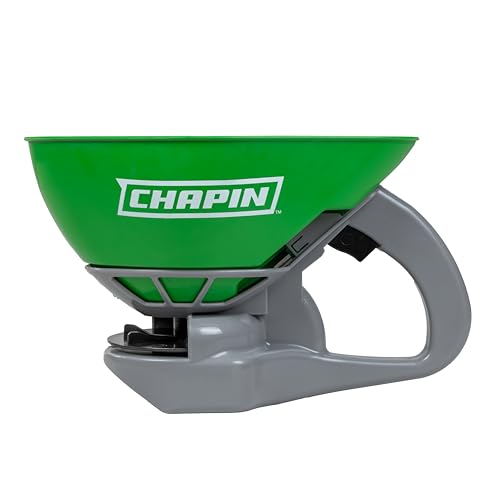
Chapin Handheld Garden Spreader

Amazon Basics Fertilizer Spreader for Lawn
More Details On Our Top Picks
This handheld spreader suits small lawns, narrow side yards, and quick touch-up jobs where a larger cart would feel like overkill. The 1,500 sq. ft. coverage claim makes it a sensible match for compact spaces, and the blue finish keeps it easy to spot in a crowded garage.
The trade-off is plain enough: a hand broadcast style asks more of your wrist and arm than a wheeled model like the EarthWay 2150. For spot seeding or fertilizer touch-ups, though, that smaller footprint can be the easier path.
Strong Points
- Handheld size keeps storage simple.
- Coverage fits modest lawn jobs well.
- Useful for fast, targeted spreading.
- Less bulky than walk-behind picks.
Things To Consider
- Arm fatigue can show up during longer passes.
- Best suited to smaller areas, not wide lots.
- Needs careful pacing for even coverage.
Feature Snapshot
Who It Suits Best
Homeowners with compact yards and occasional feeding or seeding jobs will get the most from this one.
Where A Sibling Pick Shines
EarthWay 2050P 80lb Broadcast Spreader fits better for you if the yard is larger and you want fewer refills.
For rough or uneven ground, this walk-behind design has the most reassuring stance in the group. The 13-inch pneumatic tires, meaning air-filled tires, are built to roll over bumpy turf more smoothly, and the rustproof poly rims add a practical durability edge.
The clog-free grate is a helpful detail too, especially for mixed material that may clump in the hopper. Compared with the Jonathan Green handheld model, this one makes more sense for longer routes and heavier loads, though it does take more storage space.
What We Like
- Large pneumatic tires help on rough lawns.
- Adjustable drop rate supports better control.
- Clog-reducing grate helps keep flow moving.
- Walk-behind format suits bigger spreading runs.
Points To Note
- Bulkier than handheld choices.
- More setup and storage space are part of the trade-off.
- Best value comes on larger properties.
Details At A Glance
Built With In Mind
Property owners with uneven turf and larger spreading routes should find the layout reassuring.
Look Elsewhere When
Jonathan Green New American Lawn Hand Broadcast Spreader fits better for smaller spaces where a lighter carry matters more.
This one leans into capacity, so it suits broader lawns and longer fertilizer or seed runs. The 80 lb hopper, meaning the bin that holds material before it spreads, gives you more distance between refills, and the pre-assembled setup is a nice relief for anyone who dislikes a long build session.
Side spread control is the detail that gives it more finesse than the simpler handheld options. Compared with the EarthWay 2150, this model feels a bit more targeted for homeowners who want capacity without stepping all the way into a commercial-feeling frame.
Positives
- Large hopper cuts down on refill stops.
- Pre-assembled arrival saves setup time.
- Side spread control helps target application.
- Works well for broad lawn routines.
Minor Gripes
- Larger footprint than handheld models.
- More spreader than tiny yards usually need.
- Storage space matters with this style.
Core Details
Right Fit For
Homeowners with mid-size to larger lawns and a steady seeding schedule should appreciate the extra capacity.
A Better Fit Elsewhere
Chapin Handheld Garden Spreader is the easier carry for small jobs that don’t need this much volume.
This is the most tool-system-specific option in the group, since it works with Dewalt 20V and 60V batteries but ships as tool only. That makes it a strong fit for anyone already invested in that battery line, and the 5,000 sq. ft. coverage claim puts it well beyond the small-handheld class.
Compared with the EarthWay spreaders, it trades hopper size and push-style simplicity for powered convenience. The honest read is that the compatibility detail matters more here than almost anything else, because the value depends on what you already have in the shed.
Highlights
- Powered spreading reduces manual effort.
- Coverage suits larger residential areas.
- Battery-platform match helps tool users.
- Year-round use broadens the workload.
Room For Improvement
- Battery is not included.
- Works best for Dewalt platform owners.
- Less straightforward than a basic push spreader.
Quick Facts
Who Should Grab It
Tool users who already rely on Dewalt batteries and want to limit manual pushing are the best match.
Swap It Out When
Amazon Basics Fertilizer Spreader for Lawn makes more sense for a simpler all-purpose push setup.
This handheld model leans into versatility, which is useful for a garage task list that changes with the season. The 80-ounce capacity helps cut down on refill breaks, and the included scoop plus garden gloves make the first fill and carry feel a little more orderly.
The three opening sizes, small, medium, and large, give you a simple way to match different materials such as seed, salt, or sand. That flexibility is handy for mixed-use households, though the hand-carry format still fits best for shorter sessions than a push spreader like the Amazon Basics unit.
Reasons To Buy
- Three opening sizes support different materials.
- 80-ounce capacity reduces refill frequency.
- Scoop helps with easier loading.
- Useful for several seasonal jobs.
Areas To Watch
- Handheld format works best in shorter bursts.
- Not as efficient for broad lawns.
- Storage and cleaning still matter after salty materials.
Feature Rundown
Whose Shelf It Belongs On
Households that spread seed, salt, or ice melt in smaller amounts will get steady use from this one.
Reach For A Different Pick When
EarthWay 2050P 80lb Broadcast Spreader is the better fit for larger lawns and less frequent refilling.
The small-lawn focus is obvious here, and that keeps the Chapin in a very clear lane. The 3 lb scoop-style build should feel easy to lift and refill, while the comfortable grip matters most during brief edge work or seasonal touch-ups around beds and paths.
Chapin’s even-flow approach is a good match for careful spot spreading, especially around tight corners that push-style units can feel clumsy in. Compared with the Yhtpouqe handheld, this one looks more stripped-down, which some people will like and others may find a bit plain.
Best Bits
- Lightweight shape helps with quick handling.
- Comfort grip supports short sessions.
- Easy filling works well for small jobs.
- Fits tight spaces better than larger spreaders.
Small Caveats
- Very small scale compared with push models.
- Best use is for touch-ups, not broad coverage.
- Plain design may feel too basic for some setups.
At A Glance
Perfect Match For
Homeowners tending small lawns, walkways, and garden edges should find this one easy to live with.
Another Choice May Suit
Jonathan Green New American Lawn Hand Broadcast Spreader makes more sense for slightly larger small-yard jobs that need more reach.
This is the broad-coverage, everyday-use option in the group. The 33 lb capacity and 0.53 cubic feet size give you a middle-ground setup that fits general lawn care without pushing into oversized territory, and the multi-gear system suggests more controlled spreading than a bare-bones hand unit.
It sits neatly between the compact handheld choices and the heavier EarthWay push models. For homeowners who want one spreader to handle a standard yard routine without a lot of fuss, that middle lane is exactly the appeal.
What We Like
- Middle-sized hopper suits routine yard work.
- Multi-gear setup supports steadier spreading.
- Coverage range fits larger home lawns.
- Good step up from handheld options.
Worth Noting
- Still more machine than tiny spots need.
- Less specialized than the EarthWay commercial-style picks.
- Storage takes more room than handheld tools.
Core Details
The Right Fit
Homeowners who want a straightforward spreader for regular lawn routines should feel comfortable with this one.
Skip It When
Chapin Handheld Garden Spreader is the easier choice for very small spaces and grab-and-go jobs.
How To Choose The Right Lawn Spreaders Under 100
Match The Spreader Style To Your Yard
Handheld spreaders make sense for small lawns, walkways, and patch jobs because they store easily and stay light in the hand. Walk-behind spreaders suit broader properties, especially when you want steadier coverage over longer passes. Powered options bring a different kind of convenience, but only make sense when the battery system already fits your tools.
Coverage claims matter, yet they work best as a rough guide rather than a promise of effortless use. A compact model like the Jonathan Green unit can feel perfect for a townhouse lawn, while a heavier EarthWay unit fits a yard with more ground to cover.
Look Closely At Capacity And Control
Capacity tells you how much material the hopper or container can hold before refilling. More capacity usually helps on larger lawns, though it also adds bulk and weight, so the trade-off is real.
Control features matter just as much. Adjustable drop rates, side spread control, and multiple opening sizes help you match the spread to seed, fertilizer, salt, or sand, which cuts down on waste and patchy overlap.
Think About Terrain, Storage, And Cleanup
Rough ground pushes some spreaders harder than others, which is why pneumatic tires and sturdy frames earn attention on uneven yards. Smaller scoop-style units are easier to rinse and store, while bigger hoppers and grates may need a little more cleanup after clumping materials.
That’s the part many people overlook. A spreader that fits your shed, garage shelf, or utility nook often gets used more often, and that practical fit usually matters more than a flashy feature list.
Choose The Right Balance For How You Work
Casual homeowners often do best with a simple handheld model that won’t dominate storage space. More frequent lawn care, heavier materials, or larger properties usually justify a push spreader with better control and fewer refill stops.
Tool-system users can also get value from a powered attachment, especially for recurring yard care. The best match is the one that feels easy enough to use regularly, not the one with the longest feature list.
Things Worth Knowing First
Common Shopping Slip Ups
One common mistake is matching the spreader to the wrong yard size. A handheld model can feel fine for a small patch, but it becomes tiring fast on broader lawns.
Another slip-up is overlooking how the material flows. Clumping fertilizer, coarse seed, and salty winter material behave differently, so control settings and hopper design deserve attention before you settle on a pick.
What The Higher Tier Buys
More expensive models usually spend money on stronger frames, larger capacity, and better control over where material lands. You also tend to get better movement over rough turf, which matters in yards with slopes or uneven spots.
The upgrade is worth it when you spread often, cover a lot of ground, or want fewer refill breaks. For occasional use on a compact lawn, a simpler spreader often makes more sense.
Frequently Asked Questions
What Size Spreader Works Best For A Small Lawn?
A handheld or scoop-style model usually fits best for small lawns. It keeps storage easy and avoids the bulk of a larger cart.
Can One Spreader Handle Seed, Fertilizer, And Salt?
Some can, especially models with adjustable openings or drop controls. You still need to clean it well after salty materials.
Are Walk-Behind Spreaders Hard To Store?
They take more room than handheld versions, so garage or shed space matters. That trade-off is normal for the added capacity and smoother rolling.
Does A Larger Capacity Always Mean A Better Choice?
Not always, because bigger hoppers usually add weight and storage demands. A larger capacity helps most when your lawn is broad enough to use it.
What Makes A Power Spreader Different?
A power spreader uses a battery-powered tool platform instead of pure hand or push motion. That helps reduce manual effort, but compatibility with your existing batteries matters a lot.
