

Choosing the right spreader saves you from streaky coverage, wasted material, and the usual back-and-forth that turns yard work into a chore. Some lawns call for a handheld model that handles touch-up work around beds and sidewalks, while bigger properties need a push or tow-behind setup that keeps pace without constant refilling. This roundup focuses on practical fit, so you can match the tool to your yard size, storage space, and how much walking you want to do.
The right pick can feel like a steady hand guiding the job, not a fight with the equipment. You’ll see compact options for small spaces, heavier-duty carts for wide lawns, and a few middle-ground choices that make routine feeding easier.
The Shortlist At A Glance

Jonathan Green (10947) New American Lawn Hand Broadcast Spreader
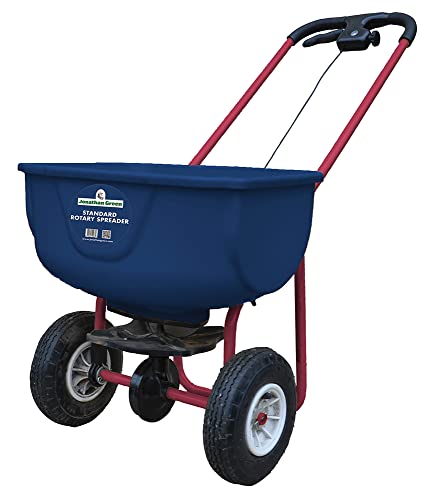
Jonathan Green (10937) New American Lawn Standard Rotary Broadcast Spreader

EarthWay 2150 Commercial 50 LB Broadcast Fertilizer Spreader

EarthWay 2050P 80lb Broadcast Spreader

Agri-Fab Tow Behind Broadcast Spreader
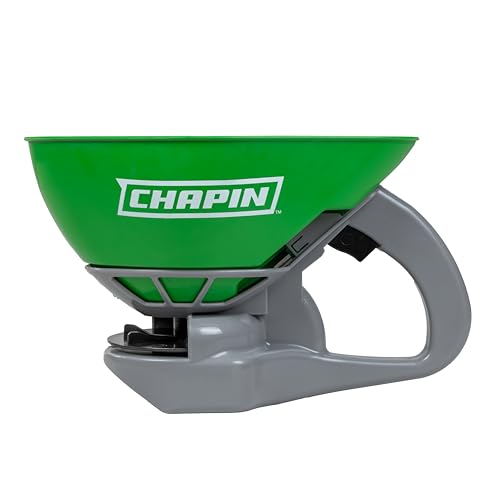
Chapin Handheld Garden Spreader with Precise Even-Flow

Amazon Basics Fertilizer Spreader for Lawn
More Details On Our Top Picks
Small patch jobs are where this handheld model makes the most sense. It suits quick passes across a side yard, narrow strips near a driveway, or a yard where storage space matters more than tank size.
The lightweight format also keeps the routine simple for spot feeding, though you’ll still want a steady grip so coverage stays even. Compared with the larger Jonathan Green push spreader later in this list, this one is for smaller, more controlled jobs, not broad seasonal runs.
Strong Points
- Handheld format stays easy to carry around beds and edges.
- Good fit for touch-ups after a bigger spreader misses tight spots.
- Less storage demand than cart-style models.
Things To Consider
- Coverage tops out much sooner than push or tow-behind options.
- Hand fatigue can show up during longer passes across open turf.
- Best kept for lighter, smaller tasks rather than full-yard jobs.
Key Specs
Who It Suits Best
Homeowners with small yards and limited storage space will get the most from this compact spreader.
Where A Sibling Pick Shines
Jonathan Green (10937) New American Lawn Standard Rotary Broadcast Spreader suits anyone covering more ground without switching tools.
This push spreader sits in the middle of the category in a useful way. It covers much more ground than the handheld Jonathan Green model, yet it stays simpler than the tow-behind setup from Agri-Fab.
For routine feeding across a standard home lawn, that balance tends to work well. The larger capacity range is a practical plus, though it still asks you to walk the yard and manage turns around landscaping.
What We Like
- Push design suits regular lawn feeding without towing equipment.
- Coverage up to 10,000 sq. ft. supports larger home lawns.
- More efficient than handheld options for whole-yard application.
Points To Note
- Still needs manual walking, so very large lots take time.
- Bulkier than the handheld picks, which affects storage.
Feature Snapshot
Made For
Homeowners with mid-size lawns who want a familiar walk-behind setup will feel at home with this one.
Another Choice May Suit
Agri-Fab Tow Behind Broadcast Spreader fits larger properties where you already use a riding mower or tractor.
Rough ground changes the job, and that’s where the EarthWay 2150 starts to make sense. The 13-inch pneumatic stud tires are meant to roll over uneven turf more easily, which helps when your lawn has dips, hard turns, or rough patches near the edges.
The clog-free grate is another practical detail, since it helps break up clumps before they choke the hopper opening. For anyone dealing with less-than-perfect material or bumpy ground, this model feels more serious than the Jonathan Green push spreaders.
Bright Spots
- Large pneumatic tires help with bumpy or uneven ground.
- Rustproof poly rims are a useful durability touch.
- Clog-reducing grate supports smoother material flow.
- Adjustable drop rate gives you more control over application pace.
Small Caveats
- Commercial-leaning build may feel more than casual lawn users need.
- The grate adds a part to manage during cleaning and storage.
Details At A Glance
Right Fit For
Property owners with rough turf or mixed terrain will get the most value from this walk-behind model.
Swap It Out When
EarthWay 2050P 80lb Broadcast Spreader fits better for larger lawns where capacity matters more than tire-focused maneuverability.
For larger lawns, the 80-pound hopper gives this EarthWay a strong practical edge. Pre-assembled setup also helps reduce the usual first-day hassle, which is a nice relief when you’d rather get to the yard work than spend time on assembly.
The side spread control is the detail that matters most in day-to-day use. It helps direct material more carefully, so you’re not wasting product along sidewalks, beds, or driveway edges, though the larger body does take more room in a shed.
Upsides
- Large hopper supports longer runs between refills.
- Pre-assembled format trims setup time.
- Side spread control improves placement near borders.
- Rustproof poly hopper is a sensible durability feature.
Areas To Watch
- Size and capacity can feel unnecessary for very small yards.
- Storage needs rise with the larger hopper shape.
Core Details
Who Should Grab It
Homeowners with big lawns and repeat seasonal spreading needs will get the most from this model.
Look Elsewhere When
Jonathan Green (10937) New American Lawn Standard Rotary Broadcast Spreader is easier to live with on a mid-size yard that does not need such a large hopper.
Once your yard gets large enough, walking every pass starts to feel unnecessary. This Agri-Fab setup is meant to ride behind a tractor or similar machine, so it fits property owners who already cover the lawn that way.
The 10-foot spread width is the meaningful detail here, because it helps cover more ground in fewer passes. Compared with the EarthWay push models, this one shifts effort from your legs to the tow vehicle, though it only makes sense with the right equipment on hand.
Reasons To Buy
- Tow-behind format suits large properties and long driveways.
- 10-foot spread width helps reduce the number of passes.
- Useful for seed, fertilizer, salt, and ice melt.
- Matches lawn care routines that already use a tractor or rider.
Honest Caveats
- Needs a tow vehicle, so it is not a standalone solution.
- Less convenient for smaller suburban lawns.
Feature Rundown
The Right Fit
This suits property owners with a riding mower, tractor, or similar tow setup and a lot of ground to cover.
Another Choice May Suit
EarthWay 2050P 80lb Broadcast Spreader fits better for people who want a walk-behind option with less equipment dependence.
Light touch-ups are the sweet spot here. The scoop-style shape and comfortable grip make this a sensible grab for gardeners who want something easy to fill and easy to move around without pulling out a larger cart.
The 3-pound weight is the detail that stands out most in daily use, especially for quick passes around small lawns or flowerbed edges. The trade-off is obvious, though, since this kind of handheld tool is better for short, simple jobs than full-yard coverage.
Best Bits
- Very light to carry during short spreading jobs.
- Scoop-style design keeps filling straightforward.
- Comfortable grip helps during quick seasonal tasks.
- Good match for small yards and spot treatment.
Room For Improvement
- Small capacity means more refills on bigger areas.
- Handheld use can feel repetitive across larger lawns.
At A Glance
Whose Shelf It Belongs On
Gardeners with small lawns or frequent edge touch-ups will appreciate how little effort this needs to get moving.
Reach For A Different Pick When
Jonathan Green (10947) New American Lawn Hand Broadcast Spreader is the better fit for someone who wants a similar compact format with a more clearly stated coverage range.
This model sits in a practical middle lane for routine lawn care. The multi-gear system is meant to support more even spreading, and the stated 5,000 square feet per load gives you a useful sense of scale for ordinary suburban yards.
At 33 pounds with a 0.53 cubic-foot hopper, it feels aimed at homeowners who want a steady cart-style spreader without stepping all the way up to the larger EarthWay body. The honest read is that it suits regular maintenance better than oversized properties, and that’s still enough for plenty of yards.
Positives
- Multi-gear setup gives more control over spreading pace.
- 5,000-square-foot coverage per load supports routine upkeep.
- Moderate hopper size keeps the form factor manageable.
- Works well for seasonal feeding and general lawn care.
Softer Spots
- Not as compact as handheld spreaders for tiny yards.
- Not as large as the EarthWay 2050P for big properties.
Core Details
Built With In Mind
Homeowners with average-size lawns and a need for regular, straightforward spreading will likely feel most comfortable here.
Skip It When
EarthWay 2050P 80lb Broadcast Spreader fits better for larger lawns that need a bigger hopper and more border control.
How To Choose The Right Lawn Fertilizer Spreaders
Match The Spreader To Your Yard Size
Coverage is the first thing worth lining up with your property. A handheld model like the Jonathan Green 10947 fits edging and small patches, while a tow-behind Agri-Fab makes more sense once your lawn becomes too large for repeated walking.
Capacity matters for the same reason. Bigger hoppers mean fewer refill stops, but they also bring more bulk and storage demand.
Think About Terrain And Control
Uneven ground changes the whole experience. EarthWay’s 2150, with 13-inch pneumatic stud tires, is built to roll more smoothly over rougher turf than a basic cart-style spreader.
Control features also matter near sidewalks, beds, and driveways. Side spread control or an adjustable drop rate helps keep material where it belongs, which is useful in tight residential layouts.
Choose Between Handheld, Push, And Tow-Behind
Handheld spreaders are for small jobs, quick touch-ups, and storage-friendly convenience. Push models fit routine yard care for average properties, while tow-behind versions suit people who already use a mower or tractor for the lawn.
The right format often depends on how much walking you want to do. That trade-off is simple, but it shapes the entire job.
Look Past The Hopper Size
Materials, wheel design, and assembly state all affect how pleasant the spreader feels in real use. A rustproof poly hopper can be easier to live with outdoors, and a pre-assembled model cuts down the first hurdle.
For most homes, the best choice is the one that fits your yard and your storage space without creating extra chores.
What To Weigh Before You Decide
Mistakes Worth Dodging
One common misstep is choosing too much spreader for a small lawn. A large tow-behind model sounds efficient, but it becomes awkward in a compact yard with narrow turns and limited storage.
Another is ignoring control around borders. Wide spread patterns can waste material near flowerbeds or sidewalks, so finer control matters more than many shoppers expect.
The Upgrade Payoff
Higher-tier spreaders usually cost more because the frame, tires, hopper size, and control features are more capable. That difference shows up in smoother movement over rough ground, better coverage, and less refilling.
The upgrade makes sense for large properties, uneven terrain, or anyone spreading often through the season. For a small yard, the extra size can be more hassle than help.
Frequently Asked Questions
What type of spreader works best for a small yard?
A handheld or lightweight scoop-style spreader is usually the easiest fit. It keeps storage simple and handles short passes without a bulky frame.
Why would you choose a tow-behind model?
A tow-behind spreader suits larger properties and long runs because your mower or tractor does the walking. It also helps reduce fatigue during bigger seasonal jobs.
Does hopper capacity really matter?
Yes, because a larger hopper means fewer refill stops. The trade-off is more weight and more space needed in storage.
What helps with uneven lawn ground?
Large pneumatic tires improve movement over bumpy terrain. A clog-reducing grate can also help keep material flowing more smoothly.
Is a push spreader a good middle ground?
Yes, a push spreader often fits standard home lawns very well. It gives you more reach than handheld tools without requiring a tow vehicle.
