

You want a mower that trims the yard without turning every weekend into a chore. That usually means looking past glossy feature lists and focusing on mapping, slope handling, obstacle sensing, and how much lawn each model can realistically cover.
This roundup keeps the focus on budget-minded robot lawn mowers that make sense for small patios, tight suburban lots, and a few larger yards that need wire-free setup. You’ll see where each pick fits, where it asks for a compromise, and which one deserves a closer look for your space.
Quick Look At The Shortlist

ANTHBOT M5 Lidar Robot Lawn Mower 360°LiDAR Vision Wire Free 1/8 Acre

LawnMaster OcuMow Perimeter Wire Free Robot Lawn Mower 1000-2000 Square Feet

ECOVACS Goat A2000 LiDAR PRO Robotic Lawn Mower Up to 1/2 Acre
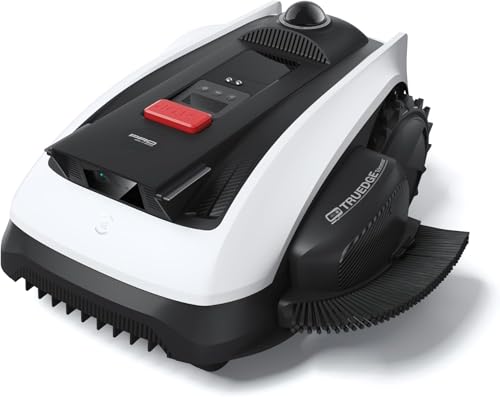
ECOVACS Goat O1000 LiDAR PRO Robot Lawn Mower Up to 1/4 Acre
ECOVACS Goat A3000 LiDAR PRO Robotic Lawn Mower Up to 3/4 Acre

DREAME A3 AWD 1000 Robot Lawn Mower 360° 3D LiDAR AI Dual Vision 0.25 Acre
YARDCARE V100 Robot Lawn Mower HD Vision Navigation Adjustable Cutting Height

YARDCARE 2026 New M800Plus Robot Lawn Mower GPS 3D Vision Deep Black

ECOVACS Goat O1000 RTK Robot Lawn Mower 1/4 Acres Lawn
More Details On Our Top Picks
For a smaller yard that needs wire-free setup, this ANTHBOT lands in a very practical place. The 360-degree LiDAR, meaning laser-based distance mapping, pairs with vision sensing, so it’s built to read the yard rather than depend on buried boundary wire.
The automatic zone division feature should help in yards with distinct sections, and the 45% slope spec gives it more climb confidence than many compact models. The trade-off is simple, though, a feature-rich setup like this makes the most sense when your lawn has obstacles, edges, and a layout worth mapping.
Strong Points
- Wire-free setup keeps installation cleaner than old boundary-wire systems.
- LiDAR plus vision should help it navigate changing yard layouts with less guesswork.
- Automatic mapping and zone division are useful for front and back sections.
- 45% slope handling gives you more flexibility on uneven ground.
- App control is handy for scheduling cuts around family routines.
Things To Consider
- Coverage is aimed at smaller lawns, so larger properties need a different tier.
- Vision-based navigation can be more sensitive to clutter than simpler designs.
- The richer feature set usually asks for a little more setup patience at the start.
Feature Snapshot
Who It Suits Best
Homeowners with a small, uneven yard and a clear need for wire-free mapping will get the most from this pick.
A Better Fit Elsewhere
DREAME A3 AWD 1000 is the stronger match for you if steep ground and rougher terrain matter more than compact-yard simplicity.
This LawnMaster model makes sense for very small lawns where simplicity matters more than a long spec sheet. Optical navigation means it uses camera-style sensing to read the yard, and the no-go function gives you a way to steer it away from places you’d rather leave untouched.
Compared with ANTHBOT M5, it feels more focused and less ambitious, which is exactly why some compact yards will prefer it. The low-noise angle also fits homes where mowing during work calls or early evenings needs to stay unobtrusive.
What We Like
- Designed around small lawns, so setup and daily use stay straightforward.
- Wire-free operation removes the burden of laying boundary cable.
- No-go control helps you protect flower beds, toys, or narrow side areas.
- Low noise suits townhomes and close-set neighborhoods.
Room For Improvement
- The narrow coverage range limits it to modest yard sizes.
- Optical navigation can be less forgiving in dim corners or heavy clutter.
- Owners with uneven terrain may want a model with stronger slope support.
Core Details
Who Will Love This
You get the most value here in a tidy, small yard where quiet operation and simple navigation matter more than advanced coverage.
Swap It Out When
ECOVACS Goat O1000 LiDAR PRO is the smarter step up for a larger quarter-acre lawn that needs LiDAR-based mapping and more structured edging.
The A2000 sits in the middle ground nicely, especially for yards that are too big for the tiny compact class but not large enough to justify a full heavy-duty setup. Dual-LiDAR auto mapping and AIVI 3D obstacle avoidance point to a mower that can build a clearer picture of the yard and respond to obstacles with more confidence than simpler vision-only designs.
The built-in TruEdge trimmer matters more than it sounds, because edge work is where many robot mowers still need help. That gives you a cleaner finish along borders, though the trade-off is that more advanced mapping usually comes with more setup attention than the most basic picks.
Highlights
- Dual-LiDAR mapping helps the mower understand larger spaces more clearly.
- Edge trimming support cuts down on the manual cleanup around borders.
- AIVI 3D sensing should help with toys, patio furniture, and other yard clutter.
- Half-acre coverage works for many standard suburban properties.
Points To Note
- The broader feature set may take longer to learn than a simpler model.
- For very small yards, some of the capability goes unused.
- App-based setup can feel like a project the first time around.
Details At A Glance
Best Suited To
You’ll like this most in a medium yard where mapped coverage and neater edge work matter more than absolute simplicity.
Another Choice May Suit
ECOVACS Goat A3000 LiDAR PRO is a better fit for you if the lawn is larger and you want faster mowing with more output per pass.
The O1000 is the kind of mower that fits a compact suburban yard without asking for a massive learning curve. LiDAR navigation, meaning laser-based mapping, gives it a structured way to understand the lawn, and the smart edge mowing feature is useful where borders matter as much as open grass.
Compared with the A2000, this one is the smaller, more focused sibling, so it makes sense for quarter-acre spaces that don’t need extra coverage headroom. App control keeps the routine flexible, and that’s useful for homeowners who like to schedule mowing around pets, guests, or backyard time.
Positives
- Quarter-acre coverage suits a common suburban lot size.
- Wire-free mapping avoids the hassle of buried boundary lines.
- Smart edge mowing helps reduce missed strips near fences and paths.
- App control makes routine scheduling easier from day to day.
Small Caveats
- The smaller coverage ceiling leaves less room for yard growth later.
- Owners with very irregular layouts may want the broader mapping tools of a larger model.
Quick Facts
Right Fit For
This suits you best in a modest lawn where clean edges and wire-free setup matter more than extra acreage capacity.
Where A Sibling Pick Shines
ECOVACS Goat A2000 LiDAR PRO makes more sense for you if your yard needs half-acre coverage and more advanced obstacle handling.
Once the yard starts stretching beyond the usual compact range, the A3000 begins to make more sense than the smaller ECOVACS models. Dual-LiDAR navigation gives it the mapping help it needs, while the fast charging and up to 400 m²/h mowing pace speak to a mower meant to cover more ground without dragging out the task.
That higher pace is useful for busier households that don’t want the lawn equipment living in the yard all day. The trade-off is that a larger, faster robot is usually the better fit for open spaces and fewer tight obstacles, not cramped side yards stuffed with furniture or garden beds.
Reasons To Buy
- Three-quarter-acre coverage gives it more breathing room than the smaller ECOVACS models.
- Fast charging helps keep longer lawns on a steadier cycle.
- Higher mowing output is useful for bigger open sections.
- TruEdge support helps reduce edge cleanup after the main cut.
Worth Noting
- The larger format makes more sense for broad lawns than cluttered ones.
- Faster output does not remove the need for careful initial mapping.
- You may not need this much capacity for a small front yard.
Spec Overview
Who Should Grab It
You’re the best fit for this model when your yard is large, open, and you want faster coverage without stepping into a commercial machine.
A Better Fit Elsewhere
ANTHBOT M5 is the better match for a smaller lawn that needs stronger slope handling and more compact wire-free mapping.
The DREAME A3 AWD 1000 stands out because it leans into terrain handling rather than just yard mapping. AWD means all-wheel drive, so you’re looking at a mower built to push through more demanding surfaces, and the 80% slope figure signals a very different comfort zone from the smaller compact picks above.
The 45-minute fast charge also fits a routine where the mower needs to get back out quickly instead of sitting in the dock for too long. That said, a terrain-focused design usually makes the most sense in yards with slopes, mixed grades, or awkward transitions, not a flat patch where simpler equipment would be enough.
Bright Spots
- AWD gives it a clear advantage on tougher surfaces.
- 80% slope handling is far beyond what many budget mowers can manage.
- 3D LiDAR and dual vision support more confident navigation.
- Fast charge timing helps keep the mowing cycle moving.
Areas To Watch
- The terrain focus may be more than you need for a flat lawn.
- All that capability can feel excessive in a very simple yard.
- Steeper-yard performance still depends on the surface beneath the grass.
Feature Rundown
The Right Fit
You should look at this if your yard has steep sections, changing grades, or terrain that punishes lighter-duty mowers.
Look Elsewhere When
LawnMaster OcuMow is the calmer choice for you if your space is a tiny, mostly flat lawn where simplicity beats terrain muscle.
The V100 feels aimed at homeowners who want a gentler start into robot mowing. HD vision navigation and collision sensors give it a straightforward approach to obstacle detection, and adjustable cutting height helps you tailor the cut to the grass instead of living with one fixed setting.
Compared with the more advanced ECOVACS units, this YARDCARE model is less about elaborate mapping and more about doing the basics well for a small lawn. Low-noise operation is a quiet advantage in close neighborhoods, especially where a loud mower would be out of place.
Best Bits
- Easygoing design makes it a sensible starting point for small lawns.
- HD vision and collision sensors help it work around common yard obstacles.
- Adjustable cutting height gives you more control over the finish.
- Low noise suits compact homes and shared fence lines.
Minor Gripes
- Coverage is limited to very small properties.
- Less advanced mapping means it suits simpler layouts best.
- Dense clutter can still slow any vision-based mower down.
Core Details
Whose Shelf It Belongs On
This belongs with you if your lawn is small, your layout is simple, and you want a calm entry into robotic mowing.
Where A Sibling Pick Shines
ANTHBOT M5 is the stronger fit for you if your small yard also includes slope, zones, and a need for more advanced mapping.
This YARDCARE model packs in several control tools at once, so it suits a yard with clearly defined spaces. GPS and 3D vision help with location awareness, the 32.8-foot magnetic stripe gives you a boundary tool, and auto-charging keeps the routine more hands-off once the layout is set.
The bow-shaped mowing pattern is the detail that may matter most in practice, because it suggests a more organized pass pattern than random drifting. The catch is that a feature-heavy mower like this asks for a yard you’re comfortable organizing, not one you want to leave entirely unstructured.
Upsides
- GPS and 3D vision bring together two useful navigation approaches.
- Magnetic stripe support helps define space without traditional buried wire.
- Auto-charging reduces the amount of babysitting your routine needs.
- Bow-shaped mowing pattern can suit lawns that benefit from orderly coverage.
Softer Spots
- The boundary setup asks for a little planning before regular use.
- Feature density can feel unnecessary in a plain, open yard.
- More moving parts usually mean more attention to maintenance and placement.
Feature Card
Perfect Match For
You fit this best when your lawn has clearly defined borders and you want several guidance tools working together.
Skip It When
LawnMaster OcuMow is the simpler match for you if all you need is a small, straightforward lawn mower without boundary planning.
This O1000 RTK model leans on RTK, or real-time kinematic positioning, which is a more precise location system than basic casual navigation. For a quarter-acre yard, that can make wire-free setup feel more structured, and the zero-edge cutting feature is especially appealing where fence lines and borders tend to collect the missed strips.
Compared with the LiDAR-only O1000, this one is the pick to watch when you care about precise guidance more than a longer feature list. The trade-off is that RTK makes the most sense in yards where the signal path and layout cooperate, so it’s better suited to organized spaces than heavily cluttered ones.
Standout Traits
- RTK positioning adds a more precise navigation approach.
- Wire-free vision setup keeps installation cleaner.
- Automated mapping helps the mower learn the yard layout.
- Zero-edge cutting is useful for reducing manual touch-up work.
Honest Caveats
- RTK performs best in yards that suit precision-based mapping.
- Busy, irregular spaces can take more setup patience.
- The more advanced guidance may be more than a simple lawn needs.
Technical Sheet
Built With In Mind
You should choose this for a small to mid-size yard where tighter positioning and edge cleanup matter most.
Another Choice May Suit
ECOVACS Goat O1000 LiDAR PRO is the easier fit for you if you want the same quarter-acre class with a simpler LiDAR-based setup.
How To Choose The Right Budget Robot Lawn Mowers
Match Coverage To Your Actual Lawn
Coverage claims only help when they line up with your ground reality. A 1/8-acre model like ANTHBOT M5 suits compact yards, while half-acre and three-quarter-acre picks make more sense once the lawn starts spreading across front and back sections.
Think about tree beds, walkways, and side strips too, because those spaces eat into usable mowing area. A robot that is sized too small works harder and spends more time returning to charge, which can turn a tidy shortcut into a slow routine.
Choose The Navigation Style You Can Live With
Wire-free mowing sounds simple, but the navigation system behind it matters a lot. LiDAR gives strong mapping, vision systems can read the yard visually, and RTK adds location precision that suits organized layouts.
Yards with odd corners or clutter often benefit from LiDAR or dual-sensor setups, while cleaner plots can do well with simpler optical or vision-based models. The goal is less about chasing the most advanced label and more about picking the guidance system that matches your property shape.
Pay Attention To Slope, Obstacles, And Edges
Grade handling is a big separator in this category. A mower that handles 45% or 80% slopes gives you more confidence on hills, but that same machine may be overkill on a level lawn.
Obstacle avoidance and edge cutting matter just as much in real use. Furniture, toys, hose loops, and fence lines are where many robot mowers either feel smooth or start to annoy you, so a good sensor set and a decent edge tool save time later.
Pick For Setup Style, Not Just Feature Count
Some models suit a hands-on setup with magnetic stripe boundaries or zone planning, while others are better for a more automatic routine after the first mapping pass. That difference matters more than a long feature list on a product page.
For smaller yards, a simpler model can be the smarter spend because it leaves less to configure and maintain. For larger or uneven lawns, the extra money often goes into better navigation, faster charging, stronger traction, or cleaner edge work, and those are the details you feel every week.
Things Worth Knowing Before You Order
Common Shopping Slip Ups
Plenty of people focus on acreage first and ignore yard shape. A mower sized for the right square footage can still struggle in a narrow side yard, a steep strip, or a lawn packed with beds and hardscape.
Another mistake is overlooking setup style. Wire-free models still need mapping, boundary planning, or zone decisions, so a simple-looking mower can ask for more upfront thought than expected.
What The Higher Tier Buys
More expensive models usually spend the extra money on better sensing, more precise navigation, stronger slope handling, faster charging, or cleaner edge work. Those upgrades matter because they reduce how often you need to step in and tidy the lawn yourself.
That premium step makes sense for larger lawns, mixed terrain, and properties with lots of objects to avoid. For a flat, small yard, the extra capability can be nice, but it won’t always translate into a better daily experience.
Frequently Asked Questions
How much yard can a budget robot mower handle?
Coverage varies a lot, from very small lawns around 1,000 square feet to larger units that reach half an acre or more. Your lawn shape and obstacles matter just as much as the acreage figure.
Do wire-free models still need setup?
Yes, they still need mapping or boundary planning, just not buried perimeter wire. The setup feels different, but it is still part of the job.
Which navigation type is easiest to live with?
That depends on the yard. Simple lawns often work fine with optical or vision navigation, while uneven or complex spaces tend to benefit from LiDAR or RTK.
Are slope ratings really important?
Very important on hilly lots. A mower built for steeper ground can handle areas that would leave a flatter-lawn model out of its depth.
Do robot mowers handle edges well?
Some do a better job than others, and edge support is worth checking closely. Built-in edge mowing or zero-edge cutting can reduce the amount of manual touch-up you do later.
Closing Thoughts
The right budget robot mower depends on your yard more than your wish list. A small flat lawn can stay simple, while a sloped or irregular property asks for better mapping, stronger traction, or cleaner edge control. That’s why the best fit for you is the one that matches your ground, your layout, and how much setup you’re willing to handle. Get those three right, and the rest becomes easier.
