

Choosing the right lawn food gets easier once you match the formula to your grass, your soil, and how much upkeep you want to do. Some yards need a gentle, slow-release granule that spreads the work across the season, while others benefit from a liquid boost that greens things up faster. You’ll also see a few all-purpose options here for mixed planting beds, which matters more than you might think in a busy yard with grass, shrubs, and vegetables all sharing space.
Quick Look At The Shortlist

Ferti-lome 13767 Centipede Lawn Fertilizer 15-0-15
Safer Brand Lawn Restore Natural Lawn Fertilizer 9335SR

Scotts Liquid Green Max Lawn Food 32 oz.

Supply Solutions 16-16-16 All Purpose Granular Fertilizer 5lbs
Pennington Full Season Lawn Fertilizer 32-0-5 4M 11.2lb

Purely Organic Products Lawn Food 10-0-2 15 LB
Eco Solutions Slow Release Lawn Fertilizer 25-5-10 10kg

Eco Solutions Slow Release Lawn Fertilizer 25-5-10 20kg

GreenView Lawn Food 16 lb. Bag 22-0-4
More Details On Our Top Picks
Warm-season turf can be picky, and this formula speaks that language more clearly than the broader picks above. The 15-0-15 ratio puts nitrogen and potassium in a more even place, while added iron is the detail that helps lawns look richer without leaning only on growth. For yards with centipede or St. Augustine, that balance matters a lot.
The slow-release nitrogen also suits homeowners who’d rather feed on a steadier schedule than chase a quick green spike. The trade-off is simple, this is less of a general-purpose grab and more of a grass-specific choice, so mixed lawns may need a different lane. In a hot-climate yard with the right turf type, though, it feels well matched.
Strong Points
- The 15-0-15 ratio gives you a more balanced feed than a nitrogen-heavy lawn product.
- Iron support helps turf color look deeper, which is handy in yards that tend to fade between feedings.
- Slow-release nitrogen stretches feeding across time, so you’re not rushing back to the spreader too soon.
- The formula is aimed at centipede and St. Augustine, which narrows the guesswork for warm-season lawns.
Things To Consider
- It’s a narrower fit, so mixed-grass lawns may not get the same benefit.
- Slow-release feed usually rewards patience rather than instant visual changes.
- You’ll want to store the bag dry, since granular fertilizer clumps when it picks up moisture.
Feature Card
Whose Shelf It Belongs On
You benefit most from this pick if your lawn is mainly centipede or St. Augustine and you want a formula built around those grasses.
Swap It Out When
Purely Organic Products Lawn Food 10-0-2 makes more sense for a simpler, lighter-feeling feed on a smaller yard with fewer turf-specific needs.
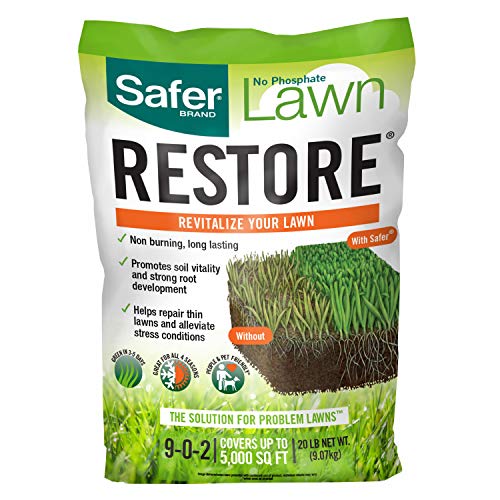
Some lawns need a softer touch, especially after a rough season or a patchy spring. Safer Brand leans into that need with a 9-0-2 NPK mix, which keeps the nutrient profile lighter than Ferti-lome’s more grass-specific formula above. For homeowners who want a calm, low-drama feeding routine, that restraint makes sense.
The non-burning positioning is useful in busy yards where watering schedules and spread rates aren’t always perfect. The honest read is that this kind of formula suits steady recovery more than flashy greening, so patience still matters. In a 5,000-square-foot yard, the coverage detail also makes planning easier.
What We Like
- The gentler nutrient profile works well for lawns that don’t need a heavy push.
- A lower-risk feel is helpful for newer grass or lawns that have already been stressed.
- Coverage for up to 5,000 square feet gives you a clear planning target.
- The simple NPK setup makes it easier to compare against stronger-feeding products.
Worth Noting
- It’s lighter than some other picks here, so very tired turf may need more time to respond.
- Granular products still need even spreading, which can matter in narrow side yards.
Core Details
Who Will Love This
You suit this pick best if your lawn needs a gentler reset and you’d rather avoid an aggressive feeding style.
A Better Fit Elsewhere
Pennington Full Season Lawn Fertilizer 32-0-5 is a better match for you if you want a more season-long approach with fewer applications to think about.
Liquid fertilizer changes the pace, and this Scotts bottle is built for that faster rhythm. The 2-in-1 setup combines fertilizer with iron supplement, so it can suit lawns that need both feeding and a deeper green tone in one step. That makes it especially handy for quick weekend work in a yard that needs visible attention.
Compared with the granular picks above, this one trades longer wear time for speed and convenience. You may find it easier to use around small repair areas or uneven patches, though liquid products can feel less forgiving than granules if you prefer a set-and-forget routine. The grass-type compatibility keeps it flexible.
Highlights
- The liquid format suits fast touch-ups and focused lawn work.
- Fertilizer plus iron in one bottle reduces the need to juggle multiple products.
- Compatibility with any grass type gives it broad appeal for mixed neighborhoods and varied turf.
- The 32 oz. size is easy to store on a shelf or in a garage bin.
Room For Improvement
- Liquid care usually asks for more direct application than a spreader-based granule.
- The smaller bottle won’t suit large lawns that need broad coverage in one pass.
- Storage around other garden liquids should stay tidy, since bottle caps and nozzles matter here.
At A Glance
Right Fit For
You suit this option best if you want a fast liquid treatment and you’re comfortable applying lawn care more directly.
Look Elsewhere When
GreenView Lawn Food 16 lb. Bag is the steadier pick for a larger suburban yard that benefits more from granular feeding over time.
This is the broadest formula in the group, and that wide reach is exactly the point. A 16-16-16 balance means the nutrient profile is even across the board, which suits mixed garden spaces where lawn, vegetables, fruiting plants, and ornamentals all need attention. For a homeowner juggling several beds at once, that flexibility saves time and shelf space.
Compared with the more lawn-specific picks like Ferti-lome or Pennington, Supply Solutions feels less specialized and more adaptable. That trade-off shows up in the name, though, since general-purpose formulas are never as tuned to turf quirks as a grass-targeted blend. Still, for a small yard with many planting zones, it has real practical value.
Upsides
- The 16-16-16 ratio gives you an even nutrient profile across all three major numbers.
- It suits lawns plus other plantings, which helps in yards where everything shares the same care routine.
- The 5 lb. bag is easy to move, pour, and store in a cramped shed.
- Granular form makes it a straightforward fit for spreaders and hand application.
Areas To Watch
- General-purpose feeding doesn’t replace a turf-specific formula for picky grass types.
- The smaller bag may disappear quickly in bigger yards.
- Mixing lawn and garden use means you’ll still need to think carefully about where and how much you apply.
Feature Rundown
Made For
You fit this pick best if your yard mixes turf with garden beds and you want one formula that can move between them.
Where A Sibling Pick Shines
Ferti-lome 13767 Centipede Lawn Fertilizer 15-0-15 is the better match for turf-focused care on centipede or St. Augustine lawns.
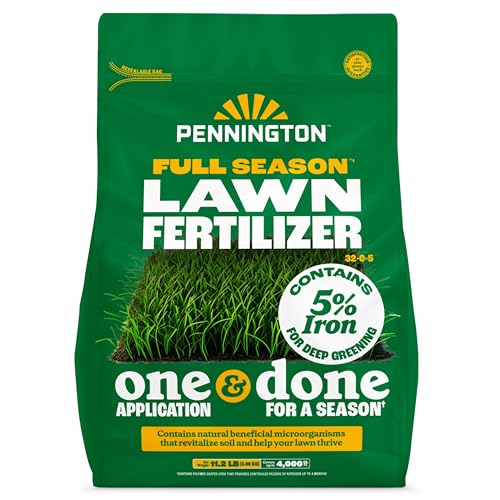
Pennington leans into convenience more than most items here, and that’s a real advantage for homeowners who prefer one main feeding window. The 32-0-5 formula and 4M slow-release setup suggest a stronger nitrogen-forward approach with potassium support, which suits lawns that need growth and color without constant repeat work. It feels aimed at people who want a cleaner seasonal routine.
Compared with Safer Brand’s gentler profile, this one is more assertive and more hands-off at the same time. The catch is that a strong seasonal fertilizer still needs reasonable mowing and watering habits to look its best, so it’s not a magic shortcut. For many suburban yards, though, that balance is enough.
Best Bits
- One seasonal application keeps the schedule simple.
- The slow-release design spreads feeding over time instead of all at once.
- 32-0-5 gives you a grass-focused nutrient profile with potassium support.
- The 11.2 lb. bag is manageable without feeling oversized.
Small Caveats
- Seasonal feeding still depends on your climate and lawn condition.
- Heavy-growth lawns may want a more frequent plan than this one provides.
- Granular storage should stay dry to avoid clumping in the bag.
Spec Overview
The Right Fit
You suit this pick best if you want a simpler seasonal routine and prefer to do less frequent lawn feeding.
Another Choice May Suit
Eco Solutions Slow Release Lawn Fertilizer 25-5-10 20kg makes more sense for larger properties that need a bulk bag and a longer feeding window.
This Purely Organic bag is more modest than the stronger-feeding picks above, and that’s part of its appeal. The 10-0-2 formula keeps things simple, which suits homeowners who want a basic, steady lawn routine without too much ingredient juggling. In a 3,000-square-foot yard, the coverage figure also makes this feel easy to size.
Compared with GreenView’s 22-0-4 blend, this one reads as lighter and less aggressive. You may find that helpful in a smaller yard or a setup where you prefer modest feeding rather than a strong growth push. The trade-off is that you give up some punch, so this is more about consistency than dramatic change.
Bright Spots
- The lighter nutrient profile suits straightforward lawn feeding.
- 3,000 square feet of coverage helps you map out use without guesswork.
- The 15 lb. bag stays reasonably easy to handle.
- It fits smaller properties where overfeeding can be more of a concern than underfeeding.
Points To Note
- It’s not built for the kind of dramatic boost some thicker lawns need.
- Smaller coverage means larger yards may need more than one bag.
Details At A Glance
Best Suited To
You fit this pick best if your yard is modest in size and you want an uncomplicated fertilizer routine.
Reach For A Different Pick When
GreenView Lawn Food 16 lb. Bag makes more sense for a larger lawn where 5,000 square feet of coverage matters more.
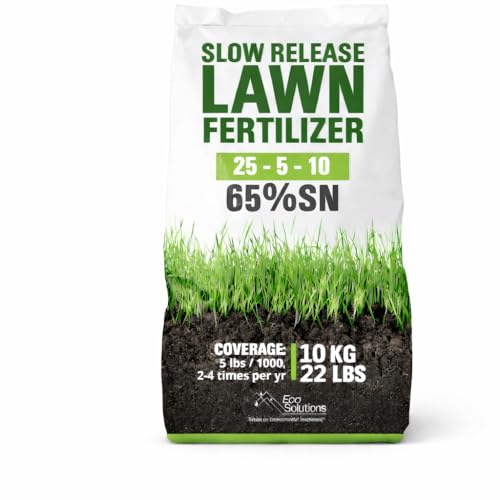
For bigger yards, this Eco Solutions bag starts to make a lot of sense. The 25-5-10 blend leans hard enough on nitrogen to support deeper feeding, and the 65% granular nitrogen claim points toward a formula built for lasting release rather than a quick burst. You’ll probably appreciate that longer rhythm in a yard that doesn’t get constant attention.
The 10kg bag also suits homeowners who prefer fewer refill runs to the shed, especially on larger lots. The trade-off is that this kind of slow-release formula asks for patience, and the bag size makes storage more serious than the lighter options in this roundup. Still, for steady lawn maintenance, it feels well matched.
Positives
- The long-feeding design supports a more relaxed lawn schedule.
- 25-5-10 gives you a strong nitrogen-forward profile with supporting nutrients.
- 65% granular nitrogen suggests a formula built for gradual delivery.
- The 10kg bag suits properties that need a larger working supply.
- Kid and pet safe positioning may matter to families keeping the yard active.
Honest Caveats
- The bag is substantial, so storage and lifting matter more here.
- Long-release feeding usually looks best with a patient, season-minded routine.
- Large granular bags can be awkward in tight sheds or small garages.
Technical Sheet
Who Should Grab It
You suit this pick best if you manage a larger yard and want a slower, longer-feeding lawn routine.
Skip It When
Pennington Full Season Lawn Fertilizer 32-0-5 is the cleaner choice for you if you want a lighter bag and a more compact seasonal setup.
This larger Eco Solutions bag follows the same slow-release logic as the 10kg version, but it suits a different kind of yard. The 20kg size makes more sense for big lawns, shared properties, or anyone who prefers buying in a bulk format instead of restocking often. That extra volume is the main reason it sits higher in the lineup.
Compared with the 10kg bag, this one is less about convenience and more about supply depth. You may like that trade if your property chews through product quickly, though the storage burden grows with the bag size. For large stretches of grass, it feels like a practical bulk choice.
Reasons To Buy
- The 20kg size is well suited to large properties and repeated use.
- 25-5-10 gives the same slow-release nutrient structure as the smaller Eco Solutions bag.
- Long feeding up to 110 days helps reduce how often you need to reapply.
- Bulk format can be easier for frequent lawn care routines.
Areas To Watch
- The larger bag takes more storage room than most of the other picks here.
- Bulk buying helps most when your lawn size truly calls for it.
- Moving a 44lb bag is not the handiest job in a cramped garage.
Feature Snapshot
Built With In Mind
You suit this pick best if your property is large enough to justify a bulk fertilizer bag and fewer restock runs.
Consider Something Else When
Purely Organic Products Lawn Food 10-0-2 is the easier choice for a smaller yard that needs lighter handling and simpler storage.
GreenView sits in a useful middle ground, and that’s why it closes the roundup so neatly. The 22-0-4 mix, plus the 5,000-square-foot coverage figure, points to a lawn food that fits standard suburban yards without much drama. Eight weeks of continuous feeding also makes the timing easier to plan than with more frequent products.
Compared with Purely Organic’s lighter formula, this one gives you a firmer push while still staying manageable. The honest read is that it suits homeowners who want a familiar middle path, not a specialty formula or a bulk-only bag. For many routine lawn schedules, that’s exactly enough.
Best Bits
- 22-0-4 offers a more assertive lawn-feeding profile than the lighter organic pick.
- 5,000 square feet of coverage works well for many typical residential yards.
- Eight weeks of continuous feeding helps space out your lawn-care routine.
- The 16 lb. bag stays manageable for most homeowners.
Minor Gripes
- It’s not as specialized as the grass-targeted Ferti-lome option.
- The formula is practical, but not the right answer for every soil or turf type.
- Granular storage still calls for a dry spot.
Core Details
Who It Suits Best
You suit this pick best if you want a dependable middle-of-the-road lawn food for an ordinary residential yard.
Where Shoppers Go Wrong
Eco Solutions Slow Release Lawn Fertilizer 25-5-10 20kg is the stronger match for very large properties that need bulk supply and a longer feed window.
How To Choose The Right Alls Around Lawn Fertilizer
NPK, Release Style, And Why They Matter
NPK stands for nitrogen, phosphorus, and potassium, the three numbers you see on fertilizer labels. Nitrogen drives leafy growth, phosphorus supports root and establishment work, and potassium helps overall plant function, so the ratio tells you what kind of push the product leans toward. A higher nitrogen number fits a lawn that needs color and growth, while a more balanced ratio can suit mixed garden use or a yard that’s already in decent shape.
Release style matters just as much as the numbers. Slow-release formulas, like Pennington and Eco Solutions, spread feeding over time and fit homeowners who want fewer applications, while liquid options such as Scotts can feel quicker for spot work or faster visual change. The trade-off is patience versus speed, and your yard routine should decide that balance.
Match The Formula To The Grass And Yard Size
Some fertilizers are broad, while others are built for specific grass types. Ferti-lome is tuned for centipede and St. Augustine, which makes it a smart fit in warm climates, while GreenView and Purely Organic are easier to place in standard residential yards. That difference matters because a formula that suits one turf type can feel oddly blunt on another.
Yard size changes the math too. A 32 oz. liquid bottle is convenient for quick attention, but a 20kg bag makes more sense when you maintain a larger property and don’t want to restock often. Measure the square footage first, then let the package coverage guide the rest.
Think About Storage, Handling, And Maintenance
Granular bags are usually easier to spread evenly, but they need dry storage and a bit more room in the shed. Liquid bottles save shelf space and work well for targeted use, though they tend to ask for more direct handling and cleanup. That’s the quiet trade-off most people overlook until the bottle or bag is already open.
Maintenance should feel realistic, not aspirational. If you want low fuss, a slow-release bag with clear coverage like GreenView or Pennington fits better than a liquid you’ll mix more often. For busy households, simpler storage and fewer feedings usually win the day.
A Quick Reality Check Before You Choose
Common Shopping Slip Ups
Many lawn owners chase the highest nutrient numbers without checking whether the turf actually needs that kind of feed. A warm-season lawn with a specific grass type may do better with a targeted formula than a broad garden blend.
Another common miss is bag size. A smaller bottle can feel convenient, but it may run out too soon on a large yard, while a bulk bag can be awkward for a compact garage.
When Paying More Pays Off
Higher-tier lawn fertilizers usually cost more because they stretch feeding longer, cover more ground, or combine multiple functions in one formula. Slow-release nitrogen, added iron, and larger bag sizes are the main reasons the price step climbs.
The upgrade makes sense when your yard is large, your schedule is tight, or your grass type needs a more tuned approach. For smaller lawns or simple touch-up feeding, a basic bag often does the job without extra complexity.
Frequently Asked Questions
What Does The First Number In NPK Mean?
The first number shows nitrogen, which is the nutrient most closely tied to leafy growth and greener color. A higher first number usually points to a more growth-forward lawn food.
Is Liquid Fertilizer Better Than Granular?
Liquid fertilizer works well for faster, targeted use and quick touch-ups. Granular fertilizer usually fits broader coverage and a steadier feeding rhythm.
Can You Use One Lawn Fertilizer On Every Grass Type?
Some formulas are broad enough for many grass types, like Scotts Liquid Green Max. Others, such as Ferti-lome, are better matched to specific warm-season turf.
How Do You Choose The Right Bag Size?
Start with the square footage on the package and compare it to your yard. Larger properties usually benefit from bigger bags, while smaller lawns are easier to manage with compact packs.
Why Do Slow-Release Products Feel Different?
Slow-release fertilizers spread feeding over a longer stretch of time. That often means fewer applications and a steadier look rather than a sudden color jump.
Closing Thoughts
The best lawn fertilizer for your yard depends on the grass you have, the size of the space, and how much effort you want to spend over the season. Ferti-lome fits warm-season turf with more precision, while GreenView and Pennington lean into easier routines. If your yard is mixed, Supply Solutions keeps things flexible, and if you want simple upkeep, the slower-release bags are the calmest path. Choose the formula that matches your real schedule, not the one that sounds busiest on the label.
